Overall, the current body of evidence does not indicate that creatine supplementation increases total testosterone, free testosterone, DHT or causes hair loss/baldness. 13/13
My Election Day Monologue on @TimesRadio. In praise of British democracy.
It’s election day in the United Kingdom, a seminal event we too often take for granted. We also do it in a very British way.
There will be no armed guards at the polling stations. No intimidating mobs. Just paper and pencil, trusted tellers and friendly canvassers.
If the British people decide it’s time to change governments, that will happen quickly and without fuss. The military will not be mobilised. Barbed wire will not be arranged around public buildings. Defeated candidates will not be fleeing the country. Riot police will not be assembling on side streets.
But a removal van — something we’ve all had to use at some stage in our lives — will turn up sometime Friday morning to help the incumbent move out. Another will bring the belongings of the new prime minister and family.
A few words from the winner outside 10 Downing Street, a round of applause as he goes through the famous door — and the business of government continues as before. Even with a new broom there will be a sense of continuity. And calm.
Nobody will contest the overall integrity of the result, whatever minor challenges there are at the margins. The loser will concede defeat and wish the winner well. The winner will try to be magnanimous.
Nobody will be exiled. There will be no talk of being cheated, of a rigged election, or lawyers getting rich on endless court challenges. No mob will descend on the Palace of Westminster determined to overthrow the result. The pigeons will continue to peck away, undisturbed, on Parliament Square.
However people voted the result will be accepted. Folks will just get on with their lives and wait to see what the next government has in store for them.
Such a peaceful, uneventful, very British passage of power is to be treasured. It is perhaps THE distinguishing hallmark of democracy that power is passed in this way, without upheaval or protest, at the behest of the people.
Democracy requires a winner to be gracious and a loser to accept that they’ve lost, without quibble. That is the British way. It is not now true of that great democracy across the Atlantic.
It is also the case, if today heralds a change, that a centre right government will give way to a centre left one. Whatever the result the numbers in Parliament who might be deemed hard right or hard left will be de minimis. Pretty much irrelevant.
There is something quite British about that too. It will not be the case when that great democracy across the Channel votes on Sunday, where the extremes on both sides of the political divide are likely to make up almost two thirds of the National Assembly.
We broadcasters don’t do British party politics on election day. That can wait until you’ve voted and we know the result sometime after 10 o clock tonight.
So we will spend the next hour looking at elections in France and America, two countries with their own strong democratic traditions.
Also two countries, as we shall see, with democratic challenges we don’t face, whatever else may confront us.
They are our allies — fellow democrats in a world threatened by autocrats — and we must wish them well in overcoming their problems, as we tackle ours. While taking some comfort and pride from the fact that there is something quite special about our own British democracy.
So let us savour this important day.
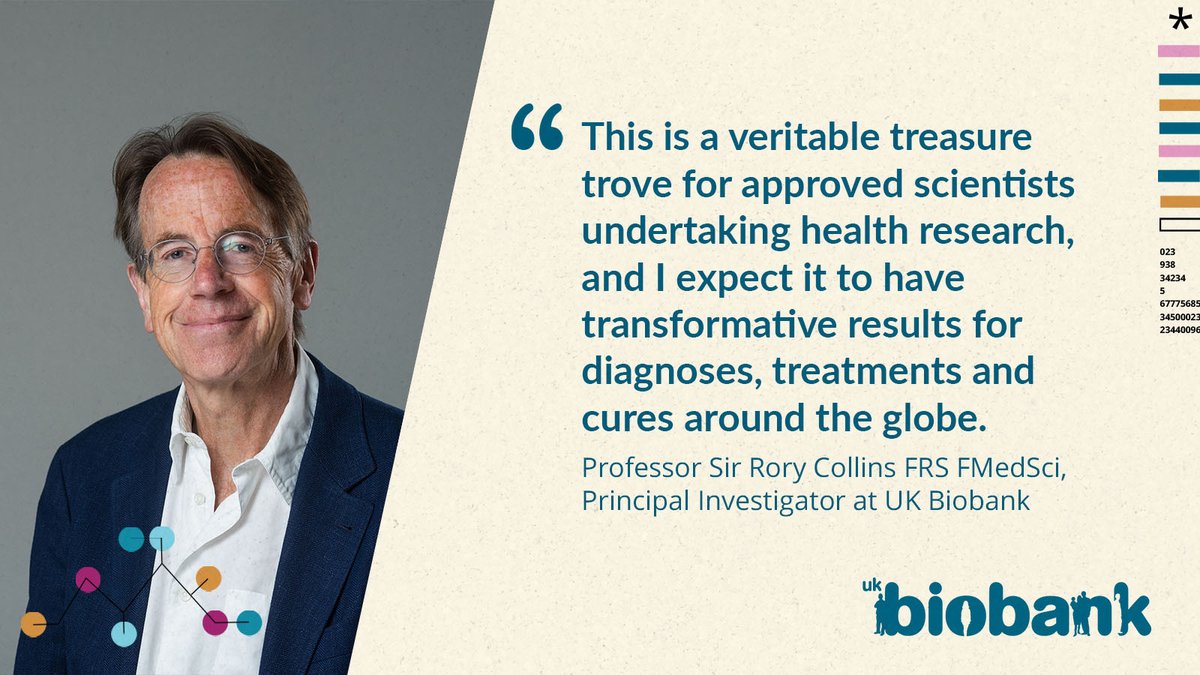
🧬 We’re excited to announce that we have sequenced the whole genomes of 500,000 UK Biobank volunteers! 🧬
The dataset is the world’s largest of its kind and we’re proud to make it available to approved researchers around the world 🌍
https://t.co/m2EeGLTr1d
#500KGenomes
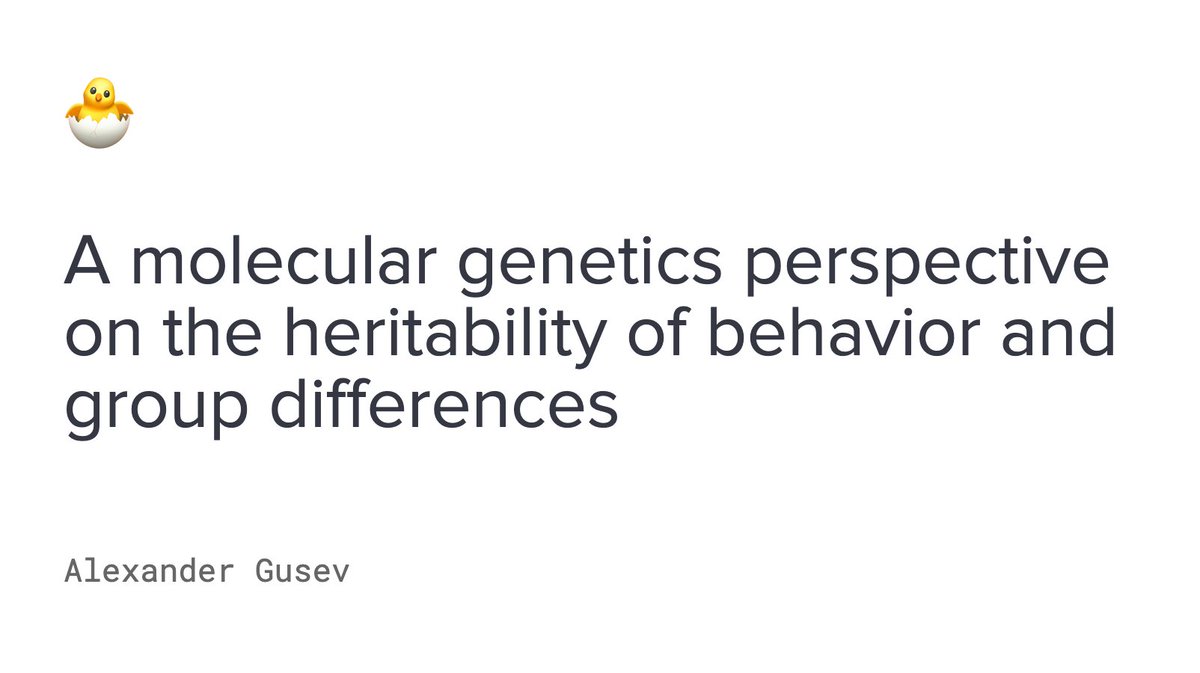
I'm writing a molecular perspective on heritability, behavior, (and eventually) race/ancestry, group differences. The idea is to start with what we've learned from genetic data and then work backwards to what we used to know from classical studies.
https://t.co/7FYUyPaFuH
The field of human genetics is evolving at a rapid pace. Much of this progress is driven by our recent ability to link common DNA variants to complex traits with genome-wide association studies (GWASs) 🧬
For both newcomers and seasoned geneticists, good review papers can be very helpful in introducing oneself to the field and in keeping up to date with the progress.
Here's an overview of key review papers, arranged chronologically:
2005 in @NatureRevGenet: Genome-wide association studies for common diseases and complex traits
A primer on the approach at the dawn of this revolution: https://t.co/9XZaIOt6QP
2008 in @NatureRevGenet: Genome-wide association studies for complex traits: consensus, uncertainty and challenges
A deep dive into the early statistical procedures of GWASs: https://t.co/znnZxxW0O3
2009 in @NatureRevGenet: Validating, augmenting and refining genome-wide association signals
On refining and replicating GWAS results: https://t.co/L6QqD0HaNO
2010 in @NatureRevGenet: Genotype imputation for genome-wide association studies
All about genotype imputation, enabling interrogation of untyped genetic variation: https://t.co/sTEOCVcHjO
2010 in @NatureRevGenet: New approaches to population stratification in genome-wide association studies
Tackling false positives in GWASs due to ancestry differences: https://t.co/KuUvVZaC20
2016 in @NatureRevGenet: Dissecting the genetics of complex traits using summary association statistics
Delving into downstream analyses of GWAS signals: https://t.co/hdCkMSCoDi
2019 in @NatureRevGenet: Benefits and limitations of genome-wide association studies
Exploring the pros, cons, and controversies surrounding GWAS: https://t.co/O8UCWBS2R2
2021 in @MethodsPrimers: Genome-wide association studies
A comprehensive look at GWAS and subsequent analyses: https://t.co/b1dHIIiBtQ
2021 in @NatureHumBehav: Dissecting polygenic signals from genome-wide association studies on human behaviour
Understanding GWAS signals in human behavioural outcomes: https://t.co/FAoWmyMM88
And finally, a series of reviews charting the progress in the field every five years in @AJHGNews
2012 - 5 years of GWAS discovery: https://t.co/5MeRmy5D0c
2017 - 10 years of GWAS discovery: Biology, Function, and Translation: https://t.co/Q8bwoCF3mp
2022 - 15 years of GWAS discovery: Realizing the Promise: https://t.co/pSBPK2U6Lc
We are pleased to announce the release of the eMerge polygenic risk scores for the human assembly GRCh37/hg19.
Polygenic risk scores have clinical utility and are the result of many years of GWAS studies.
Learn more from the following news post:
https://t.co/wJqSmiO2kU
There are significant, under-appreciated risks with GLP-1 drugs, like Wegovy and Mounjaro. My conversation this week with @PeterAttiaMD on Ground Truths (link in profile). Including loss of muscle mass and elevated resting heart rate