Continuous Integration (CI) & testing for ML pipelines is hard and generally unsolved. I’ve been thinking about this for a while now — why it’s important, what it means, why current solutions are suboptimal, and what we can do about it. (1/10)
You may have heard about this year's Economics Nobel Prize winners - David Card, Josh Angrist (@metrics52) & Guido Imbens.
Their publicly available work has helped us solve tough problems @Twitter, and we're excited to celebrate by sharing how their findings have inspired us.
Our new working paper: tell the computer what you know (and don't know!) about a causal question w/ discrete data → automatically get most precise possible answer (bounds, or a point estimate). Joint w/ @guilhermejd1 @nsfinkelstein @dean_c_knox Shpitser.🧵https://t.co/9FY4HKCp32
Folks have asked me for references on the ML perspective on causal inference. Here are two good ones:
1. @matheusfacure's book "Causal Inference for the Brave and the True" (Part II) https://t.co/kdNpZLYXuH
2. @CasualBrady's lecture notes (Chapter 7) https://t.co/FFmN6NlYau
For the past 2 years, we’ve worked to diagnose and fix bias in dozens of algorithms.
@caseymross wrote a wonderful piece about it today: https://t.co/ujDB4bEOKQ
And our bias ‘playbook’ distills the process into 4 simple steps: https://t.co/TIhL6np9jd
🧵
📰 Gutachten SVR Gesundheit:
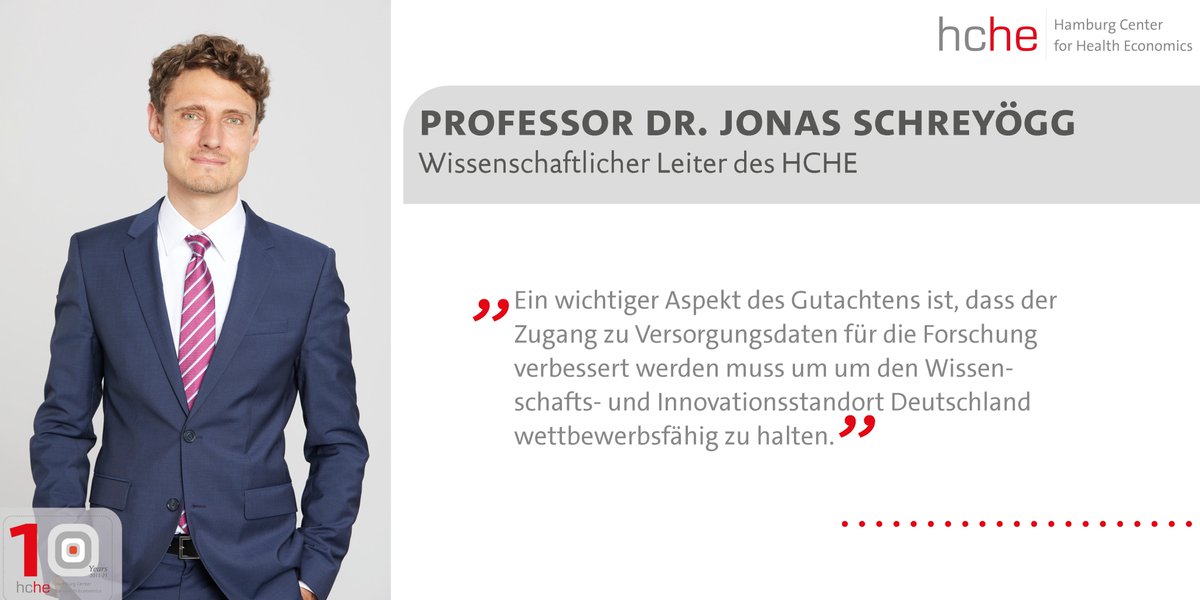
Das neue Gutachten des Sachverständigenrates (SVR) Gesundheit, dem auch @JSchreyoegg angehört, ist veröffentlicht.
Dieses Mal steht es unter dem Thema #Digitalisierung für #Gesundheit 👇
https://t.co/3606ZUiOr1
See 🧵 below for a list of books on AI ethics, algorithm bias, automated decision making, etc. that I've enjoyed reading.
What's the most thought provoking book you've read lately?
Tweetorial on going from regression to estimating causal effects with machine learning.
I get a lot of questions from students regarding how to think about this *conceptually*, so this is a beginner-friendly #causaltwitter high-level overview with additional references.
ML will not be the same in 3-5 years, and ML folks who continue to follow the current data-centric paradigm will find themselves outdated, if not jobless. Take note.
The expression "causal effect" is a relic of a period when people (mostly stats.) thought there are "non-causal effects". I believe it was Don Rubin who insisted on the distinction. Today, when we understand that all "effects" are causal, "causal effect" is redundant poetry.
🏛️We're hiring:
A professorship (W3) for Economics with a focus on empirical #healtheconomics at @unihh's Faculty of Business, Economics and Social Sciences. More details can be found here: https://t.co/3Xsq5jdeES.
Please share! #EconTwitter
A big team at the SOEP has just published a new overview of the research potentials for economists in the SOEP. Link here: https://t.co/ftrrhLR5rg Topics include: quasi-experimental designs, experiments in the SOEP-IS, data-linkage, the wealth module, and much more.
#EconTwitter
Today is #WorldNoTobaccoDay. So why not revisit the #healtheconomics paper by @J_Everding & @jmarcus_econ on the effect of unemployment on smoking behaviour of couples? https://t.co/QI3S7rlU4a.
📢📢📢 #WirvsVirus Hackathon der Bundesregierung
Nutz Deine Zeit sinnvoll. Reich Herausforderungen ein, mobilisier Deine Freunde, arbeitet digital an Lösungen, die uns näher zusammenbringen.
Sei dabei! Wir brauchen Deine Ideen & Fähigkeiten!
https://t.co/ecDtgUrNFg
The TensorFlow team has a new funding opportunity for university faculty interested in teaching ML, diversity, and inclusion.
Learn more here → https://t.co/iS4meRk9bp
. @J_Everding and @BigDataMetrics study the effect of medical marijuana laws on anti-depressant prescriptions. Their findings suggest that MMLs may improve mental health of populations that suffer from health conditions covered by state MMLs. #HCHE
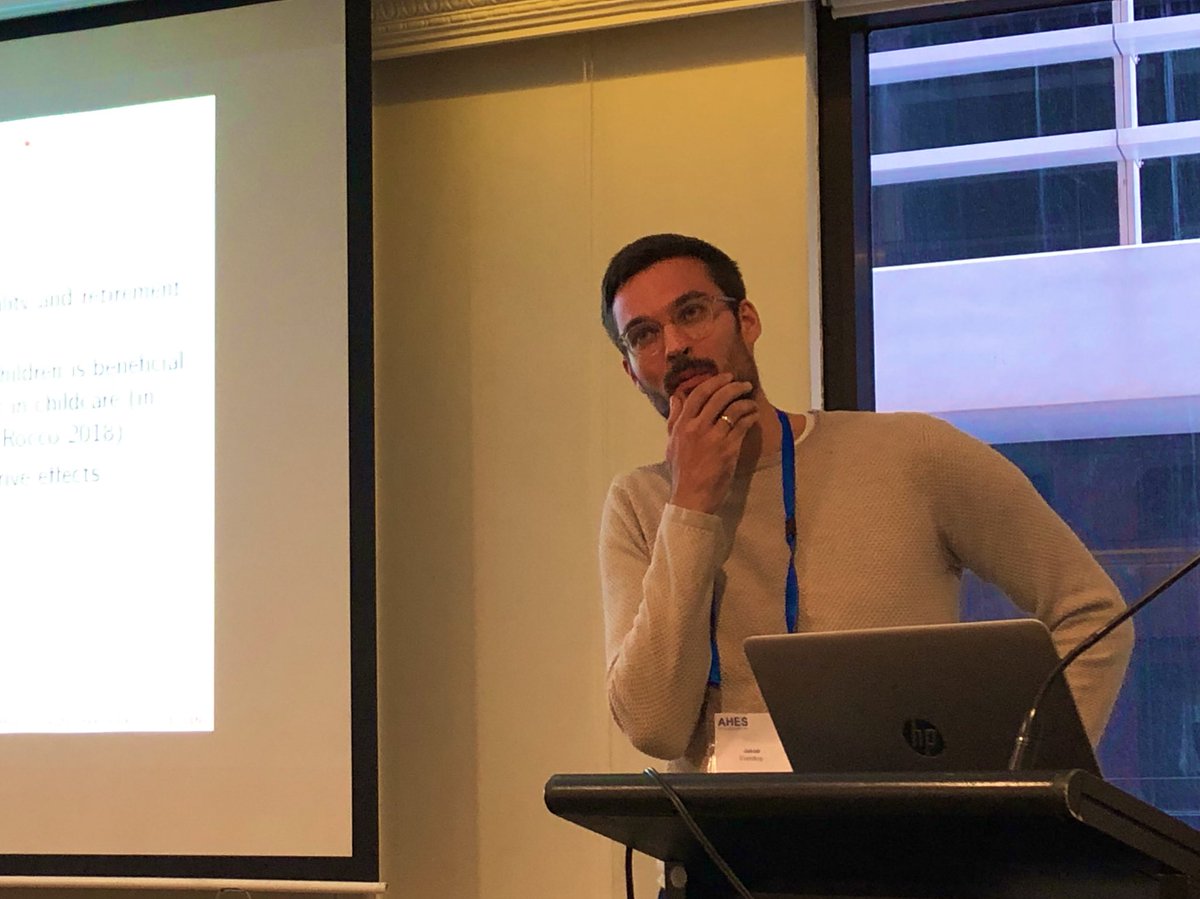
So delighted to have @J_Everding visit us at @CHE_Monash the past few weeks—we enjoyed having you around! Thanks for the interesting & unique preso at @AusHealthEcon on the (upward!) intergenerational effects of education on health (across 11 countries!).