I'm thrilled to say that I've been awarded a @MSCActions fellowship to join @BehavEvolLab and study how sexual conflict evolves and operates in nature using wild D.melanogaster populations.
How animals sense Earth’s magnetic field is one of biology’s enduring mysteries.
Researchers in Science have now identified superparamagnetic macrophages in the livers of rock pigeons to be crucial for magnetic sensing. The finding uncovers an unexpected role for immune cells in sensory perception and may fundamentally change our understanding of animal navigation.
Learn more in this week's issue: https://t.co/JS9qBFZHcP
I'm hiring! Do a postdoc in Oslo on gene-environment interplay in mental health and inequality.
You'll be in a consortium with @uppsalauni and Amsterdam MC. Apply by May 4th. Please share! 📢
https://t.co/pAgNYugdaz
@dr_appie@BehaviorGenetic@PGCgenetics@ESSGNetwork
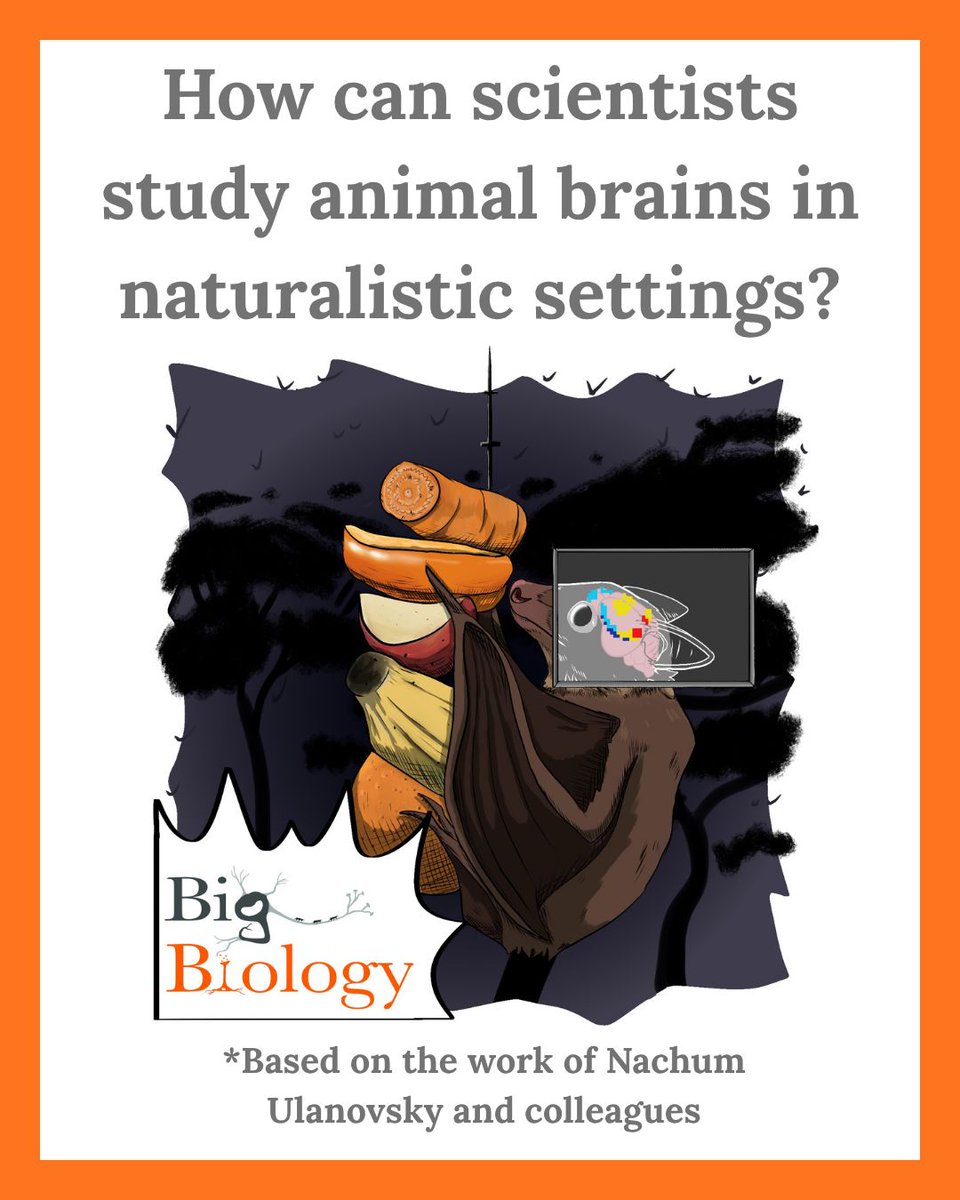
On our recent blog, Clayton Glasgow explores the ways that scientists can study animal brains in naturalistic settings, based on the work of Nachum Ulanovsky and colleagues. 🧠🦇
Excited to collaborate with @HassanSalem and @nobolly on this new Postdoc opportunity! If you're interested in the developmental biology of symbiosis, apply and join us @JohnInnesCentre and @TheSainsburyLab 🪲🦠🔬
Caso hipotético (o no): una empresa se constituye en marzo de 2019. Cero empleados, cero web, cero historial. A los seis meses se lleva un contrato público de 400K€ como único licitador. A los tres meses se disuelve.
Plot twist: su administrador es el mismo que el de otras dos sociedades que licitan al mismo organismo. Misma dirección fiscal las tres.
Hasta ahora no había forma automatizada de detectarlo cruzando fuentes públicas.
Me he descargado ∼64.000 pdf (2001-2026) del BORME para cruzar el Registro Mercantil con la contratación pública española.
El objetivo es construir un grafo real de relaciones societarias y detectar patrones que hoy pasan desapercibidos. Detectar empresas vinculadas dependía de heurísticas: fuzzy matching por nombre similar o NIFs consecutivos.
Pasamos de "estas dos empresas se llaman parecido" a "estas dos empresas comparten administrador y se constituyeron con tres días de diferencia".
Os subiré el scraper y el parser cuando los tenga afinados.
Can plant pathogens boost vector fitness?
Together with @HassanSalem, we review how phytopathogens can spread further by moonlighting as insect symbionts 🪲 More on this nifty lifestyle in @AnnualReviews!
https://t.co/Uc8TJb732Q
Este artículo denuncia que la publicación científica (sobre todo en las grandes editoriales comerciales como Elsevier, Wiley o Springer Nature) está sufriendo un proceso de “junkificación” (degradación masiva hacia contenido de baja calidad), igual que ha pasado en plataformas digitales como Amazon, Google o redes sociales. Los autores lo llaman “junkification” porque, poco a poco, se prioriza la cantidad y el dinero por encima de la calidad y el valor real del conocimiento.
Explican que esto ocurre en cinco etapas:
-La investigación se convierte en mercancía: se valora más por dónde se publica (revistas top, factor de impacto) que por su aporte real.
-Explosión de revistas de pago: el acceso abierto se pervierte; los autores pagan miles de euros por publicar (hasta 17.000 € en Nature), y surgen miles de revistas depredadoras que aceptan casi todo por dinero.
-Baja la calidad: la revisión por pares se vuelve más débil, aparecen números especiales fraudulentos y se publica mucho trabajo mediocre o dudoso.
-Sobrecarga: hay tantos artículos (casi 3 millones al año) que es imposible distinguir lo bueno del ruido.
-Junkificación total: el sistema pierde su propósito (avanzar el conocimiento para todos) y se transforma en una máquina de hacer dinero para las editoriales, mientras autores y universidades pagan caro y la ciencia se diluye.
La conclusión es que la cultura del “publica o perece”, los rankings obsesivos y el modelo de negocio de las grandes editoriales están destruyendo la calidad de la investigación. Los autores piden recuperar la publicación académica como bien público: más revistas sin ánimo de lucro, repositorios gratuitos, evaluación más amplia (no solo citas) y menos dependencia de las multinacionales. Si no cambiamos, seguiremos recibiendo y produciendo cada vez más “basura científica” disfrazada de progreso.
https://t.co/hMPiwBlxAs
Interested in studying host-microbe interactions? Hassan’s lab at @JohnInnesCentre is advertising a long-term postdoctoral position! Application deadlines are on December 15th. 🪲🧬🦠
Postdoc depression and anxiety rates are rising, finds survey of 872 researchers
The Max Planck Society is good at attracting international postdocs but struggles to retain them, survey finds.
https://t.co/kDeiJxeyLe
Postdoc time is often harder than PhD.
You have little time. Competition is higher. And you MUST stand out.
+ Your contract may end any moment.
+ Your salary is often low (for your age/education).
+ You’ve just relocated and prepare to relocate again.
No wonder that Max Planck Society survey showed that depression and anxiety of postdocs is rising.
Interestingly, Max Planck Institutes have substantial internal funding. So, in theory there should be less pressure to apply for grants, and everyone should be enjoying science. And yet the pressure on postdocs is immense.
📍 Many postdocs want to stay in academia.
They want to apply for faculty positions or become senior scientists.
Some of them achieve it. Others don’t.
❗️Why things don’t work out:
In a recent workshop Q&A session, I discussed various scenarios and behind-the-scenes processes that PhD students should keep in mind if they’re considering a postdoc:
“Postdocs: Competition, Hardship and Faculty Positions”
Watch it on here: https://t.co/nlwF8WaLJP
(I’ll appreciate if you ‘like’ this video - you will GREATLY help it reach more students.)
Are you interested in participating in field work as an internship student (e.g. Erasmus) in #SvenssonLab in southern #Sweden in the summer of 2026?
We research #Odonata (dragonflies and damselflies) and we welcome interns.
DM me here or email me ([email protected]).
Scientists discovered the world’s largest spiderweb, covering 106 m² in a sulfur cave on the Albania-Greece border.
Over 111,000 spiders from two normally rival species live together in a unique, self-sustaining ecosystem—a first of its kind.
🌷Research highlight showcases Arrowsmith et al. (2025), which shows that temperature alone can shift pollinators’ floral choices in diverse plant–pollinator communities. Such thermally-driven species interaction rewiring may have important consequences➡️https://t.co/izz5WNG4Lv
#NationalAwardHighlight!🏆
🎉We are very excited and proud to share that Dr Deepa Agashe, Associate Professor @ncbs_bangalore has been awarded the Rashtriya Vigyan Yuva Puraskar 2025 by the Government of India!
🌟Congratulations Dr Deepa!
@NCBS_Bangalore@TIFRScience
Even a single gene, shuffled and regulated in new ways, can fuel repeated bursts of evolutionary innovation, according to a new Science study of wheatear birds, which exhibit distinctive black and white plumage over different areas of their bodies. https://t.co/Pd5iBh7Xyc