@MichaelFKane You accidentally opened up a very big hole. 😂 I have learned that homeschoolers REALLY want you to like their own curriculum. My advice is to pick something prepackaged (like The Good and the Beautiful) and pivot as needed. Each kid and family is different.
@FoundationDads All true. Best thing we did was join Classical Conversations, especially good for JH/HSers. It gives them community, positive peer pressure, and classmates. Most moms who quit can’t handle the pace and accountability, which is what they need, and their kids suffer.
@TiffaniMarie483 It is, but it is not forever. When your youngest is 2-3 (no naps needed) you will begin the next phase and it just keeps getting better. The hard work is now but they just get more amazing and fun. Hang in there.
After reading Matt Shumer’s “Something Big is Coming” yesterday, which has hit 55M views, I started searching high and low for any and all counter arguments.
Not because I believed he wasn’t being honest. Or revealing valid a tectonic shift coming.
But because there is always two sides (minimum) to every story. Not sometimes. All times.
Forming opinions based on one side is how you get lobotomies becoming accepted psychiatric practice for twenty years.
So, is there any other viewpoint other than the end of the world as we know it where we’re all noodling at the local lake for our dinner?
Perhaps.
And, if so, this is the best I’ve seen.
Take a deep breath. And read it. You’ll take a deep breath after reading it, too.
@FoundationDads It’s both. My 6th grader just finished Hobbit and LOTR. 8th grader, Jane Erye and now onto Tale of Two Cities. We have read EVERY night since birth… But also many nights of Captain Underpants and DWK. Teach them to read, even that means starting with what they are interested in.
A quiet prediction for 2026, from someone who has spent a lot of time studying how humans behave at work:
I think we’re about to see an unprecedented quiet retirement of elder millennials from tech.
Not dramatic exits. Not mass layoffs. Just a steady, largely unannounced backing away.
Many elder millennials hit what was supposed to be the payoff phase of their careers—middle to senior roles, stable compensation, some accumulated growth—at the exact moment life got heavier. Kids entering adolescence. Parents aging or dying. Bodies changing. Energy changing. Perspective changing. (Read: perimenopause and midlife crises...)
At the same time, the last decade didn’t quite deliver what was promised. Most stock options didn’t meaningfully materialize. Homeownership was delayed or derailed. Many relocated during the pandemic “temporarily” for childcare or sanity and never fully returned—to cities, to offices, or to the pace they once sustained.
Then AI arrived. Not just as a new tool, but as a true platform shift.
What I’m watching isn’t resistance or denial so much as a widening gap in orientation. Some people are instinctively reorganizing how they think, work, and create around this new substrate. Others are using it incrementally; helpful, but not transformative. Neither is a moral failure. But the gap compounds quickly.
For a cohort already tired, already juggling more life outside of work, and already questioning the ROI of constant grinding, the incentive to retool themselves again—this time at platform speed—just isn’t there.
So many will choose something else.
They’ll frame it (honestly) as leaning into IRL, into human connection, into building tangible things. They’ll open coffee shops, take over family businesses, learn trades, consult selectively, or turn long-held hobbies into second careers. It will look intentional. And often, it will be.
What fascinates me is not the “exit,” but the alignment: a generational life stage colliding with a technological inflection point that dramatically raises the bar for cognitive and adaptive load at work.
From an HR lens, it’s one of the most interesting workforce transitions I’ve ever seen unfolding in real time... and I think we’re still underestimating how quietly, and how profoundly, it will reshape who stays, who leaves, and what “career success” even means next.
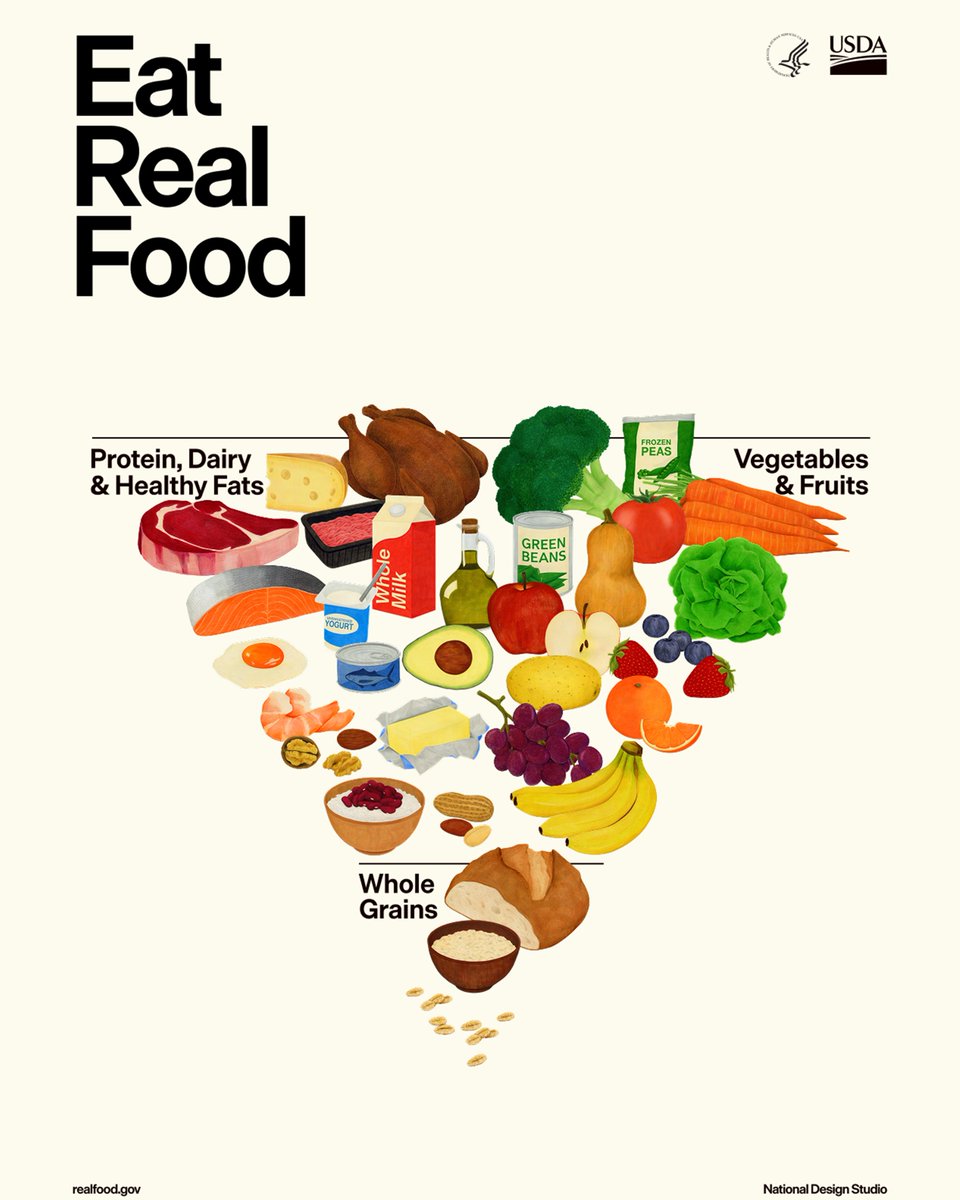
"Better health begins on your plate—not in your medicine cabinet. The new Dietary Guidelines for Americans defines real food as whole, nutrient-dense, and naturally occurring, placing them back at the center of our diets."
This is exactly what our chronically ill country needs.
BREAKING: The Trump Administration announces the 2025-2030 Dietary Guidelines for Americans, putting REAL FOOD back at the center of health. 🇺🇸
https://t.co/tkGF01onpm
My family has been personally impacted by Lyme. No long term care is covered by insurance and suffering is so, so hard. This acknowledgment is the best news. ❤️
“For decades, Americans suffering from Lyme disease have been denied the accurate diagnostics and meaningful care they deserve. Today’s actions push us decisively toward reliable testing and treatment grounded in the real-world experiences of patients. We are committed to delivering the tools that families have waited far too long to receive.” — @SecKennedy
We are obsessed with "talent" and people that have the "special something".
This is just a way of avoiding thinking about what it takes.
Excellence is real. There are people that get ahead nine times out of ten. Olympic swimmers, repeat founders, bestsellers... But, if you watch excellent people there is nothing magic about what they do*.
It's just the multi-dimensional set of skills, character, and ways of life playing out.
To give one example: Fortune 500 CEOs don't have a magic gift — maybe they are more likely to win if they are born in certain countries and have a slightly above average IQ and stamina but nothing otherworldly — instead what they have are: a willingness to have difficult conversations, a set of mental models to read a balance sheet fast, a mental model of the business they are running, mental models of how other businesses run, an idea of the psychology of their biggest rivals company, a strong motivation to increase profits, private drivers, expensive suits, intense time boxing, public speaking coaches, favourite restaurants they go to every time they are in a city, how well they celebrate after a win, keeping up the right kind of health routine to keep them sharp, spouses that do not create demands on their time.... and so on
These things are essentially mundane. There is no invisible special sauce. Pretty much all of it are choices that can be made, skills that can be learned, character that can be developed and more.
The key — the reason not everyone is a Fortune 500 CEO — is that these things are not arbitrary. The collection of things that need to be done to get to this level are vast and if the person is missing any of them they simply won't be excellent enough.
In other words to be part of the world of Fortune 500 CEOs you need to be perfectly optimized for that world.
Sometimes the collection of skills etc. can look arbitrary but this is usually because you are comparing different games. The list of what's needed is different for a software startup founder, a car dealership owner, a university dean, or even in the case of the example perhaps other Fortune 500 CEOs in different industries etc. Even between companies at a similar scale in similar industries the list of what's needed can be different at the margin because of contingent facts about how those particular organisations are constructed.
In the same way, while there may be a lot of overlap, being world-class at swimming will not make you world-class in football. If nothing else you will have to live in very different places (swimming pools vs. football pitches).
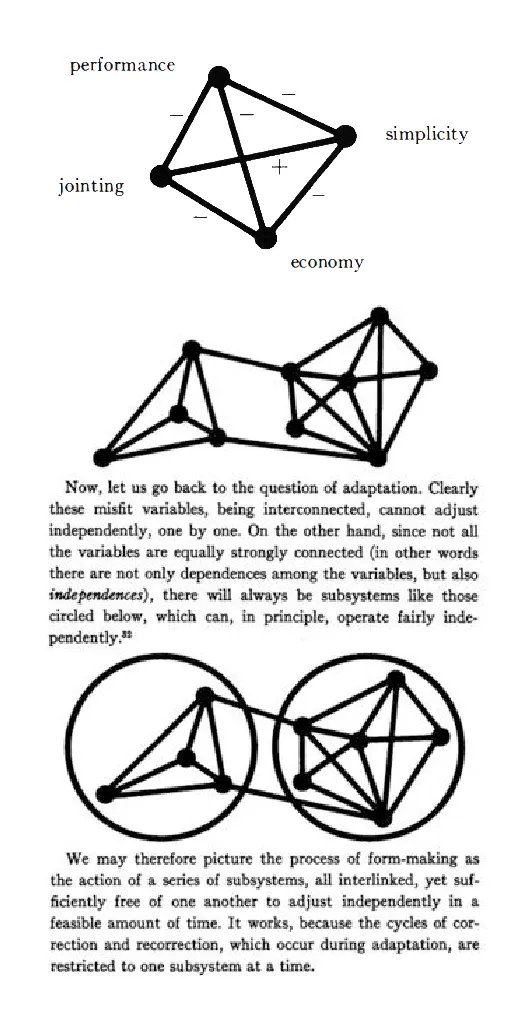
So achieving excellence is like solving of a hyper-dimensional problem. Each level requires a new bundle and a new way of life. It's similar to the way Christopher Alexander describes building a house in Notes on Synthesis of Form. You need to constantly adapt to resolve these internal tensions and enter the next world of skill.
So if you're interested in excellence you need to ask: What world do you want to be part of? And what do you need to change? What disciplines do you need to take on?
There are probably more transformations that are needed than you expect. But if you're willing to do it there's nothing stopping you.
Perhaps if there is something that the most excellent people have it's a willingness to connect with what's real. To be humble before what it actually take to succeed in their given field.
*All reflections on the paper: The Mundanity of Excellence: An Ethnographic Report on Stratification and Olympic Swimmers by Daniel F. Chambliss
@matt_vanswol Be the same person all the time as it models what good character really is. Who you are at work or church or the grocery store is the same person your kids see, even when in the most stressful situations.
its amazing how chatgpt knows everything about subjects I know nothing about, but is wrong like 40% of the time about things im an expert on. not going to think about this any further
I think about this twice a day.
Every morning when I sit down to read & again when I begin to work, I say to myself,
“Accept the initial agitation.”
When you try to focus, Andrew Huberman explains, “the brain circuits that turn on first are of the stress system.”
Meaning:
“The agitation and stress that you feel at the beginning of something—when you’re trying to lean into it and you can’t focus: you feel agitated and your mind’s jumping all over the place—that is just a gate. You have to pass through that gate to get to the focus component.”
There’s a common misconception, @hubermanlab continues: “the misunderstanding around how these brain circuits work has led to this idea...a kind of obsession with the idea that we have to feel good in order to be productive.”
“And nothing could be further from the truth.”
The truth is it’s the reverse: we have to be productive—we have to start working, we have to lean in and get going, accepting the initial agitation—in order to feel good.
So along with “accept the initial agitation,” sometimes—when I don’t feel especially good, motivated, interested, or energized—I say to myself,
“Forget how you feel right now.”
“It will feel good,” Huberman says, “but there’s a whole staircase in which it feels kind of lousy...The early stages of hard work and focus are always going to feels like agitation, stress, and confusion.”
“Remember: there’s a gate of entry. You have to wade through some sewage before you can swim in clear water. That’s the way I always think about it.”
- - -
“Mood follows action.” — @richroll
The clip below is from Andrew’s 2020 interview on Rich’s podcast (https://t.co/HqdLeNKTxm)
Chess prodigy Josh Waitzkin developed a process to achieve peak performance in any craft or career. He’s applied it to the world of investing, professional sports, science and more. The MIQ Process. It is not a quick fix, but rather a rewiring of your default settings.
Startup CEO who just closed his first $400K enterprise contract by promising something that doesn’t exist to a Fortune 500, and the founding engineer who has 7 days to build it
Less than 1 year to go! Our 70,000-sq-ft human milk processing facility is 50% complete, thanks to the incredible work of @dennis_group. This brings us closer to our 2025 launch and transforming infant nutrition for families & hospitals: https://t.co/sevNGAU18O