ATHLETES, COACHES, NUTRITIONISTS & PHYSIOLOGISTS🏃🚴♀️🧪
Our latest paper is out in The Journal of Physiology: https://t.co/CKR2pgc7iA
- Comparing glucose & glucose–fructose fuelling during running at altitude
The sort of altitude used for training camps - 2500m
A brief🧵
1/
🚨New paper in @SportsMedicineJ
“35 Years of Joyner’s Endurance Performance Model”
We assessed how physiological determinants contribute to endurance performance in 888 runners & cyclists
Led by @LoisMougin (co-first author)
📄Open access
🔗https://t.co/Rzpq0F8mwK
1/14
Interval training is not about accumulating fatigue.
It is about accumulating time at a target physiological intensity.
That does not make it the same as resistance training, but it does make both of them dose response problems. In resistance training, we dose mechanical tension and total work. In interval training, we dose cumulative exposure to the intensity that sends the adaptation signal we want.
Coates et al. describe a “central tenet of interval training” as accumulating more work at a higher intensity than continuous exercise would allow. They define HIIT in the performance context primarily within the “severe intensity domain,” and they explain that the intermittent structure allows “greater time to be accumulated” at the desired work rate.
So when people arbitrarily chop up work and rest without understanding the physiology, they are not necessarily progressing the session. They may be changing the metabolic demand and prescribing a different workout altogether.
Good interval training is not random suffering.
It is precise dosing.
Source: Coates et al., 2023.
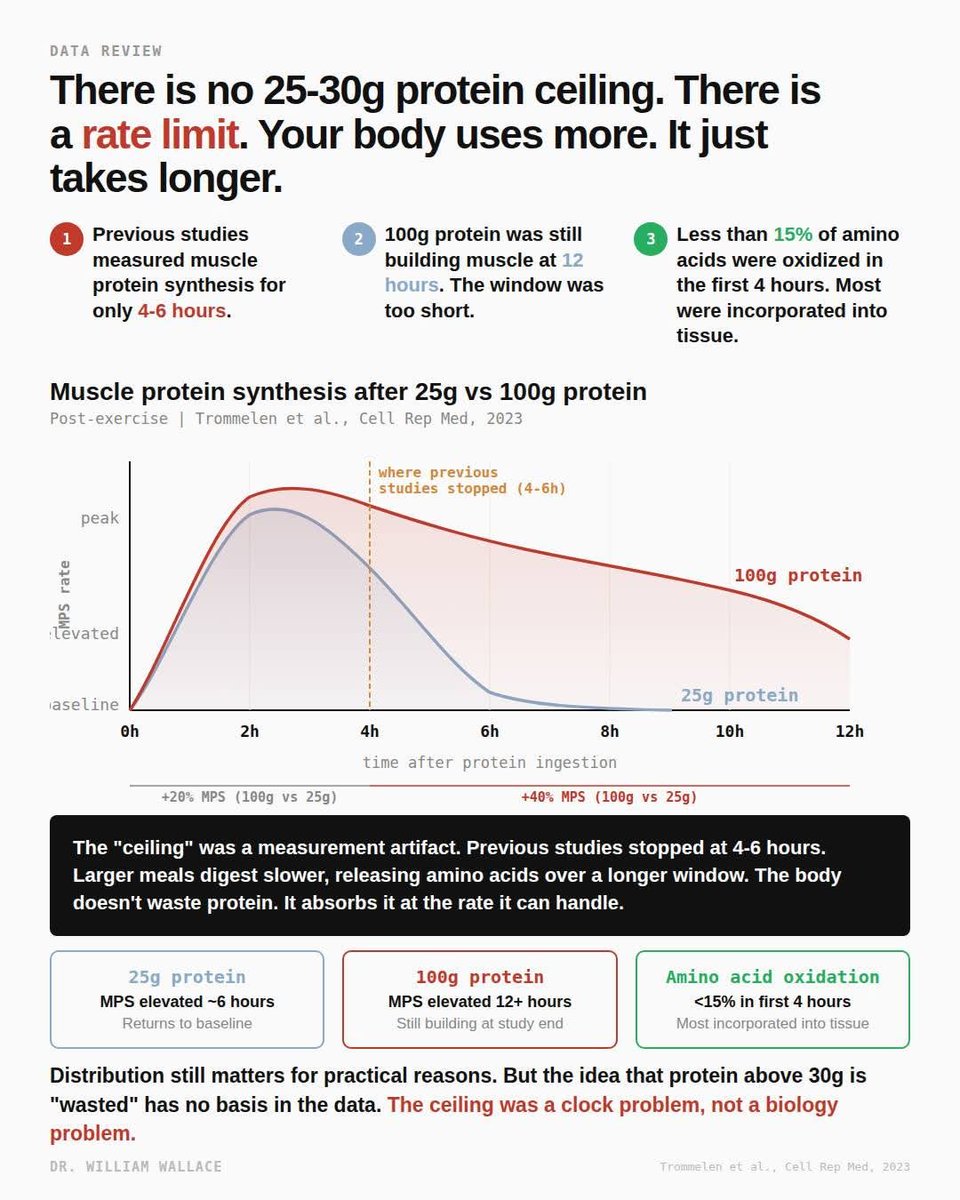
"Your body can only use 25-30g of protein per meal. Anything above that gets wasted."
This claim has been repeated in fitness nutrition for over a decade, and it was built on studies that measured the right thing over the wrong timescale.
Moore 2009 gave six young men 0, 5, 10, 20, or 40g of egg protein after leg-only resistance exercise and tracked muscle protein synthesis for four hours. MPS plateaued at 20g. Witard 2014 repeated a similar dose-response with whey protein after unilateral leg exercise in 48 resistance-trained men and found MPS rose 49% at 20g and 56% at 40g over four hours, with the authors concluding 20g was sufficient for maximal stimulation. Case closed, or so it seemed. The problem wasn't the dose. It was that a 4-hour window captures the peak response to 20g but only the opening chapter of what 40g is doing.
Think of digestion as a funnel with a fixed flow rate. Pour a cup of water through it and it drains in minutes. Pour a gallon and it doesn't overflow. The funnel just drains at the same rate over a longer period. Protein behaves the same way. A smaller dose gets absorbed and used quickly. A larger dose digests over a longer window because the stomach slows gastric emptying and the intestine releases amino acids gradually. Muscle tissue keeps incorporating them wave after wave. The "ceiling" in those early studies wasn't a biological saturation point. It was what you see when you stop watching before the larger dose finishes working.
Trommelen et al. (2023, Cell Reports Medicine) tested this directly. They randomized 36 recreationally active young men to 0g, 25g, or 100g of milk protein after a 60-minute whole-body resistance session and tracked muscle protein synthesis for twelve hours using a quadruple isotope tracer. In the first four hours, myofibrillar protein synthesis was only about 20% higher after 100g than after 25g. In the four-to-twelve-hour window, that gap widened to roughly 40%. That later window is where the bigger dose actually separates from the smaller one, and it's exactly where every prior dose-response study stopped measuring. The authors also reanalyzed the oxidation data from Moore and Witard and concluded that postprandial amino acid oxidation represents less than 15% of the increment in ingested protein. The paper states it plainly: "Protein ingestion has a negligible impact on whole-body protein breakdown rates or amino acid oxidation rates."
Caveats belong in the read. This was young recreationally active men following a single bout of resistance exercise. Not trained athletes, not women, not older adults, not a longitudinal hypertrophy trial. A 2024 Witard commentary in the International Journal of Sport Nutrition and Exercise Metabolism flagged that the finding may not translate to resistance-trained young women with different anabolic kinetics.
Practically: you don't need to portion exactly 25-30g of protein every three hours to avoid "wasting" it. Larger meals extend the anabolic window rather than capping it. Distribution across the day still matters for satiety, blood sugar, and hitting your daily target. But the rigid per-meal rule has weaker biology behind it than previously believed.
Sources:
https://t.co/AHrjZkIGRp
https://t.co/Cq27xvSl92
https://t.co/HPFcXBTlKV
https://t.co/SPjf72NSX9
https://t.co/q5hcTQ50FP
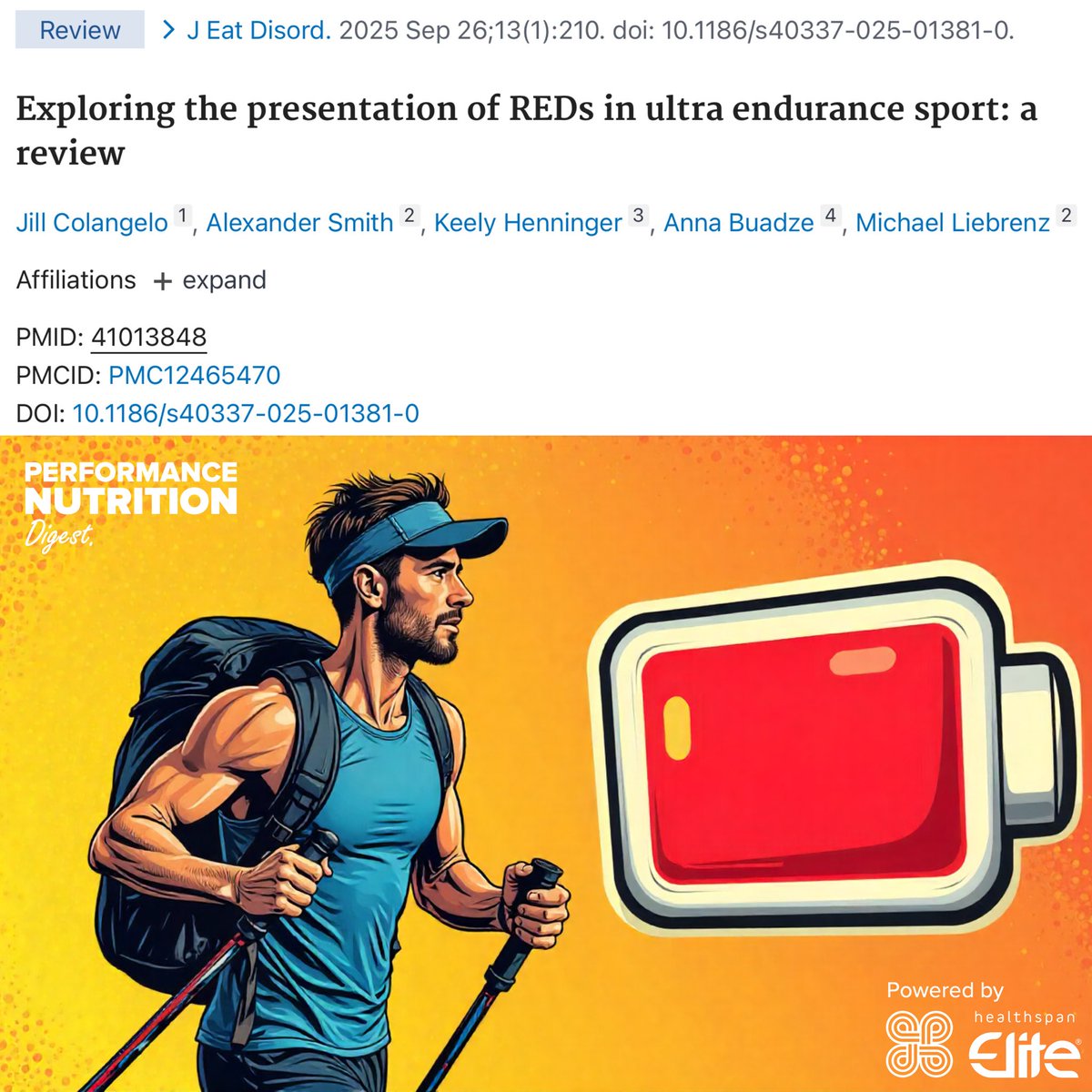
REDs in ultra-endurance sports 🪫
This new review of 16 studies (over 4,700 athletes) across ultra-endurance disciplines including…
🏃♂️ Ultramarathon
🥇 Triathlon
🚴♂️ Cycling
🏊 Open-water swimming
…to establish presence and effects of REDs in ultra-endurance sport 🔍
Here are the key findings ⬇️
🔥 Ultra-endurance athletes face extreme physical and psychological stress, heightening risk for REDs, Low Energy Availability (LEA), and Disordered Eating (DE)
📊 Up to 65% may be at risk, often through underfueling
🧩 The REDs model may overlook key mental health factors, highlighting the need for integrated care
📈 Between 43–65% showed LEA risk, and up to 88% displayed DE behaviours
🧍♀️ 61% of women and 29% of men were at moderate risk; 5.6% at high risk
🧬 Biomarkers showed reduced metabolism, low thyroid hormones, high cortisol, and bone injuries
⚖️ Many athletes remained in negative energy balance (~ -450 kcal/day) even before competition
😔 Athletes described perfectionism, guilt, and pressure to perform, often tied to identity and body image
🪞 Beliefs like “leaner is faster” led to caloric restriction and exercise dependence, despite awareness of harm
💀 Common consequences included stress fractures, amenorrhea, fatigue, and low testosterone
🩹 Recovery was often nonlinear, with lingering fears of weight gain and identity conflict
⚖️ The REDs framework focuses too heavily on physiology ➡️ psychological drivers like control, anxiety, and low self-worth are central
🧠 Many athletes are misdiagnosed or treated physically without addressing mental health
🧍♂️ Males and gender-diverse athletes remain under-researched despite clear vulnerability
Future Directions ⬇️
🔬 Investigate personality traits linked to underfueling
⚧️ Expand research to men and non-binary athletes
🧑⚕️ Adopt ED-informed interventions for REDs
🧾 Develop accessible screening tools for recreational athletes
Ultra-endurance athletes are highly vulnerable to both physical and psychological REDs 🚨
Effective management requires a holistic, multidisciplinary approach integrating nutrition and mental health for prevention, recovery, and long-term wellbeing ✅
Reference:
https://t.co/XGFKRpetzH
Subscribe to Performance Nutrition Digest FREE to receive your daily study breakdown, straight to your inbox or via the Substack app 📥
https://t.co/eiomLjpPt2
Performance Nutrition Digest is powered by Healthspan Elite⚡️
https://t.co/x7WMHaanT4
To Our Fellow Citizens and the International Community,
Thailand remains firmly committed to peace and has consistently upheld the ceasefire agreement.
Unfortunately, Cambodia has violated this commitment and continues to reinforce its troops.
We urge everyone to help share the truth: Thailand respects peace but peace must be mutual.
Issued on July 29, 2025, at 10:30 PM (Bangkok
📣 New paper out in Scand J Med Sci Sports!
We tested the reliability of running economy (RE) and other physiological parameters during 90 min of running. ➡️ Running economy is highly reliable – even in a fatigued state
🆓 Open access link
📄 https://t.co/i4HDiFqPWi
🧵1/8
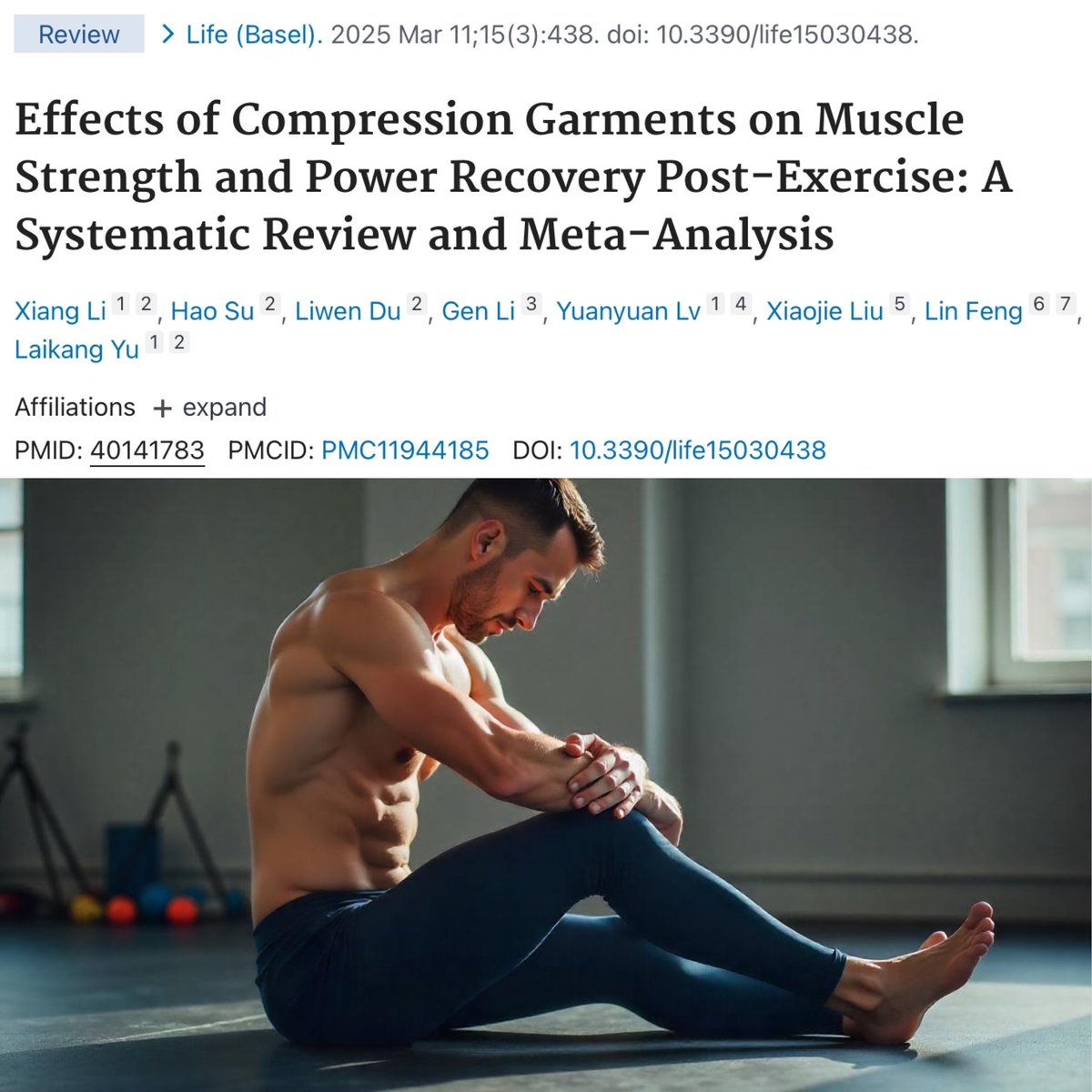
Compression garments for exercise recovery 🔋
Compression garments (incl. socks, tights, shirts) are purported to enhanced venous return and blood circulation within the muscles🩸
But do they actually improve recovery? 🧐
This new meta-analysis compiled data from 28 studies (528 participants) to establish the effects of compression garments on post-exercise recovery of…
💪 Muscle strength
💥 Power output
Results 📊
Overall, data showed that compression garments have significant restorative effects on both muscle strength and power ✅
(after exercise-induced fatigue)
Subgroup analysis showed that compression garments were effective in mitigating the decline in…
1️⃣ muscle strength when the rest intervals were 1 - 48 hr and over 72 hr
2️⃣ power when the resting interval was 1 - 24 hr
3️⃣ muscle strength, during rest intervals of 1 - 24 hr for trained individuals
4️⃣ over 72 hr for both trained and untrained individuals
Compression garments are an effective recovery tool post-exercise ✅
They may be more effective for trained individuals compared to untrained individuals 👈
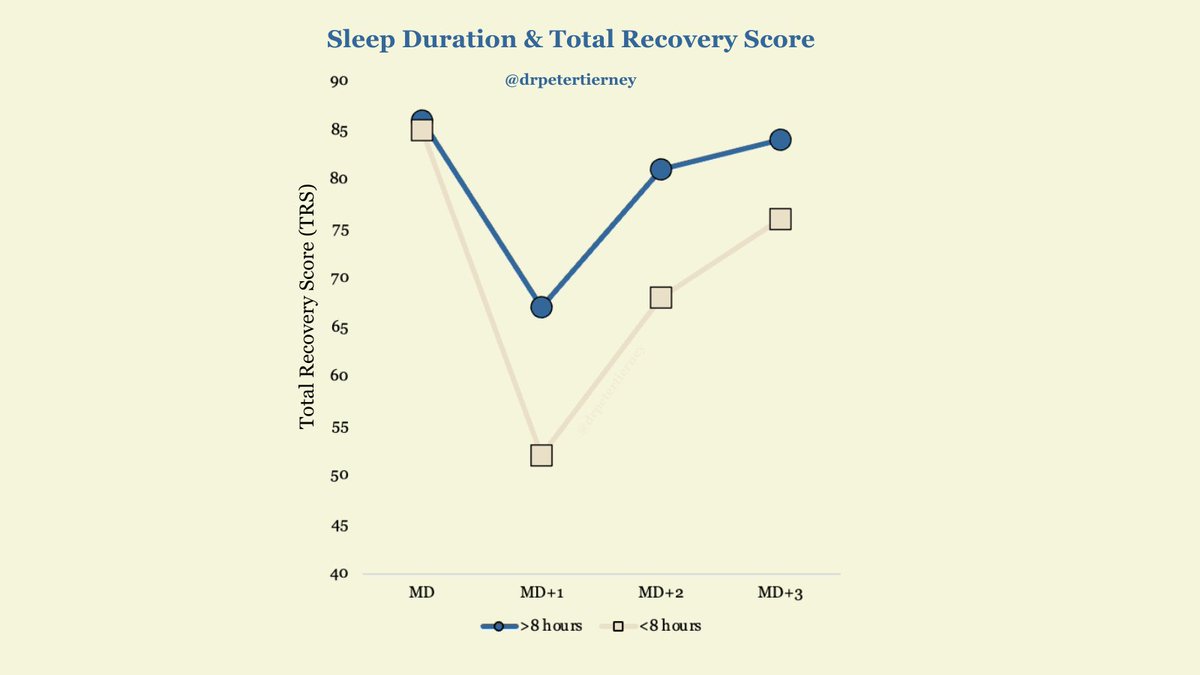
Want to recover faster? Make sure you are sleeping enough!
When examining Total Recovery Score (TRS) in elite professional team sport athletes, we noticed that players that slept more than 8 hours recovered faster than those who slept less than 8 hours.
Carbohydrate strategies for elite long distance endurance 🚴
PRE-COMPETITION 🔋
⏱️ Event < 90 min = 6 - 12 g/kg in 24-hr prior
⏱️ Event > 90 min = 10 - 12 g/kg/day in 36 - 48-hr prior
❌ Do not exceed 75 g carbs in final pre-race meal
⏰ Consume pre-race meal at least 2-hr prior to race
❌ Do not consume high doses of carbs 60 - 30 min prior to race
🥤 Mouth rinse may be preferable
DURING COMPETITION 🎽
⏱️ Events > 150 min = 60 - 90 g/hr
⏱️ Events 60 - 150 min = 30 - 60 g/hr
⏱️ Events ≤ 60 min = carb mouth rinse
POST-COMPETITION 🏆
After glycogen depletion…
⏰ Muscle glycogen takes 24-hr to recover
⏰ Liver glycogen takes 11-hr to recover
⏳ Within 4-hr = 1.0 - 1.2 g/kg/hr carbs
⏳ Within 24-hr = 8 - 10 g/kg
📈 Sustaining 8 g/kg/day for 36 - 48-hr can lead to muscle glycogen supercompensation
CARBOHYDRATE PROPERTIES 🔬
👉 Combined glucose + fructose (2:1) to reduce GI discomfort
👉 Highly branched cyclodextrin = low osmolality, fast gastric emptying, reduced GI discomfort
👉 Gels = fast gastric emptying / absorbing
🥤 6% glucose or 8 - 10% glucose+fructose solution is advised
🥤 Some athletes see benefits with high concentration solutions ~ 200 g/L
SYNERGISTIC NUTRIENTS 🧂
🥤 Carbs 0.8 g/kg/hr + 0.2 - 0.4 g/kg/hr protein post-exercise to speed glycogen recovery
🧂 Sodium = 30 - 50 mmol/L to enhance glucose uptake and utilisation
☕️ Caffeine = 6 - 9 mg/kg 60-min prior to exercise to increase fat oxidation and spare muscle glycogen
⏱️ In 4-hr post-race = 1.2 g/kg carbs + 8 mg/kg caffeine accelerates muscle glycogen recovery
GASTROINTESTINAL FUNCTION 🛠️
Training the gut protocol ⬇️
🗓️ 10 training sessions over 2-wks
🫀 60% VO2max for 60-min
⏱️ 30g carb gel at 0, 20, 40-min
= reduced GI discomfort + enhanced performance 🏆
INDIVIDUAL DIFFERENCES 🙋♂️
Test where possible and personalise strategies based on following factors…
👉 Age / Weight / Sex / Preference
ALTITUDE 🏔️
Athletes may benefit from improving GI function, prioritising glycogen loading and increasing habitual carb intake 📈
HEAT & HUMIDITY 🥵
👉 Amplified demand for endogenous carbohydrate
💧 Shift to fluid sources of carbs to maintain hydration status
🧊 Practice carb ice slushy ingestion
COLD ENVIRONMENTS 🥶
⚠️ Increased risk of glycogen depletion and hypoglycaemia
🌡️ Consume carb solutions with warm water to elevate core temp
🩸 Real time blood glucose monitoring may be useful
COMPETITION ANXIETY 😰
Anxiety can affect appetite, increase GI issues and increase glycogen depletion due to catecholamine release 🧠
Athletes who experience anxiety may benefit more from advanced carb loading strategies and increased total carb intake ✅
Carbohydrate intake for endurance performance is far from simple, it’s not just about eating a big bowl of pasta the night before 🍝
🚨 New study 🚨
The biggest project of my PhD is out in @MSSEonline.
🔑 findings: Strength training improves running economy durability & high-intensity performance following prolonged running.
🙏🏼 @rich_blagrove for the SUPERvision on this
🔗 https://t.co/WfWWwyY9oW
🧵 1/10
Creatine intake may reduce cancer risk ✅
Creatine is far from just a performance-based supplement, it also has…
🧯 Anti-inflammatory
🧬 Antioxidant
🦠 Immunomodulatory effects
This new study investigated the association between creatine intake and cancer risk in over 25,000 individuals 🔍
Results showed a significant linear negative relationship between creatine intake and cancer risk 📉
👉 the higher creatine intake, the lower cancer risk 👈
For each standard deviation increase in creatine (0.09 g/day) cancer risk decreased by 5%‼️
This association was strongest amongst males and overweight participants 🙋♂️
Further analysis highlighted additional significant benefits for older adults 👴🏻
Dietary creatine intake may have significant benefits for reducing cancer risk ✅
For context, if you’re supplementing with creatine (3 - 5 g/day) you would be in the highest quartile for daily creatine intake within the current study (a good place to be) 💊
Add to these findings the additional neuroprotective, cognitive, muscular, health and performance benefits of creatine…it’s a non-negotiable in my book 📕
In this one, overnight-fasted exercise did not consequentially differ from fed exercise in the response of components of energy balance (i.e., energy intake, energy expenditure, and appetite) or interstitial glucose across four days.