We are profoundly grateful that Dr. Ruth Gottesman, Professor Emerita of Pediatrics at @EinsteinMed, has made a transformational gift to #MontefioreEinstein—the largest to any medical school in the country—that ensures no student has to pay tuition again. https://t.co/XOy9HZLbfD
Really excited to unveil https://t.co/3DKXXBuxFD, an interactive playground for learning bioinformatics command-line tools like bedtools, bowtie2, and samtools (and more to come!) 🧑💻 🧬
Thanks to @aaronquinlan, @BenLangmead, and @mike_schatz for feedback and tutorial ideas.
Ever wonder why histone chaperones have acidic tails?
Our new preprint reveals they mimic DNA to regulate chromatin! Glutamate-glutamylation enhances their mimicry.
Dive in: https://t.co/n1MIumdmGe lead by @B_Lorton23 Chris Warren @HumairaIlyas8#biorxiv 1/7
Discover insights into #GeneTherapy, #NaturalLanguageProcessing in scientific research, and more in our latest e-newsletter! Subscribe to stay informed: https://t.co/YcslwL0NHo 📰
Very excited to share this preprint we contributed to - this work is generally important as it shows that the nuclear/cytoplasmic *density* ratio is highly conserved.
This is a unique insight has broad implications for how the genome is regulated. See thread below:
Our panel on #doubledocs interviews Q+A is about to start! Looking forward to hearing from our excellent panelists from @MSU_DOPhD, @Columbia#MSTP, @UWMSTP, and @DukeMSTP. Join us for our interactive session, keep track of the conversation with this thread, or watch on @YouTube!
Anyone familiar with an R package for visualizing these kinds of gene constructs, as in dnaplotlib (python) https://t.co/mhQLldvkVP ggbio and other genome browser / track-based tools aren't really what I'm looking for. #Rstats
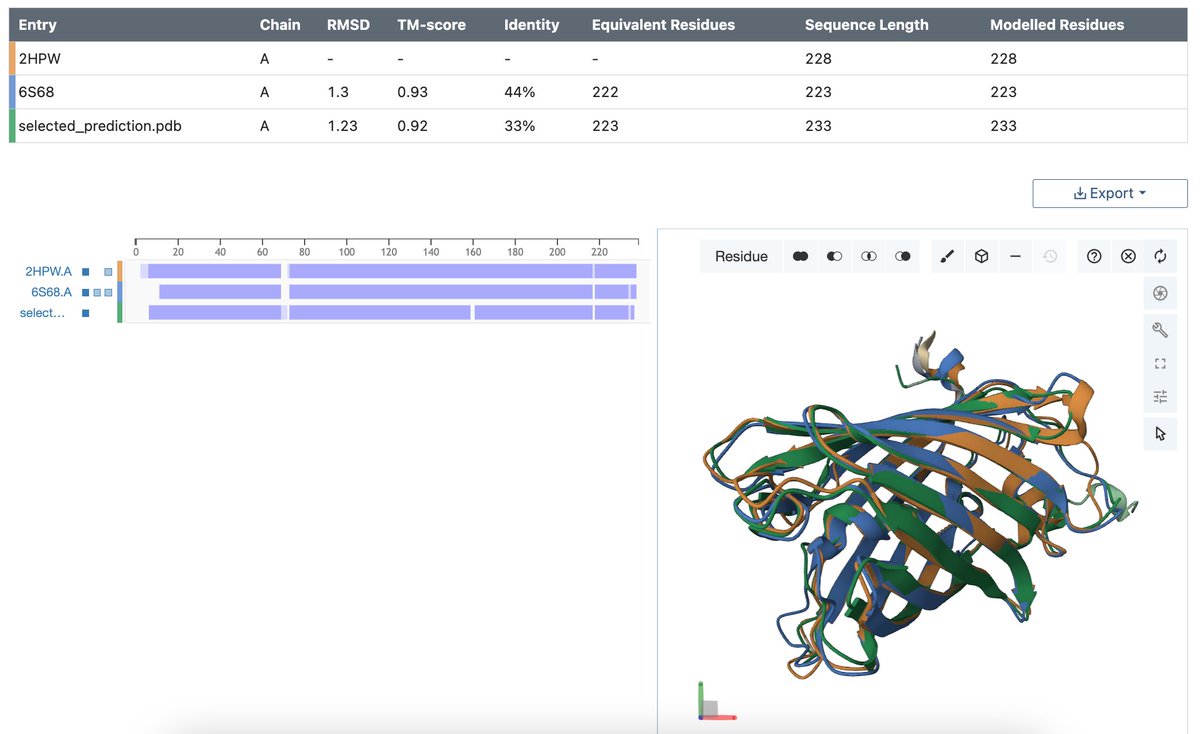
I created a Colab tutorial that checks if a gene/transcript ID has an associated crystal structure, checks if related proteins with associated crystal structures are available, and then compares those to a de novo structure prediction:
https://t.co/P24WrJzhpR
Only a matter of time before a paper formalized this exercise:
Automated #scRNAseq cell type annotation with GPT4, evaluated across five datasets, 100s of tissues & cell types, human and mouse.
A🧵below with my thoughts on how such tools will change how #Bioinformatics is done.
These kinds of non-canonical (mis-expressed) tumor antigens are so fascinating, and warrant greater attention! Exciting to think about how their expression might be detected / enhanced / targeted in our patients. Great step forward in this paper. https://t.co/pQLTKl1Qc8
A combination of drugs has shown promise for treating children with rhabdomyosarcoma. But can the potential therapy get to clinical trials? https://t.co/7yKaP3pFUI
#ChildhoodCancer@cogorg
Your gut is producing sulfide as you read this tweet! Join @anaerobicwolf Reese Hitchings and #teamsulfide@EinsteinMed with @EdGoluch reporting a novel mechanism of xenobiotic metabolism by the gut microbiome https://t.co/h8A9BJpfX9 https://t.co/7qVIoXajPC @NatMetabolism
a🧵
For readers interested in targeting RNA structures with small molecules, which Matthew Disney is presenting on at #BostonDOT22 now, here's a recent review https://t.co/Yu6UTvG7QC
Out today and freely available, a tool many in the image analysis community have been waiting for!
PyImageJ: A library for integrating ImageJ and Python
@EliceiriK@UWMadisonLOCI@ctrueden@CiminiLab@DrAnneCarpenter
https://t.co/2sjWSfJJ8n