A photo that can never be taken again. The Space Shuttle riding atop NASA's modified 747 Shuttle Carrier Aircraft, while the Concorde slices across the sky in the background. (1983)
The very first Medal of Honor of America's Second World War was earned in the opening minutes of it, by a sailor who dragged a machine gun into the open at Pearl Harbor and kept firing after being hit 21 times. In his own words, "I shot at every damn plane I could see."
His name was John William Finn. Born in Compton, California in 1909, he had dropped out of school and joined the Navy at 17, and by December 1941 he was a 32 year old chief petty officer, the chief aviation ordnance man in charge of a detail of twenty men at Kaneohe Bay Naval Air Station on Oahu, up the coast from Pearl Harbor.
On the morning of December 7, he was asleep at home with his wife when gunfire and a neighbor pounding on the door jolted him awake. Still not grasping what was happening, he got in his car and drove toward the airfield, at first obeying the base speed limit, until a plane passed overhead showing the Rising Sun on its wing and he understood. "I threw it into second," he recalled, "and it was a wonder I didn't run over every sailor in the air station."
He reached the hangars to find burning planes, scrambling men, and chaos. He spotted his squadron's painter holding a .50 caliber machine gun salvaged from a wrecked aircraft and took it from him on the spot, with the dry logic of a professional: "I knew I had more experience firing a machine gun than a painter."
Then he did the thing that made him a legend. He mounted the gun on a movable training platform and shoved it out into the open, onto an exposed stretch of ground where he had a clear field of fire at the attacking planes and absolutely no cover for himself. He did not hesitate. "I got the gun and I started shooting at Jap planes," he said. "In some cases I could see their faces."
For the next two hours Finn fought his own private war. He kept firing as the enemy raked him again and again, taking 21 distinct wounds, a bullet through his foot, a shrapnel hit to the shoulder that cost him the use of his left arm, and more all over his body. He never overstated what he achieved, even about the planes he may have downed: "I can't honestly say I hit any, but I shot at every damn plane I could see."
He refused to leave his gun until he was ordered to get medical help. At the sick bay, seeing men far worse off than himself, he let the medics bandage him, then promptly checked himself out and went back to the armory, spending the rest of the day and night repairing damaged weapons in case the enemy returned. It took a second, more direct order to finally send him back to the hospital, where he spent two weeks recovering.
Admiral Chester Nimitz personally presented him the Medal of Honor aboard the USS Enterprise, making Finn the first American to earn it in the war. He accepted it with total humility. "I was just an uneducated man who got mad as hell one day." And years later, when someone called him a hero, he pushed back hard: "That damned hero stuff is a bunch of crap, I guess. You gotta understand that there's all kinds of heroes, but they never got a chance to be in a hero's position."
His life after the war was as quiet as his stand was fierce. He served until 1956, retired to a small ranch in California, and he and his wife became foster parents to five Native American children, a kindness that earned them an honor from the Diegueno tribe. He stayed active on that ranch almost to the end, dying in 2010 at the age of 100, the last surviving Pearl Harbor Medal of Honor recipient. He is buried on the reservation of the children he helped raise.
Seventy-two. That is how many separate wounds John Cruickshank had in him, two of them through his lungs, while he lined up a burning flying boat for a second run at a U-boat that had just shot his aircraft to pieces. Most men have one of those wounds and they are finished. He had seventy-two and he pressed the attack.
He was 24, a former bank clerk from Aberdeen, flying a Catalina flying boat out of the Shetland Islands with Coastal Command. The job was the long, freezing, mind-numbing patrol, fourteen hours over the grey Atlantic hunting the U-boats that were strangling Britain. On the 17th of July 1944, far out over empty water, they caught one on the surface, U-361, and Cruickshank took the big slow flying boat down to attack.
The first run failed. The depth charges would not release. Any sane man makes a note and turns for home. Cruickshank swung the aircraft around and came back for a second pass, low and straight, and this time the submarine's gunners were waiting. Flak ripped through the Catalina. It killed the navigator, wounded half the crew, and tore into Cruickshank again and again, those seventy-two wounds, two punching into his lungs, ten into his legs.
And he flew the attack home anyway. Bleeding everywhere, in agony, with the fuselage holed and on fire, he held the aircraft dead level, aimed, and released the depth charges himself. They straddled the U-boat perfectly. It broke apart and sank beneath him.
Then came the part that should have killed him. He collapsed from blood loss, and the wounded co-pilot, who had never landed a Catalina, took the controls for the long flight back. Cruickshank refused the morphine that would have knocked him out, because he knew the man flying needed him. Drifting in and out, he had himself carried back up to the cockpit again and again through the night to help nurse the shot-up aircraft down, and at dawn they got it onto the water safely. He had lost so much blood the doctors said he had no business being alive.
He lived. He took the Victoria Cross from the King, went quietly back to banking after the war, and rarely spoke of it. And he kept on living, and living, and living. John Cruickshank died in 2025 at the age of 105, the last man on earth wearing a Victoria Cross earned in the Second World War. Seventy-two wounds over the Atlantic, and he outlasted every other hero of that war by decades.
@Hush_Kit Most observers with any business sense recognized that it was a niche product from the outset, unlikely to achieve broad market application. So it was bound to be a commercial failure. Your comment makes no sense, unless you’re unaware of the success of the 747, 777, 787, etc
Astonished beachgoers at Lac de Sainte-Croix watched as five French Sécurité Civile Canadair CL-415 water bombers took turns scooping up water before heading out to battle the wildfires raging across southern France.
📹 Cyril Talbot
6 May 1943
Tiger 131 captured by the British in North Africa. Now in Bovington Tank Museum, UK and was used in the movie "Fury". It is the only known working Tiger I.
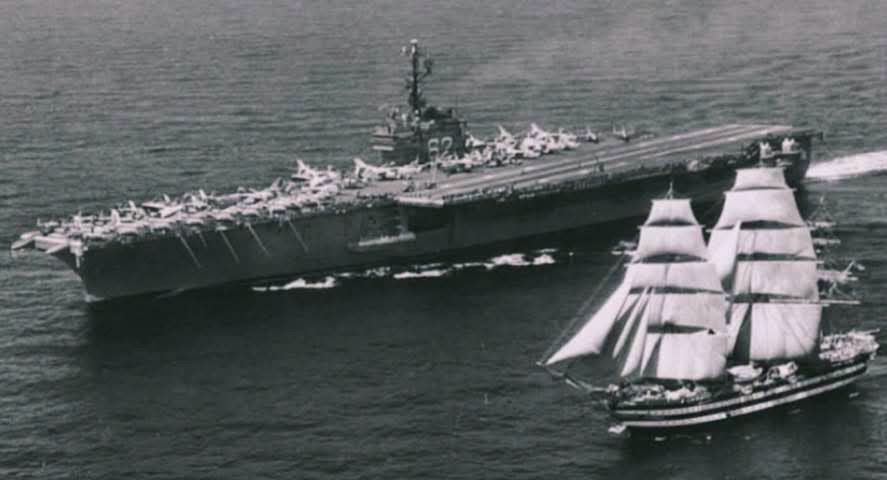
On 12 July 1962 the American supercarrier USS Independence was steaming through the Mediterranean with the Sixth Fleet when her lookouts spotted a three-masted sailing ship under full canvas, a sight that already belonged to another century. The carrier flashed a signal asking the stranger to identify herself. Back came the reply by light, "Training ship Amerigo Vespucci, Italian Navy." She was a tall ship launched at Castellammare di Stabia near Naples in 1931, her black hull banded with two white stripes in memory of the old gun decks, 26 canvas sails spread across masts more than fifty metres high. The Independence, eighty thousand tonnes of steel and aircraft, took her in and signalled a single line in return, "You are the most beautiful ship in the world."
The compliment outlived the carrier. The Independence was eventually scrapped, but the Vespucci is still sailing, the oldest ship in commission in the Italian Navy, and Italians have called her the most beautiful ship in the world ever since that afternoon. The story did not quite end there either. On 1 September 2022 another American carrier, the USS George H.W. Bush, crossed her path in the Adriatic and sent almost the same words across the water, telling the old ship she was still the most beautiful in the world, sixty years to the season after the first time. Few exchanges between warships are remembered with any fondness.
#drthehistories
Invented by the British in 1944, allied fighters used paper drop tanks of glue-soaked kraft paper to extend range. The lightweight tanks leaked after hours so crews filled them right before takeoff then dropped them after use saving metal and denying scrap to the enemy.🫡
Every year, I share this video of French caretakers who take sand from Omaha Beach in Normandy, and scrub them into the letters to give them the gold coloring.
They do this for all 9,386 US soldiers who died.
France also gave us this land as American soil. #MemorialDayWeekend
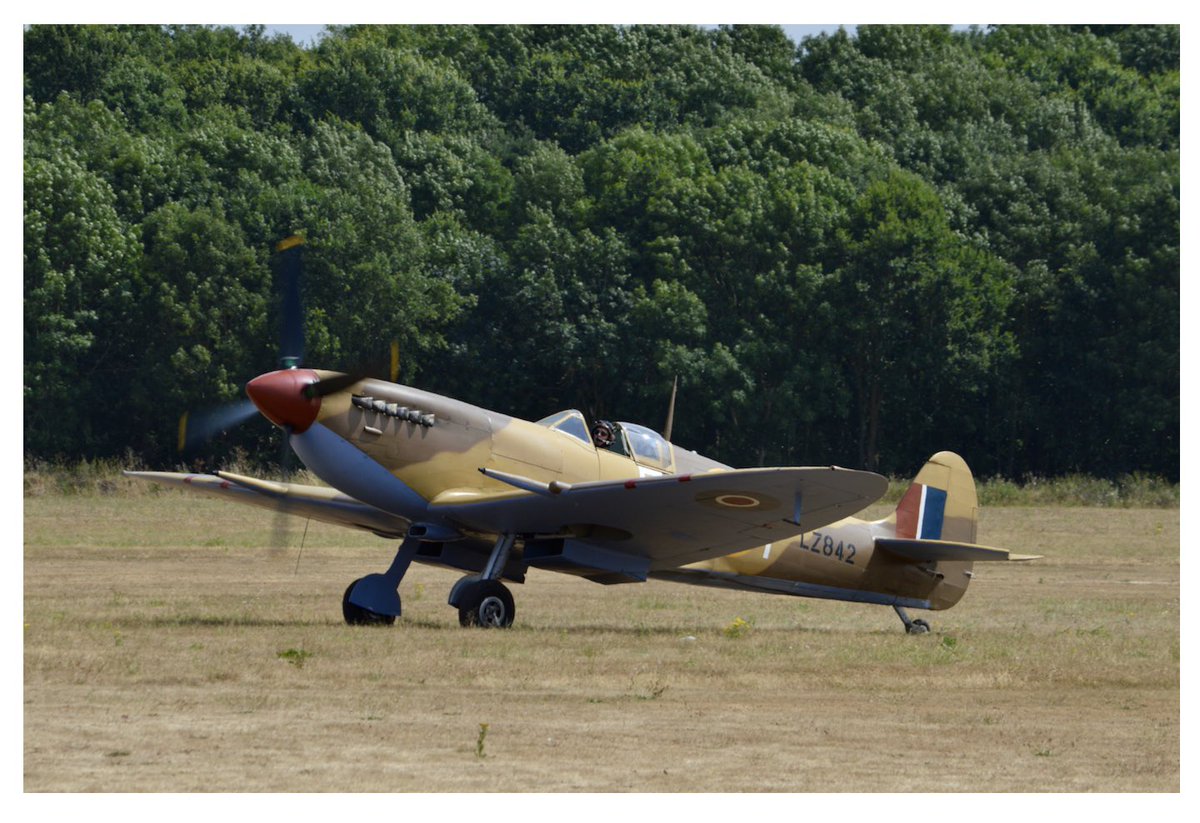
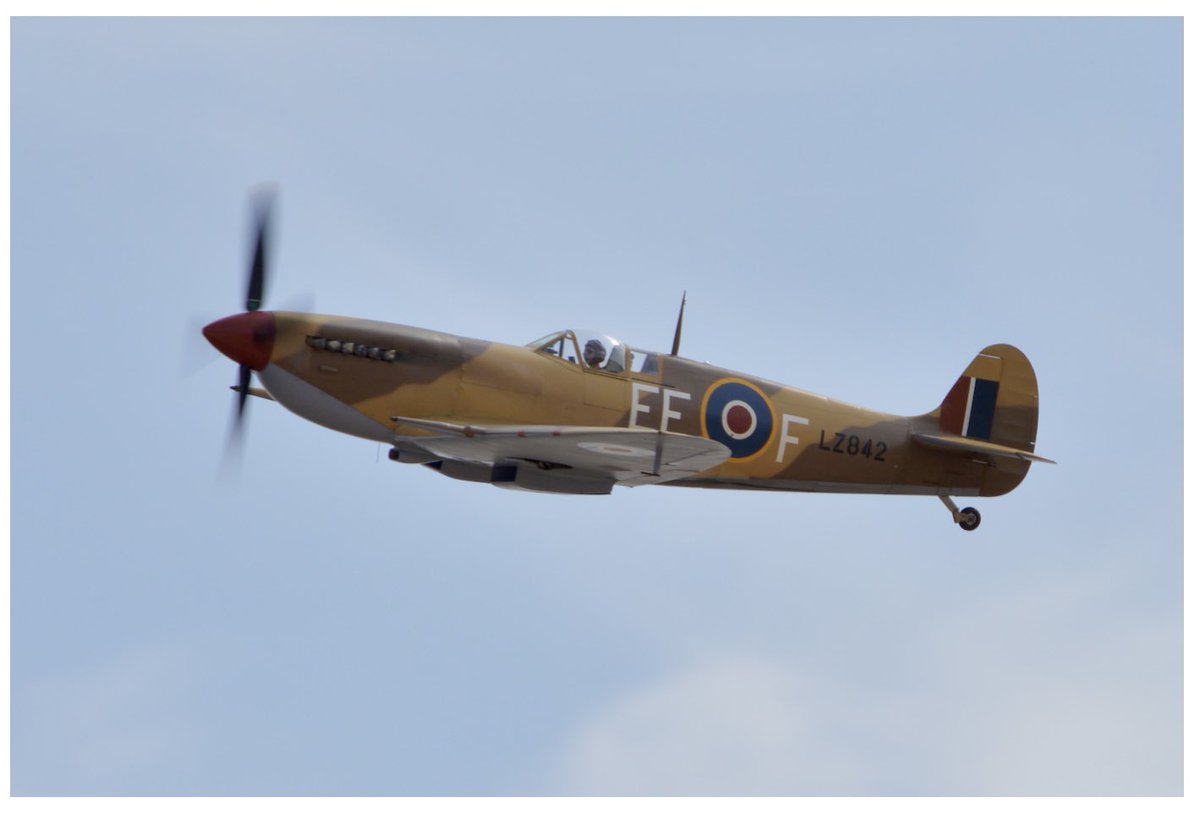
@stockotrader It’s always nice to see a Spitfire. And impressive to consider that the RR Merlin engine, developed in early 1930s, continues to provide reliable performance.
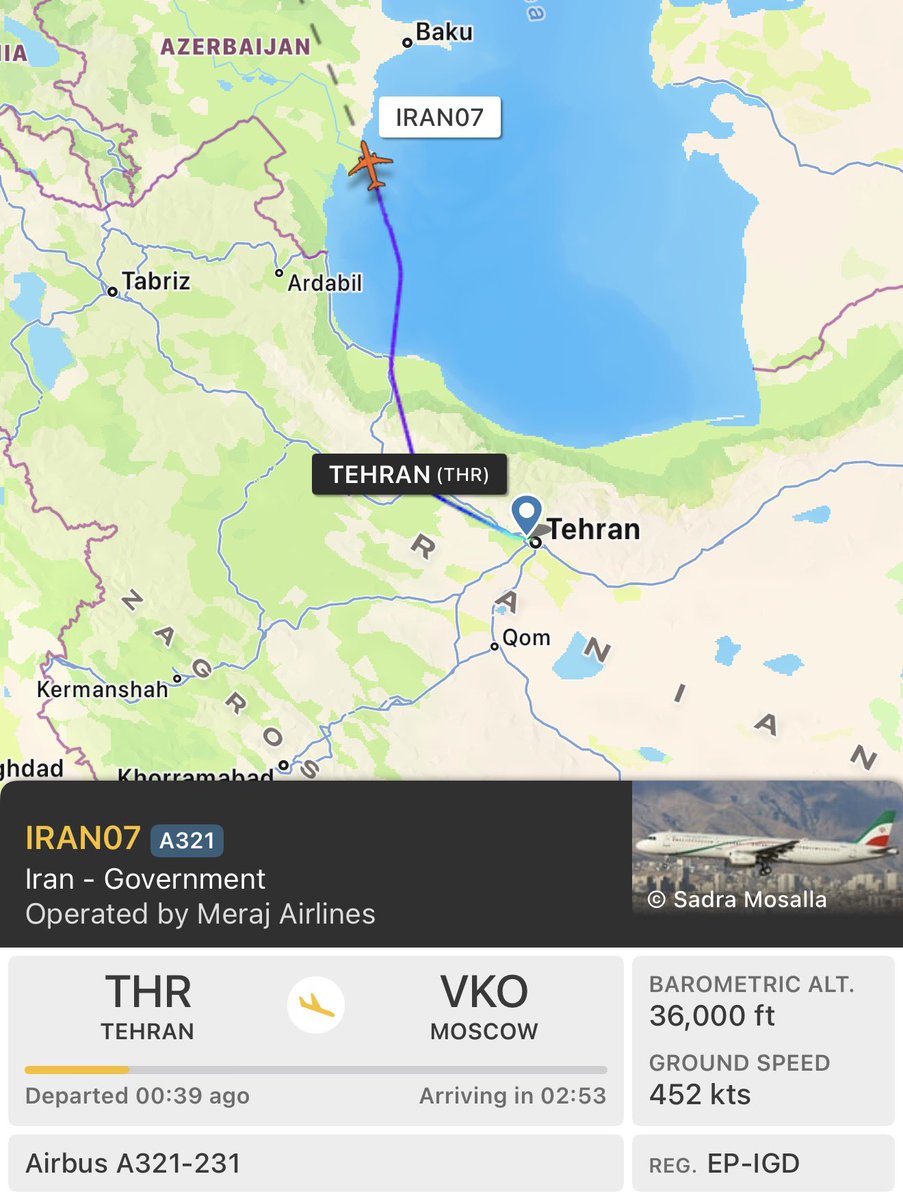
An Airbus A321-231 operated by Meraj Airlines and going by the callsign IRAN07, usually reserved for senior members of the Iranian Government, has departed Tehran within the last hour bound for Moscow, Russia.