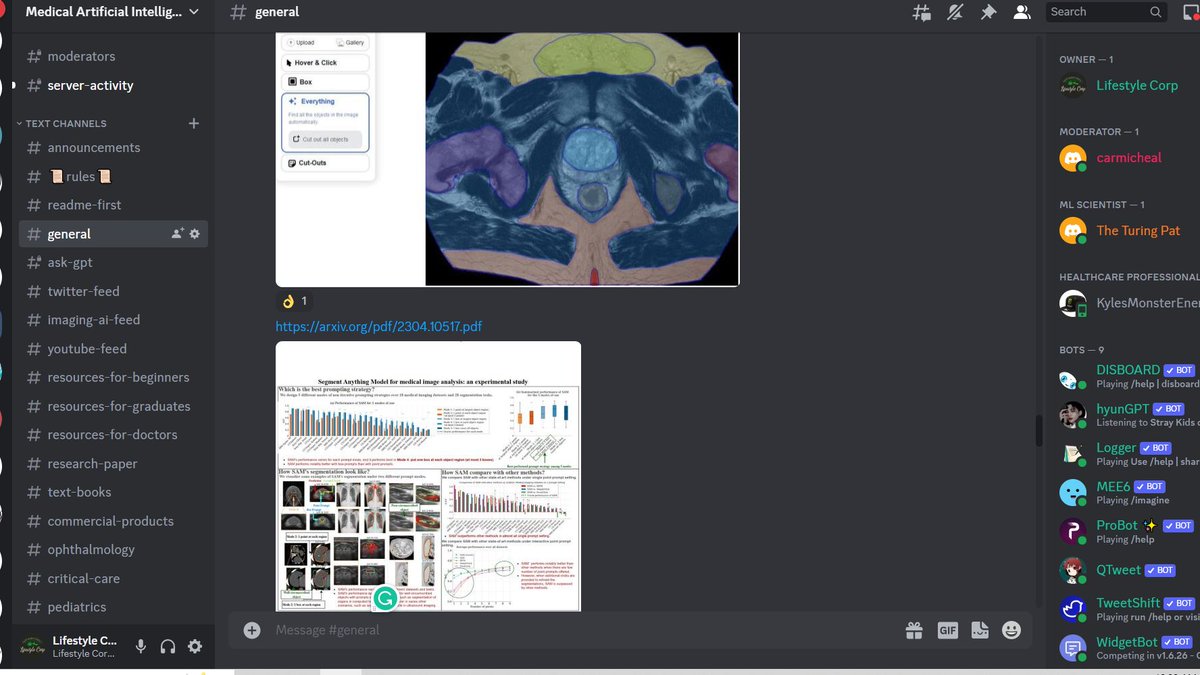
🧵 Thread: Introducing the "Medical Artificial Intelligence" Discord Server!
👋 Hey everyone! We're thrilled to announce the launch of our open-source medical AI community platform, housed on the "Medical Artificial Intelligence" Discord server. 🌐💻
DONT compete with mega corporation foundation model or chat UI wrappers
Compete in meta AI wrappers
when that is saturated
Compete in meta- meta AI wrappers
when that is saturated
Compete in meta-meta-meta AI wrappers
.
.
.
infinity
#AI#eacc
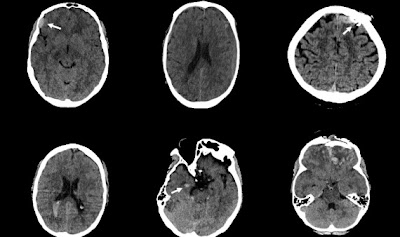
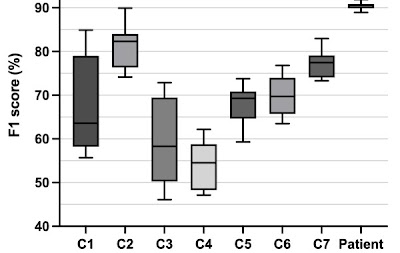
Vision Transformer-based Decision Support for Neurosurgical Intervention in Acute Traumatic Brain Injury: Automated Surgical Intervention Support Tool (ASIST-TBI) https://t.co/QA8sph97e9 @armaankm@cwitiw@UofTSurgery#TBI#trauma#DeepLearning
Towards Conversational Diagnostic AI
abs: https://t.co/baJefLLg0f
Another amazing paper from the Med-PaLM team at @GoogleDeepMind!
Introduces AIMIE, an LLM based AI system optimized for clinical history-taking and diagnostic dialogue. Trained on medical QA, summarization, and medical conversation dialogue datasets. A self-play (RLAIF) approach is used where AIMIE played the role of five agents: a vignette generator, simulated dialogue generators (patient, doctor, and moderator agents), and a self-play critic to provide feedback to the doctor agent. AIMIE uses a chain-of-reasoning process to provide informed and grounded responses to the patient.
Evaluation is done with an "Objective Structured Clinical Examination (OSCE)" which includes patient actors simulating real-life clinical scenarions. Performance is compared to primary care providers (PCPs), total of 149 scenarios were used. AI-based autoevaluation was also performed. The OCSE indicated AIMIE showed higher DDx accuracy than PCPs while AI evaluation showed AMIE matched PCPs’ efficiency in acquiring information. Additionally the patient actors rated the conversation quality of AIMIE higher than the PCPs.
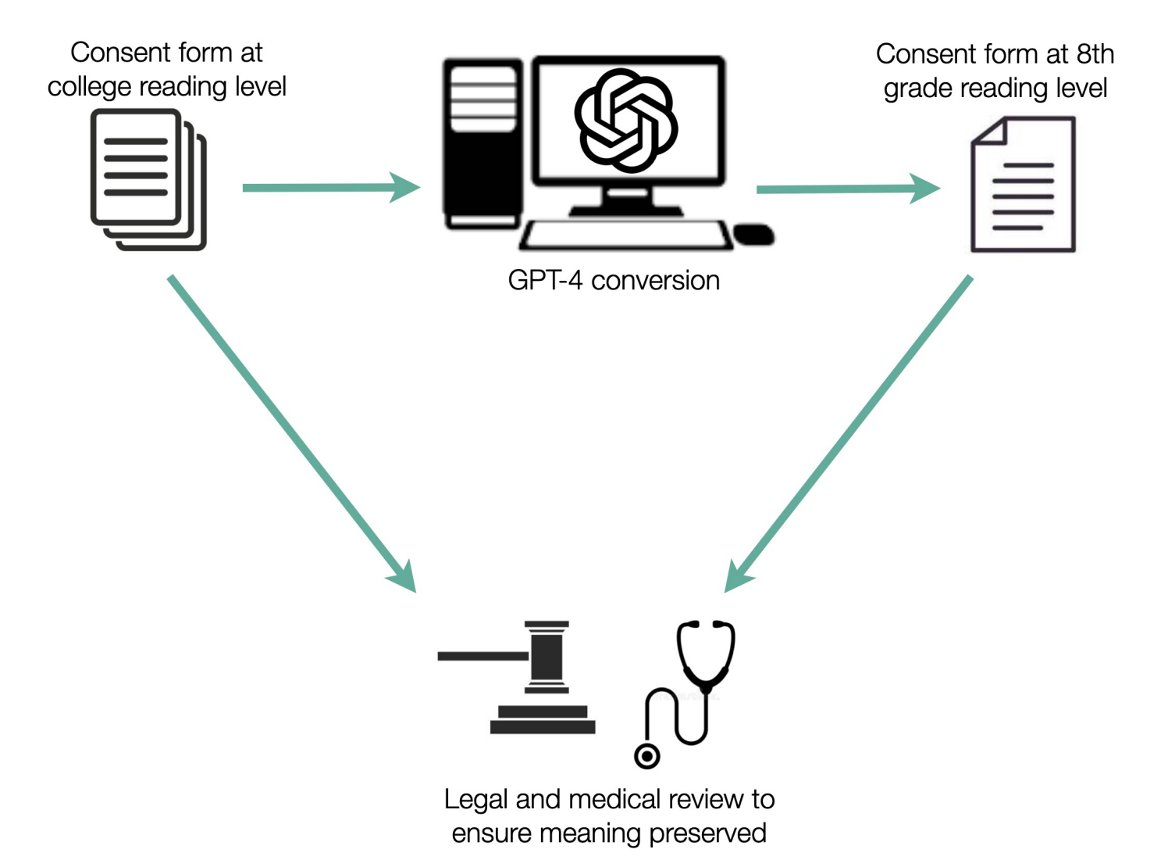
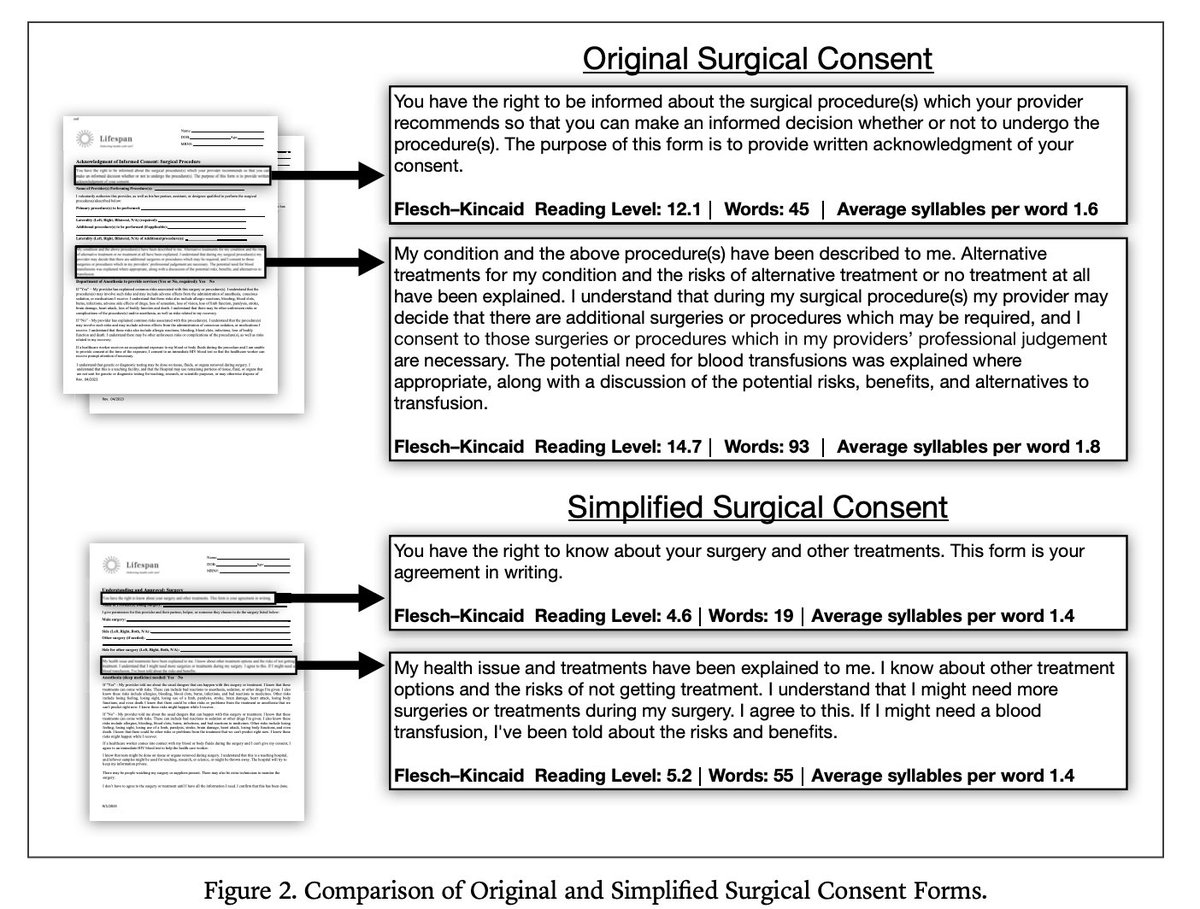
We used #GPT4 to greatly simplify medical consent forms for patients in new @NEJM_AI paper https://t.co/mSrgMFCAV3 Our #LLM simplified forms are now used in the largest health system in Rhode Island.
Medical documents like consent forms are often hard to understand--great use case for LLM. We had medical + legal experts review the simplified forms to ensure accuracy.
Great job led by @RohaidAliMD Fatima Mirza @oliverytang@IDavidConnolly and wonderful collaborators! 🚀
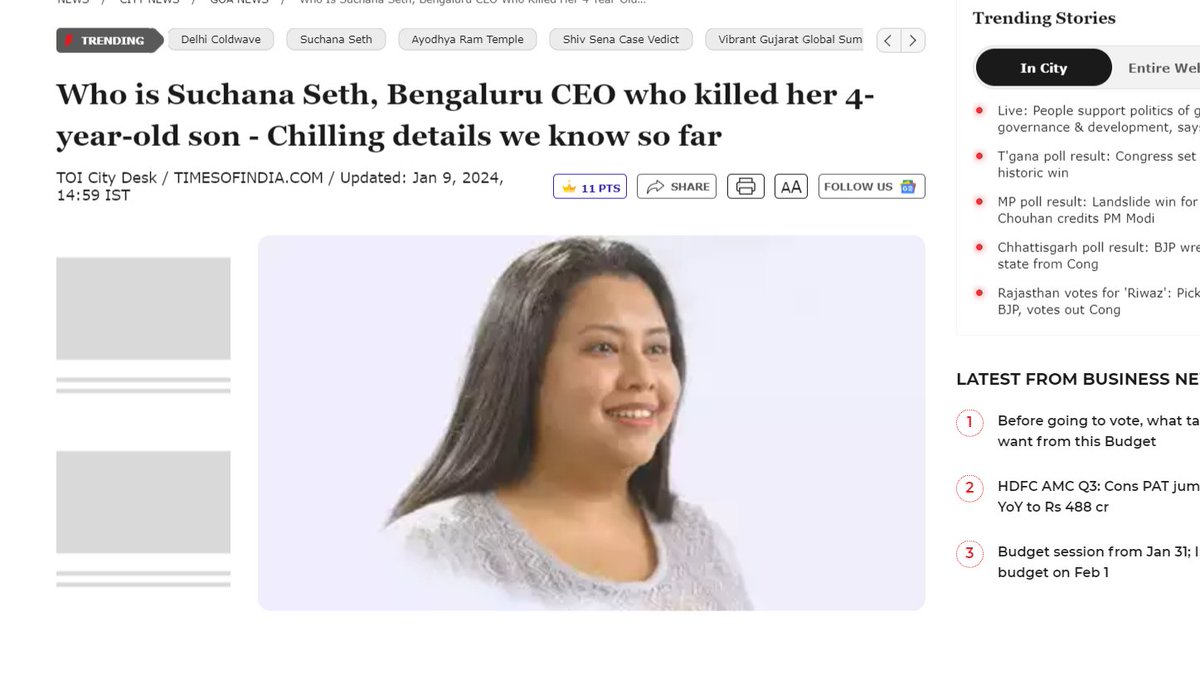
@beffjezos The CEO of AI safety from India (Mindful AI Lab) was caught murdering her 4 year old son
"Top 100 brilliant women in AI ethics"
Nobody is safe from AI safety
#AIsafety#eacc
@beffjezos The CEO of AI safety from India (Mindful AI Lab) was caught murdering her 4 year old son
"Top 100 brilliant women in AI ethics"
Nobody is safe from AI safety
#AIsafety#eacc
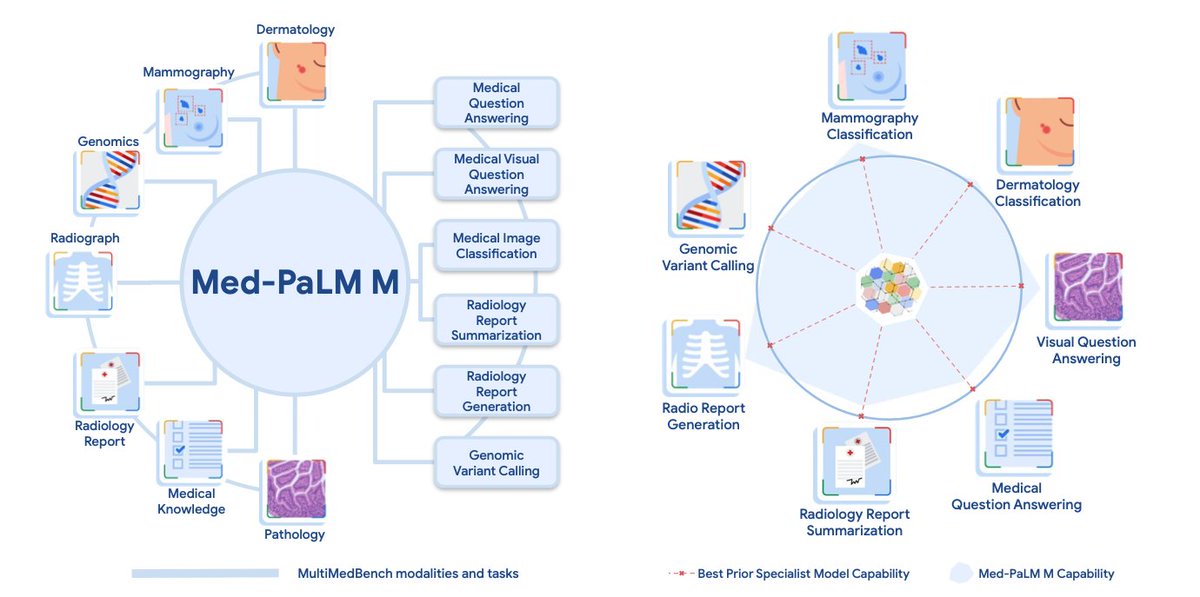
Existing AI models used in medicine has many problems including 1) single task 2) unable to incorporate diverse patients' data 3) output type constrained and 4) interpretability. A recent nice work by @m__dehghani and colleagues explored generalist AI to address these:https://t.co/bR5NIPxyiN
@FrenchMajesty Smartphones are AI device
its AI that's problematic not device
Boys and Girls are in
👉enforced pornification through tiktok-instagram AI algorithm with higher rate of social anxiety/depression
👉enforced gambling on lootbox social casino AI algorithm
LLM may or maynot fix it
Building talking toys for kids
vs
Actual products that solves problems
literally every AI device Product Market Fit is only good for helping the visually impaired or 24/7 surveillance
Why do all the new AI device websites focus on the tech instead of the use case?
I could care less if you have a 360 rotational eye camera - explain how will this improve my life?
We had very similar findings when we compared GPT-4 to Med-PaLM 2 on medical knowledge benchmarks. Med-PaLM had undergone extensive fine-tuning on medical data but GPT-4, with the right prompting strategy, still outperformed. Paper: https://t.co/fx2WwDyy45
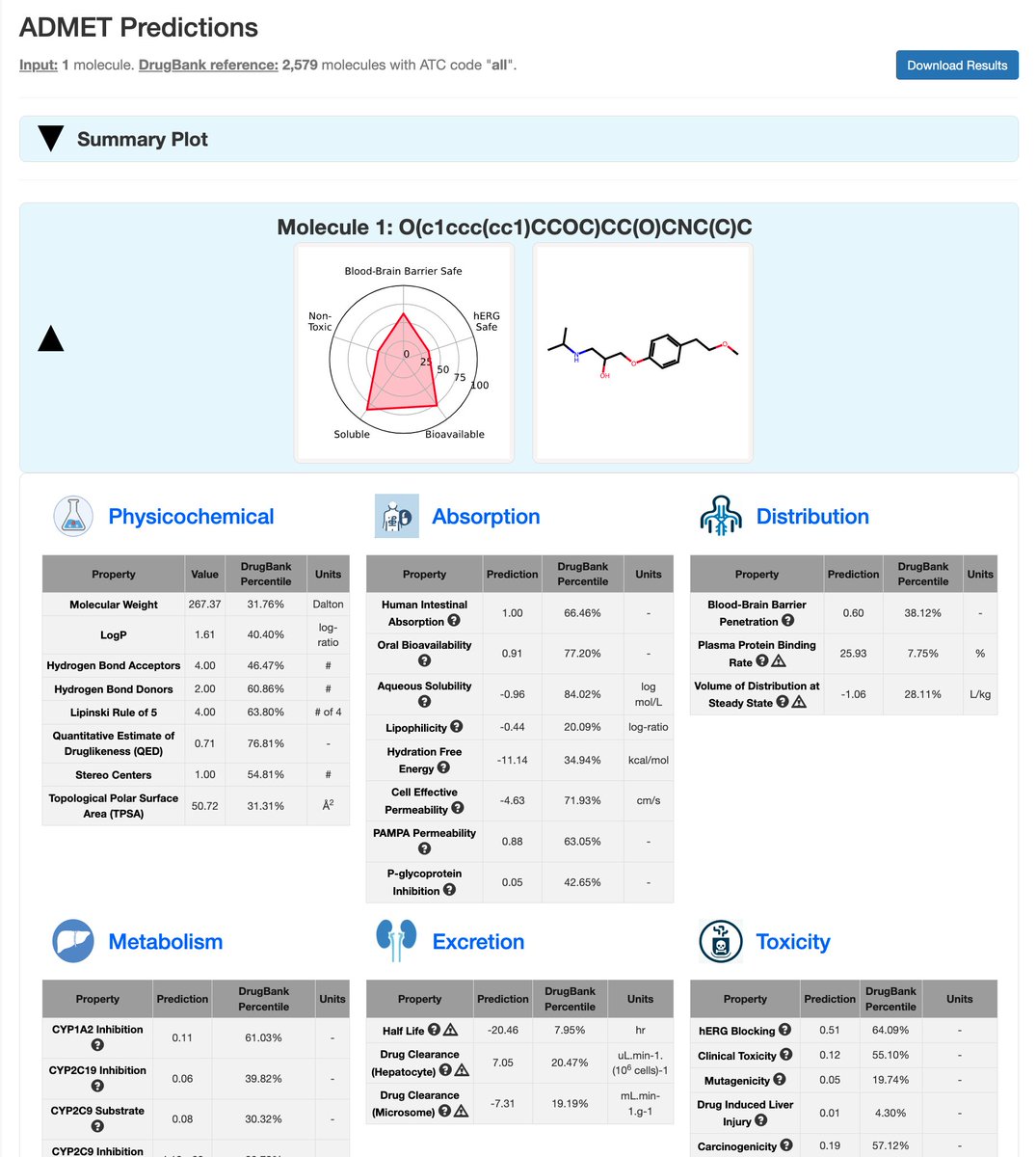
Excited to share ADMET-AI, our online #GNN platform for predicting small molecule toxicity, metabolism, absorption + other properties https://t.co/NLAP15TD0Y
Paper: https://t.co/evYutFXYsO
Code: https://t.co/oh3Jpi1hFR
Great job by @KyleWSwanson collaborating w/ @GreenstoneBio!
A reason we need beneficial AGI:
After five years of pain across many systems in her body (a broken foot from stepping off a curb, debilitating migraines, fatigue, joint pain and instability, etc), my wife was recently diagnosed with a genetic disorder called Hypermobile Ehlers-Danlos Syndrome (hEDS).
Because the medical system is designed for individual specialties while hEDS affects every system in her body (orthopedics, cardiology, neurology, gastroenterology, dermatology, etc), we spent five years seeing more doctors and specialists than in her whole life prior. Most doctors would only focus on what was relevant to their own specialty. We were lucky that her allergist (!!) put together the pieces after observing and hearing her full set of symptoms and issues.
As human medicine has progressed, it seems like we increase doctors’ depth at the expense of breadth. We need better tools to be able to deliver depth and breadth simultaneously to patients. This is one promise of AGI if built right — reliable, individualized, affordable healthcare in your pocket, like a panel of today’s top doctors across every speciality working together in concert to keep you healthy (and without you needing to fax forms between them).
There’s still a long way to go on the technology and on learning how to deploy it beneficially along with appropriate professional human oversight in high-stakes areas like medicine, but the promise is getting increasingly clear. Thoughtfully approached by technology developers, healthcare providers, governments, and society, there’s hope for much better care for every member of all of our families (including our non-human furry ones).