BS with honors in Genetics (UC Berkeley)
MS in Genetics and Development (Columbia U)
M Phil and PhD in Biology (Columbia U)
Postdoc in Neurobiology (Harvard)
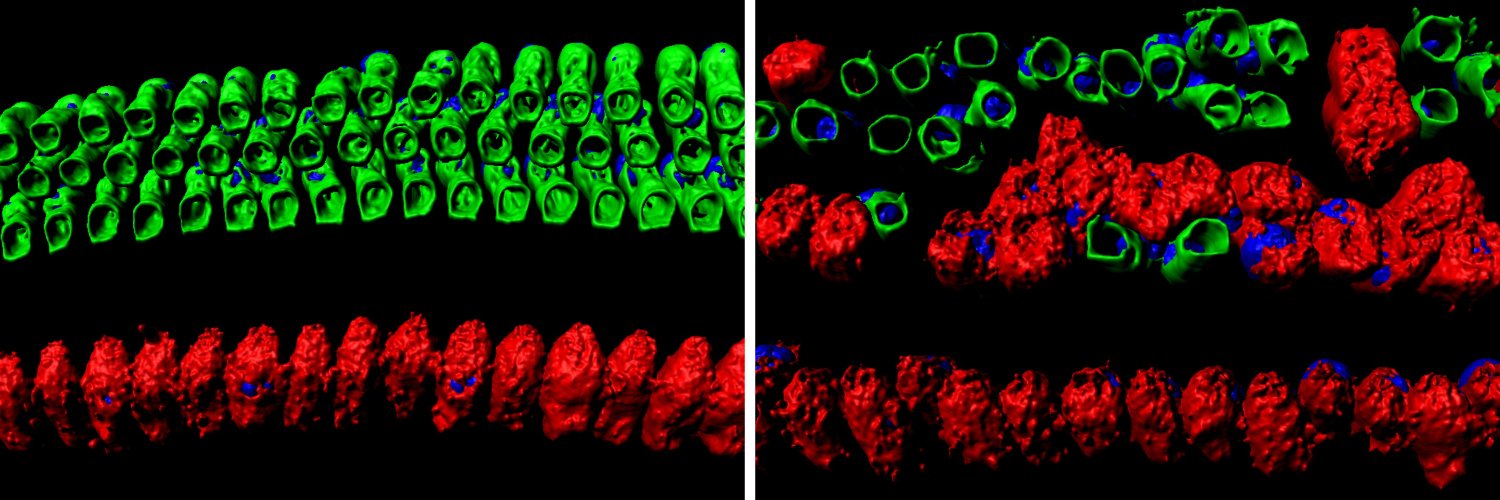
Read our latest #research on #HairCellGeneration, titled "Tbx2 is a master regulator of inner versus outer hair cell differentiation". Published with @SpringerNature in @Nature, read here: https://t.co/RdBLVE8kmN
Here we demonstrate that the different expression of many relevant genes in cochlear inner or outer hair cells can be due to their promoters being more “open” or “closed”. Hopefully used for #gene therapy of #deafness. https://t.co/kAURMge1Z2
Check out our recent interview with Dr. Jaime García-Añoveros of Northwestern University. He has been investigating auditory nociception (pain in response to sound). He has published trail-blazing research exploring type II afferent nerve fibers: https://t.co/zFadWCHLtw
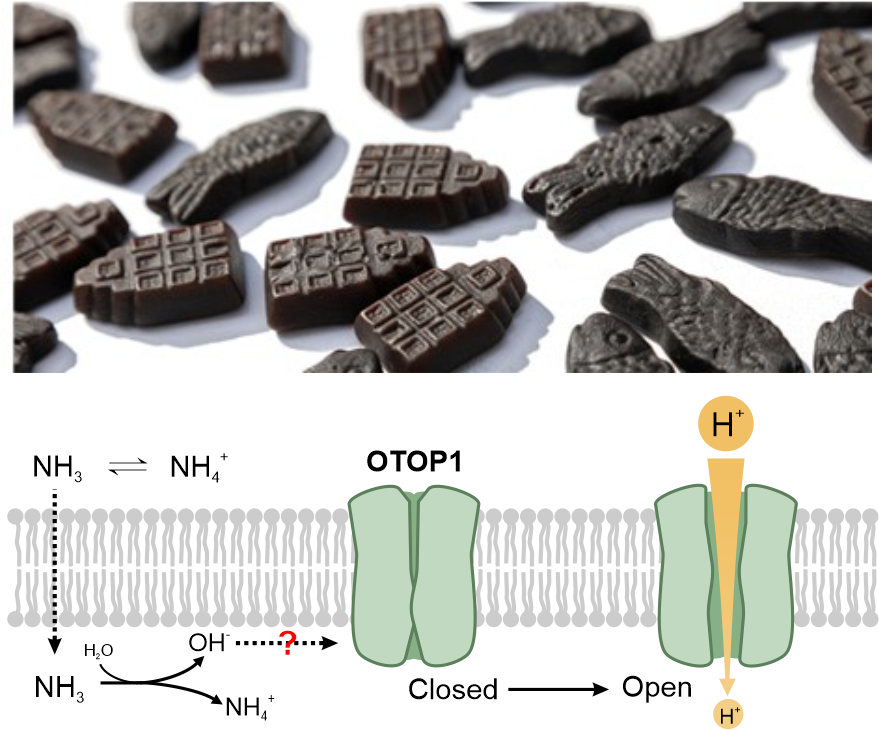
OTOP1 is not just a sour receptor, it also mediates ammonium chloride taste. Never tasted NH4Cl? It’s in salty licorice – beloved in Scandinavian countries. Our paper in @NatureComms goes from channel biophysics to behavior. https://t.co/BiuDJZmzqM.
Our paper is out @ScienceAdvances! Check out how a single line of inner hair cells within the mammalian cochlea🐚 forms. Congrats to the fantastic @roecon91 @ShaharTaiber & Olga Loza. See the thread below. https://t.co/DvADHGvYCi
Finally, deletion of PLD3 from basal forebrain (BF) normalized activity patterns in cortical neurons receiving inputs from BF cholinergic axons. This suggests that improving electrical conduction in BF axons by reducing spheroids can improve cortical neuron network function. 7/7
Neuronal overexpression of PLD3 leads to accumulation of aberrant endolysosomes, spheroid enlargement and worsened AP blockades. In contrast, CRISPR/Cas9 deletion of neuronal PLD3 reduced spheroid size and normalized axonal conduction, without any effect on amyloid plaques. 6/7
Accumulation of aberrant endolysosomes in axons drives spheroid enlargement. This is influenced by levels of Phospholipase D3 (PLD3), a lysosomal protein enriched in axonal spheroids that is also a potential genetic AD risk factor, although this has generated some dispute. 5/7
Specifically, we show individual amyloid plaques trigger spheroids in 100s of axons in their vicinity. Spheroids block action potential (AP) propagation. The degree of AP blockade is dependent on spheroid size as these structures act as capacitors/electrical current sinks. 4/7
Our study shows that targeting neuronal endolysosomal biogenesis in AD mice can reverse spheroid-induced electrophysiological defects and normalize neural circuit function, suggesting a novel strategy to ameliorate network dysfunction in AD, independent of amyloid removal. 3/7
We investigated Alzheimer’s disease amyloid plaque-associated axonal spheroids (“dystrophic neurites”) using in vivo optical electrophysiology (calcium and voltage imaging), structural imaging in single axons, computational modeling, and molecular manipulations. 2/7