Knobloch Associate Professor of Conservation Economics, Haub School of Environment and Natural Resources, University of Wyoming | Siberian Husky Enthusiast
Environmental programs could rely more on formal experimentation, argues a new #SciencePolicyForum, "which would leverage the power of science while maintaining a 'learning by doing' approach."
Learn more: https://t.co/LflonJ2WtU
Environmental organizations create or make changes to 1000s of programs each year, but rarely do they deliberately design these innovations to learn about impacts or to test our implicit models of how the world works. We can do better. https://t.co/kBA9IJVSri
.@clairecm @sarahkliff @larrybuch of @nytimes were amazing and committed to getting every single detail of the data right, which resulted in this careful and thoughtful article about our paper. Thank you! https://t.co/xqsu1H6yH1
Nature provides people with services now and opportunities for the future. That’s why we are putting it on the national balance sheet.
Today, @WHOSTP, @OMBPress, and @CommerceGov released a Strategy for Natural Capital Accounting. https://t.co/8AbTYuteQ8
Sharing our new piece in @STOTEN_journal that shows strong evidence #NC hog lagoons near private wells are a likely source of hot weather bacteria spikes in drinking water. Sampling efforts should target accordingly.
@UWyonews@ECUResearch#epa#water
https://t.co/dh2VLVyXh2
Damage from hurricanes includes more than just physical destruction. 🌀 These storms also negatively impact human health and even birth outcomes.
Listen as @Jake_Hochard (@UWyonews) discusses this surprising research result 🎧 https://t.co/RcX3gayyrm
Today in effects you wouldn't expect from climate change, a study finds that prenatal exposure to Hurricane Irene led to statistically significant decreases in birthweight, possibly because of interruptions to medical care: https://t.co/DSFTn3WDq5
Lower birth weights are associated with lifelong negative outcomes, including lower employment and education rates.
On this episode of Resources Radio, @Jake_Hochard (@UWyonews) explores how hurricanes are linked to these effects. https://t.co/RcX3gayyrm
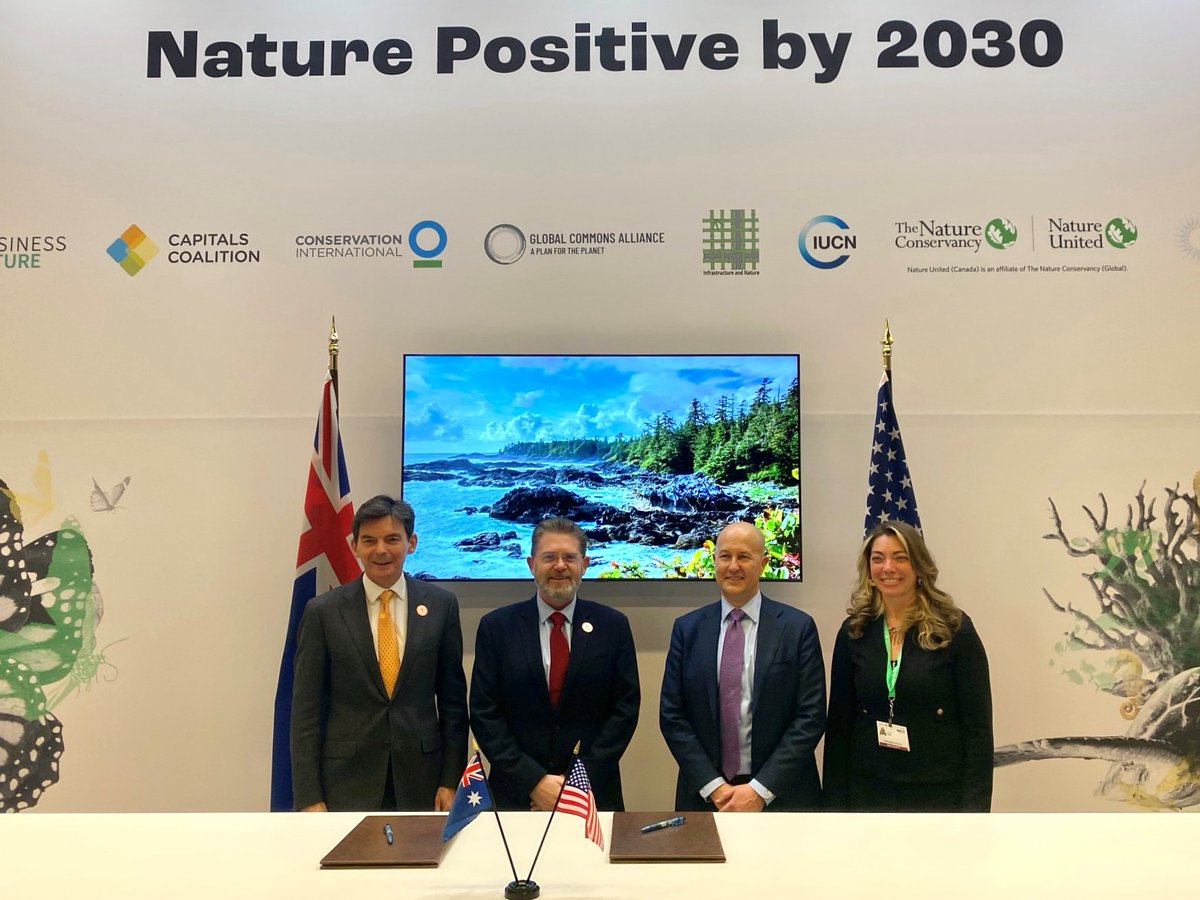
Yesterday at #COP15, @WHOSTP@CommerceGov signed a joint statement with Australia @DCCEEW advancing international collaboration to put nature on our national balance sheets – helping us fight #climatechange and nature loss & advance economic prosperity🌿
https://t.co/EuRCiCiAQf
How do vulnerable populations prepare for an approaching hurricane?
We show in @NatureComms that prenatal care gets disrupted and forecast uncertainty drives impaired birth outcomes far beyond where the storm's physical impacts end up being felt.
https://t.co/fmXQZaTEyz
The U.S. is rich in nature & livelihoods that depend on it – it’s time to put the economic value of nature on the national balance sheet. https://t.co/VxmRVtaddb
Check out this new #JEEM paper on the role of resource discoveries on short- and long-run population growth by Kevin Berry (@KevinBerryEcon), Alexander James, Brock Smith, and Brett Watson (@brettjwatson).
Read more here 👇:
https://t.co/3tmT3Ukvb4
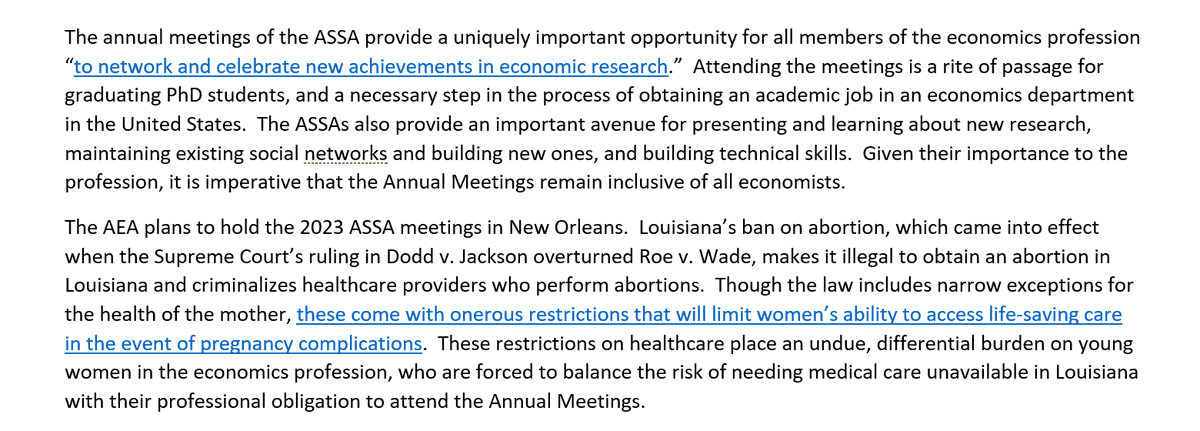
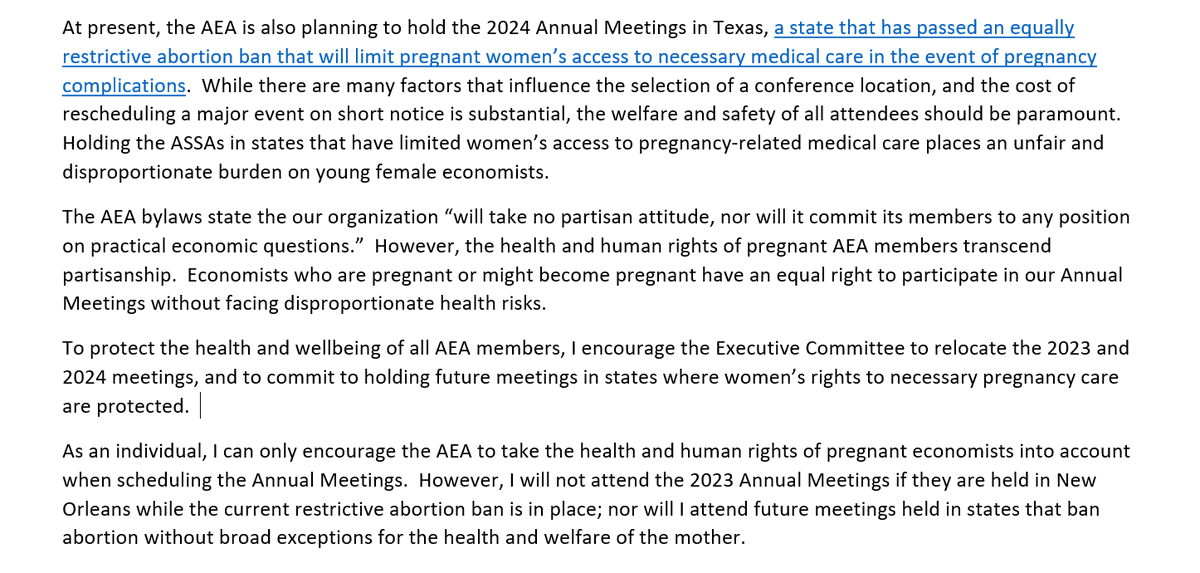
Open letter to AEA Executive Committee regarding the locations of the next ASSA meetings (scheduled for New Orleans & San Antonio).
Letter: https://t.co/S99GefaF8U
Joint w/ @econhist_allday @femonomics@sndurlauf@OwenOzier @eeshani_kandpal
Sign here: https://t.co/NW1KrhgLjC
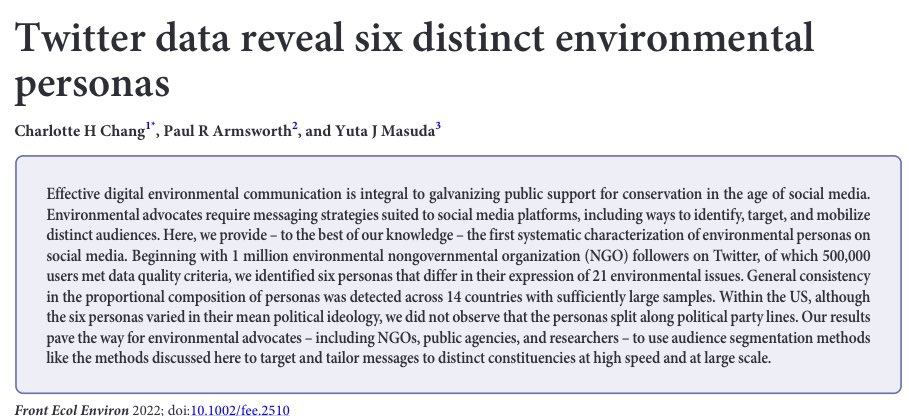
Excited to share a cutting edge project that examines and identifies “personas”/groups of Twitter users that are environmentally minded and follow eNGOs etc. We found six types of personas from data on >500k users. https://t.co/qERXREG43s
Does gender equality lead to more pro social outcomes? An important q for procedural equity in commons mgmt. Checkout our new paper in @WorldDevJournal where we conducted a field experiment by randomizing participants to single and mixed gender groups.