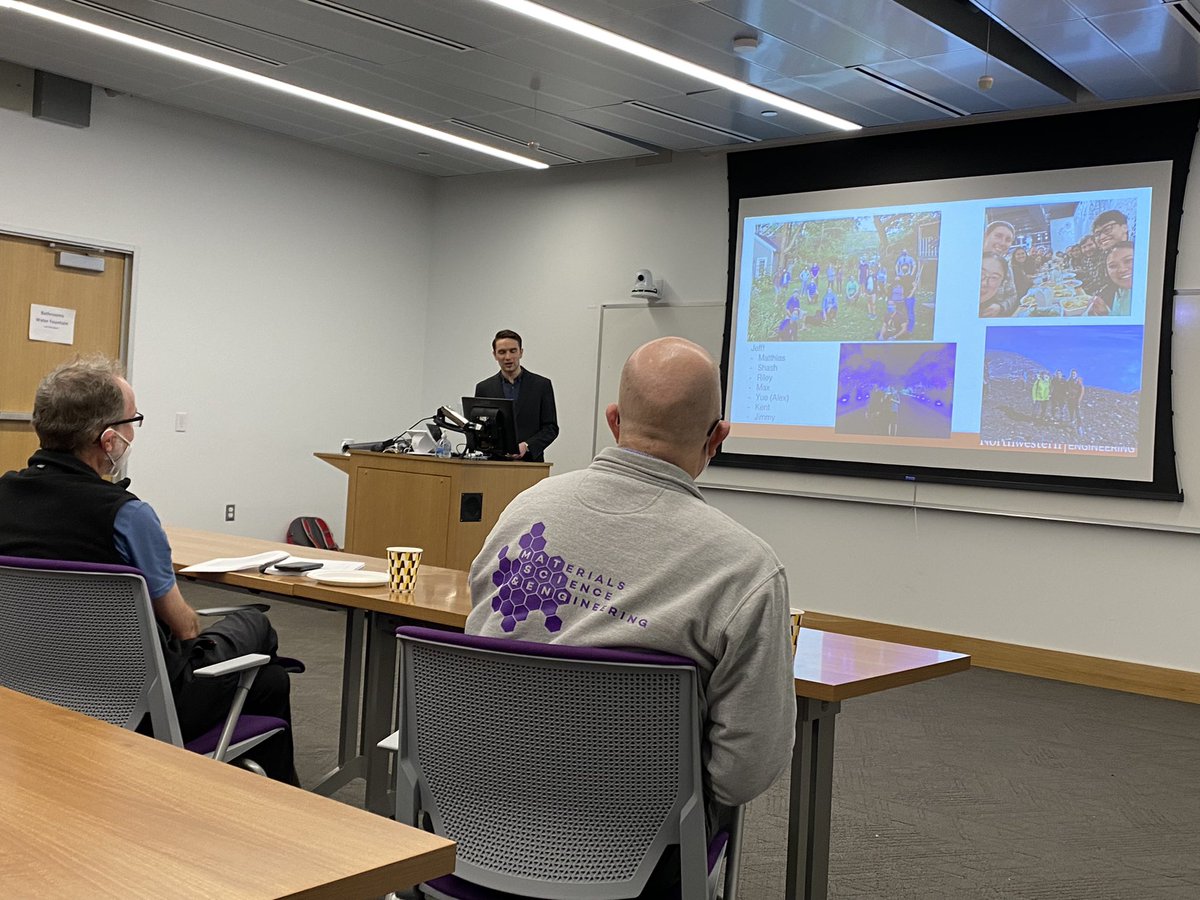
Brilliant PhD defense from @JamesMale27. A masterclass on doping complex semiconductors to obtain targeted electronic and mechanical properties. Congratulations Dr. Male!
Big congrats to Dr. Male! @JamesMale27 I can see a nice pic at the top of Mt. Fuji! Such a fun time.
Btw today I was wearing the same matsci pullover as Prof. Wolverton do😆
Dopant solubility can often be underestimated despite the observation of impurity phases.
Our recent paper provides guidelines to achieve the true maximum solubility in compounds.
@ShashwatAnand16@ChrisWolverton1
https://t.co/FFDYttyxAB
@BeyondNerva TAGS stands for tellurium, antimony, germanium, silver. It's a bit complicated, and you can mix those elements to get pretty different compositions. But one favorite is "TAGS-85", which is (GeTe)85(AgSbTe2)15
@BeyondNerva Yeah pretty much!
The MMRTG actually does utilize this segmented/mixed TC design. The n-type leg is PbTe, and the p-type leg is a mix of TAGS and a PbTe-SnTe alloy
@BeyondNerva Unfortunately, SiGe doesn't segment well with other materials, partially due to something called the thermoelectric compatibility factor.
Not certain what portion of this is responsible for the discontinued use for SiGe in RTGs, but this is one downside of the material!
@BeyondNerva It's better if each TE leg has two (or more) "stacked" materials. The section nearest the device hot side could be SiGe and the sections near the cold side could be a better mid/cold temp material (PbTe, Bi2Te3, etc). So you get each segment ideally operating at its ideal temp...
@BeyondNerva One big downside of SiGe: it doesn't segment well with other good thermoelectric materials, making it harder to optimize efficiency across the entire temperature range on the TE legs
Not sure how I missed this blog through my entire PhD on thermoelectric materials: https://t.co/xLT2Ckrr1T
Kudos to @BeyondNerva for this excellent information source
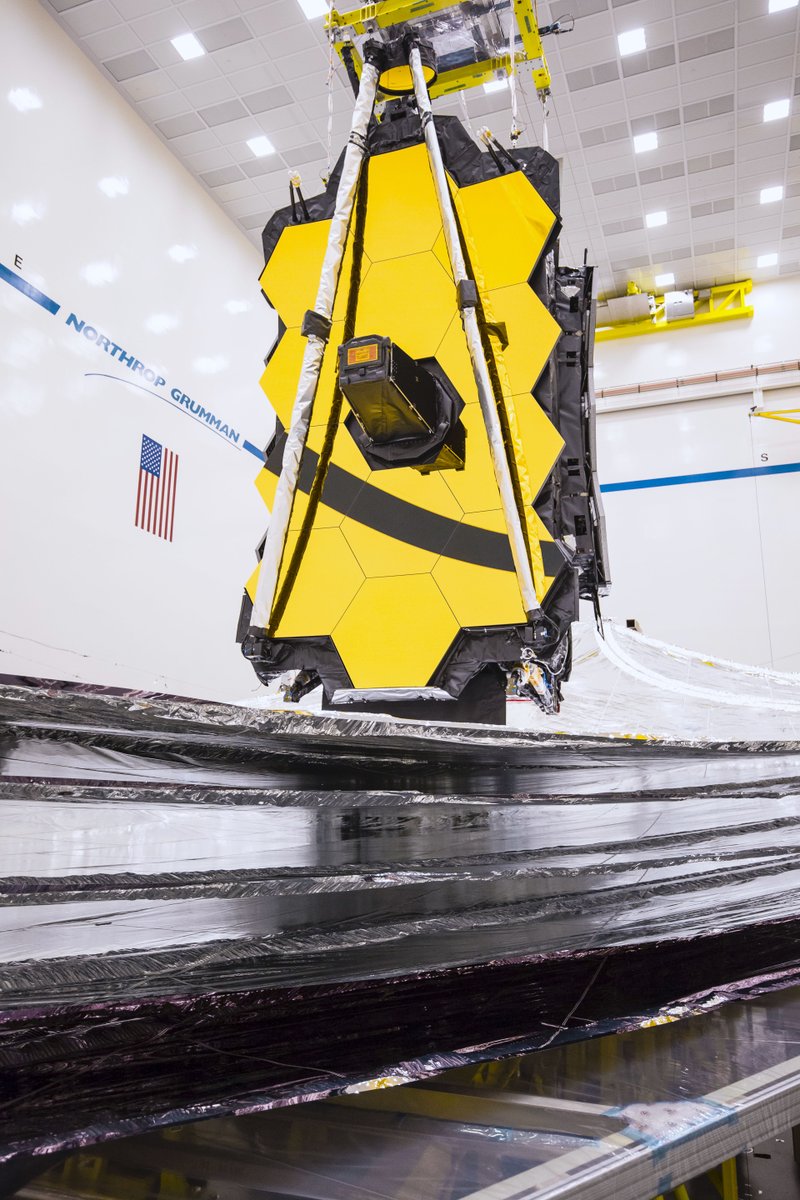
This is it: we’ve just wrapped up one of the most challenging steps of our journey to #UnfoldTheUniverse.
With all five layers of sunshield tensioning complete, about 75% of our 344 single-point failures have been retired!