요즘 하이퍼스케일러 주식 떨어지는 거 보면서 신용 위험 커진다고 난리 나잖아.
개빈 베이커가 어제 올린 글 봤는데,
시장이 완전 과하게 반응하고 있다고 하더라.
내가 읽어본 거 쉽게 정리해서 알려줄게.
일단 배경부터 말하면, 마이크로소프트, 구글, 아마존, 메타 이런 큰 클라우드 회사들(하이퍼스케일러)이 AI 데이터센터에 돈을 너무 많이 써서 빚이 늘어날 거라는 걱정이 커졌어.
그래서 신용 스프레드가 확 벌어지고 주가도 빠진 거지.
그런데 베이커가 제일 강조하는 포인트가 이거야.
GPU 임대 가격이 지금 완전 이상하게 형성돼 있대.
장기 계약으로 빌리는 가격이랑,
지금 당장 스팟으로 빌리는 가격이 최소 2배 이상 차이가 난다고.
쉽게 말해서 계약으로 빌리면 GPU 하나당 한 달에 100만 원인데,
스팟으로 빌리면 200만 원 넘게 나온다는 거야.
그래서 지금 하이퍼스케일러들은 싸게 빌려주고 있어서 사실 돈을 덜 벌고 있는 상태야.
반대로 작년에 싸게 계약한 고객들은 지금 엄청 이득 보고 있고.
이게 핵심이야.
계약이 만기되면 어떻게 되냐면,
당연히 가격을 스팟 수준으로 확 올리게 되겠지.
그러면 매출이랑 실제로 들어오는 현금 흐름이 확 늘어날 거라고 봐.
베이커 계산으로는 2026년 1분기에 현금 흐름 증가율이 31% 정도였는데,
2분기에 벌써 50%까지 뛸 거래.
그리고 하반기에도 계속 가속될 가능성이 높다고 하더라.
시장 분석가들은 3분기부터 둔화될 거라고 예측하는데,
베이커는 그 예측이 틀렸다고 보고 있어.
숫자로 보면 더 명확해.
2028년까지 하이퍼스케일러랑 신생 클라우드들이 데이터센터에 25~35기가와트 정도를 추가할 걸로 예상하거든.
기가와트당 대략 600억 달러 든다고 치면 총 1.5조에서 2.2조 달러가 필요해.
지금 예상되는 이 회사들 현금 흐름은 1.3조~1.4조 달러 수준이라서 부족한 돈이 천억에서 칠천억 달러 정도 나오는데,
가격이 재조정되면 현금 흐름이 크게 상향 수정될 거라서 이 차이가 거의 사라진다는 거지.
설령 부족한 부분을 빚으로 메운다 해도 EBITDA의 1배 이하 수준이라 신용에 큰 타격이 안 간다고 봐.
차트들도 같이 올렸는데,
신용 스프레드가 최근 올라간 건 맞지만,
실제 부채비율이랑 이자 감당 능력은 다른 섹터보다 훨씬 좋아.
현금 흐름 성장 차트 보면 2분기에 확 튀어 오르는 모양이고,
BofA 차트에서 하이퍼스케일러 현금 흐름이 줄고 반도체 쪽으로 돈이 이동하는 그림이 나오긴 하는데,
오픈AI나 앤트로픽 같은 프론티어 랩까지 넣으면 다시 올라갈 가능성이 높다고 주석 달아놨어.
결론적으로 베이커는 신용 스프레드 벌어진 건 과도한 반응이고,
CDS 시장은 조작하기 쉬워서 신호로 믿기 어렵다고 해.
진짜 위험은 전력을 제때 공급하고 GPU를 다 켜는 게 기술적으로 어렵다는 점인데,
이것도 점점 나아지고 있다고 보더라고.
한마디로 정리하면,
GPU 스팟 가격이 계약보다 훨씬 비싸니까 계약 갱신되면 하이퍼스케일러들이 돈을 확 벌게 되고,
AI 투자 자금을 자체 현금으로 충분히 감당할 수 있다.
시장이 너무 겁먹고 있다는 얘기야.
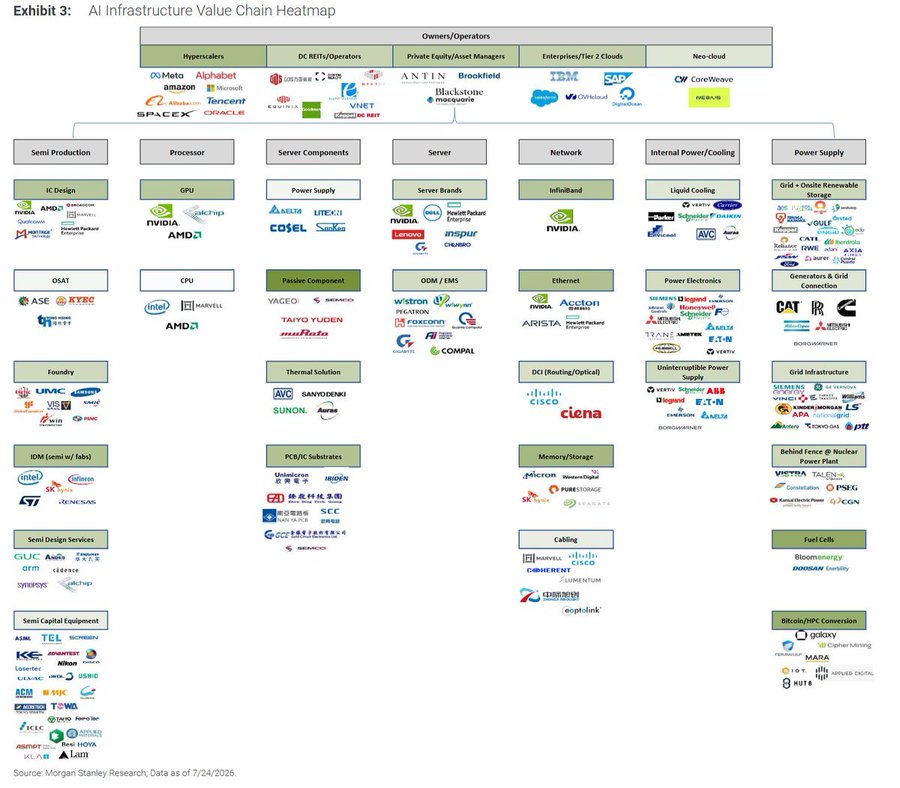
Morgan Stanley just mapped out the entire AI infrastructure supply chain, and it reveals who actually gets paid at every layer of the trillion dollar buildout (Save this).
This heatmap breaks the AI infrastructure value chain into two dimensions those who owns and operates the data centers at the top and what physical and technical components get built underneath to make those data centers function.
At the top sit the owners/operators, the hyperscalers like Meta, Alphabet, Amazon and Microsoft, alongside data center REITs, private equity giants like Blackstone and Brookfield, enterprises and neoclouds including CoreWeave and Nebius.
These are the companies writing the massive capex checks that fund everything below them.
Below that sits the actual build out, split into seven layers, semi production, processors, server components, servers, network, internal power/cooling and power supply.
Semiconductor production is dominated by names your audience already knows well, Nvidia and AMD for GPUs, TSMC adjacent foundries, ASML and Applied Materials for capital equipment, and Micron and SK Hynix under memory/storage.
But the less obvious money is in the physical infrastructure layers most retail investors never look at.
Server components include passive parts from Yageo and Murata, thermal solutions from Sanyo Denki, and PCB substrates from companies like Unimicron.
Network infrastructure includes InfiniBand and Ethernet gear from Nvidia and Arista, plus optical/DCI routing from Cisco and Ciena.
Internal power and cooling is arguably the most underappreciated category here.
It includes liquid cooling specialists like Vertiv and CoolIT, power electronics from Siemens and Eaton, and uninterruptible power supply makers like ABB and Legrand, all companies solving the literal heat and electricity problem created by cramming more GPUs into less space.
So who benefits from all of this?
Everyone in every box benefits in some way but the real insight is that value doesn't concentrate at just the GPU layer anymore.
The hyperscalers at the top are distributing capex across seven distinct physical layers which means the picks and shovels opportunity set has expanded well beyond Nvidia into cooling, grid infrastructure, and power generation.
Milk Road Pro is tracking each one of these layers, come join us for just a dollar using the link below!
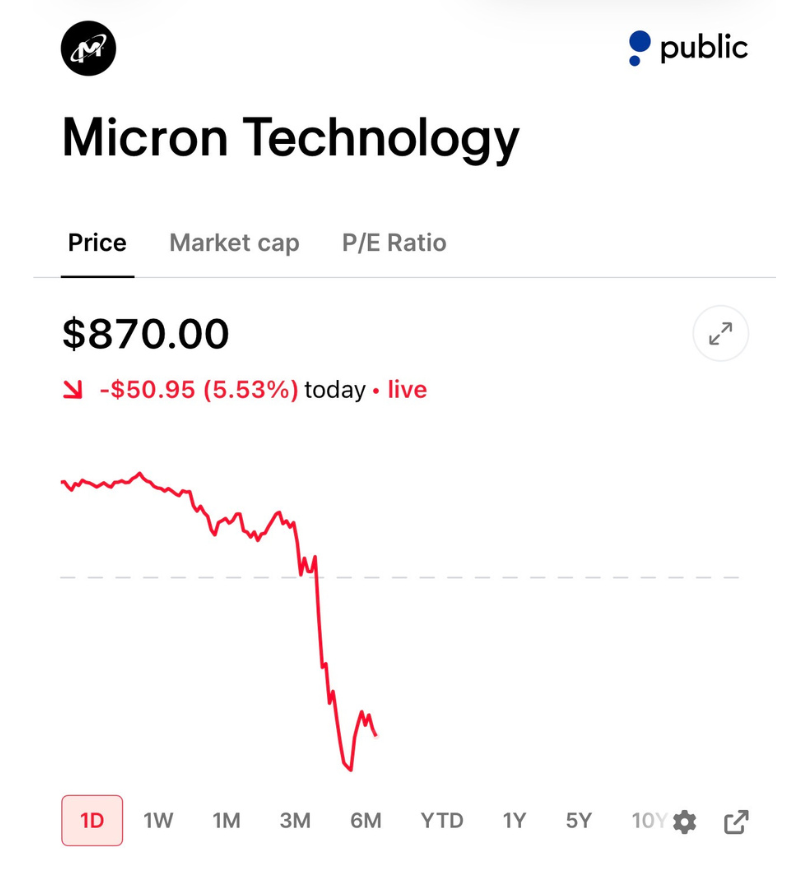
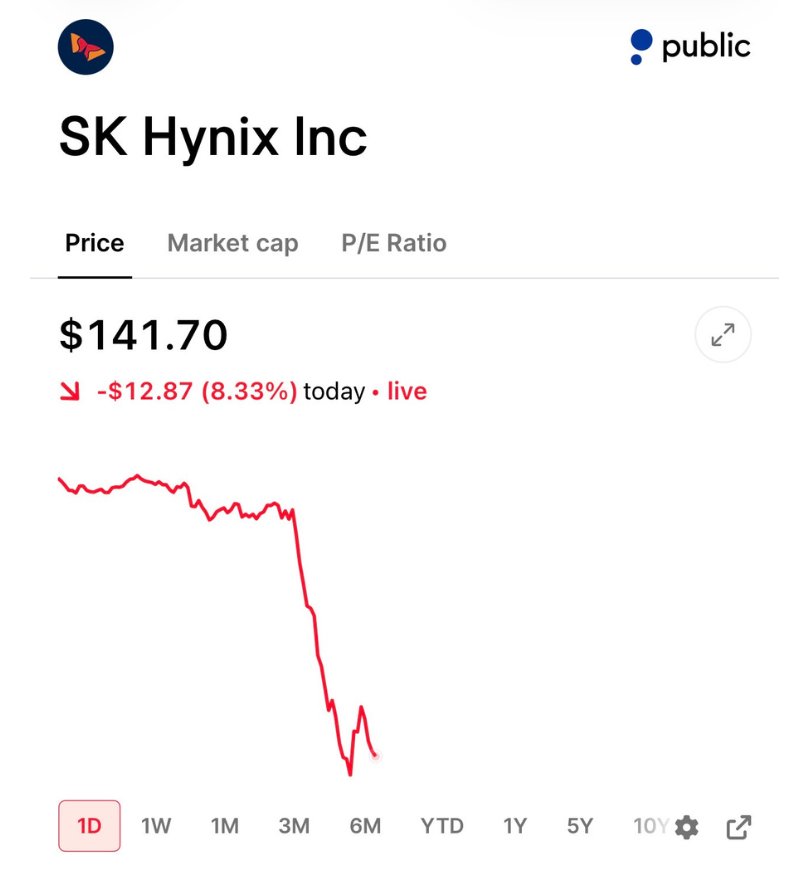
$MU and $SKHY fall more than 5% after $CXMT jumps nearly 500% in its Chinese IPO to a $500B valuation.
This selloff looks way overdone since CXMT has no meaningful HBM presence and lacks access to $ASML EUV leaving the highest-margin part of memory market largely unaffected.
SOMEONE JUST BOUGHT OVER $100 MILLION OF $MU CALLS EXPIRING NEXT WEEK
I have never in my life seen an order this big for such a short dated options contract
Someone knows something. Something BIG is about to happen
Wall Street: Cheap Chinese models kill NVIDIA.
Kimi 48 hours later: Subscriptions paused. GPUs maxed. Adding capacity as fast as possible.
That’s Jevons Paradox with a CUDA bill.
Cheaper intelligence doesn’t reduce compute demand. It detonates it.
기술적 분석을 신뢰하는 것은 우리가 감정이 있는 인간이기 때문이고, 모니터 너머에 존재하는 플레이어도 인간이거나 인간의 행동심리를 학습한 무엇가라는 전제하에서 이뤄진다.
그렇기에 인간의 심리를 무너뜨릴 어떤 것, 마치 2020년 초의 COVID-19과 같은 무언가가 출현하면 역사는 동일하게 반복된다는 기술적 분석은 그 의미를 상실한다.
즉, 인간의 시장이 처음 마주치는 사건에선 역사가 반복된다는 의미가 퇴색하는 것이다.
$MRVL is expected to nearly triple its revenue over the next three years,
Its one of the few names spanning both sides of the AI stack with custom silicon on the compute side and switching, electro-optics and high-speed connectivity on the data movement side.
TSMC 컨콜 중
(내년까지 공급부족 지속될지에 대한 질문에 대해)
C.C :
저에게 보장을 해달라고 하시니, 이렇게 말씀드리겠습니다. 오늘부터 아마 2029년, 2030년까지는 중간에 수요가 잠시 꺾이는 구간이 있든 없든 수요는 매우 강하다고 믿습니다. 확실하다고 말씀드리기는 어렵지만, 추세가 워낙 견고해서 저희는 일종의 새로운 산업이 형성되는 과정을 목격하고 있다고 믿습니다. 그 새로운 산업은 바로 AI라고 말씀드리고 싶습니다.