Ageing rebel who believes there is much wrong with the world and things need to improve - climate change, freedom of speech, democracy & wealth distribution
This is extraordinarily rare.
In fact, according to a key figure in the German business community (who is a dear friend of mine), it's unprecedented.
An op-ed, two pages, centerpiece, in Germany’s most important economic newspaper (the Handelsblatt) that begs the German establishment to stop looking at China via the prism of propaganda. And it's by their Shanghai bureau chief - not some outside contributor.
The title is "The China debate cannot continue like this!" and the article makes the case that it's suicidal, from a German and European standpoint, to keep reducing China to false caricatures rather than facts.
In effect it's rubbish in, rubbish out: if you tell people lies about China - whichever direction they go (anti or pro) - then obviously the policies that come out will be rubbish, designed for a mirage of a country that exists only in people's imagination.
Needless to say, this is absolutely music to my ears because it's literally the main point I've been making in my advocacy around China for now almost 10 years. Some are finally seeing the light...
I also believe, as I argued in my article "Are Western media turning China-friendly?" last year (https://t.co/Xg1hoSRtNy) that this type of coverage was bound to happen, and there will be more and more of it.
Why? For a very simple structural reason: China is now too powerful to coerce. The West, and Europe in particular, just don't have the leverage anymore. Which means that if you tell China to do something and they don't want to, they just won't do it. Period.
In this situation, incapable of coercing, your only remaining choice is... convincing. And what do you need if you want to convince someone? Well, you need to understand them: understand how they think, how they behave, what drives them, what they actually want.
In other words: the moment coercion stops being an option, not only does propaganda stop being useful, it begins to be actively harmful as genuine understand becomes a strategic necessity. Reality is finally becoming profitable again.
Which means, if you're a journalist reading this and you're peddling some of your usual lies, describing China as some sort of cartoonish dictatorial dystopia that's simultaneously on the verge of collapse yet a "threat" to the whole world (in short, if you write on China for The Economist or the FT), be on notice: the real threat to your country isn't China. It's you.
The USA have blocked the Somali Referee Omar Artan from entering the USA, the Referee who is rated the best in Africa was blocked at entry, so he got the Somalian embassy to give him a Diplomatic Passport.
But the USA still refuses to let him in.
The USA need to be disqualified
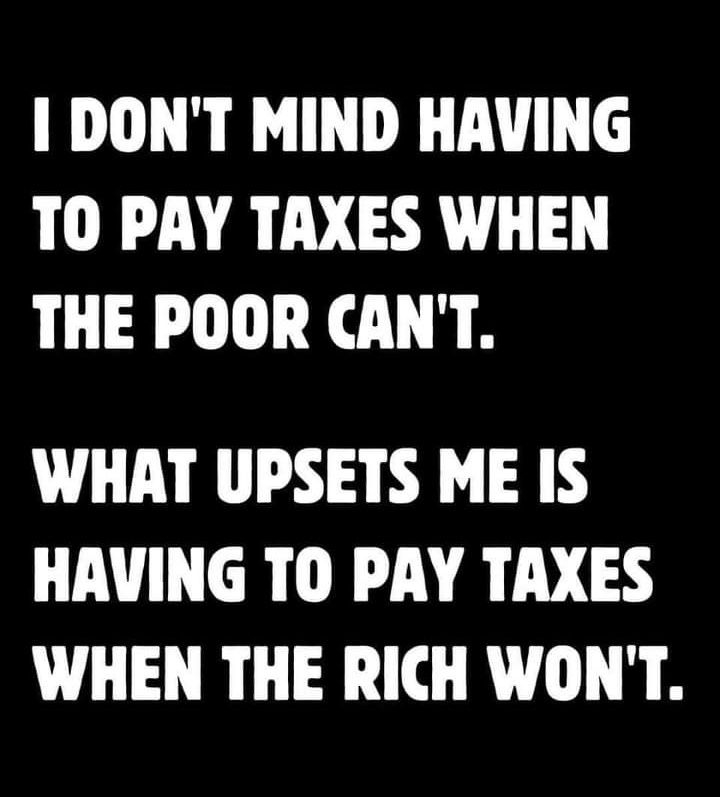
In 1879, JP Morgan paid a man to invent the lie that is the foundation of modern economics.
A billionaire who helped start Amazon just exposed the whole thing on Diary of a CEO, and once you hear it you will never look at paychecks the same way again:
146 years ago, a guy named Henry George wrote a book called Progress and Poverty.
It was the first mainstream book about the rich systematically stealing from the poor, and It literally became the bestselling book in the history of the United States at the time.
The working class was reading it everywhere, and the people at the top of the economy completely lost their minds.
So JP Morgan personally brought a man named John Bates Clark to Columbia University, which was essentially the intellectual headquarters of Wall Street, and told him to fix the problem.
Clark wrote a book called The Distribution of Wealth. In it, he invented something called the "theory of marginal productivity," which claims that because markets are perfectly efficient, the amount of money you earn reflects EXACTLY the value you contribute to the economy.
If you make $15,000 a year, that's because you're providing $15,000 of value. If a hedge fund manager makes $500 million a year moving money around, that's an accurate reflection of the value he creates in the world.
And Clark literally said the quiet part out loud IN HIS OWN BOOK.
He wrote that they had to prove to working people that no matter how much they make, whether it's a little or a lot, it accurately reflects their value, because if workers ever concluded that their labor was worth more than they were being paid, they would revolt and destroy the entire system.
That was the whole point. The theory was built to prevent a revolution.
And it worked so well that it got absorbed into mainstream economics and is STILL taught as a foundational principle to this day.
Every time a CEO tells you "the market decides your salary," they're repeating a framework that was literally commissioned by JP Morgan in the 1800s to convince you not to ask for more.
Nick Hanauer, the billionaire who told this story, also shared the numbers that prove why it matters right now:
The median full-time worker in America earns about $60,000 a year. If that same worker had maintained the same share of GDP they held in 1975, they wouldn't be making $60,000. They'd be making $120,000. That gap goes all the way up to the 90th percentile. If you earn $180,000 today, you'd be earning $250,000 under the old distribution.
The ONLY people who benefited from 50 years of economic growth were the top 10%, and the vast majority of that went to the top 1%. That is trillions of dollars every single year that used to be wages for ordinary working people and now sits in the accounts of the wealthiest people on the planet.
This happened because of policy. Tax cuts for the rich, deregulation for the powerful, and wage suppression for everyone else, all justified by an economic theory that was invented specifically to make you believe you deserve exactly what you're getting.
And the craziest part is that GDP growth rates in America were 4 to 4.5% for decades when workers were included in prosperity. As soon as the neoliberals took over in the mid-1970s and implemented these policies, GDP growth fell to 3% and eventually to 2%.
Including people in the economy doesn't slow growth down. It's literally the thing that CREATES growth. And the theory that convinced the world otherwise was a hit job paid for by one of the richest men in history to keep workers quiet.
What do you think?
The EU has mastered one trick:
When it wins, it calls it free trade.
When China wins, it calls it overdependence.
For decades, European cars, appliances, luxury goods, chemicals, machinery, and high-end consumer products entered the Chinese market. China did not cry that Europe was “distorting” its market or creating “dependency.”
China competed.
China learned.
China upgraded.
But the moment Chinese industries became competitive, Europe suddenly discovered “strategic risk.”
Solar panels?
Europe blocked and punished Chinese solar for years with tariffs and trade barriers. Did that revive Europe’s own solar industry? No. It only made Europe’s energy transition more expensive until it eventually had to reopen the door.
Huawei and ZTE?
Europe followed Washington’s pressure campaign, ripped out Chinese telecom infrastructure it had already deployed, spent more money, delayed its own networks, and called that “security.”
Energy?
Europe chose geopolitical obedience, cut itself off from cheap Russian energy, raised its own industrial costs, became more dependent on the U.S., and then watched its companies move across the Atlantic under American subsidies and tariffs.
But somehow the problem is still China.
Please.
Europe’s crisis was not created by Chinese overcapacity.
It was created by European complacency, American dependency, ideological industrial policy, expensive energy, and decades of mistaking moral lectures for competitiveness.
Now Chinese industries are faster, cheaper, more integrated, and more efficient — from EVs to batteries, solar, electronics, ports, logistics, and manufacturing ecosystems.
So Europe invents new language:
“Diversification.”
“De-risking.”
“Overdependence.”
“Fair competition.”
But strip away the diplomatic costume, and it is just protectionism with Brussels paperwork.
China did not force Europe to deindustrialize itself.
Europe made its choices.
It followed Washington.
It sanctioned its own energy base.
It taxed its own consumers.
It slowed its own innovation.
It lectured China while China built.
And now it wants China to pay for Europe’s failure to compete.
No.
China-EU trade is not a charity program for declining European industries.
If Europe wants competitiveness, it should build it.
Not rename protectionism as “diversification” and expect China to applaud.
Stephen Fry introduces one of the greatest TV series ever made.
If you love to learn, enjoy history & want to expand your mind, do watch this landmark series.
CIVILISATION (1969)
All 13 episodes are free to watch on YouTube.
#KennethClark
I am relieved that Iran has finally fired back at Israel.
The impunity with which Israel constantly violates the ceasefires in Lebanon and Gaza has to end.
Iran is standing up for all of humanity against the zionist supremacists.
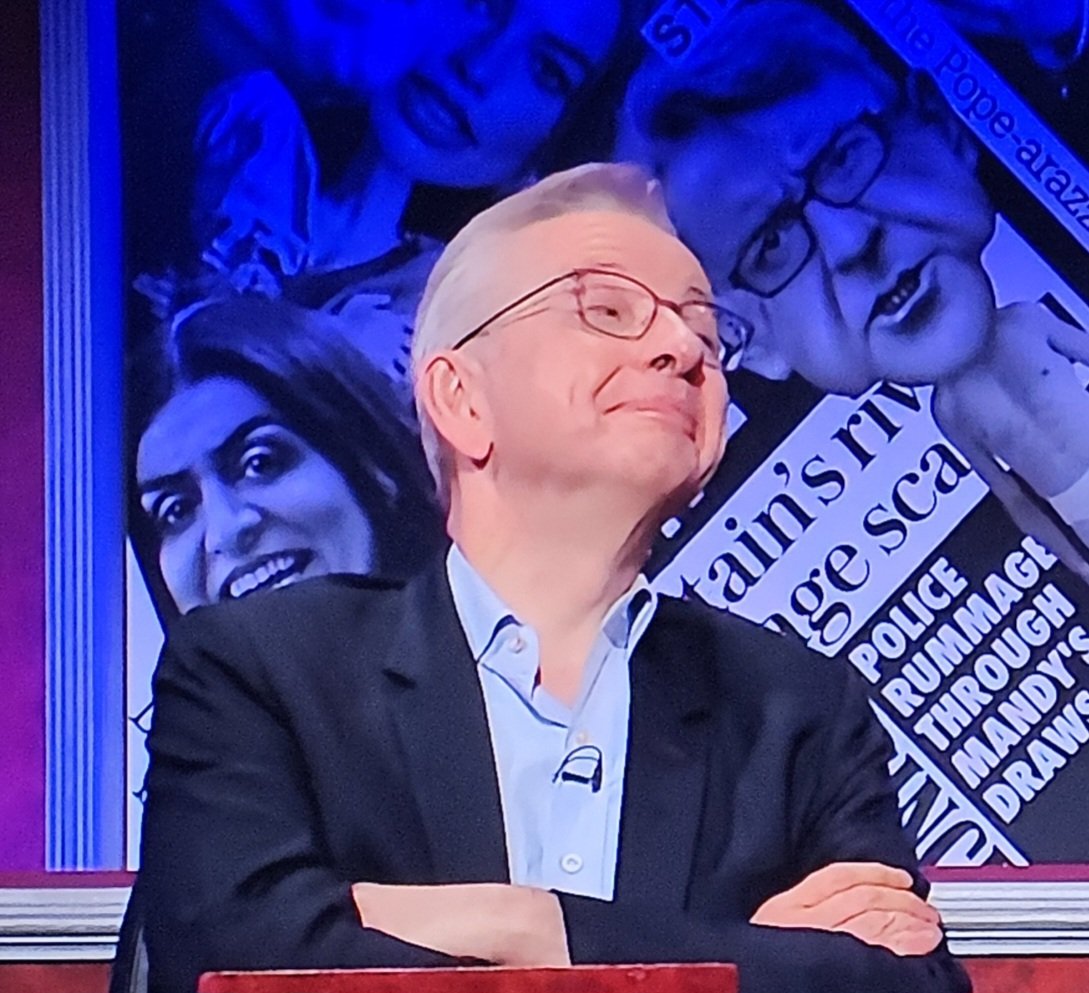
Laughing off his role in Covid fraud.
Giggling about using class A drugs.
Smirking at his treacherous ambition at the cost of the country.
Hilarious!
This man could have been Prime Minister.
@michaelgove@KemiBadenoch@Conservatives
In the 1990s, Canadian ecologist Suzanne Simard made a groundbreaking discovery that challenged everything we thought we knew about how forests work. While studying managed forests in British Columbia, she noticed something puzzling: when birch trees were removed to promote the growth of valuable Douglas firs, the firs did not flourish as expected, they actually struggled and grew more slowly.
Determined to understand why, Simard traced the movement of nutrients using radioactive carbon isotopes. What she found was astonishing. Trees were actively sharing resources through vast underground fungal networks known as mycorrhizae. These delicate, thread-like fungi connect the roots of different trees across the forest floor, forming a complex web that allows the exchange of carbon, water, nutrients, and even chemical signals, sometimes between entirely different species.
She discovered that older, larger trees often serve as central "hubs" or "mother trees," supporting younger saplings by redistributing vital resources and helping the entire ecosystem remain resilient. When these key trees are removed, the underground network weakens, and the health of the remaining forest declines.
Simard’s research overturned the traditional Darwinian view of forests as battlegrounds of ruthless competition. Instead, she revealed a far more sophisticated reality: forests operate as highly cooperative systems where trees communicate, support one another, and even warn neighboring trees about threats like drought, disease, or insect attacks.
What appears to the human eye as a silent, still forest is, in truth, a vibrant, interconnected living network, built not on isolation and rivalry, but on deep connection and mutual aid.
Economics has never been, and never will be, a value-free science.
At its core, economics is shaped by ideologies, value judgements, competing interests, social norms, and political priorities.
Adam Smith and Karl Marx — two of the most important figures in the history of economics — both treated it as an inherently political subject. They didn't even call it "economics." They called it political economy.
For Smith, the study of wealth creation was inseparable from questions about the state, social class, and moral philosophy. For Marx, the economy was a system of power relations.
Yet most introductory economics textbooks relegate politics, power, and history to footnotes. Technical models fill the space instead, abstractions that describe an imaginary economy more than the real one.
My newsletter's most popular piece is on how economics became a discipline detached from politics — despite the fact that it is intrinsically and unavoidably political.
Link to the full piece in the comments.
This morning I asked myself, not for the first time, who is Nigel and I made some notes.
And it does add up.
Here is a man who sells himself as the ordinary bloke with a pint, the man of the people, the great outsider standing up against the establishment.
And yet somehow this ordinary bloke always seems to arrive with a camera crew, a donor network, a friendly broadcaster, and now a parliamentary investigation into a £5 million gift from a crypto billionaire.
Very normal.
Very grassroots.
Very “just one of the lads”.
The peoples revolt, apparently, now comes with lighting, branding, fundraising dinners, professional outrage, and a small question about whether millions should have been declared properly.
Everything is a betrayal when Labour does it.
Everything is “nothing to see here” when Nigel does it.
Housing? Blame Labour.
The NHS? Blame Labour.
The economy? Blame Labour.
Boats? Blame Labour.
A £5 million gift? Suddenly everybody must calm down and respect the process.
And then came Tuesday.
A young man died. A family was grieving. A country was trying to understand something horrific.
And Farage stepped forward.
Not with calm.
Not with care.
Not with responsibilty.
But with his announcement of “pure cold rage”.
That phrase matters.
Because anger is human.
Anger can be moral.
Anger can demand answers, justice, accountability and truth.
I understand anger.
A lot of people are angry.
They have every right to ask serious questions.
But rage is different.
Rage does not ask careful questions.
Rage does not wait for investigations.
Rage does not protect grieving families from becoming political props.
Rage looks for a target.
And that is where Farage always seems most comfertable.
Not solving the pain.
Not calming the country.
Not asking how institutions failed and how they can be fixed.
But standing beside the pain with a microphone, turning the temprature up, and calling it leadership.
Warm enough to repost.
Warm enough to donate.
Warm enough to vote.
But never calm enough to ask:
“Hang on, who benefits from keeping us this angry?”
That is the trick.
He does not need Britain to feel hopeful.
He does not even need Britain to feel informed.
He needs Britain permanently one headline away from rage.
Because rage is usefull.
It fills rallies.
It drives clicks.
It turns grief into theatre.
It makes slogans feel like solutions.
And while everyone is shouting, nobody asks the boring questions.
Where is the plan?
Where is the funding?
Where are the costings?
Where is the responsibilty?
Maybe that is who Nigel Farage is.
Not the man of the people.
But the man who knows exactly how to turn peoples pain into his own political stage.
The Reform & Tory Sitcom continues.
Same chaos. Different rosette.
Anger can demand answers.
Rage just sells tickets.
If this speaks to you, please add your comments, repost it, and maybe follow me — not for me, but because politics needs fewer slogans and more people asking proper questions.
#Farage #ReformUK
🚨BREAKING | Andy Burnham says that Israel's murderous assault on Gaza is NOT a genocide.
The aspiring PM added that he "can't judge" Israel for what they have done.
(Via @guardian)
Brown rice, sold to you as the healthy upgrade, is a grain almost nobody in Asia ever chose to eat.
The rice in Japan is white.
The rice in China is white.
The rice in Korea, Thailand and India is white.
Brown rice was poverty food, what you ate when you couldn't afford to mill the bran off, or what you threw to the animals. They worked out long ago that the bran was the problem: its phytic acid binds up the iron and zinc so the body can't reach them, and its oils turn rancid in the heat. Stripping it off gave a grain that kept for years and stopped robbing people of their minerals.
The Japanese, who sit at the top of the longevity tables, built their entire staple on the exact rice Harvard tells you to bin.
So the wholegrain swap is, once again, pretty much the opposite of what the people you're told to imitate ever ate.
🚨 AI Just Created a Material Humans Never Imagined!
Scientists have developed a revolutionary new material that is stronger than steel, lighter than foam, and up to 5 times stronger than titanium.
The most surprising part? It was designed by artificial intelligence, not human engineers.
Using AI, researchers created entirely new microscopic structures that were later 3D-printed and tested. The results could lead to lighter airplanes, stronger buildings, and more efficient vehicles.
This breakthrough shows that AI is no longer just helping scientists—it’s starting to invent alongside them.
What could the world look like when AI designs the materials of the future?
Source: University of Toronto. AI-designed nanomaterials achieve exceptional strength and lightness. University of Toronto Engineering News.