🇺🇸⚡️- The fire at CIA headquarters is now being attributed to a small, minor electrical fire that is now under control. No casualties are reported, and first responders are on scene ventilating smoke from the building.
🇺🇸⚡️- The fire at CIA headquarters is now being attributed to a small, minor electrical fire that is now under control. No casualties are reported, and first responders are on scene ventilating smoke from the building.
Today marks the 43th anniversary of the unilateral declaration of independence by the Turkish Cypriot leadership in northern Cyprus on 15 November 1983, when the “Turkish Republic of Northern Cyprus” was proclaimed in the territory occupied by Turkish forces since 1974.
That entity remains recognized solely by Turkey.
The modern conflict is rooted in the island’s 1960 independence from Britain under a constitution and treaties (including the Treaty of Guarantee) that established a bi-communal Republic of Cyprus with power-sharing between the Greek Cypriot majority and Turkish Cypriot minority.
The Guarantor powers Greece, Turkey, and the United Kingdom were to uphold the independence, territorial integrity and constitutional order.
Interethnic violence erupted in late 1963 after constitutional disputes, leading Turkish Cypriots to withdraw from government institutions and form enclaves on the island.
Tensions persisted through the late 1960s. On 15 July 1974 a coup organized by the Greek military junta and local nationalists overthrew President Archbishop Makarios and installed Nicos Sampson, openly pursuing enosis (union with Greece).
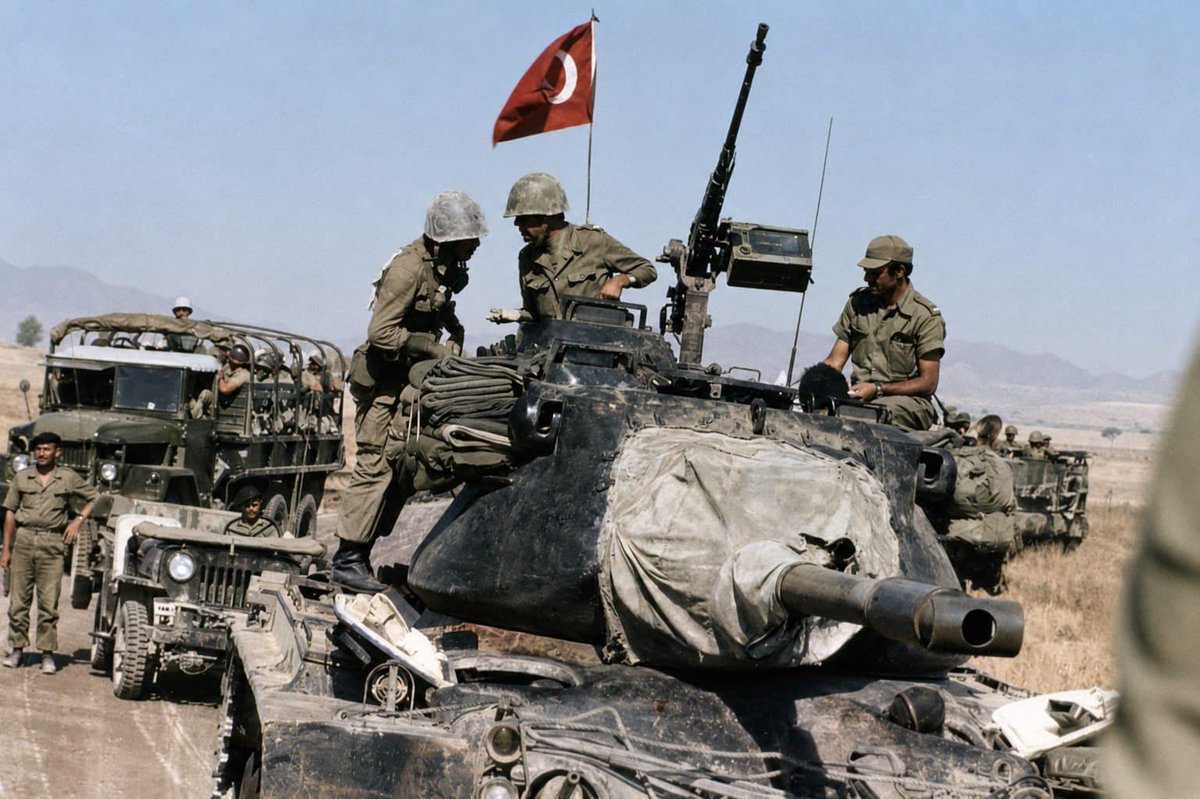
Five days later Turkey launched military operations, citing its rights as a guarantor to restore constitutional order and protect Turkish Cypriots.
A second major offensive in mid-August, after the coup had collapsed and constitutional order had been restored under Glafkos Clerides, resulted in Turkish control of the island’s territory increasing from 3% to 37%. The division has endured, with a UN-patrolled buffer zone separating the sides.
According to the 1960 census, the island’s population of 573,500 consisted of roughly 442,000 Greek Cypriots (77%), 104,000 Turkish Cypriots (18%) and smaller communities of Armenians and Maronites.
In 1974, the fighting and its aftermath displaced approximately 200,000 Greek Cypriots from the north to the government-controlled south, meaning that nearly one-third of the Greek Cypriot population was displaced. Entire cities and communities like Varosha were completely emptied of their Greek Cypriot citizens. The Turks have never allowed them to come back..
The military operations by Turkey in 1974 were an illegal invasion, with the use of force violating Article 2(4) of the UN Charter.
UN Security Council Resolutions 353 (20 July 1974) and 360 (16 August 1974) made that clear and demanded an end to Turkey’s military intervention while also recording the Council’s formal disapproval of unilateral military actions.
UN General Assembly Resolution 3212 in the same year called for the speedy withdrawal of foreign forces, respect for sovereignty and territorial integrity, and the return of refugees. Subsequent resolutions declared the 1983 secession legally invalid.
In a ruling in 2001, The European Court of Human Rights held Turkey responsible for multiple human-rights violations arising from its effective control of the north, including regarding missing persons, displaced persons’ property and remaining enclaved Greek Cypriots.
The entire international community, apart from Turkey, views the occupation and the 1983 declaration as illegitimate. The Republic of Cyprus is the sole internationally recognized government of the island.