The new Huberman Lab episode is out: Improving Science & Restoring Trust in Public Health | Dr. Jay Bhattacharya (@NIHDirector_Jay)
(0:00) Jay Bhattacharya
(6:56) National Institutes of Health (NIH), Mission
(9:12) Funding, Basic vs. Applied Research
(18:22) Sponsors: David & Eight Sleep
(21:20) Indirect Costs (IDC), Policies & Distribution
(30:43) Taxpayer Funding, Journal Access, Public Transparency
(38:14) Taxpayer Funding, Patents; Drug Costs in the USA vs Other Countries
(48:50) Reducing Medication Prices; R&D, Improving Health
(1:00:01) Sponsors: AG1 & Levels
(1:02:55) Lowering IDC?, Endowments, Monetary Distribution, Scientific Groupthink
(1:12:29) Grant Review Process, Innovation
(1:21:43) R01s, Tenure, Early Career Scientists & Novel Ideas
(1:31:46) Sociology of Grant Evaluation, Careerism in Science, Failures
(1:39:08) “Sick Care” System, Health Needs
(1:44:01) Sponsor: LMNT
(1:45:33) Incentives in Science, H-Index, Replication Crisis
(1:58:54) Scientists, Data Fraud, Changing Careers
(2:03:59) NIH & Changing Incentive Structure, Replication, Pro-Social Behavior
(2:15:26) Scientific Discovery, Careers & Changing Times, Journals & Publications
(2:19:56) NIH Grants & Appeals, Under-represented Populations, DEI
(2:28:58) Inductive vs Deductive Science; DEI & Grants; Young Scientists & NIH Funding
(2:39:38) Grant Funding, Identity & Race; Shift in NIH Priorities
(2:51:23) Public Trust & Science, COVID Pandemic, Lockdowns, Masks
(3:04:41) Pandemic Mandates & Economic Inequality; Fear; Public Health & Free Speech
(3:13:39) Masks, Harms, Public Health Messaging, Uniformity, Groupthink, Vaccines
(3:22:48) Academic Ostracism, Public Health Messaging & Opposition
(3:30:26) Culture of American Science, Discourse & Disagreement
(3:36:03) Vaccines, COVID Vaccines, Benefits & Harms
(3:47:05) Vaccine Mandates, Money, Public Health Messaging, Civil Liberties
(3:54:52) COVID Vaccines, Long-Term Effects; Long COVID, Vaccine Injury, Flu Shots
(4:06:47) Do Vaccines Cause Autism?; What Explains Rise in Autism
(4:18:33) Autism & NIH; MAHA & Restructuring NIH?
(4:25:47) Zero-Cost Support, YouTube, Spotify & Apple Follow & Reviews, Sponsors, YouTube Feedback, Protocols Book, Social Media, Neural Network Newsletter
Includes paid partnerships.
How to Fix a Broken Cap Table: A Practical Guide ✨
Last week I wrote:
> "With Down Rounds at 20%+ of all venture deals closed in 2023, a second order effect is coming into play: Broken cap tables."
But what's a broken cap table, again?
⬛ Definition: "Too much dilution, too early"
—Example: Venture studio owns ~45% of the common, while the co-founders own ~29% collectively (and single digits, individually).
• It's not inaccurate data, missing paperwork or poor cap table maintenance that's the real problem, it's misaligned shareholder interests.
Useful benchmarks for bad cap tables:
• If founding team + ESOP owns less than 50% post-seed
• If individual founder/CEO owns <10% post-seed
Common ways to avoid a broken cap tables:
• Selling less than 30% of equity through Seed+
• Preventing advisors, incubators & accelerators from taking excessive equity
• Removing dead equity from former founders, advisors & bad vesting policies
So what do you do once you see a broken cap table?
1. Do nothing, don't invest: This is the vast majority of outcomes—investors see a broken cap table and just move on.
2. Ask and receive: Investors may be receptive to term adjustments, sometimes such as heavy discounts from Post-Money Safes, elimination of super pro rata rights, or removing full ratchet anti-dilution mechanisms. All you have to do is ask!
—Example: A never-diluting 10% penny strike warrant is a self-destructive mechanism. 10% of zero is worthless.
3. Negotiate with a Carrot: Search for win-win solutions. Remember, incentives matter more than you think! Offer attractive terms for shareholders with "dead equity," like secondary market access or buyback premiums, to encourage cap table alignment.
—What's a reasonable resale discount? Look at FMV of 409A and remember Carta's 70-80%+ median discount on common vs. preferred price at the seed stage.
—Of course, other factors apply: securities laws (eg, Rule 144) must still be followed. And there may be adverse tax consequences (eg, QSBS redemption exceptions, 409A pricing adjustments)
4. Hardball Negotiations: If incentives fail, consider tougher tactics like pay-to-play requirements, board restructuring, or dilution through new funding rounds.
—I don't want to endorse all these tactics or give away the secrets, but here are some things that I have seen work:
• Aggressively expand option pool: create a 40% option pool and allocate 30%+ to the founders.
• Insert pay-to-play provisions (existing investors pay to maintain their ownership percentage during future funding rounds or else lose [preferred stock] rights)
• Name and shame (internally or through PR, but that can backfire)
• Pack the board
• Dilute the unwilling investors or holders by raising a new round
• Threaten to wind down the company or M&A via acquihire
• In conclusion, seek alignment, not just investment! Incentivize the founders and team.
Starbucks annual sales is ~$40B across 37k+ stores.
At such scale, it’s very profitable to shave a few seconds off each order.
Per Bloomberg, Starbucks would make an extra ~$900m a year if each store served 5 extra patrons per day.
That’s why Starbucks is spending $450m on a new bar setup called Siren System (video below), where the key ingredients — dairy, pumps, caffeine, ice — are placed in a new optimized counter.
Take a Mocha Frappuccino:
▫️Under the existing system, it takes 16 steps and 87 seconds
▫️Under Siren System, it will be 14 steps and 36 seconds.
There are currently 383 billion potential drink combinations at Starbucks. And orders have gotten so ridiculously elaborate, that the average wait time is 5 minutes.
Why does Starbucks put up with the extra? Cause “extras” on the order are worth $1B a year.
For people like me — who just want a simple black Trenta iced coffee — it’s kinda annoying.
The Siren System will be in 40% of US stores by 2026. Can’t wait for the full rollout to more efficiently put caffeine down my skull.
I am literally speechless. NVIDIA just grew data center sales 141% in a quarter.
That's not compared against this quarter last year. That's literally growth in three months.
$4.3B -> $10.3B
That's... with the constraint of needing to ship physical hardware to customers. Nuts.
.@nodalpower just raised $13M to build landfill methane harvesting power plants in the US. When it can't sell that power back to the grid? It mines Bitcoin at its data centers. https://t.co/AtYIImYc9b
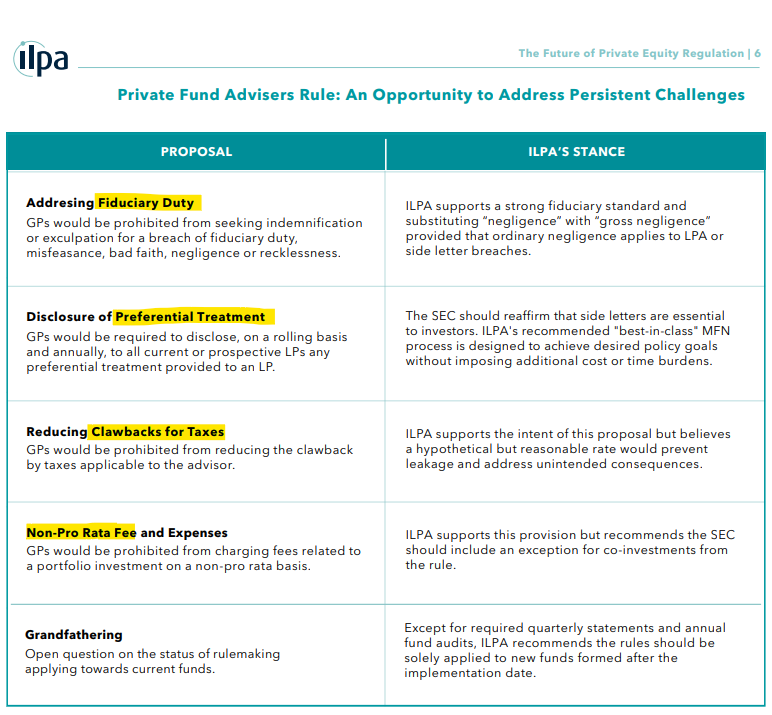
Here are six key Private Fund Rules (PFA) for VC fund managers set to pass on 8/23:
⬛Fiduciary Duties: GPs would be prohibited from seeking indemnification or exculpation for a breach of fiduciary duty, bad faith, negligence or recklessness.
⬛Side Letter Disclosure: GPs would be required to disclose, on a rolling basis and annually, to all current or prospective LPs any preferential treatment provided to an LP in a side letter.
⬛Fees and Expenses: GPs would be prohibited from passing off registration fees, examinations or investigations, even after disclosing such fees to LPs
⬛Non-Pro Rata Fee Splits: GPs would be prohibited from charging fees and expenses related to a portfolio investment on a non-pro rata basis when multiple funds invest or have invested in the same investment (e.g., in SPV or co-investments).
⬛GP Clawbacks for Taxes: GPs would be prohibited from reducing their obligation to clawback any taxes paid by the GP and otherwise required to be paid back to the LPs.
—This rule is saying that the GP cannot reduce its obligation to payback any required carried interest even if the GP paid taxes on it. Essentially, the regulation is preventing GPs from using tax considerations to lessen their obligations under a clawback provision.
⬛Effective Date: Will these compliance rules take effective immediately? Over time? Or will emerging managers get a break as applied to new funds only?
Attached is the ILPA's stance.
Nodal Power today announces the completion of our $13M seed round to aggressively mitigate methane emissions at landfills and produce renewable energy. We have two operational sites with more in development producing renewable power to support the grid and on-site data centers.
I tested Apple Watch, Garmin Fenix 7X, WHOOP 4.0, and Oura Ring Gen 3 vs a Metabolic Test
To see how close the calorie burn numbers were… here are my results
Go watch on my YouTube! “Shervin Shares”
If you played any of these games at a high level, you have a higher potential to do well in today’s internet economy than the average person coming out of any undergrad + grad program.
- Poker
- Chess
- Competitive video games
For me, it was poker (never was elite at video games, despite trying). Poker is a game of imperfect information where you bet real stakes against your decisions, a perfect microcosm of business.
ALL of the examples above are strategic games with tight feedback loops, meaning you can hone your skills exceptionally fast compared to something like being a venture capitalist, where it takes 7-10 years to figure out if your decision was right.
The skillsets you develop playing these games map quite well to the attention landscape of the internet.
All online platforms are “games” with different initial conditions (YouTube and TikTok are both video, but in a starkly different way).
Creating a piece of content is like playing a hand of poker. You bet with your time and $, the chips you throw in the “pot” of the platform is the content itself, and you win or lose based on a combination of audience reaction and algorithmic response.
The best players on a platform are akin to the best at a specific type of poker (Texas Holdem = YouTube, Pot Limit Omaha = Instagram, etc.).
The best overall players are “complete players”, they see each platform as simply another format of the same fundamental game (“everything is the same”) and can shift what they create at will to suit that particular audience or platform.
When you “win” this game, you’re simply accruing more equity with the audience you’re serving with your content. You can convert that equity into other assets (cash in the form of product or service sales, life experiences, etc.)
Some creators never convert it, they rely on the rewards the platforms themselves give out (ad money).
The best creators realize that what they’ve ACTUALLY created is a laser beam of focused, qualified attention that they can direct to the highest value products or services, which frees the creator from the trap of being a slave to the platforms.
So don’t be discouraged if you don’t have the “right credentials.” They’re largely meaningless in this game.
I came out of UCSB with an economics & accounting degree and actively tried to see how high of grades I could get while going to the least amount of classes. I managed something like 60% of classes and a 3.6 GPA, which again, doesn’t matter at all.
Jacques, our second creator at @epicgardening was a phD Geology student who had never created a piece of content in his life until he dropped out to garden in my backyard and now has a ~250k audience on every platform he creates on in under 2 years.
Don’t bemoan your background, or lack thereof. Find a way that your background becomes an incredible asset to the game you’re trying to play.
The theme of this post has been coming up a lot in recent conversations:
“A founder selling at the Series D price of $210M, would make the same amount of money at exit as they would had they sold for $38M after only raising a seed round.” https://t.co/0dQJnTse4v
I often get asked "Why is @Angellist building cap table software. Aren't there plenty of people doing that?"
The answer is in our long term plan (which we are sharing for the first time today here) 👇
Get Unrealistic
There is a process that I have used, and still use, to reignite life...👇
Create two timelines—6 months and 12 months—and list up to five things you dream of having (including, but not limited to, material wants: house, car, clothing, etc.), being (be a great cook, be fluent in Chinese, etc.), and doing (visiting Thailand, tracing your roots overseas, racing ostriches, etc.) in that order.
If you have difficulty identifying what you want in some categories, as most will, consider what you hate or fear in each and write down the opposite.
Do not limit yourself, and do not concern yourself with how these things will be accomplished. For now, it’s unimportant. This is an exercise in reversing repression.
Be sure not to judge or fool yourself. If you really want a Ferrari, don’t put down solving world hunger out of guilt. For some, the dream will be fame, for others fortune or prestige. All people have their vices and insecurities. If something will improve your feeling of self-worth, put it down.
Drawing a blank? In that case, consider these questions:
What would you do, day to day, if you had $100 million in the bank?
What would make you most excited to wake up in the morning to another day?
Don’t rush—think about it for a few minutes.
If still blocked, fill in the five “doing” spots with the following:
one place to visit
one thing to do before you die (a memory of a lifetime) one thing to do daily
one thing to do weekly
one thing you’ve always wanted to learn
What does “being” entail doing?
Convert each “being” into a “doing” to make it actionable. Identify an action that would characterize this state of being or a task that would mean you had achieved it. People find it easier to brainstorm “being” first, but this column is just a temporary holding spot for “doing” actions.
Here are a few examples:
1) Great cook —> make Christmas dinner without help
2) Fluent in Chinese —> have a five-minute conversation with a Chinese co-worker
Determine three steps for each of the dreams in just the 6-month timeline and take the first step now.
Define three steps for each dream that will get you closer to its actualization. Set actions—simple, well-defined actions—for now, tomorrow (complete before 11 A.M.) and the day after (again completed before 11 A.M.). Once you have three steps for each of the four goals, complete the three actions in the “now” column.
Do it now. Each should be simple enough to do in five minutes or less. If not, rachet it down. If it’s the middle of the night and you can’t call someone, do something else now, such as send an e-mail, and set the call for first thing tomorrow.
If the next stage is some form of research, get in touch with someone who knows the answer instead of spending too much time in books or online, which can turn into paralysis by analysis.
The best first step, the one I recommend, is finding someone who’s done it and ask for advice on how to do the same.


![ChrisHarveyEsq's tweet photo. How to Fix a Broken Cap Table: A Practical Guide ✨
Last week I wrote:
> "With Down Rounds at 20%+ of all venture deals closed in 2023, a second order effect is coming into play: Broken cap tables."
But what's a broken cap table, again?
⬛ Definition: "Too much dilution, too early"
—Example: Venture studio owns ~45% of the common, while the co-founders own ~29% collectively (and single digits, individually).
• It's not inaccurate data, missing paperwork or poor cap table maintenance that's the real problem, it's misaligned shareholder interests.
Useful benchmarks for bad cap tables:
• If founding team + ESOP owns less than 50% post-seed
• If individual founder/CEO owns <10% post-seed
Common ways to avoid a broken cap tables:
• Selling less than 30% of equity through Seed+
• Preventing advisors, incubators & accelerators from taking excessive equity
• Removing dead equity from former founders, advisors & bad vesting policies
So what do you do once you see a broken cap table?
1. Do nothing, don't invest: This is the vast majority of outcomes—investors see a broken cap table and just move on.
2. Ask and receive: Investors may be receptive to term adjustments, sometimes such as heavy discounts from Post-Money Safes, elimination of super pro rata rights, or removing full ratchet anti-dilution mechanisms. All you have to do is ask!
—Example: A never-diluting 10% penny strike warrant is a self-destructive mechanism. 10% of zero is worthless.
3. Negotiate with a Carrot: Search for win-win solutions. Remember, incentives matter more than you think! Offer attractive terms for shareholders with "dead equity," like secondary market access or buyback premiums, to encourage cap table alignment.
—What's a reasonable resale discount? Look at FMV of 409A and remember Carta's 70-80%+ median discount on common vs. preferred price at the seed stage.
—Of course, other factors apply: securities laws (eg, Rule 144) must still be followed. And there may be adverse tax consequences (eg, QSBS redemption exceptions, 409A pricing adjustments)
4. Hardball Negotiations: If incentives fail, consider tougher tactics like pay-to-play requirements, board restructuring, or dilution through new funding rounds.
—I don't want to endorse all these tactics or give away the secrets, but here are some things that I have seen work:
• Aggressively expand option pool: create a 40% option pool and allocate 30%+ to the founders.
• Insert pay-to-play provisions (existing investors pay to maintain their ownership percentage during future funding rounds or else lose [preferred stock] rights)
• Name and shame (internally or through PR, but that can backfire)
• Pack the board
• Dilute the unwilling investors or holders by raising a new round
• Threaten to wind down the company or M&A via acquihire
• In conclusion, seek alignment, not just investment! Incentivize the founders and team.](https://pbs.twimg.com/media/GBuD76MaEAA-4kS.png)