Come join my updated Black Hat class in Las Vegas, "Agentic AI-Aided Kubernetes Attack and Defense!"
Kubernetes and AI are more tightly-coupled than you think - about two thirds of organizations hosting generative AI models use Kubernetes to manage inference workloads (CNCF). And Kubernetes is growing in popularity for hosting streamable MCP servers and remote agents.
We're going to have a blast with new cutting-edge exercises that integrate AI agents into attacking and defending Linux, containers, and Kubernetes. We'll also be attacking a multi-user agentic AI system running on Kubernetes, using both direct and indirect prompt injections, gaining access to the cluster, and adding indirect prompt injection backdoors to the vector database. As in all the other exercises, we'll turn around and harden the system against this.
You can learn more and register here:
https://t.co/v09oU7gDUd
Here's an excerpt of the class description:
Learn how to use agentic AI to aid you as you attack and defend Kubernetes, Linux, and containers, from Jay Beale, who has led development of the Kubernetes CTF at DEF CON and the open source Kubernetes attack tool: Peirates. In this fully hands-on course, you'll get an x86 computer to keep, complete with an agentic AI framework, Kubernetes clusters, and capture the flag virtual machines, which you will attack and defend. You'll also get access to our cloud environment, allowing you to attack cloud-based Kubernetes clusters.
This well-reviewed training focuses on giving you practical attack skills from real penetration tests, coupled with solid defenses to break attacks. You'll create an agentic AI platform with skills and tools that allow your agents to enumerate a cluster, analyze configuration weaknesses, and recommend attack paths.
Every topic in the class has an attack exercise, where you will first compromise a Kubernetes cluster or application. Most have a matching defense exercise, where you will use new skills to break that attack, confident that it will break others.
Anthropic and roughly 50 partners used Claude Mythos Preview to find more than 10,000 high or critical severity vulnerabilities in the first month of Project Glasswing. Most partners found hundreds of high or critical issues in their own code. (One month. Let that sit for a second.)
Of those 10,000-plus, 97 have been patched upstream as of May 22. That number is not a measure of how hard anyone tried. It is a measure of where the work now jams. The Glasswing update says it plainly: software security used to be limited by how fast you could find vulnerabilities, and now it is limited by how fast you can verify, disclose, and patch them. High and critical bugs are taking about two weeks each to patch. Several maintainers have already asked Anthropic to slow its disclosure rate, because they cannot keep up.
Discovery is no longer the bottleneck. The humans in the pipeline are.
The patch playbook itself, coordinated disclosure on a 90-day clock, monthly patch cycles, the quarterly review, was built for a world where finding a flaw was slow. That world is gone. The playbook is not strained. It is finished, and most of us have not said that out loud yet. (I would love to be wrong on this. Correct me, and tell me what planet still runs on a 90-day clock.)
Rebuilding it is not a tooling purchase. It is a skills problem, and a specific one. Working at this volume means triaging AI-generated findings ten deep, judging which severity ratings hold up, and deciding what gets fixed in what order when the queue is a thousand items long. That is human judgment under machine-scale load, and almost nobody has trained for it, because the tools that create the problem are months old.
You cannot hire your way out of this, because the talent pool does not exist yet. All of us are figuring it out at the same time. So the people who can help you most are already on your team. They are the ones who know your business, who have worked real incidents, who understand what a finding actually means in your environment. What they are missing is reps on AI tools under realistic pressure.
The @SANSInstitute Find Evil! hackathon is one place to get those reps fast. Practitioners build autonomous incident response agents, run them against real case data, and watch where the AI is sharp and where it falls apart. That last part is the point. The skill that transfers is not the agent, it is the calibrated judgment of when to trust the machine and when to override it, and that is exactly the muscle the patch pipeline now needs. Find Evil! runs through June 15, with $22,000 in prizes, at https://t.co/M9hFtmhmoi.
If you manage defenders, here is the Monday version. Pick two people who know your environment cold. Give them protected time this month to put AI tools against your own findings backlog and report back on where the tools broke. That is the rewrite starting, in miniature, on your team.
The Glasswing numbers should change what you do this week, not how well you sleep.
"If LLMs can be entrusted with software development, then they ought to be writing patches that work.
They’re not.
The contrast between the breathless blog posts from commercial entities and ... 97 findings patched in the open source world is really shocking." https://t.co/wVJXikdWHV
Friday = Early price cutoff for my Black Hat class: Agentic AI-Aided Kubernetes Attack & Defense!
We're going to have a blast! Cutting-edge exercises that integrate AI agents into k8s attack & defense, and attack a k8s-hosted agentic AI system. Join us!
https://t.co/MHh1SGR7Mn
“I spend all day, every day, looking at folks who misuse our models and our products. I want to walk through all of you what I've been seeing on the ground and how this has changed in the past year.” - Jacob Klein, @AnthropicAI's head of threat intel at the @SANSInstitute AI Summit.
And then came the heartburn line: “Almost everything I’m walking through can be used by a defender as well.”
He’s right. Defenders can point AI at endpoints at scale, code at scale, vulnerabilities, and SOC signals. Every serious defender already knows the list.
The hard part is the operating reality: usable data, investigations that don’t depend on manual glue work, remediation that moves fast enough, and AI you can actually trust.
What makes this a tougher sell is the reliability of the tools in our hands right now and our own skill gaps. And consider: we still get to watch some of this play out in the open. That window closes as attackers move to their own private tooling and infrastructure.
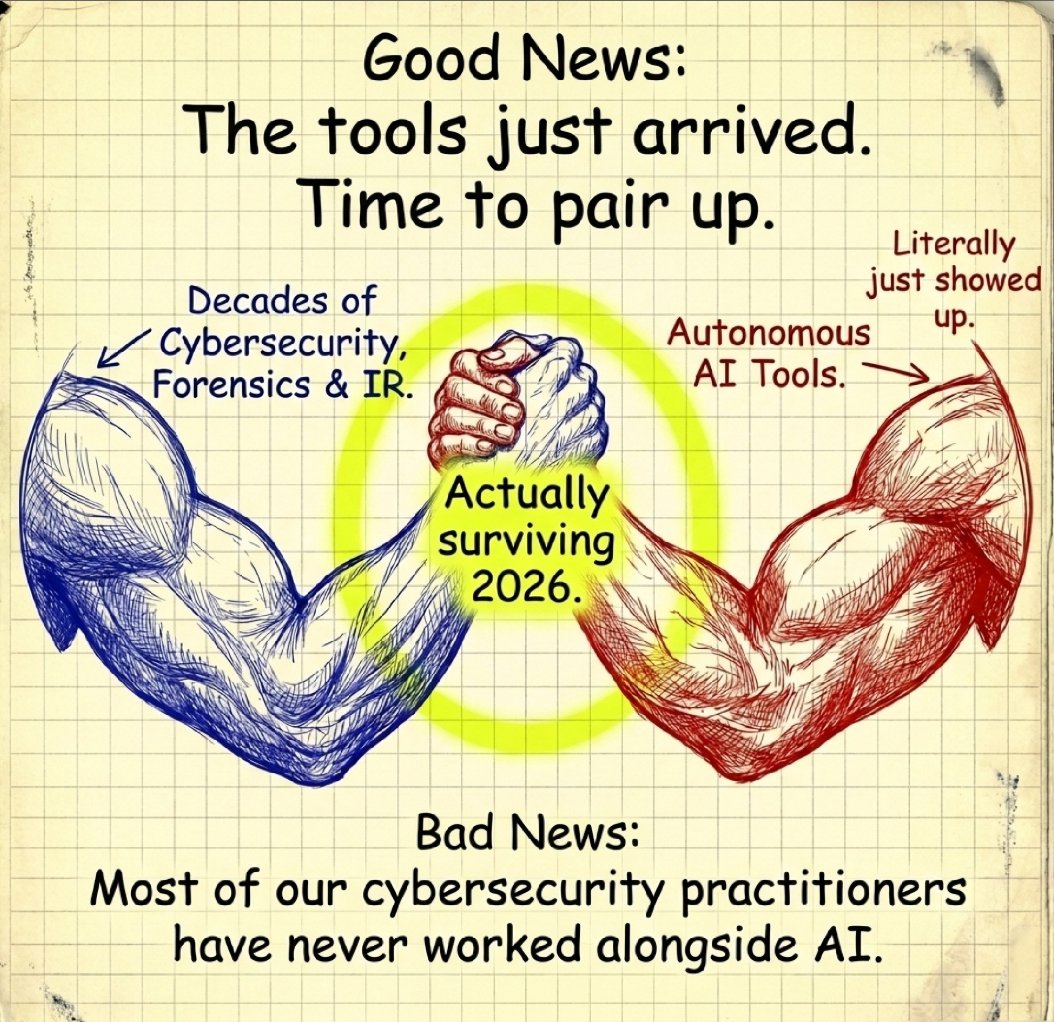
The only way we get ready is by starting now: working on our own skill gaps, building muscle with the tools we have, stress-testing them in real environments, forcing the workflow changes that make AI for defense operational.
Work on this directly with us: Find Evil! is live. Protocol SIFT is what happens when you wire an AI agent into a forensic workstation full of trusted tools and tell it to behave. It's an early capability with real outputs, failure mode. Join our community effort to make it something defenders can deploy.
42 days to enter. An incredible 2,500+ builders and teams are in as of today. $22K in cash prizes. Sponsored by SANS Institute. https://t.co/M9hFtmhmoi
(You'll have to hear Jacob's full talk and the fireside chat with Bruce Schneier and Anne Neuberger: Are tech companies the new SOC? Check it out on the SANS Institute YouTube page.)
Curious what you think. (And if you've entered in the hackathon?)
#AIsecurity #cybersecurity #vulnops
The ever awesome @NielsProvos dropping knowledge. Vulnerability research with AI is an orchestration thing not a model capability thing at this point. Echoes my sentiments that winning here (defense v offense) is a question of tokens, agents, agility. https://t.co/YKoF7awq7j
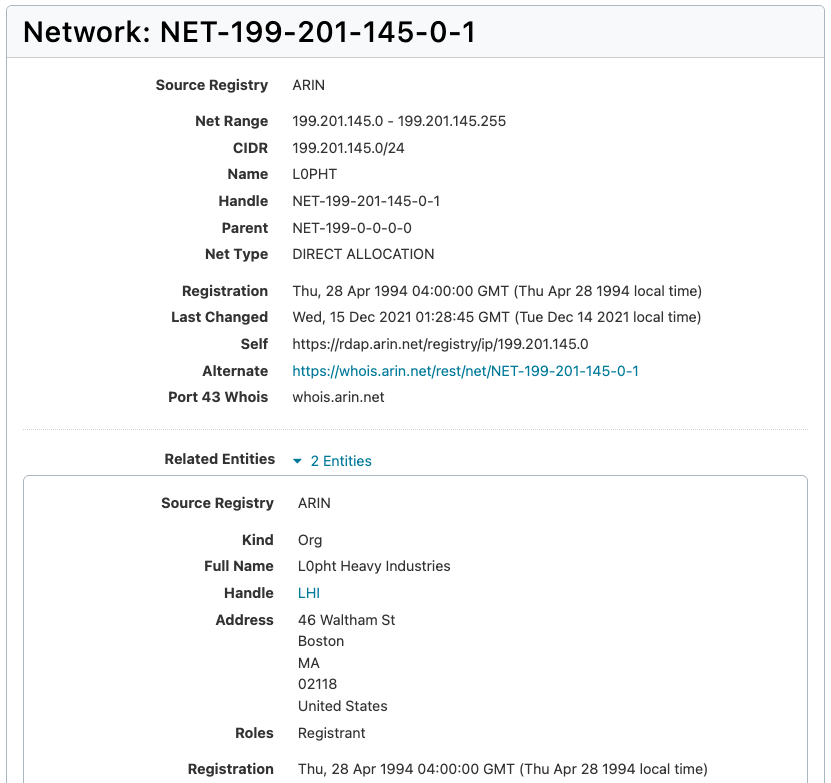
32 years ago today I registered the @L0phtHeavyInd class C. I got the email from ARIN, sent the class C address to our ISP, then got the first packets routed over our 56K modem to our 486 linux box. When those first packets come through the whole room exploded with chants of, "We on da backbone!"
Then came one of the first hacking resources on the web, shell accounts, a bbs, webcams, and lots of shenanigans. You can see an archive of the website here: https://t.co/a3TQXUxnex
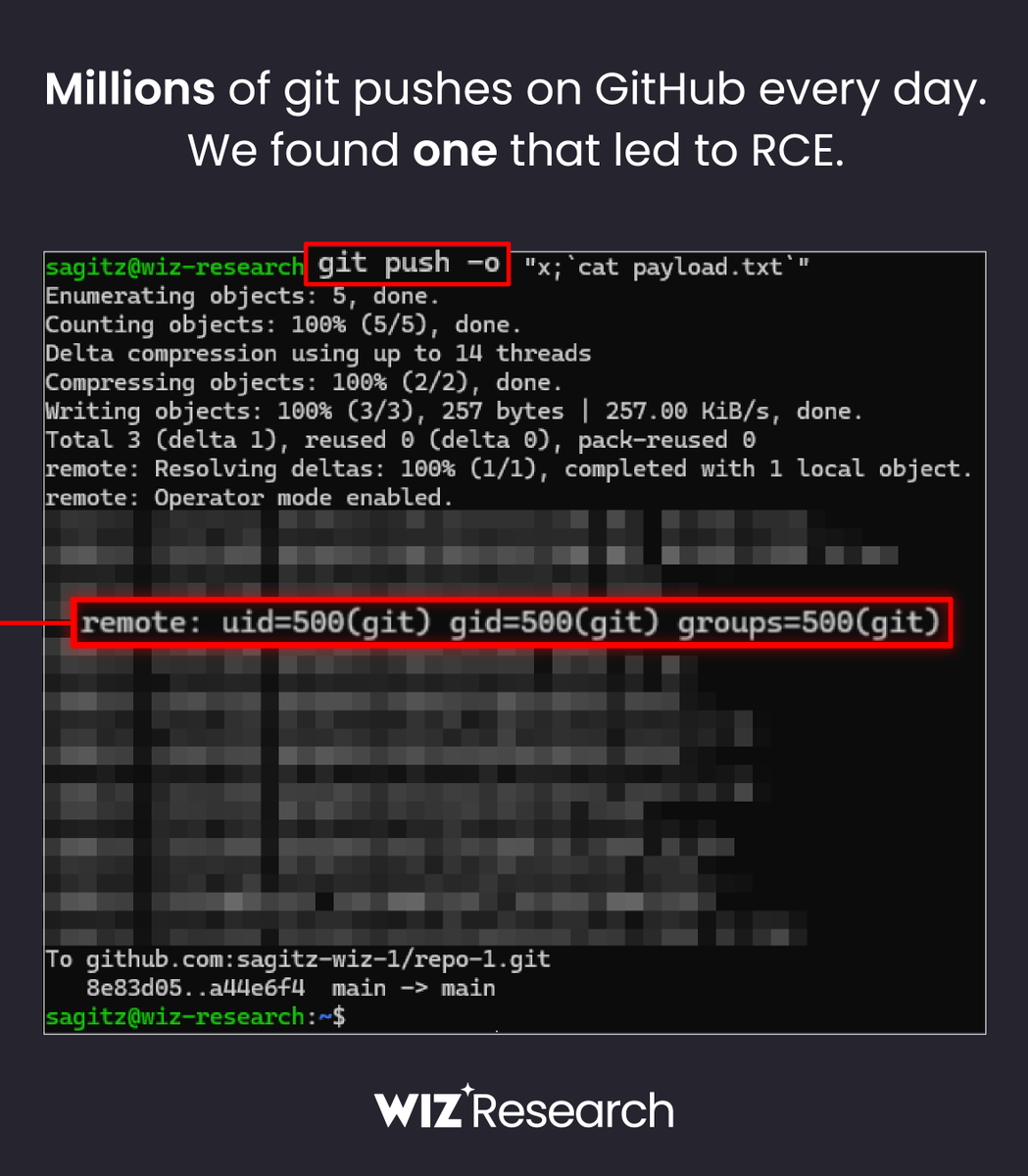
🚨 BREAKING: Wiz Research discovered Remote Code Execution on https://t.co/SvN2lGsnbO with a single git push
The flaw in @github allowed unauthorized access to millions of repositories belonging to other users and organizations 🤯
Oh for the love of keyboard gods!
I <3 my Mac MBP, but the low travel keyboard sucks ergonomically. Should I use Karabiner to shut it off when Bluetooth is connected, then design & 3D-print a carrier for an ext keyboard? Or switch to a laptop with a premium keyboard? Which one?
An Expedited Strategy Briefing on Mythos, Glasswing, and building a security program for what comes next, by 250 CISOs, and the wider community.
It is still a draft, with some design incomplete, but we felt it was imperative to release.
Link:
https://t.co/pQc8LM6Tga
BUT MYTHOS IS GUNNA BREAK DA INTERNET...
yeah but no but yeah: https://t.co/d8X3YA2zwe
been a fun weekend working on this along with so many epic people.
Friday afternoon @gadievron says "I'm working on a CISO community document for Monday. Want to collaborate? Releasing Monday." I said "Sure." (I have a problem with that word.)
@AnthropicAI had dropped Mythos on Monday. @cloudsa is running an emergency CISO Zoom on Tuesday. @SANSInstitute was already building BugBusters this Thursday with Ed Skoudis, Joshua Wright, and Chris Elgee. The entire community was asking the same question: what do we actually DO about this?
Three nights later we have a 30-page strategy briefing with 60+ contributors. "Sure" turned into barely sleeping Friday, Saturday, Sunday while @gadievron and @rmogull dragged this thing into existence. (My son checked to see if I was still breathing around hour 40. I think he was mostly concerned about if Uber Eats delivered Five Guys yet.)
The contributing authors list reads like someone raided a cybersecurity hall of fame: Jen Easterly, Bruce Schneier, Chris Inglis, @philvenables, Heather Adkins @argvee, @RGB_Lights, @sounilyu, @jimreavis, Katie Moussouris @k8em0, Jon Stewart, Maxim Kovalsky, David Scott Lewis, Joshua Saxe, John Yeoh, Ramy Houssaini and James Lyne. Every single one said yes within hours.
Cloud Security Alliance @cloudsa, @SANSInstitute, [un]prompted, @OWASPGenAISec -- four organizations that don't usually build things together at this speed. This is the start.
SANS reviewers who showed up: Chris Cochran @chrishvm, @edskoudis, Viswanath S Chirravuri @vchirrav, @bettersafetynet, Ciaran Martin
Thursday @edskoudis, @joswr1ght, and @chriselgee stop talking and start showing.
Live AI-assisted vulnerability discovery against real code. No slides about the future. Terminals and bugs. (The kind of demo where something breaks and that IS the point.)
Full reviewer list is in the doc. If you know someone on it, send them a note. They earned it.
But an even bigger thank you -- seriously -- from the entire cyber security community needs to go to @gadievron for once again bringing the avengers together -- like in Endgame (is that what Mythos is?) -- and you all know the scene -- but we need someone to create the meme with Gadi Evron with his shield and Mjölnir saying "Avengers..... assemble!" because that is exactly what he does. A lot it seems.
Read it: https://t.co/pppV1gi4Vc
Going to sleep now. Setting my alarm for Thursday. (Not joking.)
#CyberSecurity #AISecurity #SANSInstitute
this is actually insane
> be tech guy in australia
> adopt cancer riddled rescue dog, months to live
> not_going_to_give_you_up.mp4
> pay $3,000 to sequence her tumor DNA
> feed it to ChatGPT and AlphaFold
> zero background in biology
> identify mutated proteins, match them to drug targets
> design a custom mRNA cancer vaccine from scratch
> genomics professor is “gobsmacked” that some puppy lover did this on his own
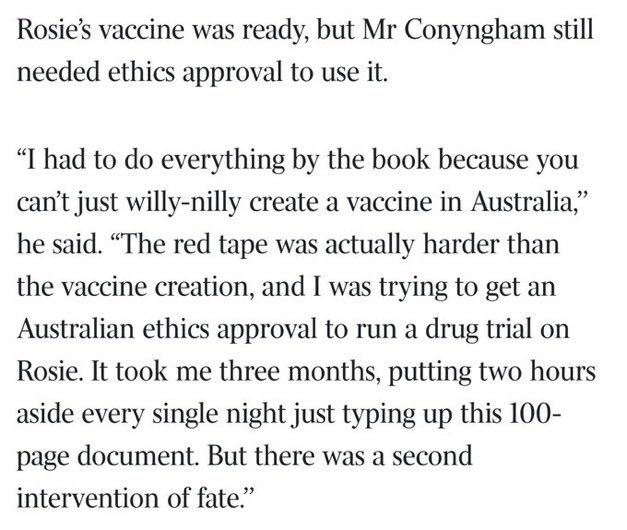
> need ethics approval to administer it
> red tape takes longer than designing the vaccine
> 3 months, finally approved
> drive 10 hours to get rosie her first injection
> tumor halves
> coat gets glossy again
> dog is alive and happy
> professor: “if we can do this for a dog, why aren’t we rolling this out to humans?”
one man with a chatbot, and $3,000 just outperformed the entire pharmaceutical discovery pipeline.
we are going to cure so many diseases.
I dont think people realize how good things are going to get