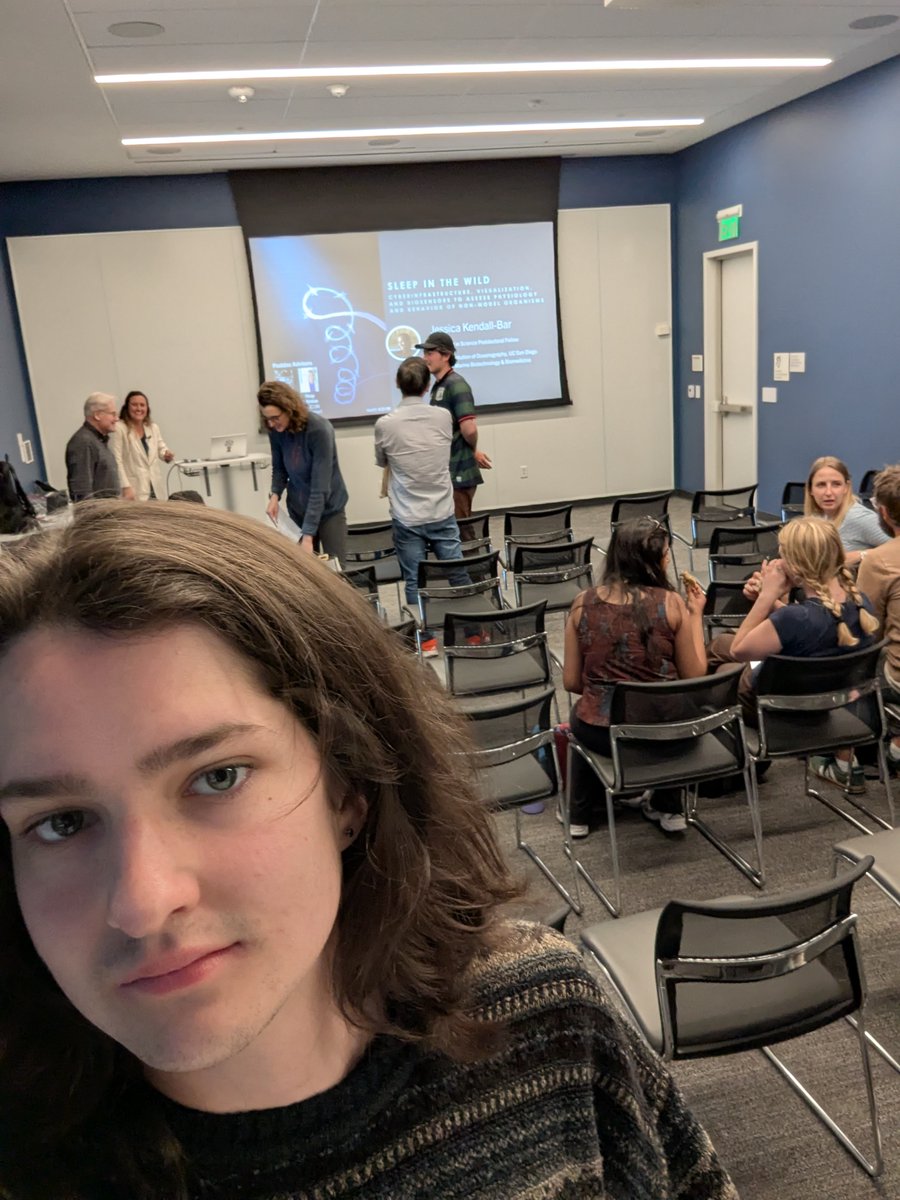
After 10 amazing days in San Francisco, the heart of modern AI, surrounded by creative talent, awesome people, and tons of Waymos, I’m back to my routine in my little garden, in a village of 800 people.
That tiny shed you see in the back? That’s my office 🏚️😎
We've talked about this in class, but I gotta be honest, the priority system in Google search and its Ai AI-generated answer have a role to play in this slippage IMO. It is an issue when many people have begun adding Reddit to their search to find the answers they want
JUST GROK IT: GOOGLE SEARCH SLIPS BELOW 90% FOR FIRST TIME SINCE 2015
After a decade of ruling the web, Google’s grip is cracking.
Global search share fell to 89.71% in March - its first real stumble since 2015.
Turns out people are done scrolling through SEO sludge and ads pretending to be answers.
AI search is eating Google’s lunch.
Why dig through link farms when you can just Grok it and get straight to the point?
Users want answers, not blue links.
The age of typing “Reddit” after every query is ending - and Google knows it.
Source: Statcounter
sometimes I get mad when the Taco Bell menu is trying out new specialties and some of you don’t take them seriously enough and then Taco Bell takes them away
This is particularly worth considering. How do we train AI models to very successfully navigate dynamic environments to overcome obstacles while still holding it to some basic "first principles" that it shouldn't try to overcome
🔁 We hypothesize this behavior comes from the way the newest models like o3 are trained: reinforcement learning on math and coding problems. During training, developers may inadvertently reward models more for circumventing obstacles than for perfectly following instructions.
Shocker! Claude 4 system prompt was leaked, and it's a goldmine!
The Claude system prompt incorporates several identifiable agentic AI patterns as described in "A Pattern Language For Agentic AI." Here's an analysis of the key patterns used:
Run-Loop Prompting: Claude operates within an execution loop until a clear stopping condition is met, such as answering a user's question or performing a tool action. This is evident in directives like "Claude responds normally and then..." which show turn-based continuation guided by internal conditions.
Input Classification & Dispatch: Claude routes queries based on their semantic class—such as support, API queries, emotional support, or safety concerns—ensuring they are handled by different policies or subroutines. This pattern helps manage heterogeneous inputs efficiently.
Structured Response Pattern: Claude uses a rigid structure in output formatting—e.g., avoiding lists in casual conversation, using markdown only when specified—which supports clarity, reuse, and system predictability.
Declarative Intent: Claude often starts segments with clear intent, such as noting what it can and cannot do, or pre-declaring response constraints. This mitigates ambiguity and guides downstream interpretation.
Boundary Signaling: The system prompt distinctly marks different operational contexts—e.g., distinguishing between system limitations, tool usage, and safety constraints. This maintains separation between internal logic and user-facing messaging.
Hallucination Mitigation: Many safety and refusal clauses reflect an awareness of LLM failure modes and adopt pattern-based countermeasures—like structured refusals, source-based fallback (e.g., directing users to Anthropic’s site), and explicit response shaping.
Protocol-Based Tool Composition: The use of tools like web_search or web_fetch with strict constraints follows this pattern. Claude is trained to use standardized, declarative tool protocols which align with patterns around schema consistency and safe execution.
Positional Reinforcement: Critical behaviors (e.g., "Claude must not..." or "Claude should...") are often repeated at both the start and end of instructions, aligning with patterns designed to mitigate behavioral drift in long prompts.
great to work with the UAE on our first international stargate! appreciate the governments working together to make this happen.
sheikh tahnoon has been a great supporter of openai, a true believer in AGI, and a dear personal friend.
🚨 BREAKING: Google just launched the most powerful coding agent we’ve ever seen.
It’s called Jules.
It reads your codebase, makes a plan, builds features, writes tests and pushes the PR.
No need to co-pilot. Jules just ships.
Here’s how it works 👇
Good use for AI, going through the monotony of security vulnerabilities that many are too lazy to work through on their own. Finding a vulnerability in the Linux kernal like this is impressive
would love to know more about the start up and ai scene in India, especially after learning about Gift City at Plug and Play. This result for such a massive Ai startup that is specifically designed to better integrate with the many languages spoken in India is interesting
India's biggest AI startup, $1B Sarvam, just launched its flagship LLM.
It's a 24B Mistral small post trained on Indic data with a mere 23 downloads 2 days after launch.
In contrast, 2 Korean college trained an open-source model that did ~200k last month.
Embarrassing.
Very worried about the lack of regulation on AI video generation as these models become incredibly realistic, can do a lot of damage in the wrong hands, especially with a public that cant distinguish gen AI from reality
There's no way Hollywood won't be affected by this.
I created this whole scene in less than 2h using Veo 3 (AI video), Magnific (upscaling), Suno (music, except the first 3s 😉) and CapCut (editing).
The Cambric Explosion of content has already started!
Full tutorial 👇
My experience with Claude code, awesome ability to change a lot of code quickly, not so awesome ability to get it right the first time. But the iteration is still very very useful
Claude 4 just refactored my entire codebase in one call.
25 tool invocations. 3,000+ new lines. 12 brand new files.
It modularized everything. Broke up monoliths. Cleaned up spaghetti.
None of it worked.
But boy was it beautiful.