@AmericanAir you have the most exceptional flight crew in this delayed/cancelled flight #1003 from St Kitts to Miami. They have the very best attitudes and are most supportive of the passengers.
Help end childhood lead poisoning through better testing.
@RenPhilanthropy's @robbiebarbero and @CHAI_health have been working with global experts to draft a target product profile for an affordable, point-of-care blood lead level screening test. This test could help reach the 1 in 3 children worldwide with elevated blood lead levels, who currently have no access to testing.
The draft is open for public comment until July 8, 2026, and all feedback is confidential.
https://t.co/oP1ebkw0MH
absolutely, I believe this. I have never been able to "write"--at least a first draft-- any other way than by hand.
our handwriting is unique to us as our fingerprints. it makes sense that the brain & the hand are closely coordinated. handwriting can vary & be loose & formative--not fixed like print; it embodies plasticity, change. even an unintelligent scrawl has meaning.
print is uniform, impersonal. as Samuel Beckett said: "It all came together between the hand and the page."
“A 2018 study by MIT cognitive scientists found that back-and-forth conversations between young children (ages 4 to 6) and adults led to measurable changes in brain physiology associated with language skills.” @OxEdAssessment
https://t.co/sYz8JcRPcR
Thank you @Delta for an easy flight home on a Friday evening. Flight DL1065 ATL to PBI has a very attentive and professional flight crew. #service#nodeltanojen
Comprehension begins with spoken language. “A 2018 study by MIT cognitive scientists found that back-and-forth conversations between young children (ages 4 to 6) and adults led to measurable changes in brain physiology associated with language skills.”
We’re always excited to see Symposium conversations continue beyond the event.
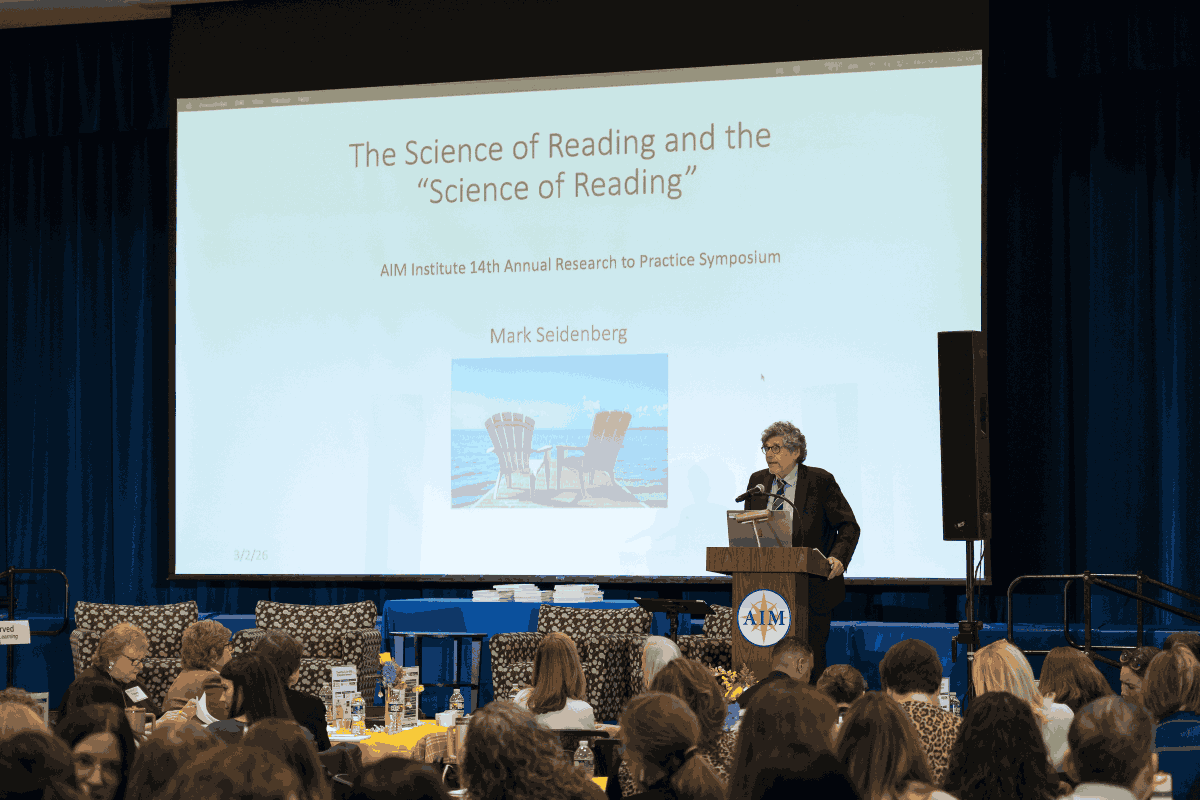
After presenting at AIM’s 2026 Research to Practice Symposium, @markseidenberg shared a new piece exploring how early language development shapes reading outcomes.
It’s a timely reminder: how children learn to read is deeply connected to how they develop language.
Take a look: https://t.co/SBRdRTPeax
@MelK_Ed@CurriculumIP You may want to screen for language? Language is the precursor to phonics, and when a developmental language disorder (DLD) phonics and decoding is not enough. @OxEdAssessment
Remember this article, @ehanford 👉 https://t.co/S5caXZ14wq?
We have two thoughtful articles on “the reading wars” — but they clash on phonics:
✅ Education Next warns against over-teaching phonics: too many rules, drills, and jargon crowd out actual reading, waste time, and can overload struggling kids.
✅ The New Yorker argues we’re still under-doing it: whole-language ideas linger, leaving dyslexic students (and many others) behind. Explicit, intensive structured literacy is the proven fix — and we’re not doing enough of it.
One says “trim the fat.” The other says “don’t short the dosage.”
Both love phonics… yeah, evidence shows all learners benefits from phonics instruction — diverse learners benefit most.
Oh, and… who is really stoking “the reading wars” and why? 🤔
@Volcoucou@ImpactEdTx@nellkduke People act like you can “just teach phonics and kids will read,” says Tenette Smith of @MdPublicSchools.
< chuckle in the room >
She is the latest panelist to note the need to focus more on oral language development.
@ehanford@MissyPurcell@LianaLoewus Great article. We must also raise awareness on the role that oral language plays in reading. Comprehension starts with oral language. Reading is language. https://t.co/LB7DtJKBd7
Sold a Story, The Sequel, perhaps @ehanford?
📚 Free Webinar Alert!
Join us April 22 at 6 PM MST for “Fostering Reading through Language” with MaryKate DeSantis.
Learn how oral language drives reading success & closes gaps.
👉 Register now!
#Literacy#EdChat#Teachers#Reading