The benefits of coffee include lowering the risk of atrial fibrillation, Type 2 diabetes, and lowering blood pressure (J-curve, see summary below)
A summary of the data and statement from @American_Heart https://t.co/m20TCPa2S5
While views aren’t the only metric to assess the value of social media output, sometimes it’s useful to reach a significant number of people.
So I’m pleased that the extra time/energy I have been putting into my FB page is yielding results.
#MEcfs#PwME
News Release 8-Apr-2026
Some common IBS treatments linked to higher risk of death
https://t.co/da7Hazmk4U
Association of pharmacotherapy with all-cause mortality among patients with irritable bowel syndrome
https://t.co/KAvQhQTKhS
#IrritableBowelSyndrome#IBS
🏆 I received this journal notification today that my paper on neuroinflammation of the brainstem as a possible CNS localization for #POTS and #LongCOVID made their top 10 list for most viewed and downloaded papers in 2025. 🧠🎉
Read full paper here:
https://t.co/A01HSxalrF
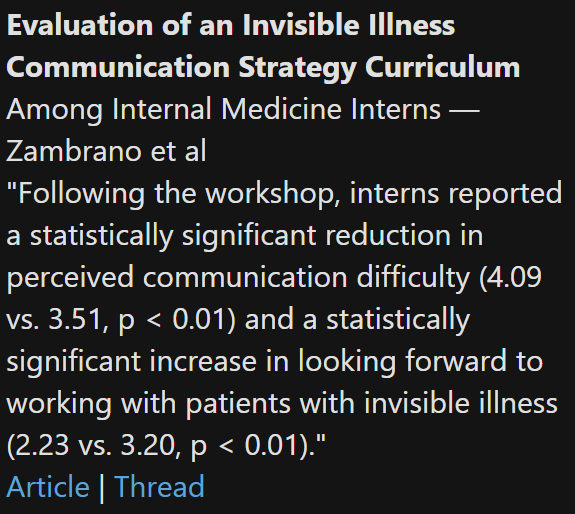
Evaluation of an Invisible Illness Communication Strategy Curriculum Among Internal Medicine Interns
https://t.co/N54yFtXMJd
Screenshot from latest Science for ME weekly update
#hiddenillness#invisibleillness
From Germany 🇩🇪
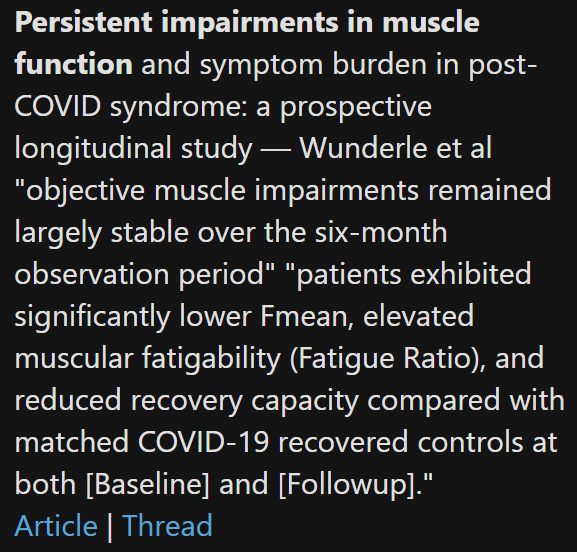
Persistent impairments in muscle function and symptom burden in post-COVID syndrome: a prospective longitudinal study
https://t.co/TwTVaZZ5jZ
Screenshot from latest Science for ME weekly update
#LongCovid#PASC
From Italy 🇮🇹
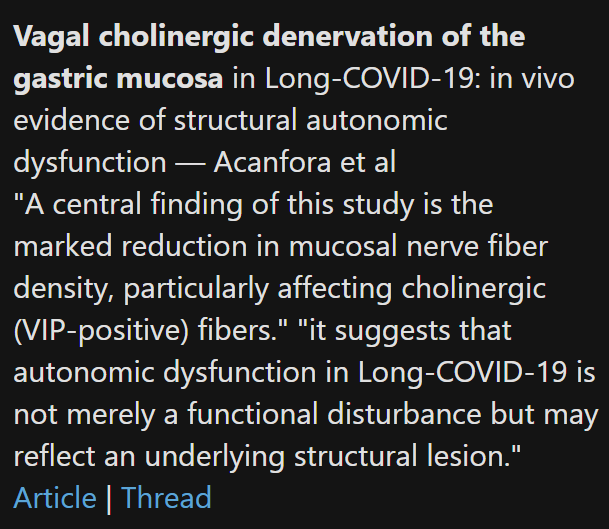
Vagal cholinergic denervation of the gastric mucosa in Long-COVID-19: in vivo evidence of structural autonomic dysfunction
https://t.co/KvN03iVpZw
Screenshot from latest Science for ME weekly update
#LongCovid#PASC
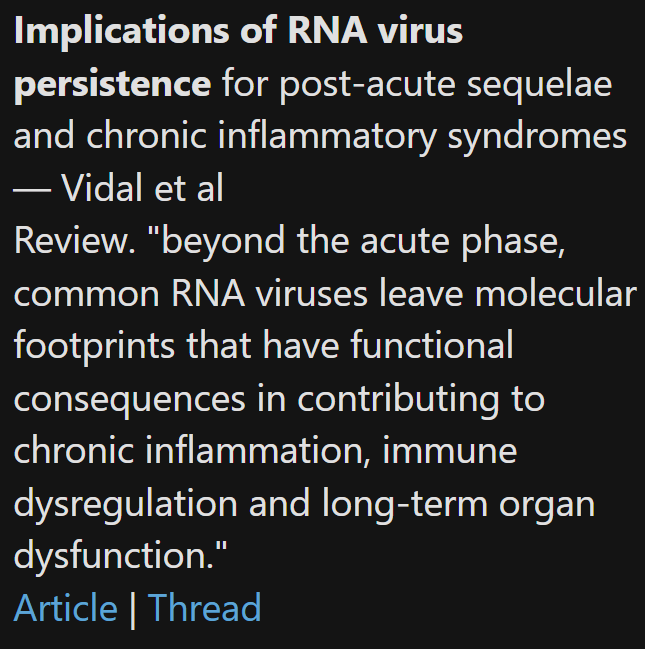
Implications of RNA virus persistence for post-acute sequelae and chronic inflammatory syndromes
https://t.co/iVpp0NP3w0
Screenshot from latest Science for ME weekly update
#LongCovid#PASC
@EricTopol Similarly, I also believe that abdominal aortic aneurysms (AAA) are a thing in MECFS and Covid. I had an open AAA repair at the end of May 2026.
A controversy has erupted over COVID-19 vaccine science in the U.S.
➡️ A report claims that a CDC MMWR manuscript showing the 2025–26 COVID-19 vaccine was 53–55% effective in preventing hospitalization among immunocompetent adults during the first few months after vaccination was delayed and ultimately blocked from publication by the CDC’s acting leadership.
➡️ The study’s authors argue that suppressing such findings undermines scientific transparency and prevents the scientific community from independently evaluating the evidence.
➡️ Whatever one’s views on COVID-19 vaccines, open access to scientific data and transparent debate are fundamental to evidence-based public health.
https://t.co/Ish1uYDo6z
Implications of RNA virus persistence for post-acute sequelae and chronic inflammatory syndromes
🚨Textbooks are obsolete. I was right again!
The bad news SarsCoV2 brought for all those rooted ID/Virologists, their textbooks of acute RNA viruses is dead according to this new review!
➡️This new and very interesting review synthesizes evidence that many RNA viruses long considered strictly acute (SARSCoV2, influenza, RSV, measles, CHIKV, EBOV, etc.) can leave behind persistent viral products like replication-competent genomes, proteins, mutated forms, and non-standard viral genomes (nsVGs), even months to years after infectious virus is cleared.
➡️Study main findings:
- Persistence occurs in diverse reservoirs: tissue macrophages, dendritic cells, ILC2s, fibroblasts, neurons, and immune-privileged sites (brain, testes, joints, gut),
- Pathogen-Associated Molecular Patterns(PAMP’s) products continuously stimulate innate sensors driving chronic low-grade inflammation and tissue dysfunction,
- Documented links include longC0VID (SARSCoV2), subacute sclerosing panencephalitis (measles), persistent arthralgia (CHIKV), post-Ebola syndromes, and virus-driven asthma-like disease (Sendai virus model),
- nsVGs and immune-evasion tactics (IFN suppression, MHC downregulation, antigenic variation) help viruses or their remnants survive in host cells,
- Animal models show that removing specific persistently infected immune cells reduces chronic inflammation, proving a causal role,
➡️The review challenges the classical view that acute RNA virus infection reliably ends in complete clearance and durable protective immunity(= classic textbooks!),
➡️Reinfection impact is not directly addressed, the authors focus on post-acute/chronic sequelae rather than susceptibility to new infections.
‼️So, the comfortable assumption that acute RNA virus infections are self-limiting events followed by some kind of "sterilizing immunity" is outdated. Persistent viral products can instead establish a smouldering inflammatory state that drives debilitating chronic disease. For SARSCoV2 and similar viruses, this means the real long-term cost may not be (re)infection itself but the failure to ever fully resolve the first encounter, leaving behind reservoirs that keep the immune system chronically engaged and the host at risk of progressive organ damage. It just became a lot more complicated!
TEXTBOOKS OUT….#MITIGATION and #CLEANAIR IN!
https://t.co/lez6TzJ7iS
1) A notable trend in these positive developments is how many are taking place in 🇪🇺Europe instead of the 🇺🇸US.
A major shift has taken place in just a couple of years.
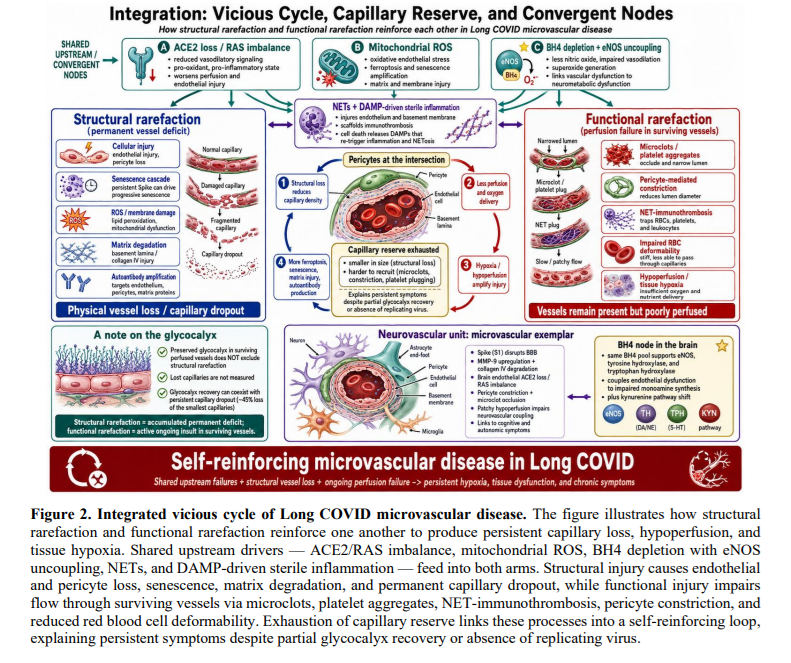
Microvascular Erasure in Long COVID and Spike Protein Exposure: Complementary Mechanisms of Direct Cellular Injury and Perfusion Impairment Driving Capillary Rarefaction
🚨Spike protein may be erasing your capillaries.
New proposal claims LongC0VID’s core problem is irreversible microvascular destruction, not just inflammation.
→Structural + functional rarefaction up to 18 months post-inf!
➡️Interesting international evidence-based hypothesis model, a research proposal builds on existing science/literature!
➡️Bear with me…. their hypothesis:
1. Persistent capillary rarefaction is a core hallmark of LongC0VID, detectable up to 18 months post-infection, with studies showing ~45% loss of the smallest capillaries and reduced microvascular health scores.
2. They propose two complementary, interacting mechanisms of “microvascular erasure” driven by SARSCoV2 spike protein exposure:
A. STRUCTURAL rarefaction (irreversible physical vessel loss) via direct endothelial and pericyte injury: calcium dysregulation, mitochondrial dysfunction, ACE2/RAS imbalance, NF-κB inflammation, eNOS uncoupling (BH4 depletion), ferroptosis, NETs/DAMPs, senescence, and autoantibodies.
B. FUNCTIONAL rarefaction (perfusion failure in remaining vessels) via amyloid fibrin microclots, NET-immunothrombosis, platelet activation, pericyte constriction, and RBC deformability issues.
3. These create a vicious cycle of patchy hypoxia, tissue ischemia, fibrosis, and organ dysfunction (brain fog, fatigue, cardiac issues, etc.), potentially progressing to an acquired systemic sclerosis-like state (“Spike Protein Endothelial Disease” or SPED).
4. Reinfection/vaccination: The document does not discuss reinfections or present any data on vaccination. It only proposes future studies to correlate capillary density with vaccination history and spike exposure. No mechanisms or comparisons between natural infection versus vaccine-derived spike are detailed.
➡️This proposal synthesizes prior evidence on persistent capillary rarefaction and spike-mediated endothelial injury into a unified “microvascular erasure” framework, distinguishing structural from functional damage and introducing the "SPED concept". Its bolder interpretive synthesis offers a coherent, hypothesis-generating model that indeed should merit further testing.
‼️So, following the authors, capillary rarefaction in LongC0VID represents not a temporary dysfunction but progressive, largely irreversible microvascular erasure. Once structural vessel loss occurs, downstream parenchyma is permanently orphaned in non-regenerative tissues (heart, brain, kidney), locking patients into chronic hypoxia and multi-organ decline. Spike-driven mechanisms turn a single exposure into a self-perpetuating disease process with “scleroderma-like” features, a sobering prospect of widespread, potentially permanent microvascular obliteration if unaddressed.🤔
Would greatly appreciate @resiapretorius thoughts?
#AvoidSars2 #AvoidReinfections
https://t.co/gZgpZrEXtN
The memory of our immune system cells is truly incredible
The new @SciImmunology dedicated issue
https://t.co/IfeKSrgZqW
https://t.co/itjtqNCi9Z
https://t.co/4HqZsB7RSN
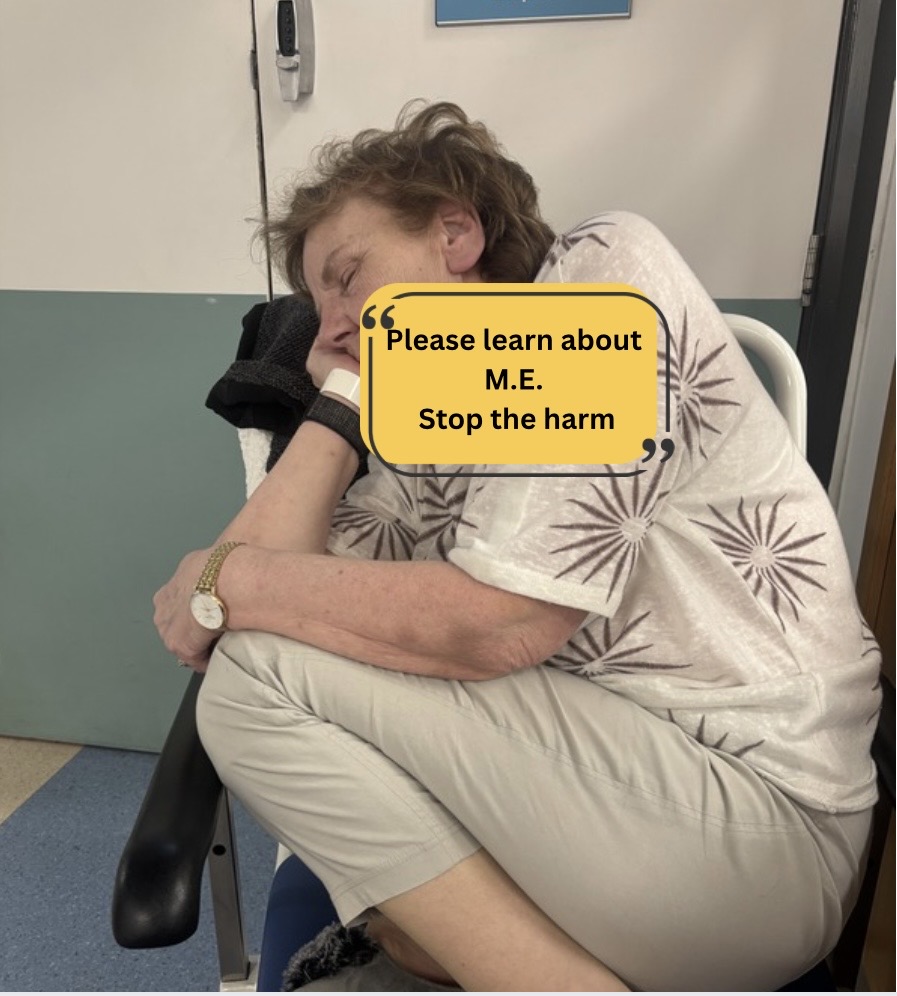
1/ friday evening advised by Phone First to attend A&E with high BP couldn’t stand/walk/head spinning Light/noise intolerant + inability to be upright more couple of hrs past 26yrs with #ME
Asked on admission “whats M.E.“
9hrs like👇 on chair the #PEM is still crucifying me
From Brazil
Assessing autonomic nervous system imbalance in long COVID-19 patients through heart rate variability during tilt testing
https://t.co/wYSpbdoL5z
Screenshot from latest Science for ME weekly update
#LongCovid#PASC
In older adults, how to keep your muscle young at multiple molecular levels (metabolomics, lipidomics, transcriptomics)
Exercise.
"We found that 50% of these age-related differences were absent in trained older adults, resulting in profiles resembling those of young adults."
https://t.co/AYIHUGyWCF