@PotHolesMovie is currently in development. If you're an Investor and would like to invest in our little movie with a big heart you can email me at [email protected] to get our Production Kit, which includes our Pitch Deck,Style Guide, Budget & Business Plan.
This is so cool. While reading this I thought of glasses or contacts like @Meta 's #Ai glasses could "see" your finger pointing at something in front of you like a screen or anything else in front of you.
This works really well btw, at the end of your query ask your LLM to "structure your response as HTML", then view the generated file in your browser. I've also had some success asking the LLM to present its output as slideshows, etc.
More generally, imo audio is the human-preferred input to AIs but vision (images/animations/video) is the preferred output from them. Around a ~third of our brains are a massively parallel processor dedicated to vision, it is the 10-lane superhighway of information into brain. As AI improves, I think we'll see a progression that takes advantage:
1) raw text (hard/effortful to read)
2) markdown (bold, italic, headings, tables, a bit easier on the eyes) <-- current default
3) HTML (still procedural with underlying code, but a lot more flexibility on the graphics, layout, even interactivity) <-- early but forming new good default
...4,5,6,...
n) interactive neural videos/simulations
Imo the extrapolation (though the technology doesn't exist just yet) ends in some kind of interactive videos generated directly by a diffusion neural net. Many open questions as to how exact/procedural "Software 1.0" artifacts (e.g. interactive simulations) may be woven together with neural artifacts (diffusion grids), but generally something in the direction of the recently viral https://t.co/z21CP5iQfu
There are also improvements necessary and pending at the input. Audio nor text nor video alone are not enough, e.g. I feel a need to point/gesture to things on the screen, similar to all the things you would do with a person physically next to you and your computer screen.
TLDR The input/output mind meld between humans and AIs is ongoing and there is a lot of work to do and significant progress to be made, way before jumping all the way into neuralink-esque BCIs and all that. For what's worth exploring at the current stage, hot tip try ask for HTML.
This is a super exciting release - Claude Fable 5 is the same underlying model as Mythos but with added safeguards. The benchmarks are great and it's SOTA on everything by a margin but I'll add that *qualitatively* also, this is a major-version-bump-deserving step change forward (imo of the same order as Claude 4.5 was in November), peaking especially for long problem-solving sessions on very difficult problems. You can give it a lot more ambitious tasks than what you're used to, the model "gets it" and it will just go, and it's never felt this tempting to stop looking at the code at all (but don't do this in prod!). The model still has quirks that people will run into and the safeguards are configured to be a little too trigger happy for launch, which can hopefully be tuned over time.
I feel a lot of things changing as working software increasingly comes out on a tap. The Jevon's paradox kicks in and I feel my own demand for software growing substantially. You can ask for anything - explainers, visualizers, dashboards, bespoke single-use apps (e.g. a full wandb that is hyper-specific just for your project), you can 10X your test suite, auto-optimize code, run giant research projects with custom HTML for the results, anything! "Free your mind" (Matrix ref). Really looking forward to all the things people build!
I love open source AI in @ComfyUI because it lets me control every step.
For this spaceship shot I tracked the camera, designed layout geometry in Blender, exported depth maps, prompted the final look with an AI image editor, and jumped into Photoshop to clean it all up.
I tried a lot but this is the closest one-shot prompt I was able to build
go build it :)
404 Page — One-Shot Recreation Prompt
Build a cinematic, multilayer parallax 404 page using Next.js (App Router, "use client"), vanilla CSS, and Phosphor Icons (@phosphor-icons/react). The page uses three provided images — a background, a person, and a hand — layered with giant "404" typography to create a dramatic depth-of-field composition. Rose petals float across the scene. The entire page is fullscreen, overflow hidden, pitch black (#000).
Assets
Download these images and place them in /public/:
Hand (save as hand.webp): https://t.co/YYIvbIrGn9
A veiled hand holding a large dark peony/rose, positioned in the lower-left of the frame reaching upward. Right half is empty white. Monochromatic, desaturated.
Person (save as person.webp): https://t.co/LtyWm0KSGd
A woman in dark clothing with a gothic ornate crown and sheer dark veil, looking downward. Subject is on the left half, right half is empty white. Monochromatic, desaturated.
Background (save as bg.webp): https://t.co/k7wUr2nu0n
Extremely dark, near-black atmospheric texture with subtle smoky gradients. Almost void-like.
Layer Stack Architecture
The composition is a stack of absolutely positioned fullscreen layers inside a single div.layer-container (100vw x 100vh, overflow hidden, background #000). Each layer has position absolute, inset 0, width 100%, height 100%, will-change transform.
Z-index layering from back to front:
z-index 10 — Background: bg.webp with object-fit cover
z-index 20 — Zero "0": Giant white "0" character, behind the person
z-index 30 — Person: person.webp, masked with linear-gradient(to right, black 0%, black 65%, transparent 85%) so the white right edge fades out
z-index 40 — Left "4": Giant white "4", appears in front of the person
z-index 50 — Hand: hand.webp, masked with radial-gradient(ellipse 55% 70% at 33% 55%, black 0%, black 35%, transparent 70%) to isolate the hand/flower
z-index 60 — Right "4": Giant white "4", frontmost text layer
Critical: The person partially obscures the "0" behind it, while the left "4" floats in front of the person. The hand sits above the left "4", creating complex interleaving where photographic elements and text weave through each other.
404 Typography
Font: Futura, Futura PT, Century Gothic, sans-serif
Weight: 500 (medium)
Size: clamp(12rem, 26vw, 28rem) — massive, screen-filling
Color: Pure white #fff
Vertical stretch: transform scaleY(1.04)
Line-height: 1
Absolute positioning per character:
Left "4" — left 35.3%, top 39%
"0" — left 48%, top 38.9%
Right "4" — left 60.4%, top 38.9%
Text shadows for depth:
Left "4": 6px 6px 25px rgba(0,0,0,0.8), 0 4px 12px rgba(0,0,0,0.5)
"0": 6px 6px 28px rgba(0,0,0,0.8), 0 4px 14px rgba(0,0,0,0.5)
Right "4": 0 10px 45px rgba(0,0,0,0.9), 0 4px 15px rgba(0,0,0,0.7), -6px 6px 30px rgba(0,0,0,0.5)
Mouse-Driven Parallax Effect
On mousemove, normalize cursor to (-1 to +1). Apply lerped translate3d transforms (ease 0.12) per layer:
"0" — multiplier x2 (subtle)
Person — multiplier x4
Right "4" — multiplier x5
Left "4" — multiplier x7
Hand — multiplier x12 (most dramatic)
Use requestAnimationFrame. Store interpolated values in a mutable ref. Use translate3d(Xpx, Ypx, 0) for GPU compositing.
3D Rose Petal Simulator
A separate PetalSimulator component spawning 40 CSS-only petal divs via raw DOM manipulation (no React state per petal):
Size: 20-35px x 25-45px, organic teardrop border-radius (4 shape variants)
Color: radial-gradient with randomized deep crimson HSL (hue 340-355, sat 85-100%, lightness 35-50%)
Motion: drift diagonally bottom-right with sine-wave wind sway + 3D tumble (rotateX/Y/Z)
Opacity: 0.4 to 0.7 (semi-transparent)
Respawn off-screen-top when exiting viewport
Initial spread across full viewport on load
Container: z-index 50, pointer-events none
Performance: No filter blur, no box-shadow. Only will-change transform + translate3d.
UI Overlay
Position fixed, inset 0, z-index 200, pointer-events none (buttons get pointer-events auto). All text uses Futura. All icons use Phosphor Icons — weight light for UI, weight fill for social.
Top-left (28px, 32px) — List icon size 22, menu button
Top-center — "B&Y" logo (22px, weight 600, spacing 6px) + "YOUR · GOAL · TRAINER" subtitle (7px, 50% opacity)
Top-right (28px, 32px) — MagnifyingGlass, User, ShoppingCart icons with 16px gap
Left-center — "BACK" vertical text (writing-mode vertical-rl, 10px, 50% opacity)
Right-center — "HOME" vertical text (same style)
Bottom-left (28px, 32px) — House, SlidersHorizontal icons
Bottom-center — 3 dots (6px, first at 80% opacity, rest 40%)
Bottom-right (28px, 32px) — XLogo, FacebookLogo, InstagramLogo (fill weight)
Top 32%, left 62% — "BACK HOME" button, 16px Futura 500, spacing 5px, 1px border rgba(255,255,255,0.4), padding 18px 48px
Performance Rules
All layers use will-change transform and translate3d, never translate()
No filter on any animated element
No box-shadow on any animated element
Petals use raw DOM, not React state
Images use next/image with fill, priority, sizes 100vw
CSS masks use both -webkit-mask-image and mask-image
Stack
Next.js App Router, TypeScript, "use client", next/image, Vanilla CSS, @phosphor-icons/react
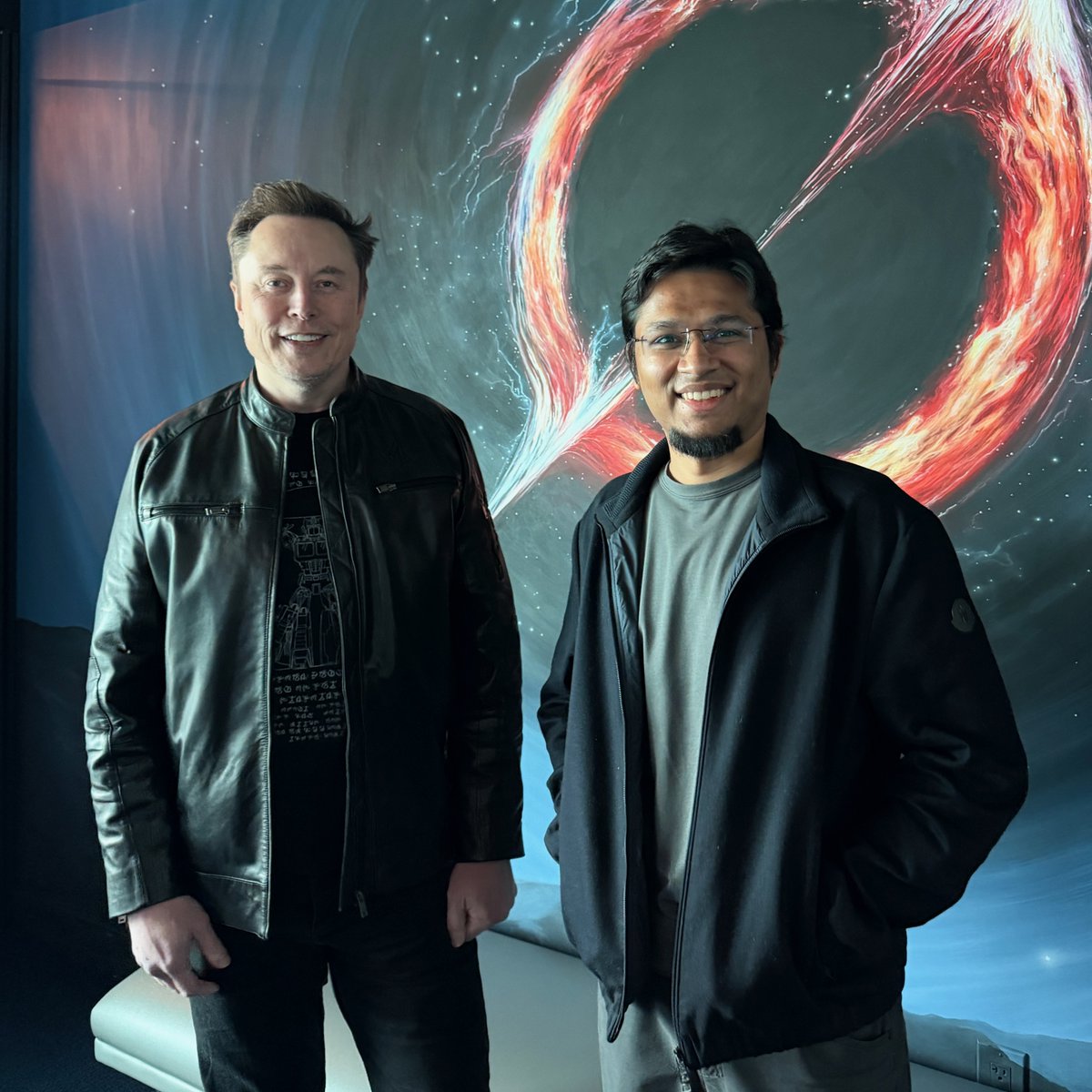
Who is Devendra Chaplot?
-> This Chap is a cracked engineer coming all the way from India
-> Did his computer science engineering from IIT Bombay along with a minor in Applied Statistics in 2014 (why not)
-> Worked at Samsung Electronics HQ as a Research Associate
-> Interned at Apple for another year doing AI Research as an intern
-> Joined as a research intern at Facebook in 2018 but became their Lead AI Scientist by 2020
-> Then casually went on to join Mistral as their AI Research Scientist (founding team member) in 2023 - leading and creating some crazy LLMs like Mistral 7B, Mistral 8x7B, Mistral 12B
-> Then he headed the research at Thinking Machine Labs (FYI this is Mira Murati's startup) - building frontier AI systems
Oh and did I mention, the Chap also complete his PhD from Carnegie Mellon University on the side while working as a Research Intern at Apple and Facebook.
Yep, he seems like a regular guy from India - now trying to build superintelligence at xAI.
I'm joining SpaceX and xAI, working closely with Elon and team to build superintelligence.
Together SpaceX and xAI combine physical and digital intelligence under a leader who understands hardware at the deepest level. Add a high-agency culture with frontier-scale resources, and you get the possibility to achieve something truly unique.
I’m excited to advance the fields I’ve obsessed over for years, from robotics research to building AI models on the founding teams of Mistral and TML. Both were extraordinary journeys with extraordinary people that shaped how I think about building intelligence from the ground up.
Grateful for everything that brought me here and can’t wait to get started.
Our niece, Émélie, is part of the British Columbia #mogul#team
Rafflebox: Help support the BC Mogul Team 50/50 Fundraiser and have a chance to win some real prizes. https://t.co/jmWIAzyQII
@MaxynMkt@PotHolesMovie Hi Maxyn, how are you? Sorry, I didn't see your comment until now, 2026. No, I haven't thought of TikTok for @PotHolesMovie. That's a good idea.
@PotHolesMovie is currently in development. If you're an Investor and would like to invest in our little movie with a big heart you can email me at [email protected] to get our Production Kit, which includes our Pitch Deck,Style Guide, Budget & Business Plan.
@PotHolesMovie@grok what is this post about, and roughly how many pot smokers/stoners around the world would love to see this movie, and how much money could it net for any investors who invest in the development, production, post-production, and marketing of this production?
NASA's Dragonfly is targeting launch in 2028 from Kennedy Space Center on a mission to explore Saturn’s largest moon, Titan! Listen to NASA's Small Steps, Giant Leaps podcast latest episode to learn why Titan is such a compelling destination! https://t.co/b2X6J7gytR
(video has no sound)
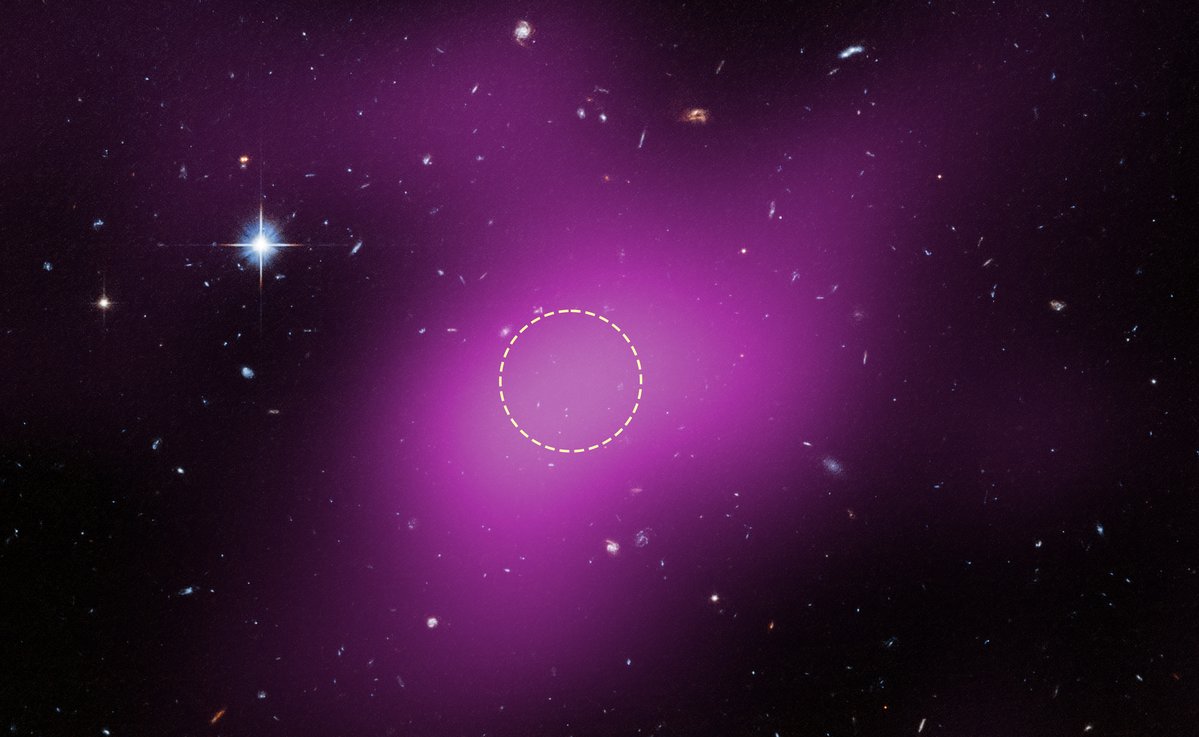
A team using @NASAHubble has made the first confirmed detection of a new type of astronomical object: a starless, gas-rich, dark-matter cloud, nicknamed Cloud-9. Here's what this object is teaching us about dark matter and the early universe: https://t.co/csCRXnzgDM
How @Netflix got mad because I wouldn’t hand over my prompts for FREE - A thread ⤵️
A Netflix AI division asked me to do a free test for a potential job. I usually refuse free tests because free doesn't pay bills, but being Netflix I said why not, it may be a good opportunity.
Scattering is one of Dash's biggest strengths, yet many users never explore the power of using several scatter tools in the same setup. This approach allows you to create far more complex procedural environments, like these cliffs, directly inside UE5.
Let us know below if you want us to share a full scattering tutorial.