12 Reasons Why Cities Need More Trees:
1. Temperature Control
One large tree is equivalent to 10 air conditioning units, and the shade they provide can reduce street temperature by more than 30%.
2. Noise Reduction
Trees can reduce loudness by up to 50%. In urban areas filled with the sound of cars, construction, sirens, aeroplanes, and music, trees are essentially the best way to block noise and keep cities — along with the homes and workplaces in them — quieter.
3. Air Purity
Trees remove an astonishing amount of harmful pollutants and toxins from the air. In urban areas air quality is often disastrously bad — with severe consequences for our health. Trees make the air we breathe much cleaner.
4. Oxygen
And, while absorbing all those pollutants, trees also put more oxygen back into the urban environment. Oxygen levels are significantly lower in cities compared to the countryside; trees help to solve that problem.
5. Water Management
Trees do more than just shelter us and our buildings from rain — which is, in fact, extremely important. They also absorb huge quantities of water, reduce run-off, neutralise the severity of flooding, and make flooding more unlikely altogether. Not to forget that their roots absorb pollutants and prevent them from feeding back into a city's water supply.
6. Psychological Health
Studies have proven what we instinctively know to be true: that human beings are significantly happier when surrounded by nature rather than sterile urban environments. Our emotions, behaviour, and thoughts are shaped by the places we spend time — and trees have a profoundly positive effect on our psychology. The consequential benefits of being happier and more peaceful — as individuals and as a society — are immense.
7. Physical Health
Beyond all the other ways in which trees improve air quality and the urban environment, much to the benefit of our health, they also encourage people to go outside. Cycling, running, and walking are all more common in urban areas with plenty of trees. A knock-on effect of people spending more time outdoors is also social integration and stronger communities.
8. Privacy
A simple point, but not inconsequential, is that trees provide privacy.
9. Economics
The total economic benefit of urban trees is hard to calculate. There are costs, of course, including the repair of infrastructure damaged by roots and maintaining the trees themselves. But the total economic benefit — a consequence of everything else in this list and more — far outweighs the expenditure. Trees make cities wealthier.
10. Wildlife
Trees are miniature cities all of their own, serving as a habitat for hundreds of different species, including birds and mammals and insects.
11. Light Pollution
Trees don't only block the light shining down, therefore keeping us and our cities cooler — they also disrupt light shining up, from street lighting, cars, houses, and billboards. Skies are clearer in cities with more trees.
12. Aesthetics
And, finally, trees are beautiful. They break up the potential monotony of urban environments — the sharp geometry, the greyscale roads and buildings, the endless rows of cars — with their trunks, boughs, canopies, and flowers.
Just think: the gold and red of falling leaves in autumn, the white and pink blossom of spring, the vast green canopies of summer, and the branches lined with hoar-frost in winter. Every single tree is a myriad of intricacy and texture, of colour and scent, of dappled light on the pavement, mottled bark, knotted roots, of clustered leaves and delicate petals and stern boughs.
Few streets would not be improved by the kaleidoscopic aesthetic delights of a tree, not to mention the many different species of tree, all over the world, whether willow, oak, lime, cherry, aspen, maple, birch, horse chestnut, dogwood, hornbeam, ash, sycamore... the list goes on.
There are some drawbacks to urban trees, most of them context-specific, and they are not — of course — universally appropriate. But it seems fair to say that many cities would benefit from at least a few more trees here and there.
From rewetting peatlands to restoring forests and nurturing green areas in urban settings, there is a huge potential for increasing the 🌎 rollout of nature-based solutions. 🌿
Learn more about NbS and its potential in this report 👇 https://t.co/Rqi4sl4m3J
👀 Sneak a peek at the deepest & sharpest infrared image of the early universe ever taken — all in a day’s work for the Webb telescope. (Literally, capturing it took less than a day!) This is Webb’s first image released as we begin to #UnfoldTheUniverse: https://t.co/tlougFWg8B
We have already locked in ~2 ft of sea level rise, but there is still time to avoid the worst if the global economy transitions towards #netzero as quickly as possible. It is not an exaggeration to state that our very survival depends on it. #climatechange https://t.co/vo9lmID3GA
Pssst!
Solar is now 88% cheaper than thought a decade ago, UK govt says – half its estimated cost of new gas power
Just running a gas plant in Feb 2022 is costing around FOUR times as much as we'd pay for new solar or wind
Thread with charts + FAQ
1/
https://t.co/V2wefGvdy7
Confused by all the ESG and #sustainability framework acronyms? Then have a read of our handy new explainer here: "Unravelling the #ESG ecosystem: a guide for professional and financial services" (and everyone else too!) https://t.co/fOZ96xze0T @_Avieco #csr
Fascinating deep dive into 'Green Lairds' trend in my homeland. So many issues at play here from #climate to #offsetting, #biodiversity, land rights & #rewilding... "Who Owns Scotland? The millionaires buying up the Highlands" https://t.co/iom5V24TfF via @SpecialReports @_Avieco
The proposed go-ahead for 6 new oil & gas fields in N Sea would represent stunning retreat from pro-climate action posturing before COP26
It's almost as if UK at the time was bullshitting the world
THREAD 🧵 1/6
https://t.co/pIKCjIyb2u
An interesting @corporateknight round up of some promising decarbonisation innovations in the steel, cement and aluminium sectors. All of which (and more) will be needed at rapid pace to push us towards #NetZero! @_Avieco #climate#CSR#Sustainability
https://t.co/8GJOl6WAKn
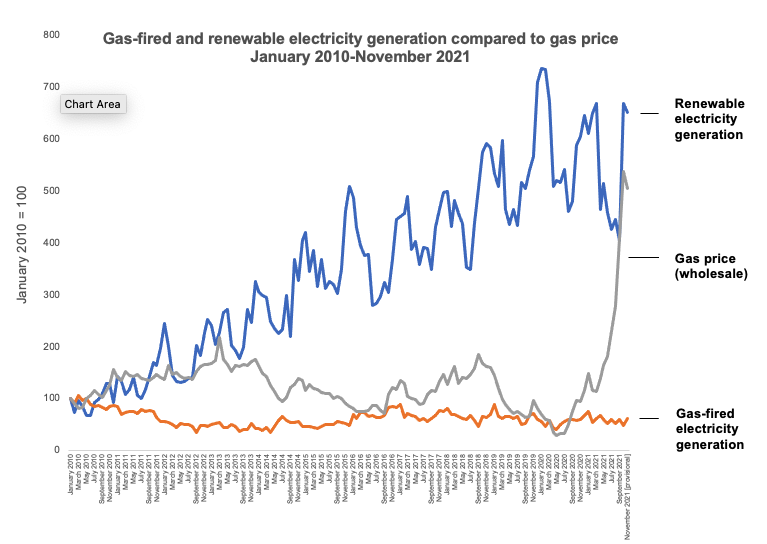
The argument that low renewable electricity generation led to higher gas generation driving up gas prices is clearly false.
In the UK in the months Sep-Nov 2021 compared to Sep-Nov 2020 we can observe:
Gas generation ⬇️ 2%
RES generation ⬆️ 3%
Gas price ⬆️ 400%
🧵
Great graphic on UK land use. The first thought that came to mind is how much of that space will need to be handed over to reforestation if the UK plans on meeting its #NetZero aspirations/committments... @_Avieco #ClimateCrisis
Three thoughts from this brilliant graphic:
- we really should eat less red meat
- can we actually put all the golf courses on Shetland, please?
- Christmas trees!
From SeptE10 biofuels will replace unleaded petrol, slashing #transport emissions by over 750,000 tonnes a year in UK. Sounds too good to be true? That’s because it is... @_Avieco Analyst Melina Kouyialis explains why: https://t.co/FyU28VaZRt
#NetZero#Sustainability#Renewables
#ClimateRisk reporting in line with #TCFD recommendations will be mandatory more the majority of FTSE companies in the UK by 2022. How can organisations align whilst benefiting from this type of disclosure? Watch our episode of #AviecoAnswers to know more: https://t.co/vFLiVNMkJc
Record Number of Beavers to be Released in Britain This Year:
A record number of beavers will be released by @WildlifeTrusts into Britain this year as the industrious mammal is restored to five counties where they have been extinct for hundreds of years.
https://t.co/0yCw2ICEJG
There are many benefits associated with undergoing third party #verification. Read how @CrodaPlc were able to achieve effective mitigation of #climatechange impacts through accurate reporting, whilst driving internal engagement: https://t.co/z5tFBDujGG @_Avieco @isostandards
2020 marks the 5-year anniversary of both the SBTi and the Paris Agreement - and the start of a new critical #DecadeOfAmbition.
With 1,000+ business leaders now setting #ScienceBasedTargets, momentum must continue to grow for a 1.5C, #ClimateSafe future: https://t.co/az1iGa7xP8