Thrilled to share that our review in @ScienceAdvances is out!🧬We highlight how age-related thymic involution alters T-cell immunity and discuss therapeutic strategies to rejuvenate thymic function and promote healthier aging.
#immunology#Aging#thymus
https://t.co/vq3onou8rz
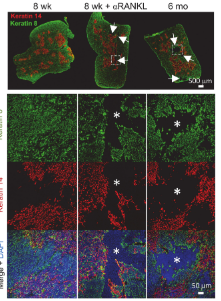
Really excited to share my new Post-doc paper published in @ScienceTM thanks to all the authors for their hard work !
RANKL treatment restores thymic function and improves T cell–mediated immune responses in aged mice | Science Translational Medicine https://t.co/TA8Jm9749z
I remember being blown away when @IrlaLab showed me these data @CIML_Immunology 🤯 - Exogenous RANKL substantially reverts thymic involution and improves T cell function in aged mice @ScienceTM
https://t.co/MhibGjJISP
One of the alluring and theoretical strategies for extending healthspan and longevity is to rejuvenate the thymus gland, promote an intact immune system. Now there's a way to do that in aged mice.
https://t.co/1XVibjLhMK @ScienceTM
Strong evidence showing that getting a PhD is extremely bad for your mental health.
A new paper uses Swedish medical records and matches them to the full population of PhD students for which the authors could get gender and birth year data from 2006 to 2017. After some exclusion criteria, they end up with a sample size of 20,085 individuals.
The paper compares PhD students to those who have masters degrees and don't start a PhD program.
Before starting a PhD program, people who stop at a masters and those who go on to seek a PhD have similar rates of psychiatric medication use and hospitalization.
A few years into a PhD program, however, 40% more individuals are on psychiatric medications, before the number falls off as people leave or finish their studies.
You see the same pattern with psychiatric hospitalizations. PhD students are up to 150-175% more likely to be hospitalized after starting a program!
These are incredible numbers, too massive to be the result of chance or a flaw in the methodology. This is comparing the same people over time.
If you're considering a PhD program, and the terrible job prospects and waste of time aren't enough, here's yet another reason to stay away.
Check out our new article in Front. Immunol. in which we identify that the type 1 diabetes susceptibility locus 5 is involved in a paradoxically higher development of high-affinity/autoreactivity Treg in newborn NOD mice. Thanks to all the authors for their great job !
New Research: The type 1 diabetes susceptibility locus Idd5 favours robust neonatal development of highly autoreactive regulatory T cells in the NOD mouse: Regulatory T lymphocytes expressing the transcription factor Foxp3 (Tregs) play an… https://t.co/b2pt5LAFzh #immunology
New Research: The type 1 diabetes susceptibility locus Idd5 favours robust neonatal development of highly autoreactive regulatory T cells in the NOD mouse: Regulatory T lymphocytes expressing the transcription factor Foxp3 (Tregs) play an… https://t.co/b2pt5LAFzh #immunology
Un poste d’Ingénieur d’étude CNRS est ouvert à mobilité en FSEP dans mon équipe au Centre d’Immunologie Marseille Luminy (CIML) dans le superbe cadre des calanques.
Pour postuler, rendez-vous sur :
https://t.co/Dy7DwUFJw4
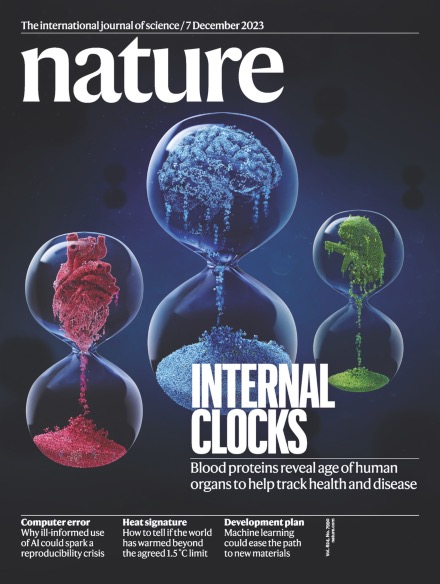
I am thrilled to present our new study out in @Nature where we measure aging at organ-level resolution in living people with large-scale plasma proteomics + ML! From @wysscoray lab, co-led with former grad student @JarodRutledge1 1/12
Researchers Alexia Borelli, Cloé ZAMIT, and Magali Irla at @IrlaLab, @CIML_Immunology have developed a rapid co-culture assay enabling the evaluation of antigen-presentation ability of mTEC to CD4+ T cells in an antigen-specific context.
(2/5)
The next European Thymus meeting ‘ThymE’ will be held from May 27 to 31, 2024 in Porto. Very glad to be part of the scientific organizing committee with my friend Nuno Alves.
Join us for this exciting meeting !
#Tcells#Thymus#ThymE#Immunology