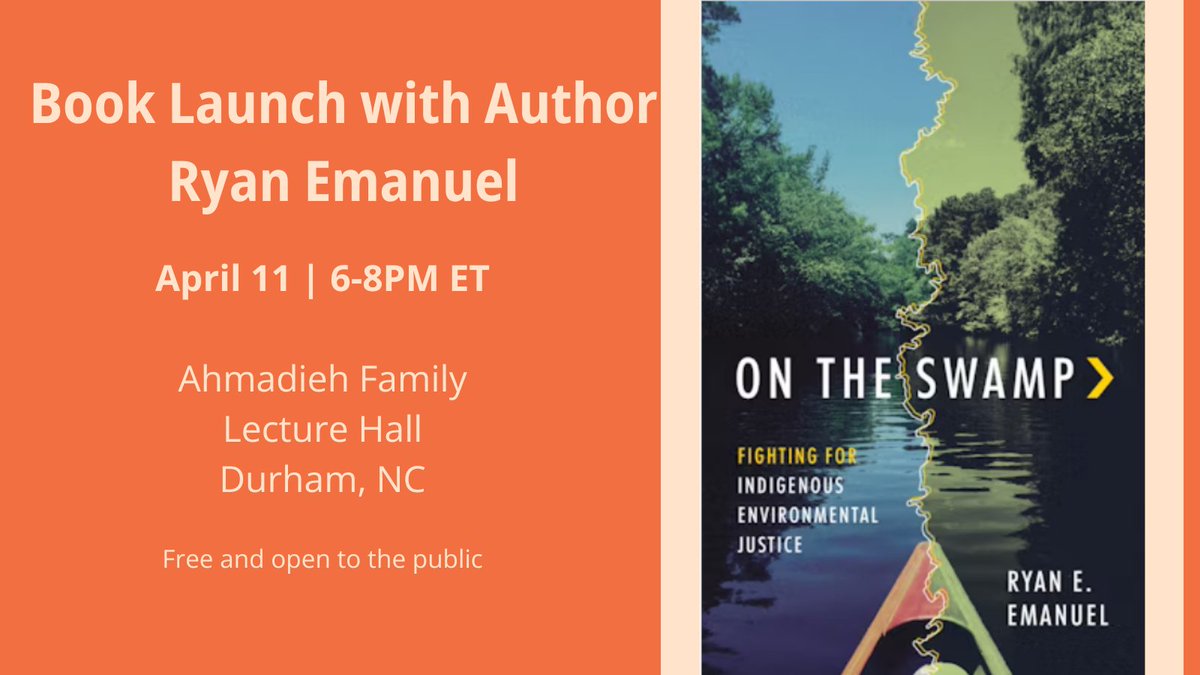
🎉 Celebrate the release of Ryan Emanuel @waterpotential new book, "On the Swamp: Fighting for Indigenous Environmental Justice," on April 11 from 6-8PM ET, at Duke University's Ahmadieh Family Lecture Hall!
RSVP here: https://t.co/iWysD87J5B
Looking for a postdoc to join our group at VIMS! Postdoc will use remote sensing, alongside ecological and geomorphological monitoring data, to quantify landscape evolution in the mid-Atlantic sea-level rise hotspot. Details + application here: https://t.co/wHs1HBIryt
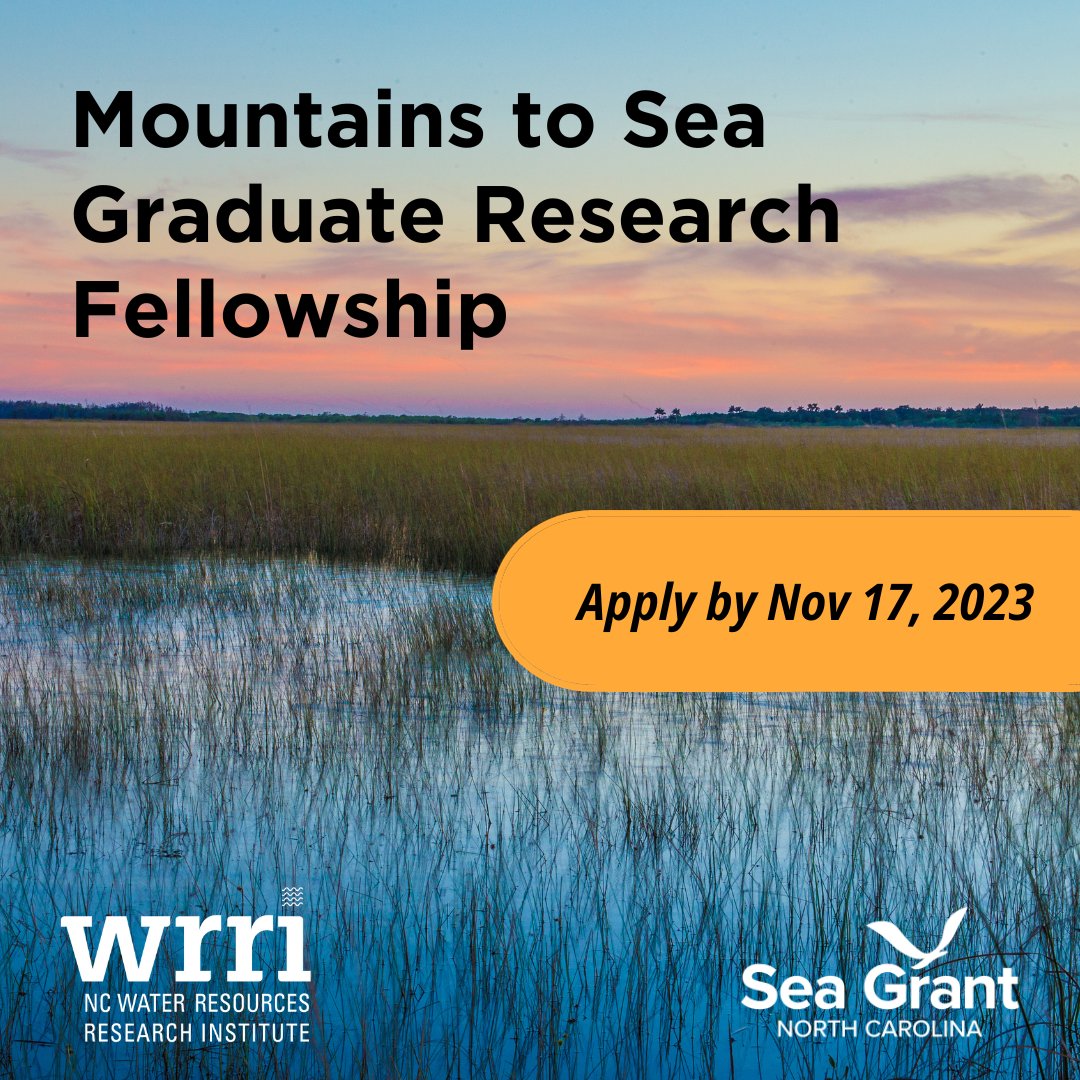
#NCWRRI and @SeaGrantNC are now accepting applications for the Mountains to Sea graduate student research fellowship! Open to NC graduate students to conduct research on coastal or freshwater resources issues in North Carolina. Apply by Nov 17! Learn more: https://t.co/YgVPL5o7oO
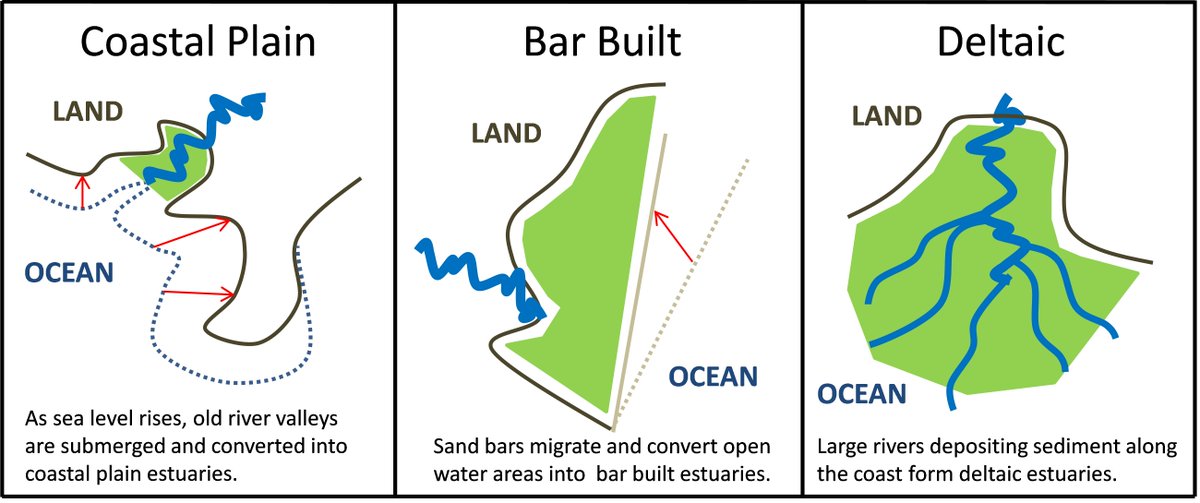
Here's a perennial favorite #EstuariesWeek tweet: Estuaries come in different shapes & sizes. Geologically there are 5 different estuary types; most US Atlantic and Gulf coast #estuaries are coastal plain, bar built, or deltaic. What kind of estuary do you have near you?
📰 New Pub! @USGS scientists part of a global team of researchers warn that rapidly rising seas will endanger coastal habitats if global warming exceeds 2 °C above pre-industrial levels. Read the full paper in @Nature 👉https://t.co/N3xosI2TZN
The qgisprocess package is now on CRAN: https://t.co/ix5xJMoSY0
Now you can also read qgisprocess cheetsheets (created by Antony Barja) at
https://t.co/DViqHg3FOP.
#rspatial#qgis#rstats
How will mangroves, tidal marshes and coral reef-island systems fare under global warming? Here we consider the implications of warming above 1.5 degrees, using sea level rise thresholds derived from the paleo record and our global observation network
https://t.co/I0FWsEMe0P
New Publication Indicates floodplains provide millions $ in benefits to people in the Chesapeake Bay and Delaware River Watersheds. SAWSC Research Physical Scientist Krissy Hopkins led the study with coauthor, SAWSC contractor Jackie Welles and others. https://t.co/rGqxO7ctOU.
[FAQ] Where can I get USGS water quality (water chemistry) data for surface water and/or groundwater?
Answer: https://t.co/ajhqZpKFQ2
#NationalWaterQualityMonth
Out today in @Nature - rivers and streams are major contributors to global methane emissions. Emily Stanley & a team of international researchers mapped out where & why.
https://t.co/fmJouW8eTM
A decade after dam removal, salmon are once again spawning in pristine river habitats and beaches are being replenished with sediment released by the Elwha River. https://t.co/lgCrlXRfFC
@USFWS@OlympicNP@NOAA@ResourcesLF@NatureBridge@ElwhaTribe@usbr
🆕 Just released! National Land Cover Database (NLCD) 2021!
The NLCD is updated every two to three years and stands as the definitive land cover database for the United States. Learn more here: https://t.co/o2q71c1fmZ
@USGSLandCover#NLCD#landcover
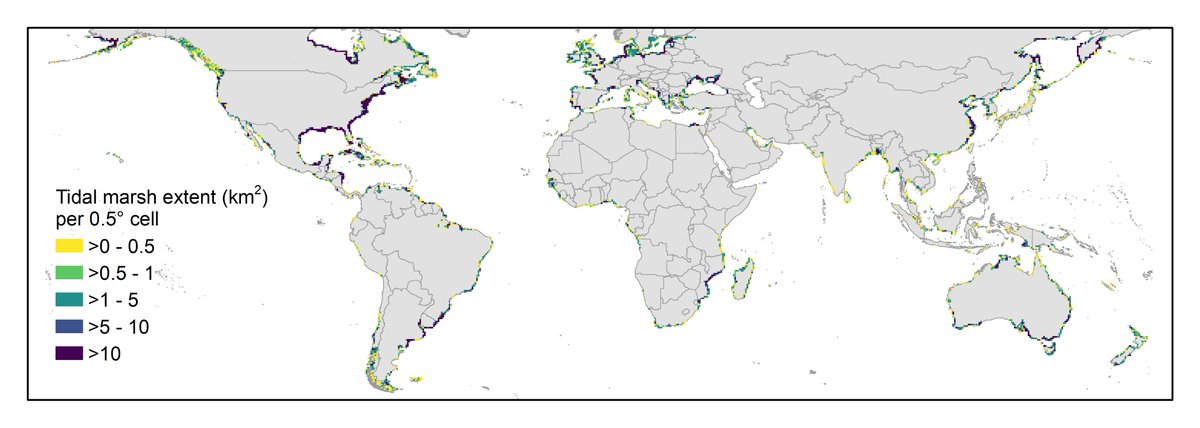
Tidal marshes, are critical coastal ecosystems and protecting them has never been more important for people and the planet. But to protect them, we need to know where they are, and there’s never been a global map of Earth’s tidal marshes—until now.
This is a good morning to read "Smoke deposition to water surfaces drives hydrochemical changes" by @hydrobeth, @MaxMoritzFire & Michael Brown. They found that smoke inputs can increase acidity as well as DOC & nitrate concentrations in surface water https://t.co/VCEMQ5s9mA
Excited that our new paper has been selected for the Editor's Choice section in Journal of Water Resources Planning and Management this month! PDFs are open access while it's there!
Wetlands are essential in the global carbon cycle and capable of long-term carbon sequestration. But what in the world does carbon sequestration mean? Check out today's Wetland Word: https://t.co/DVZuQVCPY3 #AmericanWetlandsMonth #
🚨LAST CHANCE!🚨 Today, 15 May, is the last day for you to submit your abstract to #CERF2023! Get them submitted by midnight Pacific Daylight Time. Remember, you can submit a second abstract on DEI, education, or cultural heritage/coastal humanities abstract for free!
Just 2 days left to submit your abstract to our session “Climate change driven impacts to wetlands across the riverine to estuarine continuum” at the @CERFScience biennial meeting! Can’t wait to learn about the great science others are doing in the coastal zone!







![USGS's tweet photo. [FAQ] Where can I get USGS water quality (water chemistry) data for surface water and/or groundwater?
Answer: https://t.co/ajhqZpKFQ2
#NationalWaterQualityMonth https://t.co/z23qwCnkkD](https://pbs.twimg.com/media/F4OCdPAXkAAk4pE.jpg)