Read both sides of the story:
🧪 Trainee perspective:
https://t.co/HiNDI2uitc
🔬 Mentor perspective:
https://t.co/twb70AZB2j
Because healthier research environments are built from both sides of the bench.
#GradLabCompass#HabitsNotHacks#ResearchCulture#Mentorship
The weekend is coming, and yes, taking a break is part of the work.
In research, rest is often treated as something we earn only after everything is finished. The problem? Research is never completely finished.
Rest is not laziness or lost productivity. It is risk management.
Tired people miss details, make avoidable mistakes, and struggle to make thoughtful decisions.
For trainees, this may mean learning to pause without guilt.
For mentors, it may mean creating a lab culture where people do not have to reach burnout before rest becomes acceptable.
Academics are trained to explain the details. All the details. But a job interview is not the time to data dump everything you have ever done.
https://t.co/37NFyEjl1i
For those working in RNA and molecular research, these advances are an encouraging reminder of where today’s experiments can eventually lead.
Here’s a simple infographic highlighting a few recent milestones in personalized medicine.
Still measuring your progress against someone else’s timeline? Start with a clearer read on your own season. The free Career Season Self-Assessment (part of the Essentials Kit) helps you see where you are.
Read more about the stories:
For trainees: https://t.co/KmxPBrbwV2
For supervisors helping trainees, and perhaps needing the reminder themselves: https://t.co/XhAjoyuVXD #ResearchCulture#GradLabCompass
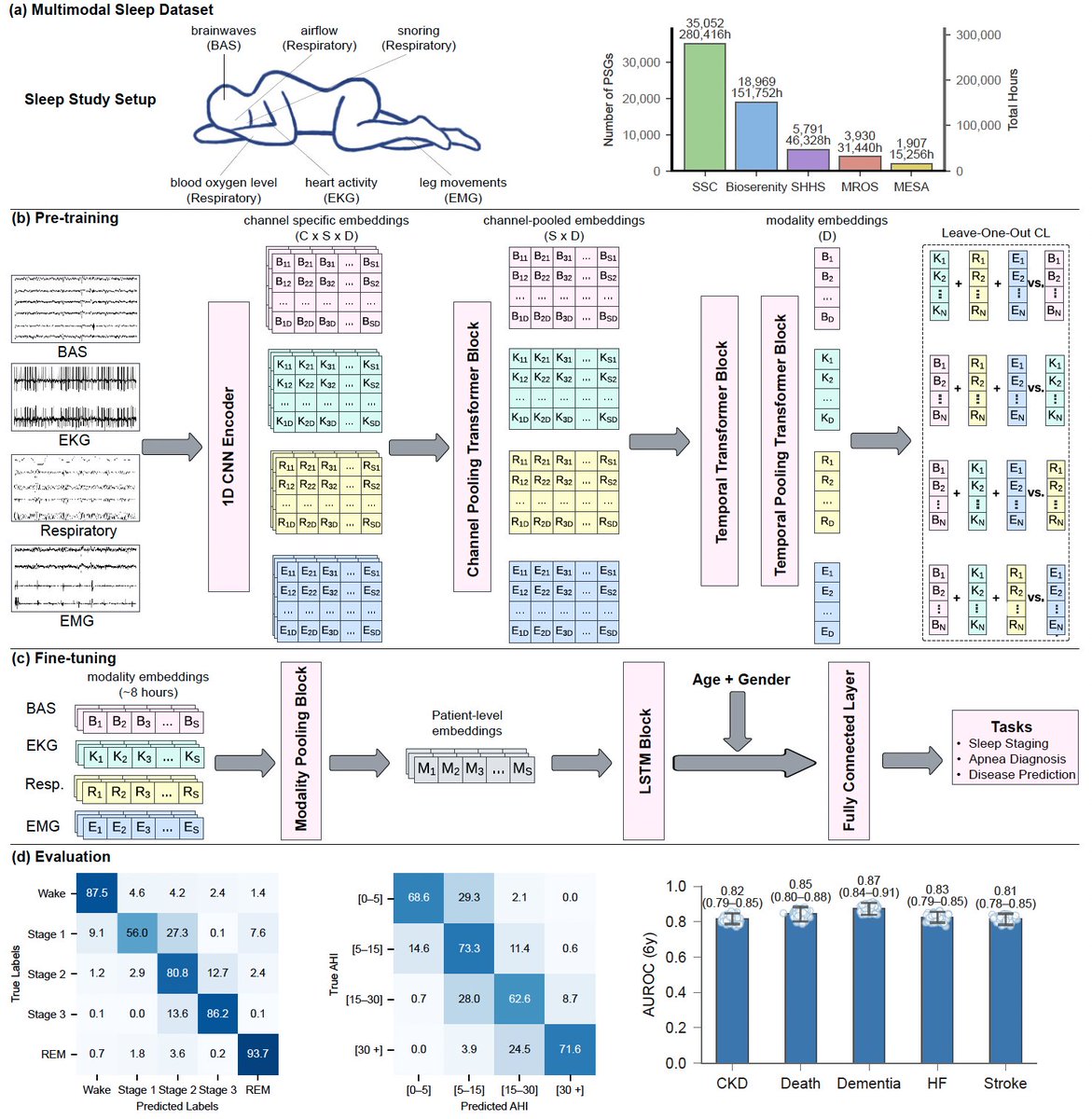
Today in @NatureMedicine we report that AI can predict 130 diseases from 1 night of sleep🛌
We trained a foundation model (#SleepFM) on 585K hours of sleep recordings from 65K people—brain, heart, muscle & breathing signals combined.
AI learns the language of sleep🧵
Hosted an expert MD/PhD in ADHD this week. Turns out it may be a circadian disorder, which explains why so many adults now have it, why regular sleep-wake, meal, exercise times help & counterintuitively why stimulants for ADHD help people sleep better (if taken in early day).
Our new @NatureAging paper: We built 14 "biological clocks" representing the biological age and rate of aging of 14 major body systems using data from 13,000 people of the Human Phenotype Project
Key findings:
1. Biological clocks are clinically meaningful: People with higher biological age for some body system are at greater risk for disease related to that body system (e.g., higher aging rate of insulin resistance associates with higher risk for diabetes)
2. Surprisingly, biological clocks for different body systems are mostly independent, i.e., a person with a higher rate of aging for one body system does not necessarily have higher aging rates in other body systems
3. Males and females age differently: While males age linearly, females exhibit a sharp non-linear increase between the ages 50-55. This sharp increase is associated with menopause. When comparing pre- and post-menopausal females of the same chronological age, we find that post-menopausal females have higher biological age for several body systems
Paper: https://t.co/RWfQ1mfMYV
Data: https://t.co/qRrFPaY4as
Access our aging models: https://t.co/3do2rlTgQV
Great job by @Lee_Reicher1, @NoamBar7, @nastya_godneva, Yotam Reisner, @ZahaviLiron, Nir Shahaf, @AdinaBlueBird, in collaboration with Raja Dhir
#NIH is dedicated to improving the postdoctoral experience to retain & attract our nation’s brightest scientific minds. To this end, NIH is seeking feedback on additional actions improve the postdoctoral experience: