New episode of Beyond the Classroom #podcast with @UCC983FM Really enjoyed this chat with @Nikki__Sullivan about CPD, protecting teachers' pie-charts and recommendations of books and podcasts we love. https://t.co/9YGOc7t0XC #edchatie#cpd
We’re delighted to share that @researchED1 is coming to Bandon Grammar School on Saturday, 19th September! 🙌
Proudly supported by Tralee, Clare, Navan & West Cork ESC this is a brilliant chance to connect and collaborate with fellow educators.
🔗https://t.co/kWy2gL5d9q
(New). For 'Leader' magazine. On the persistence of edu-myths like learning styles and the 'learning pyramid' in Irish education, in textbooks, tech companies and even public representatives:
https://t.co/U9pW6JxW1o
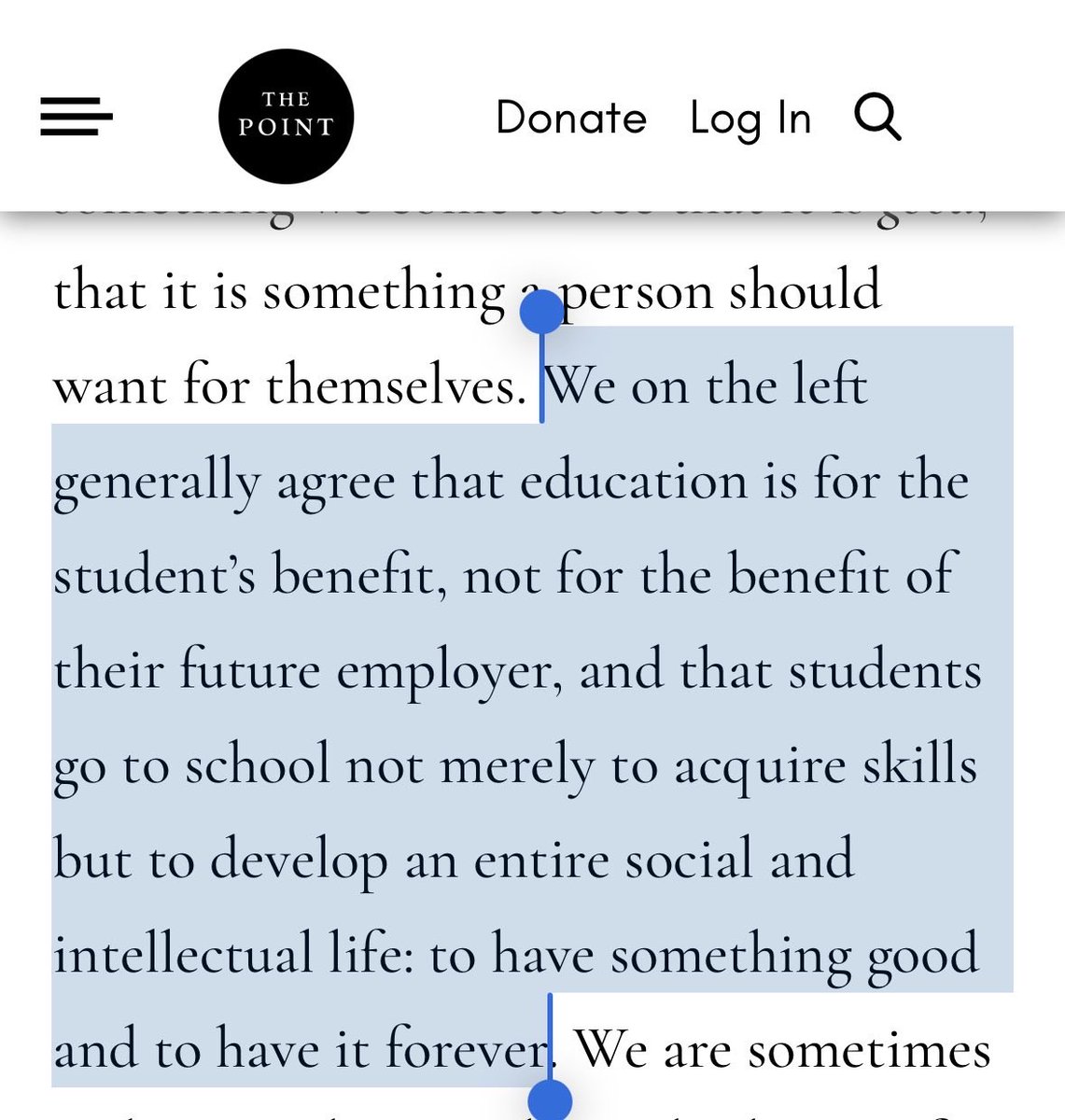
“Education is for the student’s benefit, not for the benefit of their future employer, and that students go to school not merely to acquire skills but to develop an entire social and intellectual life: to have something good and to have it forever” @dwaldenwrites
@KevinCahill5@officialgaa My knowledge of football is minimal across all codes but I still found @daisychristo 's "I Can't Stop Thinking About VAR" a really interesting read.
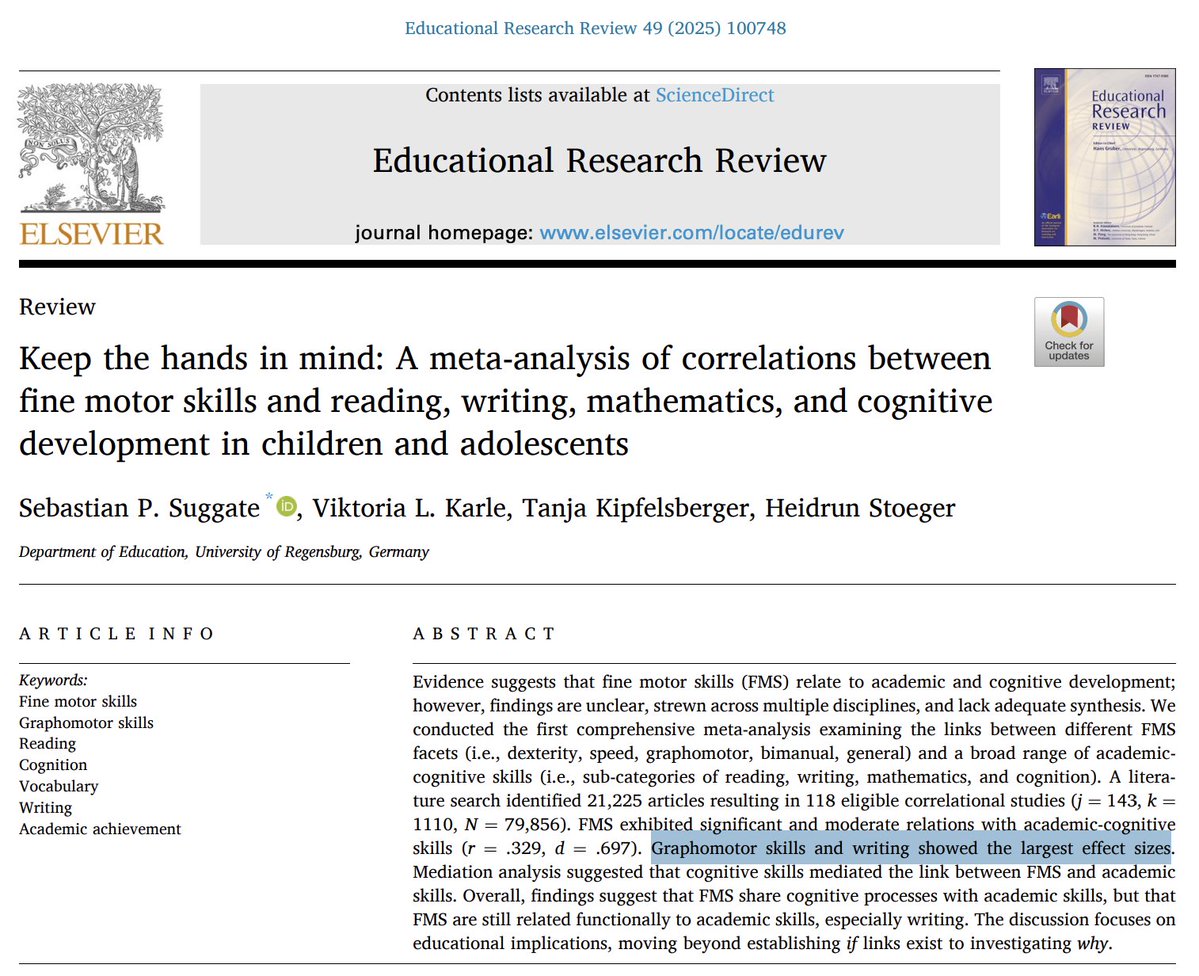
"Keep the hands in mind" — indeed.
Fine motor skills (FMS) have been largely overlooked in the era of the internet. A new meta-analysis identified a positive correlation between FMS and academic success, and the details are fascinating.
The study aggregated 118 articles to check the correlation between specific sets of FMS and academic skills (Writing, Math, Reading, and Cognition).
Crucially, they distinguished between different types of motor skills:
Dexterity: Object manipulation (e.g., pegboards).
Graphomotor: Using a tool (pen/pencil) to draw symbols.
Speed: Rapid movements (tapping).
Finger Gnosia: Proprioception.
Here are the key takeaways from the study:
- The link is moderate to strong: Fine Motor Skills and academic success are significantly linked.
- It persists with age: The link exists in older students (adolescents) just as much as in young children. It is not just a developmental phase.
- Tool use matters most: Among all FMS, Graphomotor skills (using a pen/pencil) are more important for academic success than simple dexterity (moving pegs). There is a functional difference between manipulating an object and using a tool to create a symbol.
- Theory update: The data supports "Functionalism" (hands directly help learning) and "Shared Processes" (hands and brains share neural networks) as the correct way to look at this, rather than the old "Amodal" theory (hands are irrelevant).
Fine Motor Skills, and especially handwriting, deserves a comeback!
💡Here's the thing: lowering standards, eliminating exams, removing accountability/transparency measures doesn't help disadvantaged students: it hurts them. They suffer the most. @CratoNuno knows the data inside and out. We talked about it on my latest podcast. Link below
I had my first orgasm at age 27, after stopping #SSRIs I'd taken since childhood. This timing is not a coincidence.
I am lucky to have regained this sacred part of my humanity, and have made peace with all that was lost, interfered with, or otherwise disrupted along the way.🧵
This piece stuck out to me today. @rpondiscio writes: "AI is not a democratizing force that will level the playing field for students and make teachers’ jobs easier. When automation replaces learning, the opposite happens: the knowledgeable become more powerful, the uninitiated more dependent."
K-12 leaders are making decisions right now about the what, how, when, and who of #AIineducation impacting this school year and the future ahead.
Three quick thoughts about what leaders must consider when doing so:
1) Community engagement: It's is absolutely vital to understand what the problems are, where AI can help, and where AI can hurt.
2) Clarity and alignment: Systems need to be clear-eyed about how simply layering systems over old models that aren't working will only create more dysfunction.
3) Strategy braiding: Systems can take intentional, complementary strategies and weaving them together so the organization sees them as one.
Leaders need to lead in this moment. They need to approach AI with a focus on vision and not vendors. Our kids' futures depend on it.
https://t.co/0Apcrumgjt
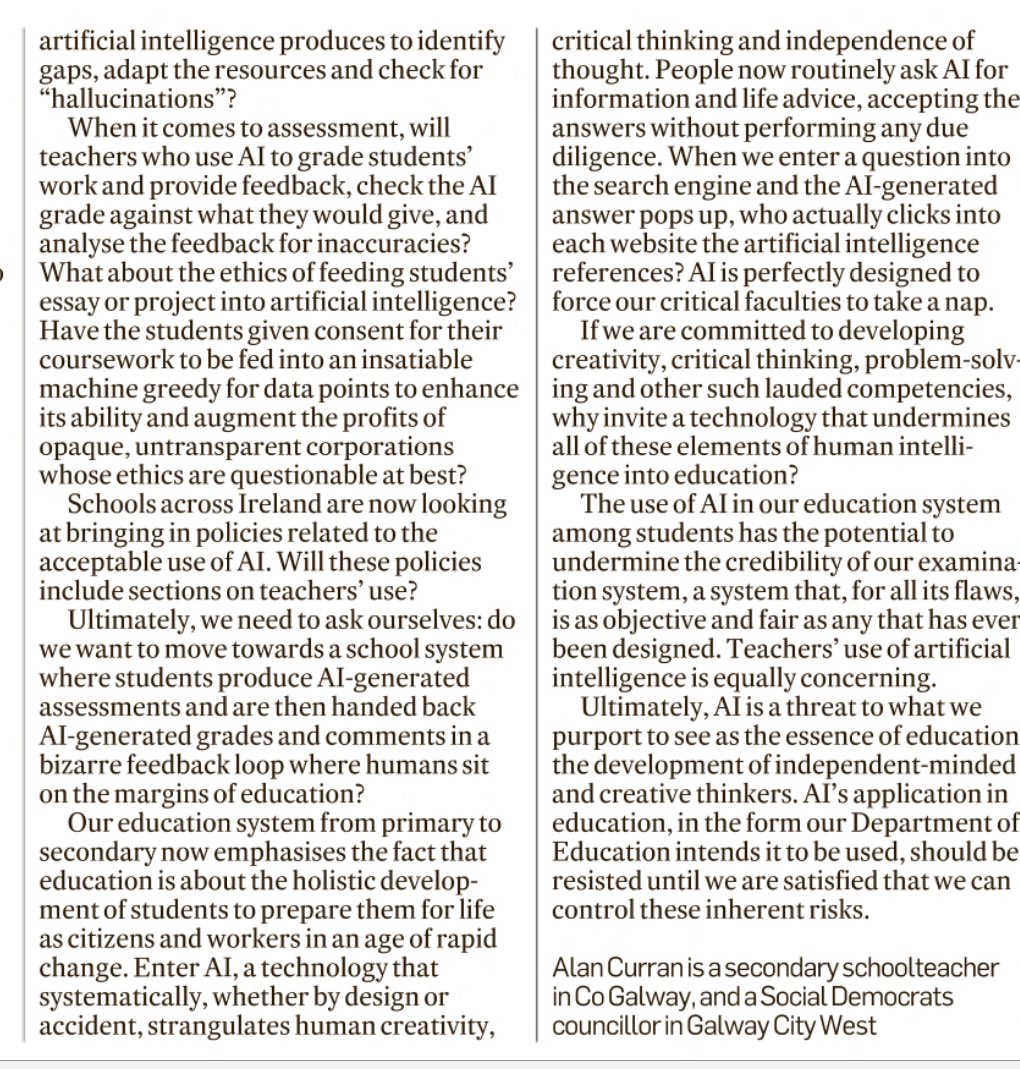
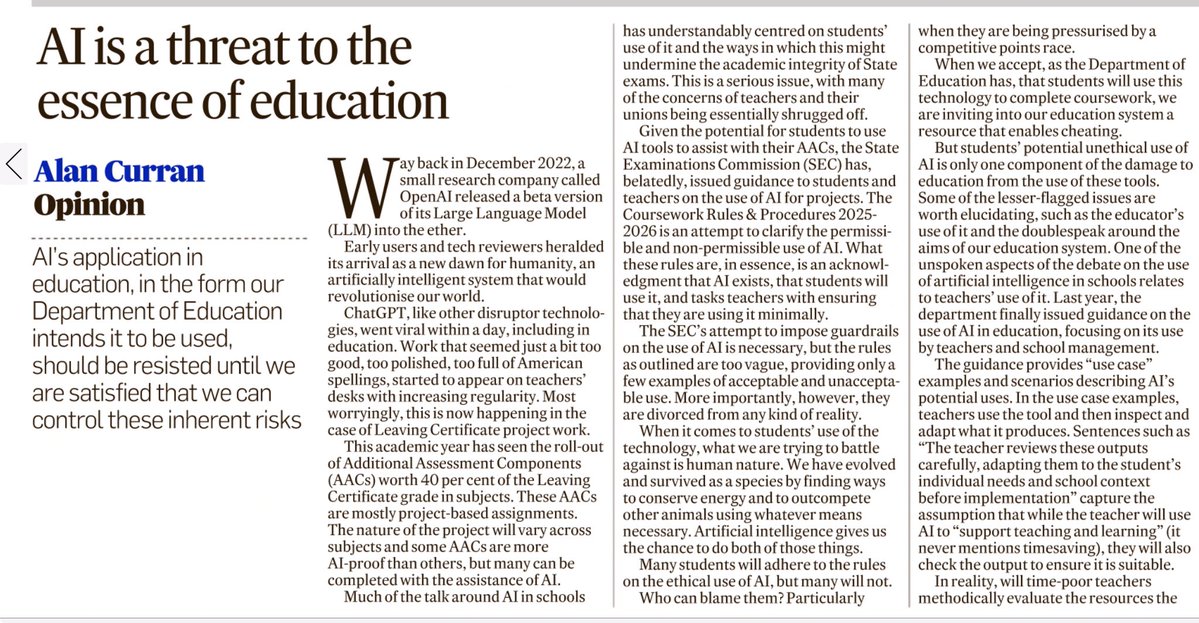
(New). 'Guidance on Artificial Intelligence in Schools' (in Ireland).
How much can schools and individual teachers 'ensure'? Can GenAI ever be used ethically?
https://t.co/JcHSdnNKGy
Fascinating new report from the World Bank summarising the global evidence on effective reading instruction.
"A fundamental insight from reading research is that children do not learn to read naturally—reading must be explicitly taught"
https://t.co/yHDcqskM0x
An important reminder from @C_Hendrick for all of us working on knowledge-rich curricula: it’s not about accumulating disconnected facts, but about developing richly connected schema of knowledge.
@head_teach This is interesting, thanks. I think Timimi is less strong on specific SEN diagnoses than he is on the harmful amounts of endless "mental health promotion" that causes a lot of unnecessary anxiety & is increasingly obviously counter-productive.