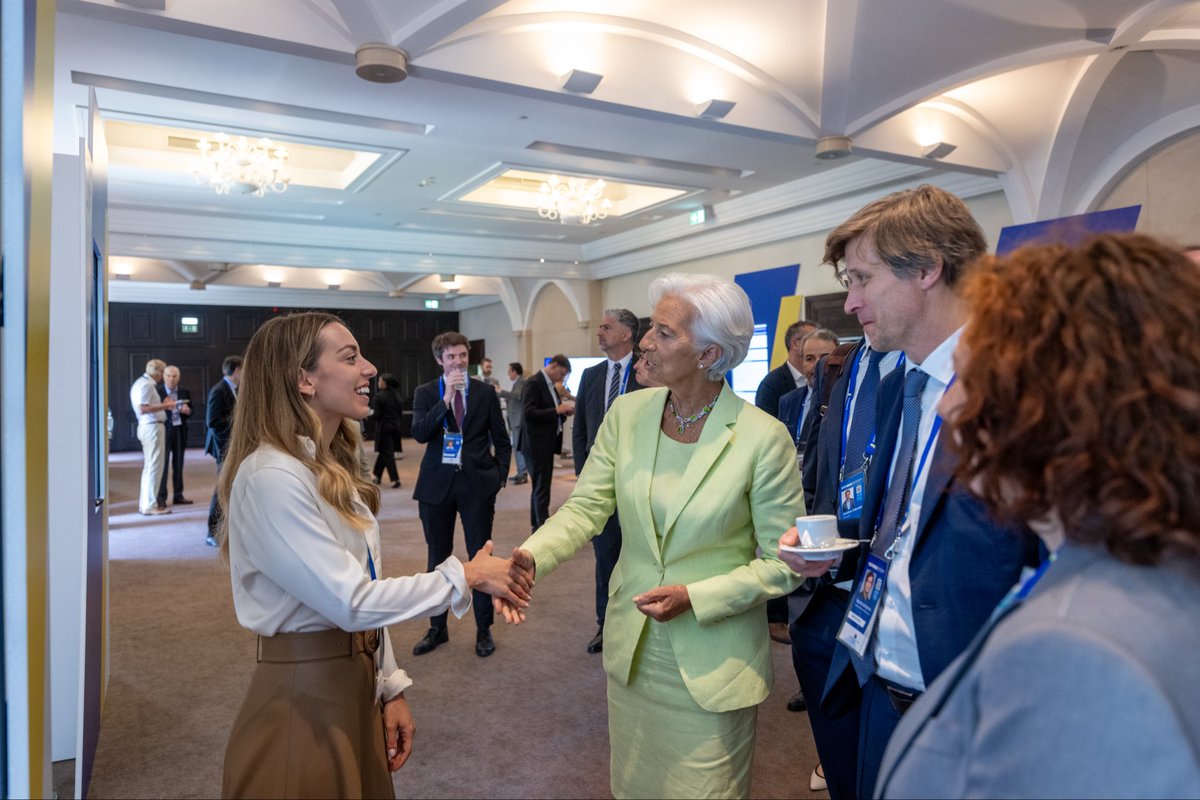
What a rare opportunity and incredible opportunity this was! Very grateful to have participated at the ECB Forum on Central Banking in Sintra as one of the Young Economist finalists.
Many thanks to the @ecb and everyone involved for the fascinating last few days 🥹
🎉 It’s a wrap: the first year of our #NextGeo Program came to a close at the Kiel-CEPR Conference on Geoeconomics, where some of our fellows presented their research.
Applications for the 2027 cohort close tomorrow 👉 https://t.co/foUxlCfbSi
🚨 Job Market Paper
🔍 Many workers start their career mismatched, not knowing which tasks they are best at. I estimate a dynamic structural model to study how this shapes careers and who gains and loses from task-biased technological change
📄 https://t.co/yxBJ0ga6XL
🧵👇
Did you know there is an online hub full of economic data about Greece?
The project is run by an independent group of top Greek academics and includes some of the most important macro indicators. Oh, and it’s totally free.
Check out @GreeceInNumbers!
Interesting scoop by @fbermingham: the EU is stepping up currency diplomacy with China, with Lagarde, Dombrovskis and Pierrakakis leading talks.
About time. The yuan is an important and underappreciated part of China's macro-imbalances.
1/
https://t.co/jo4NFUan68
There are interesting parallels between the US centrality in the international monetary system and Chinese centrality in critical minerals networks. They are endogenous and they confer pricing power. My EEA Presidential address in Bordeaux. @LBS
Congratulations Lennart Niermann on winning this year’s Young Economist Prize!
And well done to all the bright young minds who presented their innovative research at this year’s #ECBForum on Central Banking.
Learn more about their research https://t.co/12RLSM76IW
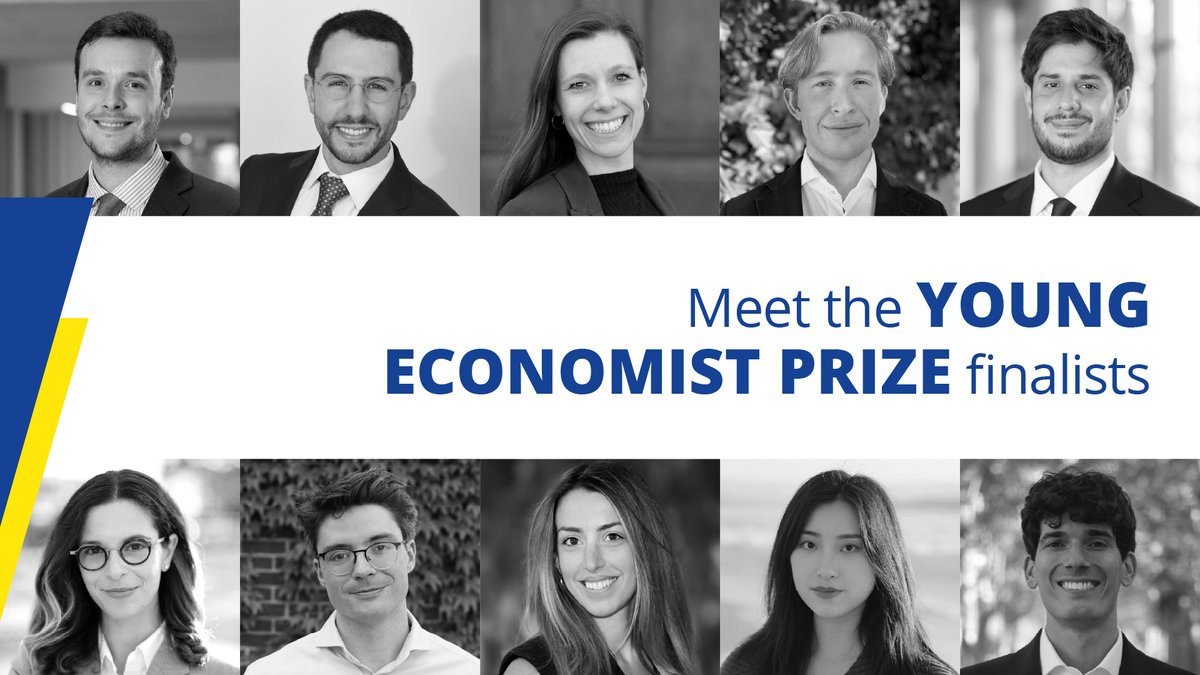
Meet the finalists of this year’s Young Economist Prize!
Their research papers explore the role of innovation, growth and stability in shaping Europe’s future.
The winner will be announced at the #ECBForum on Central Banking from 29 June to 1 July https://t.co/986ObhPgN1
Η Balderton Capital, το fund που επένδυσε σε ευρωπαϊκούς γίγαντες όπως την Revolut και την Darktrace, πιστεύει ότι ήρθε η ώρα για την Ευρώπη να κοιτάξει τα δικά της επιτεύγματα και να αποκτήσει την αυτοπεποίθηση που αντιστοιχεί σε μια ήπειρο που ήδη γεννά παγκόσμιους τεχνολογικούς πρωταθλητές.
https://t.co/hDQdiT796x
Premodern societies tended to be rent by terrible wars. In the early modern period, tens of millions died in wars in Europe, India and China. Just one society found a kind of solution: Japan. Between 1603 and 1853, Japan enjoyed near-perfect peace. The ruling Tokugawa family achieved this through creating what might be seen as the largest prison in the history of the world, the city of Edo (modern Tokyo).
https://t.co/29RvgozjUc
Most of Japan was governed by about 260 nobles, called ‘daimyo’ (see first map). To secure their loyalty, the government required that the daimyo leave their families permanently in Edo, essentially as hostages to the state. Most daimyo women thus never saw the domains over which their husbands and sons ruled. The daimyo were also required to alternate years in Edo personally.
The result was that most of the surface area of Edo was given over to daimyo palaces, or to accommodation for the hundreds of thousands of samurai retainers they brought with them (see second map). This was arranged through an elaborate zoning system, probably the largest use of zoning before modern times.
Edo was extraordinarily top-heavy socially: about half of its population were samurai. Samurai were theoretically a warrior class, but since Japan was at peace, they did little real work apart from gentlemanly occupations like calligraphy. Their main income came in the form of tiny hereditary stipends from their daimyos or the government.
These stipends were fixed in perpetuity around 1600, declining gradually with inflation over the next quarter of a millennium. Most samurai thus lived in dignified but extreme poverty, their income determined by the favour in which one of their ancestors had stood centuries earlier.
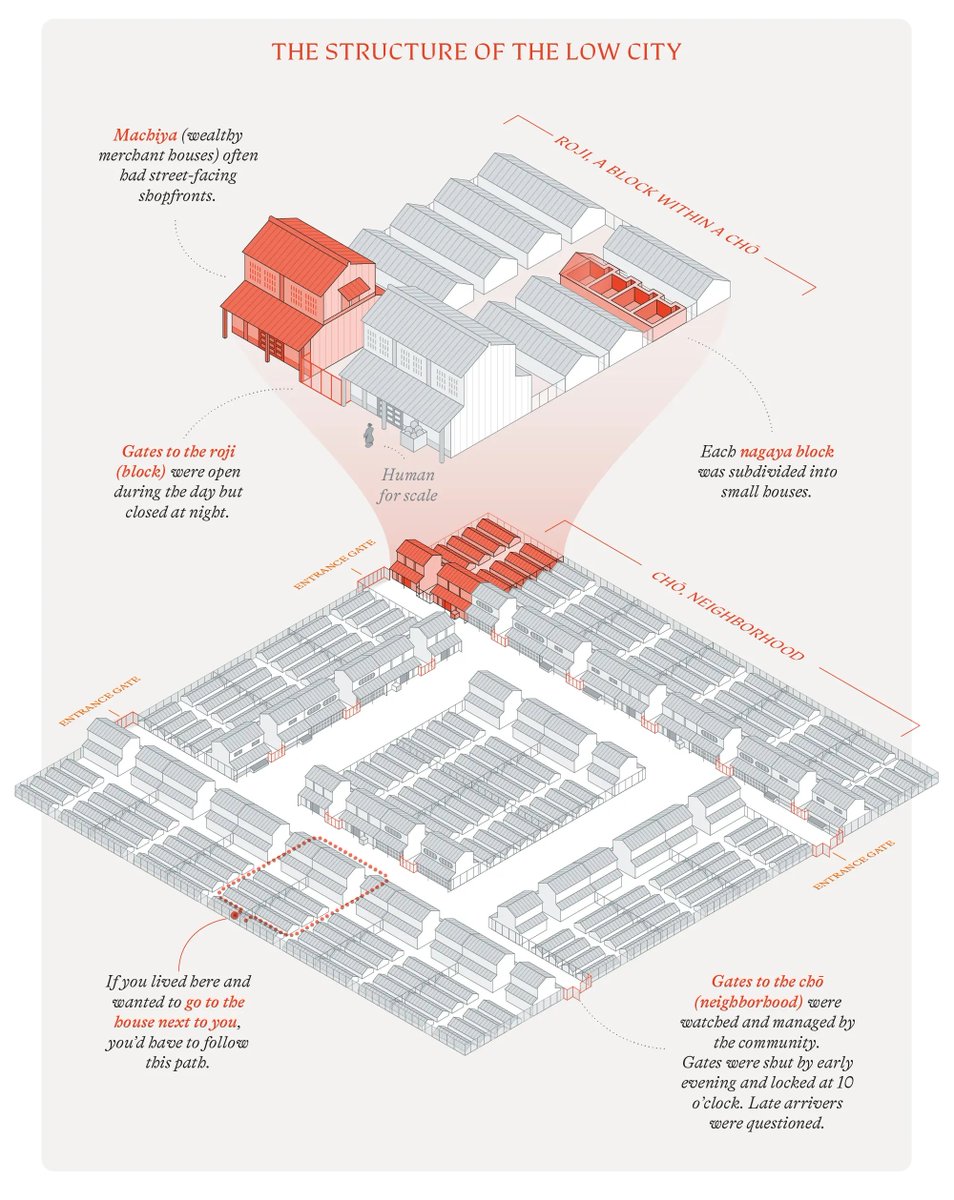
The commoner population was also tightly controlled. Commoner Edo was divided into some 1,500-2,000 fenced and gated blocks. These were then subdivided into gated alleys lined with small houses (see third map). The Low City was thus divided up by tens of thousands of internal checkpoints, all of which closed at night. Edo was not under threat of attack in the Tokugawa period and the city as a whole was not fortified. The purpose of this immense labyrinth of walls and gates was to control and monitor the movement of the population.
Prisons are useful things, and the Tokugawa system was a kind of success, making Japan the most peaceful society on earth. But it is also a disconcerting reminder of the power of rent-seekers, and how a whole city can be warped by the political exigencies they create. Edo is a particularly striking case of this, but it is far from alone.
Useful for Europeans to get a reality check on the sometimes paralysing declinism that is gripping the continent.
I suppose it takes the outside perspective of Krugman to deliver it, in a good piece.
https://t.co/Z7Lfx5Ur1S
We’re very pleased to welcome the Next-Geo cohort to Kiel this week: 👋Katerina Nikalexi, Ekin Ergin, Jing-Rong Z., Carolin Formella, Marco Brolli, Gastón Nievas Offidani, Balázs Markó and Julian Marcoux.
At the heart of the program is our “Best of #Geoeconomics” lecture series, with contributions from ten of our researchers — @jonathanfederle, @TimothyAMeyer, Taro Nishikawa, @julianhinz@t_heidland, @CathrinMohr, Sebastian Horn, Robert Gold, Holger Görg and Michael Porcellacchia — each focusing on a different aspect of the field.
In between the lectures, the cohort will present their own research, meet in smaller groups, and exchange ideas during bilateral meetings, joint breaks, and informal moments — all with a view of the Baltic Sea.
We’re very glad to have you here in #Kiel and look forward to the discussions and ideas that will emerge over the coming days.
The Next-Geo program is funded by @MercatorDE and implemented in cooperation with @cepr_org, @UniofOxford and @Unibocconi.
👉Find out more about the program: https://t.co/oYGIDLBgmM
Notre rapport (@GitaGopinath, Axel Weber, Chon En Bai) pour le G7 qui pointe les déséquilibres mondiaux grandissants, et leur risque de crise https://t.co/VItY7bqfaF
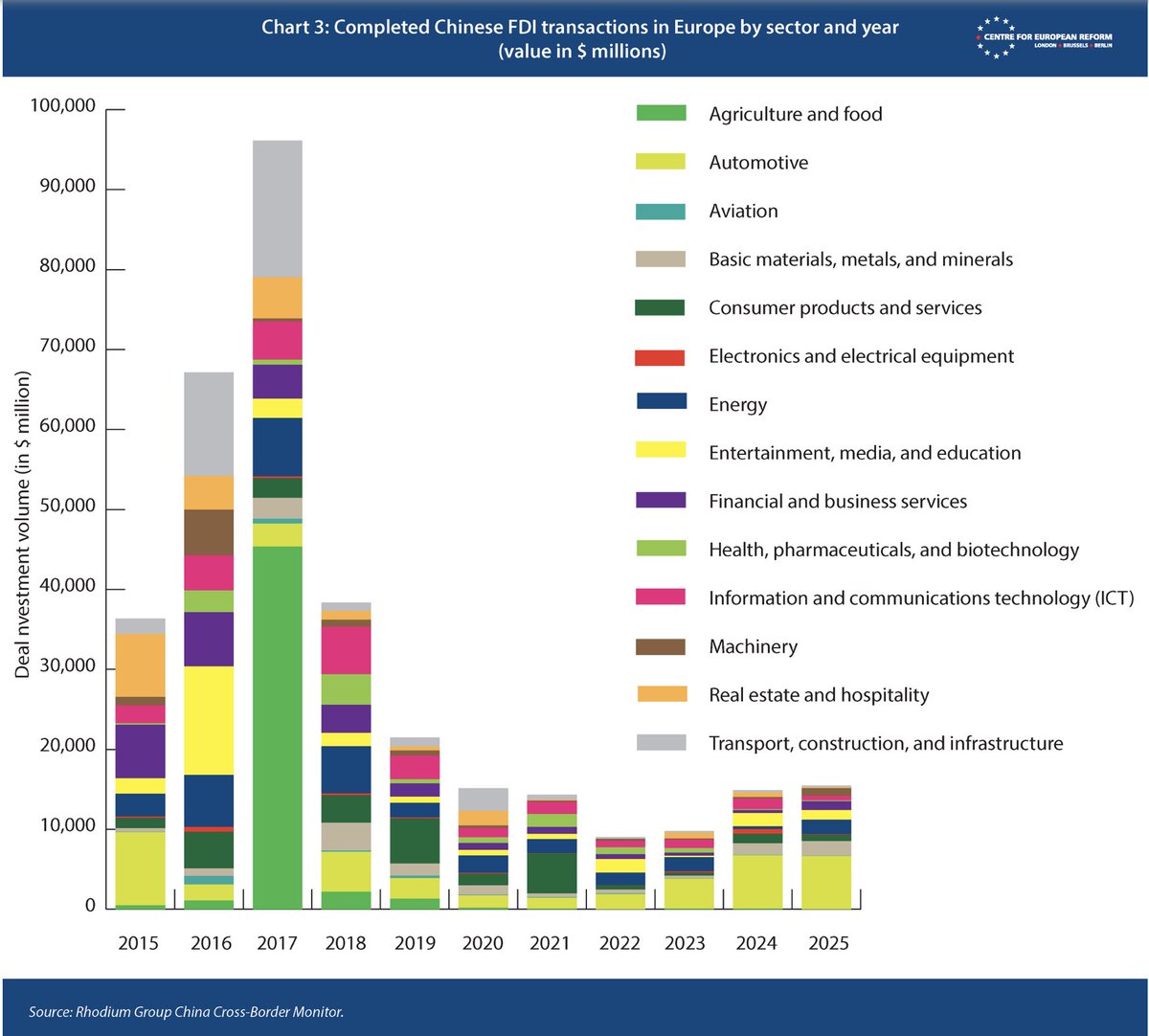
Can Chinese investment save European industry?
New piece on Chinese investment in Europe, out the same day the Commission released the Industrial Accelerator Act.
The good news: Europe has (belatedly) learned to block Chinese takeovers of high-tech/semiconductor assets.
1/
We’re excited to introduce the 1st cohort of Next-Geo — our new research & training program for the next generation of geoeconomists.
Funded by the Stiftung Mercator and implemented in cooperation with @cepr_org, @OxfordEconDept & IEP@Bocconi
After kicking off in February, we’re looking forward to a year of exchange, research, and collaboration with this great group of young scholars.
@julian_mrcx@KNikalexi@gatonievas@Ch_Trebesch
"The fishing boats assembled in the East China Sea, near major shipping lanes that branch out from Shanghai, among the world’s busiest ports.
[...]
They are almost certainly not fishing.”
https://t.co/WQhva3oZKE
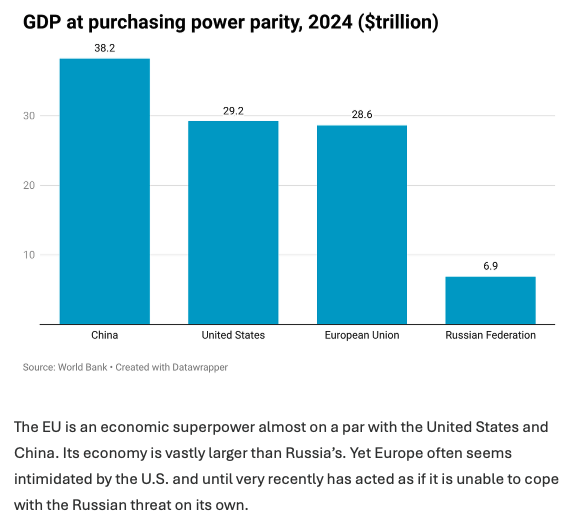
An excellent column by Martin Wolf on Trump’s war on Europe. Great economic data to support the arguments and thank you for the generous mention of our European defense proposal. @voxeu@MSchularick@kielinstitute https://t.co/NurPPGIbI2 @financialtimes