2/2 Particularly useful takeaway: “When you see these articles, unless they explicitly discuss randomization, I would assume the results are driven by bias, not by a causal link.”
1/2 Scare stories about everyday food choices are so common, they can feel overwhelming. Detailed discussion here ⬇️ that lays out the evidence in an accessible way.
Apparently Gen Z calls a fresh, cold Diet Coke a "fridge cigarette". Today, I investigate whether it is, in fact, so bad for you. Answer: no
https://t.co/oUtKYc1DU4
1/2 ICBA welcomes what @WHO has called the "most ambitious" political declaration on NCDs yet, which acknowledges that all stakeholders, including the private sector, have an important role in advancing solutions. We are committed to #collaboration.
"Nevertheless, like many working parents, I find that feeding my family a diet free of ultra-processed foods is impossible."
Read full @olgakhazan piece here: https://t.co/yYuZB85mrI
Such an exciting milestone for @ICBAbeverages! I am personally thrilled to welcome Iddah and cannot wait to build on the great work members and associations are already pursuing in the region, plus expand ICBA’s impact globally.
#AfricaBeverage@IAsin
ICBA is honored to announce the appointment of Ms. Iddah Asin as the Executive Director of the newly established ICBA Africa!
https://t.co/a6zNJ5lDGC
#AfricaBeverage
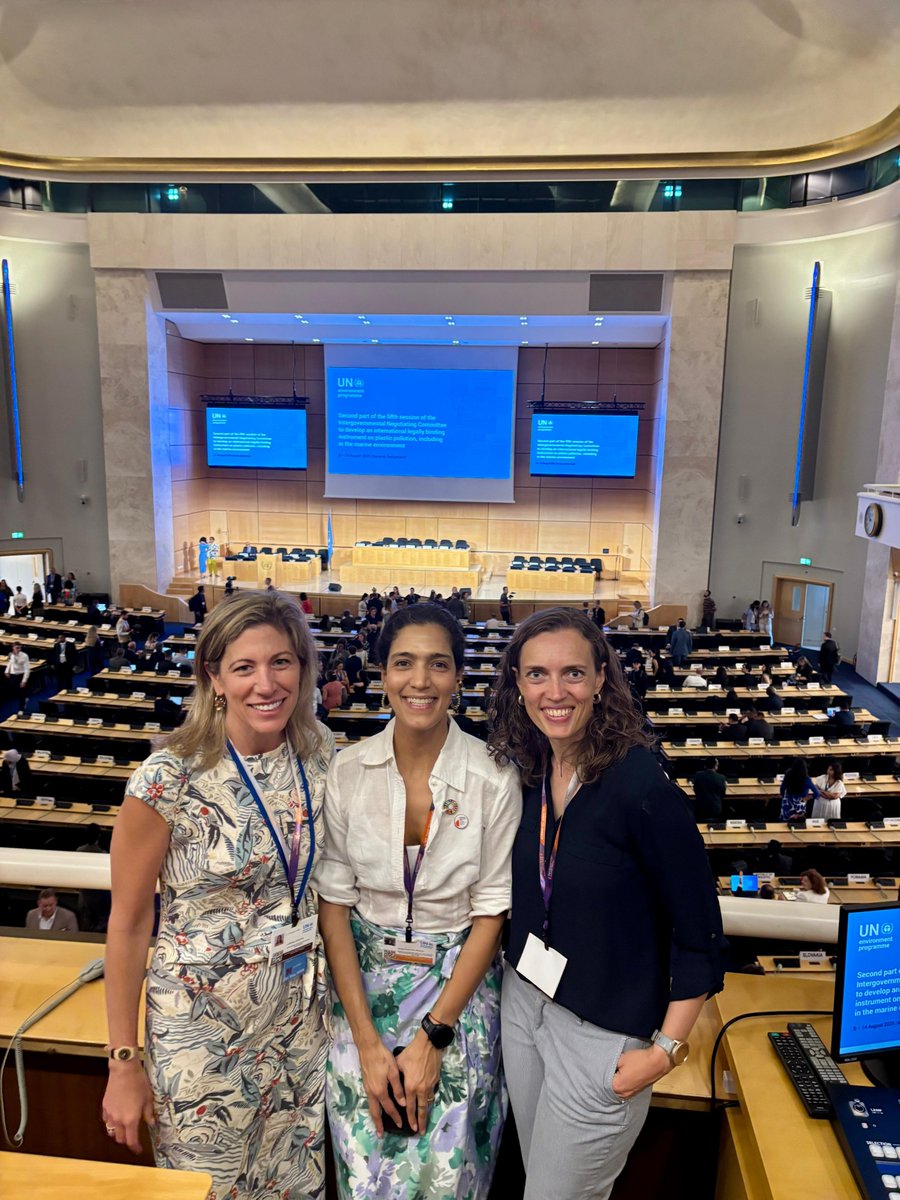
It's Day 2 of the #PlasticsTreaty talks in Geneva and the energy level on the ground is high! A global framework that supports harmonization = a level playing field + faster progress. Let’s get this job DONE! ✅
Well done 👏 to @icba_apac on the launch of the new ‘Insight Series: What the Experts Say’.
Our members are committed to science-based solutions to help meet public health goals and provide choices for consumers.
We encourage you to tune in to episode 1!
"It’s deeply concerning that the @WHO continues to disregard over a decade of clear evidence showing that taxing sugar-sweetened beverages has never improved health outcomes or reduced obesity in any country," – @KateLoatman 👏
https://t.co/QWobMWVFih
This heat wave is no joke — reminds me how important staying refreshed really is. With weather patterns changing, it's on all of us to pay attention. Hope everyone’s finding ways to keep cool and stay safe out there!
ICBA members provide diverse beverage options that we all rely on for hydration, refreshment, flavor and function. This #NationalHydrationDay we're raising our glass to the importance of staying hydrated — not just for your health, but for your overall well-being and performance.
👩🦰💬This is a textbook example of where UPF (ultra-processed food) hysteria can take us.
@DrFedeAmati recommends food swaps that would add an extra 43 pounds to a single shopping trip – all in the name of a “healthier” picnic. This is orthorexic thinking aimed at the worried well, not serious, evidence-based advice for improving public health through better nutrition.
Her fixation on UPFs – a vague, often incoherent category – leads to nutritionally worse choices.
Take her suggestion to swap a wholemeal loaf for a sourdough ciabbatin.
She criticizes the wholemeal bread for containing palm oil and a trace amount of saturated fat. But this is misleading: it contains just 0.1g of saturated fat per slice – a nutritionally insignificant amount. She also raises concerns about tiny quantities of preservatives and emulsifiers, but these appear after yeast and salt in the ingredient list – meaning they’re present in negligible amounts. As the saying goes, “the dose makes the poison.”
Meanwhile, her supposedly healthier alternative – a sourdough-style ciabatta – contains no wholegrains, less fibre, and more salt and saturated fat per slice.
Wholegrain sliced bread is consistently linked to good health outcomes. There’s no need to panic over a few regulated additives when the overall nutritional profile is strong. Swapping a fibre-rich, wholegrain loaf with minimal additives for a white bread with worse nutrition, simply to avoid the “UPF” label, isn’t just unnecessary – it may be actively harmful.
Great to see @FoodDrinkEU and @DirkJacobsEU championing a water-smart economy. @ICBAbeverages members are committed to sustainable sourcing and reducing water use across our value chain.
I want to tackle a nonsense claim.
"Natural is Safer"
Sounds comforting, right?
But it’s based on fear, not facts.
It’s tempting to think that because natural substances have been around for billions of years, they’re inherently safe, while synthetic chemicals are not. But this reasoning doesn’t hold up under scrutiny.
Let’s break it down:
→ It implies that “natural” = “safe.”
→ That synthetic chemicals are harmful because they’re "new".
The truth?
→ Nature doesn’t care about your safety.
Arsenic, cyanide, and botulinum toxin are 100% natural. And deadly.
Meanwhile, many synthetic chemicals are inspired by nature, like life-saving insulin or penicillin.
Here’s a perfect example:
Natural and synthetic vitamin C are chemically identical.
↳ Whether from an orange or a lab, both are ascorbic acid.
↳ Your body can’t tell the difference - processed exact same way.
What actually matters?
↳ The dose makes the poison.
→ It’s not about whether a substance is “natural” or “synthetic.”
→ It’s about how it’s used and how much you’re exposed to.
Whether a substance is ancient or newly created doesn’t determine its safety.
↳ Science, testing, and proper use do.
1/3 I don't agree with everything in this article, but it raises an important issue - the anxiety food debates can bring consumers trying to make the best choices for themselves and their families.
2/3 As @DrDuaneRD says: "...people 'like the idea of clean food' and the anti-UPF narrative has fed into that, but it is not as simple as more ingredients are always bad." My view is we need solutions, not shame.
I’m grateful for the support and trust from my @ICBAbeverages colleagues. I´m excited and fully committed to continuing the great work we’ve been doing together.
I want to congratulate and recognize Nicholas Hodac for his strong leadership and the outstanding job he’s done over the past 2 years.