While cigarette smoking is still the primary risk factor for lung cancer, a growing proportion of patients with the disease are nonsmokers.
Never-smoker lung cancer is now the eighth leading cause of cancer-related death in the U.S. https://t.co/PhgRs8JkqF
🧬🫀 What if liver fibrosis could be reversed by genetically engineering macrophages directly inside the body—without manufacturing CAR immune cells in a laboratory?
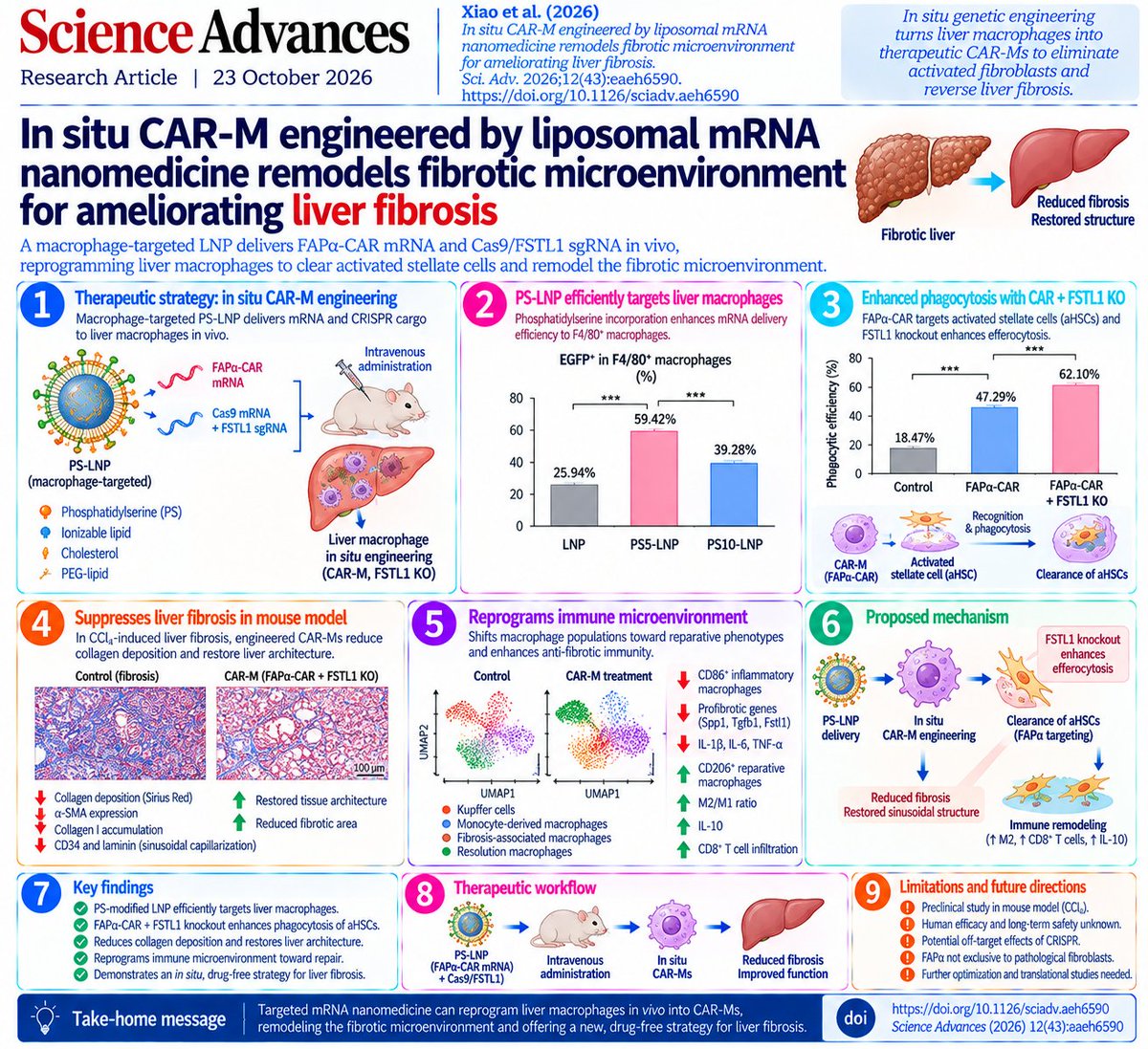
A new study in Science Advances introduces an in situ CAR-macrophage (CAR-M) engineering strategy using lipid nanoparticles (LNPs) to reprogram liver macrophages and remodel the fibrotic microenvironment.
The central discovery: FAPα-targeted CAR expression combined with CRISPR-mediated FSTL1 knockout enhances macrophage phagocytosis, suppresses fibrosis, and restores hepatic sinusoidal architecture in mice.
🔬 1. Engineering CAR-macrophages directly in vivo
Researchers developed phosphatidylserine-modified lipid nanoparticles (PS-LNPs) that preferentially deliver genetic cargo to hepatic macrophages.
The nanoparticles simultaneously carry:
• FAPα-CAR mRNA: Enables recognition of activated hepatic stellate cells (aHSCs).
• Cas9 mRNA + FSTL1 sgRNA: Disrupts the profibrotic FSTL1 gene.
This approach avoids the complex ex vivo manufacturing required for conventional CAR-M therapy.
⚡ 2. Phosphatidylserine improves macrophage targeting
Incorporating 5 mol% phosphatidylserine increased mRNA delivery efficiency in liver macrophages.
Among F4/80⁺ macrophages:
• Conventional LNP: 25.94% EGFP-positive
• PS5-LNP: 59.42% EGFP-positive
• PS10-LNP: 39.28% EGFP-positive
Thus, PS5-LNP provided the most effective formulation among those tested.
🧬 3. Dual engineering enhances targeted phagocytosis
FAPα-CAR enables macrophages to recognize activated fibroblasts.
FSTL1 disruption further enhances their engulfment capacity.
In vitro phagocytic efficiency increased from:
47.29% with CAR engineering alone → 62.10% with CAR + FSTL1 knockout.
CRISPR-mediated FSTL1 editing was confirmed by sequencing, with an overall editing efficiency of 32.92%.
These findings support complementary roles for antigen recognition and macrophage functional reprogramming.
🔥 4. Engineered macrophages suppress liver fibrosis
In a carbon tetrachloride (CCl₄)-induced mouse fibrosis model, combined CAR/FSTL1 engineering produced the strongest antifibrotic effects.
Histological analysis demonstrated:
• Reduced collagen deposition
• Lower α-SMA expression
• Reduced collagen I accumulation
• Improved hepatic tissue organization
• Restoration of liver sinusoidal endothelial cell fenestrae
The treatment also reduced CD34 and laminin expression, indicating attenuation of pathological sinusoidal capillarization.
🧠 5. Macrophage reprogramming reshapes hepatic immunity
The combined intervention shifted macrophage populations toward reparative phenotypes.
Observed changes included:
• Reduced CD86⁺ inflammatory macrophages
• Increased CD206⁺ reparative macrophages
• Higher M2/M1 ratio
• Increased IL-10
• Reduced IL-1β, IL-6, and TNF-α
• Increased intrahepatic CD8⁺ T-cell infiltration
These findings suggest that CAR-M therapy can influence both fibrogenic cells and the broader immune microenvironment.
🔍 6. Single-cell RNA sequencing reveals extensive remodeling
scRNA-seq identified changes in four macrophage populations:
Kupffer cells | Monocyte-derived macrophages | Fibrosis-associated macrophages | Resolution macrophages
Following combined treatment:
• Fibrosis-associated macrophages decreased.
• Resolution-associated macrophages expanded.
• Profibrotic genes, including Spp1, Tgfb1, and Fstl1, were suppressed.
• Reparative markers, including Il10 and Clec4f, increased.
Cell–cell communication analysis suggested reduced TGF-β signaling and enhanced IL-10-associated communication.
These transcriptional findings support broad immune remodeling, although inferred signaling interactions require functional confirmation.
💊 7. Implications for next-generation antifibrotic therapy
This study suggests a modular therapeutic strategy:
Macrophage-targeted LNP → In situ CAR expression + FSTL1 editing → Activated fibroblast clearance → Immune remodeling → Fibrosis reduction
Potential applications could extend beyond liver fibrosis to cardiac, pulmonary, and renal fibrotic diseases.
⚠️ Important limitations
The therapeutic strategy was evaluated in a CCl₄-induced mouse model.
Long-term efficacy, durability of gene editing, off-target CRISPR effects, and immune safety remain unresolved.
FAPα is not exclusive to pathological fibroblasts, raising potential tissue-specific safety concerns.
Human efficacy has not been established.
The broader implication
CAR-based immunotherapy may extend beyond cancer treatment.
Rather than manufacturing engineered immune cells outside the body, targeted RNA nanomedicine could potentially transform endogenous macrophages into programmable antifibrotic effectors.
The future of fibrosis treatment may involve eliminating pathological stromal cells while simultaneously reprogramming the tissue microenvironment toward repair.
📄 Xiao H, Li X, Cai K, et al.
In situ CAR-M engineered by liposomal mRNA nanomedicine remodels fibrotic microenvironment for ameliorating liver fibrosis.
Science Advances. 2026;12(43). Published October 23, 2026.
DOI: https://t.co/BtSbKXkgl5
📊 scRNA-seq dataset: GSE327385
https://t.co/WZhghYDfOj
#LiverFibrosis #CARM #Macrophages #Immunotherapy #LipidNanoparticles #mRNA #CRISPR #FSTL1 #FAP #HepaticStellateCells #SingleCellRNAseq #Nanomedicine #RegenerativeMedicine #DrugDiscovery
Some cancer cells evade chemotherapy in a nondividing, “zombie-like” state, growing to almost 10 times normal size and attracting immune cells that can help tumors recover. @tcddublin@ScienceAdvances https://t.co/q2v8S7KDcJ
Tissue-resident macrophages sense colonic stiffening via Piezo1, releasing NGF to sensitize TRPV1+ nociceptors for visceral pain @SciImmunology
https://t.co/gr8sVwEtxQ 🇨🇳
Longevity is living a long life beyond the average lifespan. Your daily choices and lifestyle habits, especially exercise, can influence your longevity. https://t.co/QXSyE0H8e1
Loneliness is an occupational hazard for healthcare workers.
The harmful and silent impact of loneliness at work needs acknowledgement and action
https://t.co/gvi9iz6xXI
This #OAWeek, the theme is 'The Cost of Knowledge'. Read our Editorial by @katemmabrown1, @briscoejames & Alex Eve on the costs of publishing. It explores our finances and tackles common myths. We hope it sparks discussion around the #CostOfKnowledge.
https://t.co/1aRCx3ZxjT
How does THC affect emotion regulation in PTSD?
THC produced dose-related reductions in prefrontal engagement during negative emotion reappraisal, suggesting a role for cannabinoids in re-engaging efficient emotion regulation strategies in PTSD
https://t.co/1nY0IqKvtS
A meta-analysis (7 studies, n=299) found slightly stronger associations between heavy dynamic strength tests and explosive performance than isometric tests, particularly for jumping. Correlation ≠ causation or superior training effects.
https://t.co/MzGCGlPJca
VO2 Max and economy explained about 95% of the differences in threshold speed or power across 888 runners and cyclists, from recreational to world class. The % of VO2 Max held at threshold added little.
https://t.co/DbUHaJEz59
The glymphatic system flushes toxins out of the brain, but this seems to be disrupted in Alzheimer's disease, and cholesterol may be involved https://t.co/DyWWqHV7kI
Getting 30 minutes of exercise isn't everything, time of day also plays a factor. Timing of resistance #exercise and cardiometabolic outcomes in adults with #prediabetes: a secondary analysis (Jason Thomas et al. @UofU_HK@VTHNFE):
https://t.co/NSYqyPhUWy
Calorie restriction reduces deposition of iron in the brain, leading to neuroprotection.
More evidence that at least one factor in calorie restriction extension of lifespan is reduced iron
https://t.co/SywgSJCCGg
An analysis of political rhetoric and mobilization shows that when elected officials endorse demographic conspiracy theories, their rhetoric is tied to measurable increases in white supremacist protests and extremist propaganda distribution. dlvr.it/TW2TXr
📢 Call for Papers
@MediPharma_MDPI
📚 Special Issue “Disease-Associated Gut Microbiota Patterns, Nutritional Factors, and Host Immunity”
🎓 Edited by Dr. Zsolt Barta
⏰ Submission deadline: 25 October 2026
👉 https://t.co/keJgv6dPo3
Children’s independent mobility declined in Finland from the 1990s to 2011, particularly in rural areas and small towns
Our environments shape opportunities for movement
Importantly, the study does not establish effects on physical activity or health
https://t.co/4DkKLKkXbi
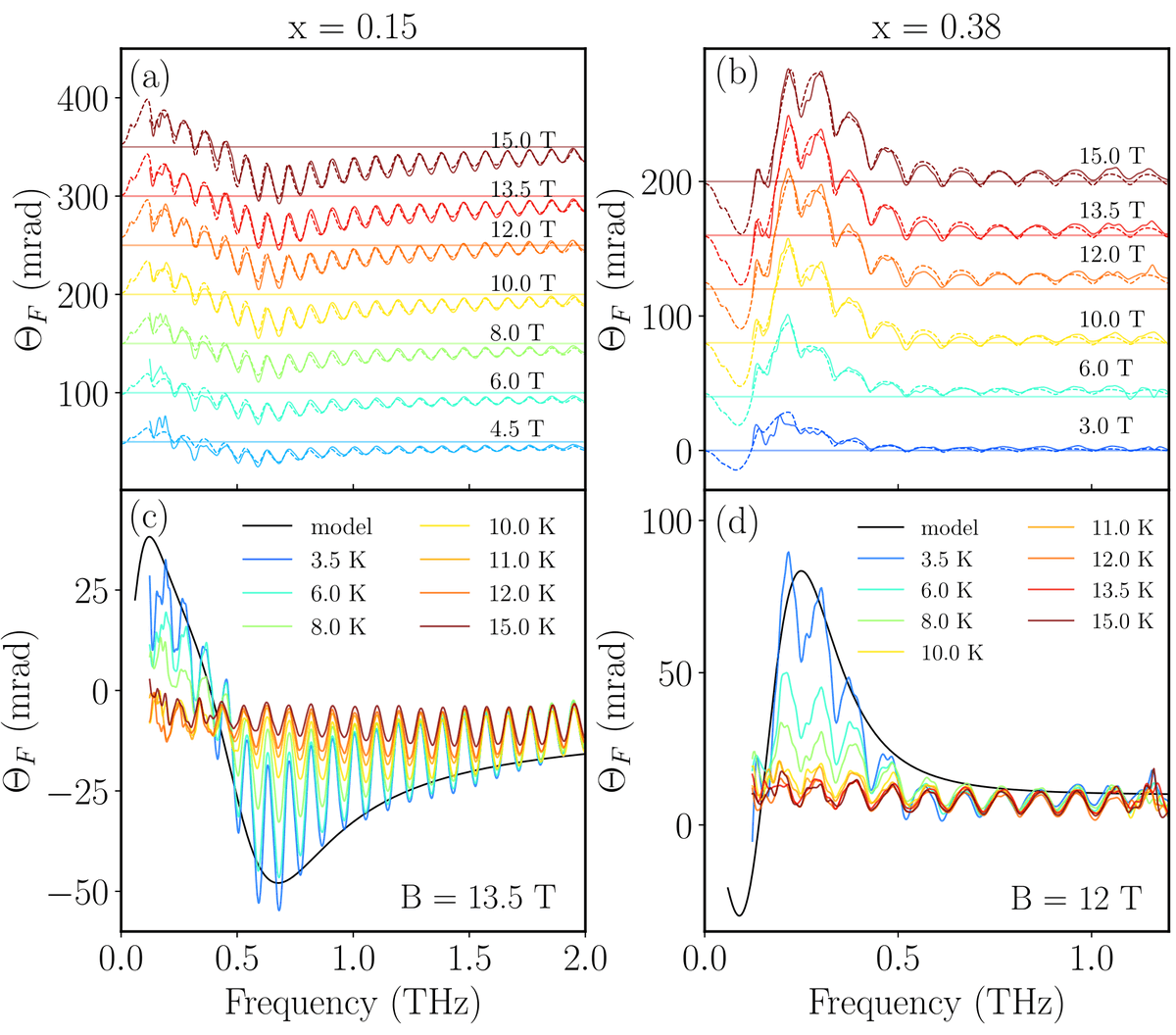
A spectroscopy study of Caroli-de Gennes-Matricon (CdGM) states shows the utility of terahertz magneto-optics as a probe for helical vortex-core excitations and yields evidence of multiband CdGM in iron superconductors.
Read more: https://t.co/OtCiLVdyfx