Originator of #FinalFiveElections. Business leader, political innovation activist, author, speaker. Seen in @TIME, @FortuneMagazine, @Salon, @CNN, @HBRexchange.
Final Five Voting makes general elections matter again! Winners won't be chosen in low-turnout primaries, so Congress will report to all of us, not just some of us. Alaska
is first to use Final Five-style elections. My TED talk explains... https://t.co/SqPVcLNaLF via @TEDTalks
Adam, you must not pay close attention to anything I say or write. RCV is not my pet project. Appleton did the right thing. I am vehemently opposed to RCV for municipal elections and state and federal primaries (both low-turnout, low-information races). As I have consistently said (listen up, please), RCV serves no purpose in these cases except, in the view of its proponents, to make elections "more fair," and candidly, I dispute that as well. That's why I have a fractured relationship with "liberal reformers" as a group. My actual pet project (listen up, again) is FREE MARKET POLITICS where candidates/elected officials compete to govern in the best interest of citizens. The only way you can get healthy competition (like the kind that drives the innovation, results and accountability in the private sector that has made America the envy of the world) is by eliminating the barrier to entry for new competition, and to that end, there's a narrow use case for instant runoffs in general elections with five candidates (you wouldn't want one of them to win with only 21%, would you?) Adam, I'd be interested in what you think about the ideas I actually propose...
Went to the NY Premier of the new film “Majority Rules”, an extraordinary documentary showing the success of open primaries and ranked choice voting in Alaska, Maine and other states.
@FinalFiveNYC and its leader @SalAlbaneseNYC is working to bring much needed reforms to NYC where the average turnout in last week’s primary was a paltry <15%. This is not democracy.
@katherinegehl F5 founder and reformer @OpenPrimaryUSA founder and leader John Opdycke are featured in the film.
The film will be playing at the Village East Theatre all week, including July 4th. What a perfect movie to see on Independence Day!
The Film will be premiering in LA next week. Extraordinary writing and directing from non-partisan veteran documentarian A.J Schenk.
A real consensus is building that reform is urgently needed.
@Unite_NY hosted the premier. As Tim Dunne their Executive Director put it, the film gives real hope to Americans worried about our future.
@OneCityRisingNY@JCAndersonNYC@saferstreetsny@ycinnewyork@familiesfornyc@Megmd514@MegynKellyShow@savetheuws@westsideco_org@RezaC1@SamAntar@LattinaBrown@NYCMayor@GovKathyHochul
Every time I interviewed someone for this piece, I asked who they thought @ringwiss is.
I heard: Former parliamentarian. Former longtime Hill aide. Someone in their 70s. A UK Parliament staffer.
No one had the correct answer: a 20-year-old in England. https://t.co/pBfBgx21cP
PPS: I'd be remiss if I didn't mention some reliable resources out in the world:
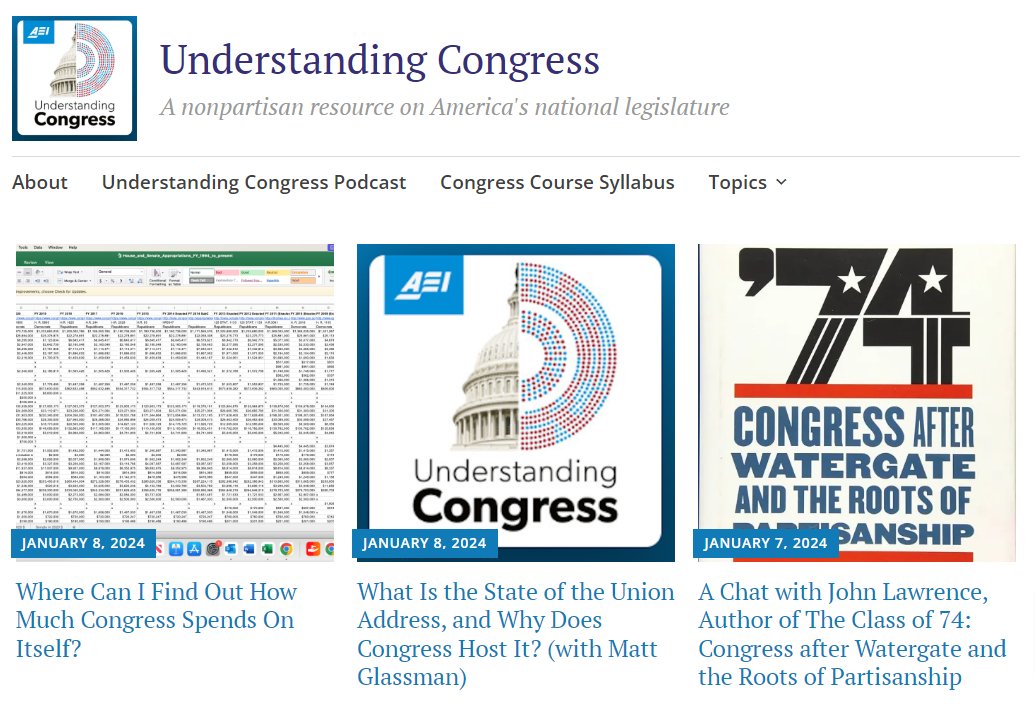
@kevinrkosar's Understanding Congress: https://t.co/kU0ZGXGQsI
@jameswallner et al's https://t.co/nlhO3MXr11: https://t.co/vEZ4rQc1K1
I referenced this in my @lexfridman podcast. A brilliant and thought inspiring analysis of what is wrong with our political system:
Why Competition in the Politics Industry is Failing America - U.S. Competitiveness - Harvard Business School https://t.co/CghqYzZRtK
***Longer post, feel free to skip***
Bring Back Low-Stakes Activities for Kids
We took a wrong turn in the last ~20 years as a society by transforming too many of our organized extracurriculars for kids into high-commitment and high-cost activities.
Low stakes, high mountain
High-cost, high-commitment organized activities have some or all of these attributes:
- Many practices per week and/or long sessions
- Expensive uniforms, gear
- Expensive registration fees
- Year-round or multi-season schedules
- Tryouts to make the team/league
- Weekend competitions
- Mandatory travel
- Expensive facilities
- Paid coaches
- Prevalence of additional, private coaching
When high-cost, high-commitment activities become the dominant form of activity, it brings some major drawbacks:
- Kids are more isolated in single friend groups that align to whatever their "main" interest is.
- Kids have far less unstructured free time. In what is arguably the great blunder of our generation, we've created a world where kids have little time to act under their own direction, spontaneously doing something, exploring, being bored, etc. One major factor in this is high-volume organized activities after school.
- Family time is crowded out with nightly sports/dance obligations.
- Parents' emotional investment amps up with their financial and time investments, causing people to say and do stupid stuff at their kids' games/competitions.
- Kids are far less able to try out different things, as there is little room for beginners and the cost is prohibitive.
- Parents with limited means can't afford to have their participate, especially if they have multiple kids.
- Coaching becomes very costly as a time commitment for parents and volunteers, even verging into paid gigs (further driving up cost).
On a more speculative note, it's worth thinking about whether the (increasingly valid) perception of kids being super expensive to raise in the "normal" way makes people more reluctant to have kids.
It's also worth thinking about whether the college admissions rat race and the stupidly high cost of tuition are driving some desperation for kids to get good enough at a thing to receive a college scholarship.
Thinking About Low-Stakes, Low-Cost Kids Activities
I'd propose that we try to bring back more low-stakes organized activities for kids. I think they occupy an important place between unorganized stuff and the higher-commitment stuff. Kids do benefit from organization. Parents and others benefit from volunteering to coach. It's fun to have some measure of scoring/judgment to keep things sharp.
The low-stakes, low-cost organized activities might have some or all of the following characteristics:
- Just a couple practices per week for an hour
- Simplified uniforms/gear
- Lower registration fees
- Single season structures
- No weekend competitions
- No travel
- Open to all who register
- No expectation of private lessons/coaching
- Publicly available facilities used
- No paid coaches
Wanting more low-stakes activities does not mean wanting to get rid of the higher-commitment stuff. Every kid is different, and many of them (and their families) really thrive in a more intensive environment. I question how often that is really true for younger kids (under 12?), but this is also a nuanced thing.
But simply adding more low-stakes activities opens up the option for families to craft a different model for their situations, even on a kid-by-kid basis. One family might do exclusively low-stakes activities for kids until a particular pursuit really jumps out at them.
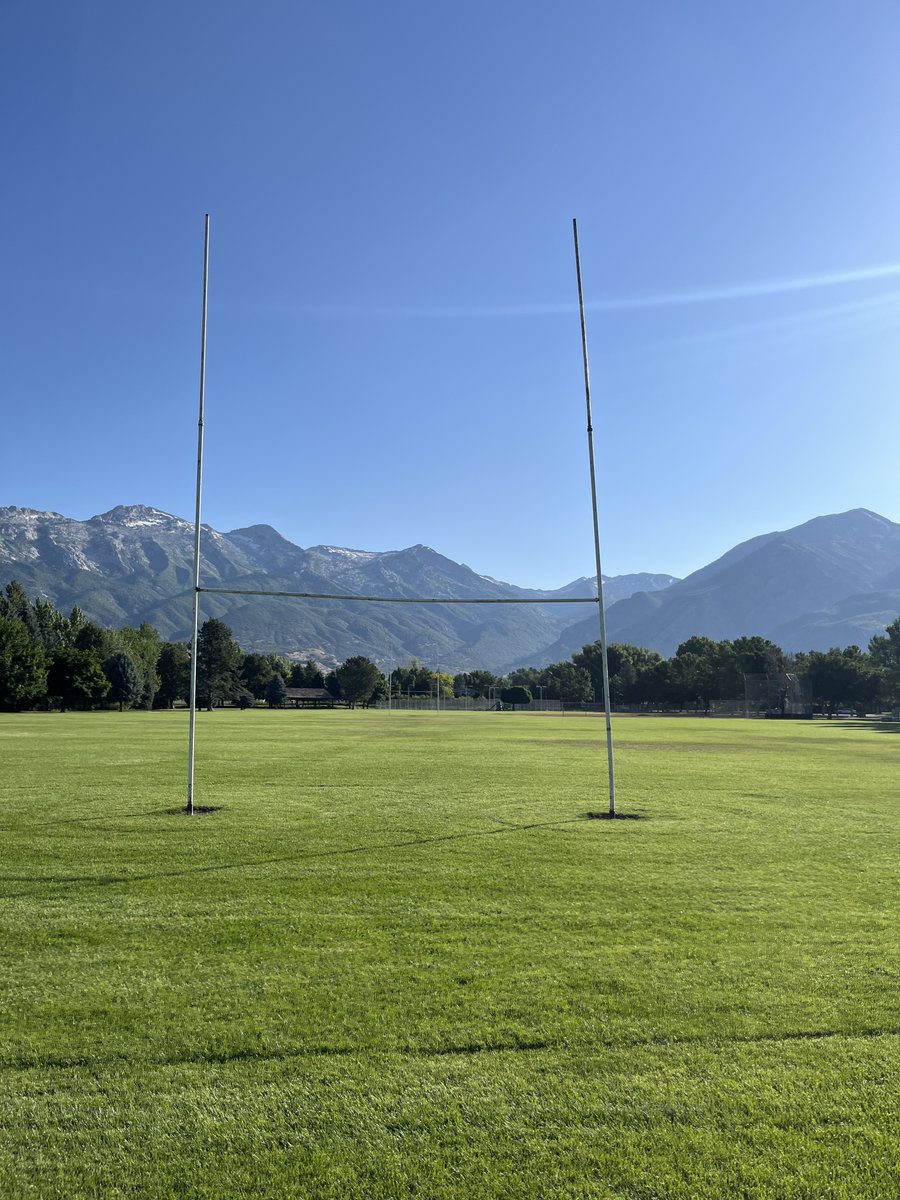
Gratuitous extra shot of the Wasatch mountains
So how can we create more low-stakes activities?
This is the hard part, but here are some thoughts on increasing the number of low-stakes organized activities for kids:
- Cities and counties can make it a priority. Make fields/facilities available for these activities, provide some basic structure for registration and volunteering so people can coordinate.
- Parents can coordinate with each other. The cost of coordination is as low as it has ever been, so it is probably easier than you think to find like-minded people to organize (and coordinate with the cities and counties).
- People protect existing lower-cost activities by pushing back on higher cost and higher commitment changes. This can take a variety of forms, but speaking out about wanting a lower cost uniform option, having one fewer practice in a week, etc. can help adjust the norm. This one is tough as it often feels bad to be the cheapskate and/or signal that you don't care about the activity as much as others do.
- People can reflect on whether a lower-stakes approach could benefit their family in some way. This is not exactly an airtight bit of advice, but perhaps we can just ask whether the higher-cost, higher-commitment versions of the organized activities our kids do are bringing them real fulfillment, leaving time for their lives, providing them with the right mix of friendships, and broadening their horizons. If the answer feels shaky, then there can be motivation to talk about this more.
What did I miss?
I have soft launched the site, https://t.co/6f0RKAejY0. The site aims to explain the what, why, and how of Congress, and includes both curated and original content.
Please have a look, and send me suggestions/pitches for content.
The two political parties represent an increasingly shrinking percentage of the American populace (27% each, according to Axios). And yet, they've rigged the system to protect their duopoly, effectively keeping competition out and holding the American republic hostage as a result.
The solution isn't choosing one or the other -- and it sure as hell isn't stronger parties in general (apologies to my smart colleagues who believe otherwise) -- it is a way forward that moves us beyond the simplistic and unhelpful binary of republican vs democrat, allowing the full range of preferences of the American public to be expressed and reflected in our politics.
The work of @katherinegehl and @MichaelEPorter is a great place to start -- their book, The Politics Industry, is a good diagnosis of the problem and a way forward.
https://t.co/tPYtC70Sgt
Fabulous testimony by @katherinegehl and Austin Ramirez this morning in front of the Assembly Committee on Campaigns & Elections in support of final five voting. Let's do this Wisconsin! #finalfivevoting@OperationVAV
https://t.co/GNhP3uaajE
"No one should win an election until November voters have had their say." Hear from IPI founder @katherinegehl in @CrainsChicago on why election reform is so desperately needed and why we think #FinalFiveVoting is the answer. https://t.co/ndHLfiMqx1
The Alaska Election Model works! Now, we can either be part of the solution, or we can be critics on the sidelines and maintain the status quo. Who will you be? @OperationVAV