RUHAKANA RUGUNDA: A LIFE OF SERVICE IN UGANDA'S GOVERNMENT, DIPLOMACY, AND PEACE EFFORTS.
By Keefa Nuwahereza.
Ruhakana Rugunda was born on 7 November 1947 in Kabale, in southwestern Uganda. He trained as a physician, earning his medical degree from the University of Zambia in 1975 and a Master of Public Health from the University of California, Berkeley, with a focus on maternal and child health. He also completed specialized training in pediatrics at the University of Nairobi. Before entering politics, he practiced medicine in Zambia, the United States, and Kenya, gaining experience that later shaped his approach to public service.
After Yoweri Museveni and the National Resistance Movement took power in 1986, Rugunda joined the new government and began a long series of cabinet appointments. He first served as Minister of Health from 1986 to 1988, helping rebuild health services after years of conflict. He then became Minister of Works, Transport and Communications from 1988 to 1994. In 1994, he was appointed Minister of Foreign Affairs, a role he held until 1996, during which he managed Uganda’s external relations amid regional tensions. Subsequent posts included Minister of Information (1996–1998), Minister in charge of the Presidency (1998–2001), Minister of Water, Lands and Environment (2001–2003), and Minister of Internal Affairs (2003–2009). In the latter role, he oversaw internal security and immigration matters. He also represented Kabale Municipality in Parliament for several years and chaired the NRM Electoral Commission.
One of his most prominent assignments came in 2006 when he led Uganda’s delegation to the Juba peace talks with the Lord’s Resistance Army (LRA). Held in Juba, then in southern Sudan, the negotiations sought to end the long-running conflict in northern Uganda led by Joseph Kony. Rugunda worked with mediators including former Mozambican president Joaquim Chissano and South Sudanese officials. The talks produced a cessation-of-hostilities agreement that allowed many LRA fighters to leave northern Uganda, although Kony ultimately refused to sign the final agreement. Harvard University later published a case study examining Rugunda’s leadership of these negotiations.
In January 2009 he was named Uganda’s Permanent Representative to the United Nations, a post elevated to ministerial rank. He served until 2011 while Uganda held a non-permanent seat on the Security Council, twice acting as Council president. In this capacity he represented Ugandan interests on international issues and contributed to debates on regional security.
Rugunda returned to the health portfolio briefly in 2013–2014 before being appointed Prime Minister on 18 September 2014, succeeding Amama Mbabazi. As head of government business in Parliament, he coordinated the cabinet and advanced national development priorities until 21 June 2021. After leaving the premiership, he continued public roles, including his installation as Chancellor of Gulu University in February 2023.
In mid-November 2026, President Museveni dispatched Rugunda to represent Uganda in a mediation effort involving Russia and Ukraine. The assignment reflected the continued trust placed in his diplomatic experience when the president was unable to travel. Across nearly four decades, Rugunda has combined medical training, repeated ministerial service, leadership of the Juba talks, United Nations representation, and the premiership, remaining one of the longest-serving figures in Uganda’s post-1986 political order.
STORM BLOWS OFF FORT PORTAL HOSPITAL ROOF, DAMAGES EIGHT CARS.
By Keefa Nuwahereza.
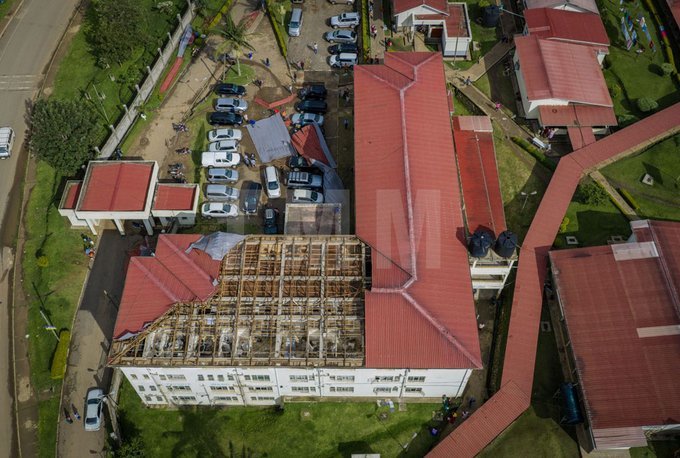
Strong winds accompanying a heavy downpour tore off part of the roof at the private wing of Fort Portal Regional Referral Hospital on the afternoon of 18 November 2026, sending iron sheets and debris crashing onto eight parked vehicles. Patients, attendants and health workers escaped injury, and hospital administrators promptly moved those in the affected section to the first floor to keep care running without interruption.
The incident occurred at the facility in Fort Portal City, western Uganda, during what witnesses described as a sudden and intense storm. Flying roofing materials struck cars in the parking yard outside the private wing, leaving several with visible dents, shattered glass and other damage. Police from the Fort Portal Central Division arrived quickly after the alert, cordoned off the area and worked with hospital staff, the Fire Brigade and Crime Intelligence to document the destruction and clear debris from the compound.
Victor Nuwamanya, the division’s Police Community Liaison Officer, confirmed that eight vehicles were affected and that authorities had recorded all damaged property. He noted the collaborative response that followed the storm’s passage.
Hospital director Dr Bahizi Archibald Newton called the episode unfortunate yet expressed gratitude that no one was hurt. He explained that rain associated with powerful winds had lifted part of the private wing’s roof structure. Patients from the damaged section were immediately relocated and reassessed by clinicians so that treatment could continue. Dr Bahizi urged the public to remain calm while management and relevant agencies evaluate the full extent of the damage and organise repairs. He praised the speed with which government responders, hospital staff and members of the surrounding community helped clear the site.
Hospital authorities notified higher offices, and the Uganda People’s Defence Forces Engineering Brigade was expected to arrive on Thursday, 19 November, for a technical assessment and recommendations on corrective work. Officials expressed hope that the roof and other affected elements could be restored as soon as possible to maintain uninterrupted services for patients and the wider community.
The private wing operates on a paying basis, unlike the hospital’s other wards that provide free care. Fort Portal Regional Referral Hospital, also known locally as Buhinga, serves Fort Portal City and neighbouring districts across the Tooro and Rwenzori sub-regions, including Kabarole, Kamwenge, Kyenjojo, Kasese, Bundibugyo, Ntoroko, Bunyangabu, Kyegegwa and Kitagwenda. Its estimated catchment population is about three million people.
The storm exposed the private wing’s upper structure and left sections of the building open to the elements, though the rest of the hospital continued to function. Emergency teams and staff worked through the afternoon and evening to secure the site and reassure those still on the premises. Local reports described initial panic among patients and staff as the wind tore through the area, but the absence of injuries and the rapid relocation of those at risk limited the immediate human impact.
By the following morning, attention had shifted to the engineering assessment and the timeline for restoring the damaged roof. Hospital leadership emphasised that continuity of medical care remained the priority while the necessary structural work is planned and carried out. The event highlighted both the vulnerability of hospital infrastructure to extreme weather and the effectiveness of the coordinated response that followed.
PRESIDENT MUSEVENI'S GRANDSON HAVING A BLAST.
President Yoweri Museveni's grandsons and companions playing an outdoor "Who am I?" party game, wearing headbands with photos and laughing while gesturing animatedly in a garden setting.
The light-hearted clip shows family members at what appears to be a casual celebration with flowers and decorations, offering a glimpse into the private life of Uganda's long-serving leader's younger relatives.
HUNGER CRISIS GRIPS MAKERERE UNIVERSITY AS STUDENTS COLLAPSE DURING EXAMS AMID RISING COSTS.
A deepening hunger crisis at Uganda’s premier institution, Makerere University, has left students skipping meals, missing examinations, collapsing from exhaustion, and in some cases requiring hospitalisation as the examination period unfolds in November 2026. Reports circulating on social media and in local outlets describe students struggling to concentrate, losing weight, and developing health complications simply because they cannot afford regular food. One widely shared post claimed students were “dying of hunger” and collapsing in exam halls, highlighting a stark contrast with statements made by Vice Chancellor Prof Barnabas Nawangwe roughly two years earlier, when university officials publicly denied that any students were going hungry.
The immediate trigger for institutional action was mounting evidence that hunger was directly interfering with academic performance. On 11 November 2026, Makerere University partnered with the Rotary Club of Makerere Passport to launch the Food for Peace programme. The initiative initially targets 206 students identified through a needs assessment conducted by the Makerere Rotary Peace Centre. These students, drawn from both government- and privately sponsored ranks, receive free meals at participating halls of residence during the examination period so they can sit papers without an empty stomach. Prof Nawangwe, who also serves as president of the Rotary club, openly acknowledged the severity of the situation, stating that the university had “noticed some being taken by ambulance to hospital just because of hunger.” He framed the programme as a temporary but necessary intervention to protect academic integrity while longer-term solutions are sought.
At the heart of the crisis is the inadequacy of financial support relative to living costs in Kampala. Government-sponsored students receive a living/meal allowance of approximately USh 530,000 per semester. Spread across a typical 120-day semester, this equates to roughly USh 4,400 per day. A single modest meal near campus—rice, chapati, chips and beans—can cost around USh 3,500, while protein options such as offals (USh 4,000), stewed beef (USh 5,000), chicken (USh 8,000) or fish (USh 10,000) quickly exhaust the daily allocation. Many students therefore rely on cheap street food such as plain chapati, Rolex or cassava, or simply skip meals altogether. Privately sponsored students, whose families have already stretched resources to cover tuition and rent, face similar or greater pressures when home remittances are irregular or insufficient.
Student leaders have been vocal. Guild President Gracious Kadondi, herself a government-sponsored student, noted that the allowance arrives at the beginning of the semester and is often exhausted by examination time. Innocent Kisembo, chairperson of the College of Humanities and Social Sciences, described the USh 530,000 figure as “too little to push someone for the entire semester.” Third-year student Denise Kainomugisha told reporters she routinely attends lectures on an empty stomach and returns to her hostel hoping she has both food supplies and cooking gas. She observed that without a side hustle or consistent parental support, many students simply “get used to not eating the whole day.”
This is not an entirely new problem. In 2018 the university discontinued direct meal provision in halls after caterers demanded higher payments amid rising commodity prices and switched to cash allowances following a student survey. In late 2024, delayed disbursement of those allowances sparked protests by government-sponsored students. University officials at the time dismissed some starvation claims as inaccurate, and several student leaders were briefly suspended before the suspensions were lifted. Those earlier episodes, combined with the current reports of hospitalisations and missed exams, have prompted renewed scrutiny. Parliamentary attention has also been drawn; Deputy Speaker Thomas Tayebwa directed the Committee on Education and Sports to examine student living allowances.
The Food for Peace programme offers immediate relief for a few hundred students, and Rotary International Director Emmanuel Katongole has pledged annual support. Yet student leaders and commentators argue that 206 beneficiaries represent only a fraction of those affected at a university with tens of thousands of students. They call for a permanent student food bank, an emergency welfare fund, and a review of allowance levels and disbursement timing so that support lasts through examinations. Prof Nawangwe has also warned that food insecurity can expose vulnerable students, particularly young women, to exploitation.
For now, the contrast remains striking: an institution that once denied the existence of hungry students is now publicly feeding starving candidates so they can finish their examinations. Whether the current emergency response evolves into sustained welfare reform will determine how many future Makerere students can focus on their studies rather than their next meal.
JUSTICE MINISTER NORBERT MAO CALLS FOR END TO UNLAWFUL AND INCOMMUNICADO DETENTION.
By Keefa Nuwahereza.
Justice and Constitutional Affairs Minister Norbert Mao has issued a strong call for security agencies to halt all forms of unlawful arrest, abduction and incommunicado detention, insisting that every state institution must operate strictly within the bounds of the Constitution and respect the fundamental rights of every suspect.
Speaking at a press conference at the Uganda Media Centre on 18 November 2026, where he formally announced the start of this year’s Justice Week, Mao described the practice of holding people in undisclosed locations without informing their families or allowing access to lawyers as unconstitutional. He argued that any official who believes such methods remain necessary should openly campaign to change the law rather than permit security organs to act outside established legal procedures.
Mao was particularly direct about the continued existence of so-called “basement” detention facilities. He acknowledged that certain recognised safe houses may be used for special arrangements, but insisted these must be known and accountable. By contrast, he declared torture chambers and secret holding cells illegal under Ugandan law, warning that no security agency has a blank cheque to pick up citizens and disappear them into locations unknown to their relatives or the courts.
The minister also expressed concern over the slow handling of habeas corpus applications—the legal mechanism that forces the state to produce a detained person before a judge and justify the detention. He questioned why some judicial officers adjourn these urgent liberty cases, noting that delay itself can prolong unlawful imprisonment. Mao clarified that a successful habeas corpus order does not automatically declare a person innocent; its purpose is simply to ensure the individual receives a fair trial rather than remaining beyond the reach of the law.
His remarks come against a backdrop of persistent public allegations linking abductions and incommunicado detention to security operations, some of which have been associated with facilities under the command of senior military figures. Mao has previously sought briefings from security agencies on torture, excessive force and delayed trials, and he has publicly rejected the idea that political detainees must be released as a precondition for national dialogue. Instead, he has argued that such issues belong on the negotiating table itself.
The statement also served as a rebuttal to recent comments by journalist Andrew Mwenda, who had appeared to defend aggressive detention methods as a route to socio-economic progress. Mao responded that Uganda cannot trade the rule of law for development and that “knocking people out in the basement” has no place in a constitutional order.
Justice Week, organised by the Justice, Law and Order Sector, is scheduled to run from 23 November to 4 December 2026 under the theme “Advancing an Integrated People-Centred Justice System for Socio-Economic Transformation.” Mao used the launch to admit that the sector’s credibility is at stake because many ordinary Ugandans still experience gaps between official promises and the reality of access to justice. He urged all justice institutions to prioritise equality before the law, transparency and respect for human rights regardless of a person’s political status.
By placing the rule of law at the centre of the national conversation just days before Justice Week begins, Mao has signalled that the government expects security agencies and the judiciary alike to demonstrate, in practice, that no citizen stands outside the protection of the Constitution.
TANZANIAN PRESIDENT SAMIA SULUHU HASSAN ARRIVES IN UGANDA TO STRENGTHEN BILATERAL COOPERATION AND ACCELERATE MAJOR INFRASTRUCTURE PROJECTS.
By Keefa Nuwahereza.
Tanzanian President Samia Suluhu Hassan arrived in Uganda on 18 November 2026 for a two-day state visit at the invitation of President Yoweri Museveni. The visit began with her arrival at Entebbe International Airport, where she was received by the Third Deputy Prime Minister, Rukia Nakadama, before proceeding to State House Entebbe. There, she was welcomed by President Museveni and signed the visitors’ book in a formal ceremony marking the start of high-level engagements between the two neighbouring countries.
The visit centres on deepening economic, energy and trade relations. During bilateral talks at State House Entebbe on 18 November, the two leaders reviewed progress on key cross-border initiatives and agreed to expedite several projects. A joint communiqué highlighted the East African Crude Oil Pipeline (EACOP), a 1,443-kilometre line designed to transport crude oil from Uganda’s oilfields in the Hoima area to the Tanzanian port of Tanga. Officials reported the pipeline as 93.9 per cent complete, and the presidents directed that remaining construction, testing, commissioning and operational preparations be accelerated so crude oil exports can begin.
The leaders also committed to speeding up the Standard Gauge Railway (SGR) linking the two countries to improve freight movement and reduce transport costs. Discussions further covered strengthening electricity interconnectivity, including a proposed 400kV line connecting points in Uganda and Tanzania, and advancing plans to develop Tanga into a regional energy hub. This hub would support petroleum storage, refining, trading and distribution, building on an agreement signed during Museveni’s visit to Dar es Salaam in August 2026. Both sides also agreed to work on removing trade barriers to facilitate the freer movement of goods and people.
Beyond energy and transport, the agenda includes cooperation in agriculture, industry and finance. On 19 November, Presidents Hassan and Museveni are scheduled to travel to Mpigi District to inaugurate the Double Q Automotive Assembly Plant in Nakirebe, Kiringente sub-county. The facility assembles vehicles, including Sinotruk trucks, as part of Uganda’s efforts to expand local manufacturing, create jobs and reduce reliance on imported finished vehicles. Police issued a traffic advisory for the Kampala-Masaka highway in anticipation of the presidential motorcades.
The visit continues a pattern of frequent high-level exchanges between the two leaders aimed at advancing shared infrastructure and economic integration. With EACOP nearing completion and railway and energy projects receiving renewed political attention, officials from both countries described the engagements as important steps toward stronger regional connectivity and economic opportunities for their populations. The state visit concludes on 19 November 2026.
Copied:
This morning, the State produced Sam Mugumya before the General Court Martial at Makindye. He was charged with treachery alongside UPDF officers and remanded to Murchison Bay Prison, Luzira.
Armed men abducted Sam in Mbarara on 26 August 2025. For more than 14 months, the UPDF told the High Court on oath that it did not have him. Then Gen Muhoozi Kainerugaba posted, "Yes, I have Sam Mugumya," and threatened to execute him. Leaked footage showed Sam barely able to walk after torture.
Today, the army produced him in its own court. That proves its sworn denials were lies.
Sam is a civilian. He belongs before a civilian court, not a court martial. He needs his lawyers, his family and an independent medical examination now. Those who tortured him and lied to court must answer for it.
Thank you to everyone who refused to let Sam disappear. You brought him out of the dark. The fight for his freedom continues.
#FreeSamMugumya #StopEnforcedDisappearances #Uganda
MBARARA UNIVERSITY ADVANCES CANCER CARE AND FRENCH PARTNERSHIPS THROUGH AMBASSADORIAL TALKS.
By Keefa Nuwahereza.
Mbarara University of Science and Technology (MUST) has taken a further step towards expanding specialised healthcare and international academic ties after Vice Chancellor Professor Pauline Byakika-Kibwika held discussions with the French Ambassador to Uganda, Her Excellency Virginie Leroy. The meeting focused on two interconnected priorities: exploring formal collaborations with French universities and advancing plans for a major cancer centre to be located on the university’s campus.
The proposed facility is the Uganda Cancer Institute’s Mbarara Regional Oncology Centre, which will occupy 8.5 acres at MUST’s Kihumuro campus. In early November 2026, Parliament approved a government request to borrow up to €31.98 million from the Republic of France to construct and equip the 138-bed centre. The French loan is expected to cover roughly 95 per cent of the total project cost of approximately €33.58 million, with Uganda providing the remainder. This financing arrangement reflects a broader pattern of French support for Ugandan health infrastructure, building on earlier agreements involving French healthcare partners.
Uganda’s cancer burden provides the clearest rationale for the project. Official figures cited during parliamentary consideration of the loan noted roughly 35,968 new cancer cases and 24,629 cancer-related deaths each year. Most specialised oncology services remain concentrated in Kampala, forcing many patients from western Uganda and neighbouring regions to travel long distances at considerable personal cost. The Mbarara centre is intended to reduce that pressure by offering chemotherapy, surgical oncology, and diagnostic services in its first phase. The design includes three operating theatres, intensive and high-dependency care beds, and an imaging department equipped for CT and MRI scans, mammography, ultrasound, and X-rays. Two ambulances are also planned. Radiotherapy has been deferred to a later phase, a sequencing that has drawn some parliamentary scrutiny over the centre’s initial treatment capacity.
Training and knowledge transfer form a central part of the French partnership. The project includes specialist training arrangements with France’s Gustave Roussy Institute, one of Europe’s leading cancer research centres. These links are expected to strengthen both clinical capacity and research capability at MUST, which already positions itself as a hub for medical education and biomedical sciences in western Uganda. During the meeting with Ambassador Leroy, university leaders also discussed wider opportunities for collaboration between MUST and French higher-education institutions. Such partnerships could extend beyond oncology to areas such as research ethics, clinical trials, infectious disease, and faculty or student exchanges.
The timing of the discussions is significant. Parliament’s approval of the loan only days earlier has moved the cancer centre from planning into an implementation phase. University and government officials have indicated that MUST has allocated the required land and is finalising a memorandum of understanding with the Uganda Cancer Institute. Ambassador Leroy has previously described the Mbarara project as a way to bring treatment closer to communities in the west of the country and to neighbouring states. The latest meeting therefore serves both to reaffirm high-level diplomatic support and to identify practical academic mechanisms that can sustain the centre once it becomes operational.
For MUST, the dual focus on the cancer centre and university-level collaboration aligns with its long-term goal of expanding super-specialised medical training while contributing to national health-system strengthening. For France, the engagement continues a pattern of targeted investment in Ugandan healthcare that combines infrastructure finance with institutional partnerships. Whether the centre meets its timelines and whether radiotherapy follows promptly will depend on subsequent financing, construction progress, and the effectiveness of the training arrangements now under discussion. The meeting between Professor Byakika-Kibwika and Ambassador Leroy marks one concrete step in converting parliamentary approval into operational capacity for cancer care outside Kampala.
TOP EXCISE DUTY GENERATORS IN UGANDA ACCORDING TO URA FOR THE 2024/2025 FINANCIAL YEAR.
By Keefa Nuwahereza.
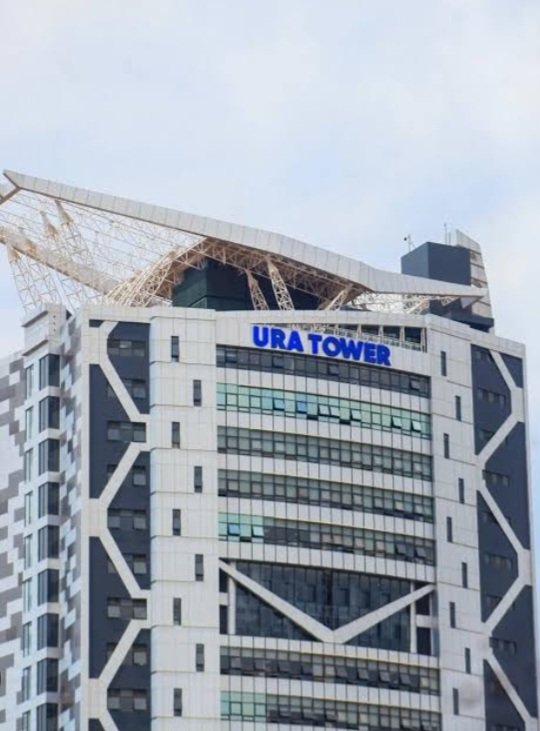
The Uganda Revenue Authority’s figures for the 2024/2025 financial year place beer firmly at the head of the country’s excise duty contributors, generating UGX 469 billion. This single category outpaces every other item on the list and underscores the continued importance of alcoholic beverages to domestic tax collections. Mobile phone airtime follows in second place with UGX 340 billion, reflecting the near-universal reach of telecommunications services across urban and rural Uganda. Soft drinks occupy third position at UGX 274 billion, while spirits and waragi contribute UGX 263 billion in fourth place. Mobile money transfers round out the top five with UGX 234 billion, highlighting the rapid expansion of digital financial services that have become integral to everyday transactions.
Taken together, the leading five categories account for well over UGX 1.5 trillion. Alcoholic products alone—beer combined with spirits and waragi—generate approximately UGX 732 billion, demonstrating the scale of formalised production and consumption of these goods. Telecommunications-related items, encompassing airtime and mobile money transfers, contribute a further UGX 574 billion. These figures illustrate how both longstanding consumer habits and newer digital platforms have become major pillars of excise revenue. Lower down the ranking, everyday household and construction materials appear with more modest but still notable totals: cooking oil at UGX 58.8 billion, bottled drinking water at UGX 57 billion, sugar at UGX 54.09 billion, cement at UGX 50.3 billion, and cosmetics and perfumes at UGX 17.13 billion.
The presence of staples such as cooking oil, sugar, bottled water and cement among the top ten indicates that excise duty in Uganda is applied across a broad spectrum of high-volume goods rather than being confined solely to traditional “sin” products. Cement’s inclusion, in particular, points to sustained activity in the construction sector, while the ranking of bottled water and soft drinks reflects both rising urbanisation and the formalisation of beverage production. Digital tax stamps and electronic monitoring systems have played a documented role in improving compliance and recorded production volumes for many of these categories in recent years, helping to convert previously under-reported output into measurable tax revenue.
These commodity-level results form part of a broader revenue performance in which the Uganda Revenue Authority exceeded its overall target for the 2024/2025 financial year. Collections reached approximately UGX 31.63 trillion against a target of UGX 31.37 trillion, representing a surplus of roughly UGX 262 billion and year-on-year growth of about 15.86 percent. Local excise duty formed a meaningful component of domestic tax mobilisation, which itself surpassed its internal targets. The concentration of large sums in a relatively small number of product lines, however, also reveals structural features of the tax base. Heavy reliance on beer, airtime, soft drinks and mobile money means that revenue outcomes are closely tied to the fortunes of a few high-volume industries and to household spending patterns on both discretionary and essential items.
For policymakers, the distribution offers clear signals. Alcohol and telecommunications continue to deliver reliable volumes, supporting arguments for maintaining or refining existing rates while ensuring that compliance measures remain effective. At the same time, the appearance of cooking oil, sugar and bottled water on the list raises questions about the incidence of the tax on lower-income households and the balance between revenue needs and affordability of basic goods. Cement’s contribution links fiscal outcomes to infrastructure and housing investment, suggesting that broader economic growth in construction can translate directly into higher collections. Cosmetics and perfumes, by contrast, generate a comparatively small sum, indicating either lower formal production or more limited demand relative to other categories.
Overall, the 2024/2025 ranking confirms that Uganda’s excise system captures significant revenue from both traditional consumer goods and the expanding digital economy. Beer’s lead, the strong showing of mobile services, and the steady contribution of household essentials together paint a picture of an economy in which formalised production, widespread mobile connectivity and daily consumption habits are the primary drivers of this particular tax stream. As URA continues to publish detailed data books and to strengthen digital enforcement tools, these figures provide a transparent benchmark against which future shifts in production, consumption and compliance can be measured.
OFWONO OPONDO SAYS MUGUMYA CASE EXPOSES NRM LEADERS’ PRETENCES.
By Keefa Nuwahereza.
The reappearance of opposition activist Sam Mugumya before Uganda’s General Court Martial has prompted a sharp public rebuke from within the ruling National Resistance Movement (NRM). Ofwono Opondo, the newly elected Member of Parliament for Older Persons representing the Eastern Region and a long-serving former government spokesperson, declared that the case has stripped NRM leaders of their remaining pretences.
On 18 November 2026, Mugumya, aged 47, appeared at the Makindye-based military court alongside two Uganda People’s Defence Forces (UPDF) soldiers: Lance Corporal Gift Mukundane, formerly attached to the Special Forces Command, and Lance Corporal Isaac Ocan (also referred to as Ochom or Acan), attached to the 704 Armoured Brigade. The three faced charges of offences relating to security and treachery under sections of the UPDF Act. Prosecutors alleged that between November 2023 and September 2025, they held meetings in locations including Kampala, Bwera in Kasese, Bundibugyo and Ntoroko districts, during which Mugumya solicited the soldiers’ support to coordinate with the Allied Democratic Forces (ADF), a rebel group based in the Democratic Republic of Congo, with the intention of prejudicing the security of Uganda’s defence forces. A separate count accused them of conspiring to withhold information from authorities about ADF efforts to obtain manpower and logistical support. All three denied the charges. The court, chaired by Brigadier Richard Tukacungurwa, remanded Mugumya to Murchison Bay Prison in Luzira and the soldiers to military facilities, with the case adjourned to 21 December 2026 for further mention while investigations continue.
Mugumya’s appearance marked the end of a disappearance lasting approximately 449 days. His lawyers stated that armed men seized him on 26 August 2025 while he was having breakfast at NIM Hotel in Mbarara City. Family members and legal representatives alleged he was held incommunicado at a Special Forces Command facility, denied access to relatives, counsel or medical care. The High Court had issued writs of habeas corpus and directed police and military authorities to produce him or account for his whereabouts. Ministry of Defence officials, including Lieutenant Colonel Edgar Musasizi, repeatedly denied that he was in custody at any gazetted facility. Videos circulating on social media purported to show a frail and emaciated Mugumya in detention, heightening concerns. In October 2026, Chief of Defence Forces General Muhoozi Kainerugaba posted on X claiming to have Mugumya in custody and threatening execution, a message that was later deleted. Opposition figures and human rights advocates had demanded his production before a civilian court.
Opondo’s reaction highlighted the contradiction between earlier official denials and the sudden presentation of formal charges in a military tribunal. In a post on X, he wrote: “This, on Sam Mugumya, regardless of the obtaining ‘facts’, We, @NRMOnline leaders, have now ambanoed any pretences! SAD!” The non-standard term “ambanoed” was widely interpreted as meaning abandoned or discarded. The statement carried particular weight because Opondo has previously used his platform in Parliament to criticise alleged security excesses, including abductions and incommunicado detentions, under an NRM-led government. He has questioned the lack of accountability for such practices and, in other recent exchanges, publicly clashed with General Muhoozi over demands for an apology regarding social media comments, rejecting the ultimatum as lacking legal authority.
Mugumya has a history of prolonged detention. He previously spent eight years in prison in the Democratic Republic of Congo after his 2014 arrest on charges including illegal entry and alleged rebellion plotting, before his release in 2022. He has long been associated with veteran opposition leader Dr Kizza Besigye and is linked to the People’s Front for Freedom. His latest charges and the manner of his reappearance have shifted focus from the unresolved questions about his prolonged absence to the merits of the treachery allegations, while renewing debate over the use of military courts for civilian suspects and the broader pattern of enforced disappearances reported by opposition activists and rights groups in Uganda. The case continues to draw scrutiny over due process, transparency and the gap between official denials and subsequent judicial proceedings.
KAZO COUNTY MP DAN KIMOSHO CHALLENGES LOCAL GOVERNMENT MINISTER BALAAM BARUGAHARA OVER STALLED SHS20 BILLION WATER PROJECT.
By Keefa Nuwahereza.
Kazo County Member of Parliament Dan Kimosho has publicly challenged Local Government Minister Balaam Barugahara to extend accountability measures to senior government officials, declaring that if the minister intends to pursue arrests over a long-stalled water project, he should begin with the Minister of State for Water and the Permanent Secretary and Secretary to the Treasury.
Speaking in Parliament, Kimosho pointed to assurances given to President Yoweri Museveni in January 2024 during a meeting at Rwakitura. At that time, the Permanent Secretary and Secretary to the Treasury together with the Minister of State for Water informed the President that the project required only approximately Shs5 billion more and committed to resolving the matter. Eight years after work was commissioned, Kimosho said, “nothing has been done,” leaving communities without the promised supply.
The project in question, associated with the Nyabuhikye–Kikyenkye gravity flow scheme and related infrastructure in Kanoni and surrounding areas of Kazo District, was designed to deliver around 65,000 litres of water for domestic use and irrigation. Intended beneficiaries included Engadi, Kanoni and Kazo sub-counties, with later extensions planned to Kikyenkye, Nsasi, Igomora and parts of neighbouring Ibanda District. President Museveni commissioned the works roughly eight years earlier, yet residents report that construction effectively halted after initial activity and has never fully resumed.
Minister Balaam, responding in the same parliamentary session, stated that the outstanding funds of approximately Shs5 billion had been released, bringing total expenditure on the scheme to about Shs20 billion. A large metal reservoir has been installed, he noted, yet the water has not reached the three intended beneficiary sub-counties in Kazo. He further alleged that pipes in the Kanoni area are now being dismantled and sold as scrap metal, compounding the loss of public resources.
Local leaders and residents have described a stark contrast between the billions spent and daily reality. Families in Kanoni continue to share scarce water sources with livestock, while abandoned tanks stand unused. Local council officials have repeatedly raised the issue with area Members of Parliament and the district leadership, yet no sustained resumption of work has followed the presidential commissioning.
The exchange occurs against the backdrop of Minister Balaam’s ongoing anti-corruption inspections across local governments. In Kazo itself and elsewhere in the Ankole region, the minister has ordered interdictions and investigations into alleged irregularities involving public funds, including education payrolls and other development projects. His visits have highlighted multiple incomplete or non-functional schemes despite substantial government investment, prompting calls for wider scrutiny of both technical officers and political overseers.
Kimosho’s intervention underscores a recurring tension in such oversight efforts: while lower-level officials face interdiction or arrest for failed service delivery, questions remain about the responsibility of senior ministries that control funding releases, project supervision and technical approvals. The water scheme falls under the Ministry of Water and Environment, yet the assurances to the President involved both that ministry and the Treasury, raising issues of inter-ministerial coordination and follow-through.
Community impact remains immediate. Despite the reservoir and the release of remaining funds, no reliable piped water has reached the targeted households. The reported removal of pipes for scrap further erodes remaining infrastructure and signals a risk of total project abandonment if protective measures and completion works are not prioritised. With the matter now raised on the parliamentary record, both the Local Government Ministry and the responsible line ministries face renewed pressure to demonstrate tangible progress rather than additional expenditure figures.
The stalled scheme, which earlier ministry reports had at times listed as substantially advanced, illustrates the gap that can open between budget releases, physical works and actual service delivery. For residents of Kanoni and surrounding sub-counties, the eight-year delay has translated into continued reliance on unprotected or shared sources, even as public funds totalling approximately Shs20 billion have been recorded as spent. Whether the latest parliamentary exchange produces accelerated completion, recovery of materials, or broader accountability for the senior officials named by Kimosho will depend on subsequent administrative and investigative steps.
NDA PUBLIC RELATIONS MANAGER ABIAZ RWAMWIRI CHARGED IN SHS296 MILLION FALSE ACCOUNTING SCANDAL.
By Keefa Nuwahereza.
The National Drug Authority (NDA) has been rocked by a fresh accountability scandal after its Public Relations Manager, Abiaz Rwamwiri, was charged with false accounting involving Shs296 million out of Shs324.5 million entrusted to him for media and community engagement activities. Prosecutors further accuse him of obstructing an investigation by the Inspectorate of Government (IG) by allegedly influencing witnesses to provide false information.
The charges, which emerged on 18 November 2026, place a senior communications official at the centre of allegations concerning the management of public funds meant for public awareness and community outreach. According to the allegations, Rwamwiri submitted false accounts relating to the bulk of the allocation. Only Shs28.5 million of the total sum falls outside the amount cited in the false accounting charge. Full details of how the funds were spent and accounted for are expected to surface during court proceedings.
Rwamwiri has long served as the public face of the NDA, the statutory body mandated to regulate human and veterinary medicines, ensure their quality, safety and efficacy, and protect public health. In this role he has frequently addressed the media on enforcement operations targeting illegal drug outlets, counterfeit medicines, unlicensed pharmacies and the diversion of government stores. In August 2026, for example, he briefed journalists after an operation that led to the arrest of three suspects linked to the sale of government veterinary vaccines and counterfeit products. More recently he has commented on operations in northern Uganda that closed dozens of unlicensed outlets and impounded significant quantities of unauthorised medicines.
The second charge of obstructing an IG investigation is particularly significant. The Inspectorate of Government has in recent months intensified efforts against corruption and abuse of office across public institutions, repeatedly calling for stronger fraud-prevention mechanisms, specialised investigations and greater public participation. Rwamwiri’s case adds to a series of high-profile proceedings involving public officials and comes against a backdrop of other governance questions at the NDA, including earlier probes into board appointments and audit findings.
The development has drawn swift public attention on social media, with many Ugandans noting the irony that the official who routinely spoke out against drug-related crimes now faces serious accountability allegations himself. Some commentators have highlighted past public statements by Rwamwiri defending the NDA’s enforcement work and criticising those he viewed as unpatriotic or negative about the country.
Rwamwiri, who has a background in mass communication and has previously worked as a journalist, is also known for involvement in tourism and endurance running. He is presumed innocent until proven guilty by a competent court and will have the opportunity to respond to the allegations through the judicial process. The precise circumstances of the expenditure, the nature of the alleged false accounts, and the details of any attempts to influence witnesses remain matters for the courts.
For an institution whose core mandate is to safeguard the quality and safety of medicines reaching Ugandan patients, questions of internal financial accountability carry particular weight. Funds allocated for media engagement and community sensitisation are intended to build public awareness about the dangers of counterfeit and substandard medicines, illegal hawking of drugs, and the importance of using licensed outlets. Any failure in the proper use or accounting of such resources risks undermining both public trust and the effectiveness of those awareness efforts.
As the case proceeds, observers will watch closely for further disclosures about the management of public resources at the NDA and for the outcome of the IG’s broader anti-corruption work. The charges remain allegations at this stage, and the full facts will only become clear once the evidence is tested in court.
The elite credibility & credentials within the NRM was set by men that had clout- the revolution was a people’s revolution but the men that shaped it’s direction set it apart - ironically that legacy is being distorted by a generation from within that has no grasp of this history
PARLIAMENT CALLS FOR SPECIAL SITTING OVER RISING ABDUCTIONS IN UGANDA.
By Keefa Nuwahereza.
Uganda’s Parliament faces growing pressure to convene a special sitting to examine a sharp increase in reported abductions, arbitrary arrests and related human rights concerns that have intensified in recent weeks. The proposal gained traction after Second Deputy Prime Minister Dr Crispus Kiyonga endorsed calls for a dedicated debate to identify root causes and restore public confidence in security operations across the country.
The immediate catalyst was a cluster of incidents in mid-November 2026. The Uganda Law Society publicly demanded the immediate and unconditional release of three people it said had been seized outside normal legal procedures. Leonard Egesa, a technology and cybersecurity specialist and chief executive of Magezi Harvest Limited, was reportedly taken while appearing on a live radio broadcast at the premises of Akaboozi FM and Radio One. David Musiri, described as president general of the Students Brotherhood, was allegedly removed from his home along Salama Road in Makindye by a group of men who also took electronic devices and cash before placing him in a white vehicle. Trainee advocate Prosper Julian Ahabwe disappeared while travelling to assist a client who had himself been the subject of an earlier abduction. The Law Society issued an ultimatum and warned that failure to produce the individuals would prompt further legal steps.
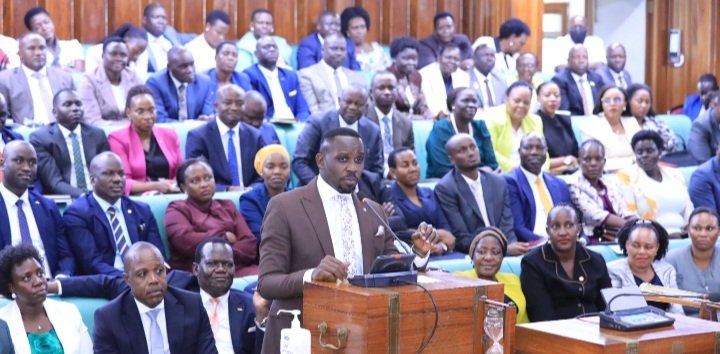
These cases were raised on the floor of Parliament by Leader of the Opposition Joel Ssenyonyi, who contrasted the secrecy surrounding the detentions with the open court process applied to other criminal matters. He noted that families of previously missing persons, including Sam Mugumya, Christopher Godi and Eria Jjengo, still lacked information about their relatives’ whereabouts or any formal charges. Jinja South West MP Paul Mwiru invoked an earlier government undertaking that security agencies would stop holding suspects incommunicado and pressed for the Minister of Internal Affairs to explain why the commitment appeared to have been breached. Deputy Speaker Thomas Tayebwa sought clarification, after which Dr Kiyonga stated that the government’s position remained firm: anyone acting outside the law, whether inside the ruling National Resistance Movement or elsewhere, would face consequences.
The parliamentary exchange occurs against a broader post-election backdrop. Following the January 2026 polls in which President Yoweri Museveni was declared the winner for a further term, opposition figures, civil-society groups and some international observers had already highlighted restrictions on civic space, reported intimidation and hundreds of arrests. Media outlets including NTV Uganda and the Daily Monitor have tracked both the latest abductions and the government’s responses, which have included statements linking some detentions to violent crime while critics accuse the authorities of sidestepping the specific issue of enforced disappearances.
Accounts circulating in Kampala frequently mention the use of unmarked white Toyota HiAce vans, locally called “drones,” in such operations. The Uganda Law Society has framed the pattern as a threat to the rule of law, arguing that criticism of the government is not treason and that citizens cannot be treated as hostages. In earlier statements the Society also referenced the reported abduction of prominent lawyer Erias Lukwago in June 2026 as part of a longer sequence of incidents affecting legal professionals and political actors.
If the special sitting proceeds, members are expected to examine whether security agencies are complying with constitutional guarantees of personal liberty, the right to be informed of charges and access to legal counsel. Opposition voices have insisted that no person is above the law and that suspects must be produced before a competent court rather than held in undisclosed locations. Government representatives have countered that rogue elements exist and will be dealt with, while maintaining that the overall security apparatus remains under civilian control.
The outcome of any special debate will be watched closely by legal practitioners, families of the missing and observers of Uganda’s political environment. At stake is not only the status of the three recently named individuals but also the credibility of earlier parliamentary assurances that incommunicado detention would cease. Continued uncertainty risks further polarising public debate over the balance between security operations and fundamental rights in the months ahead, particularly as civil society groups continue to document cases and call for independent investigations.
THE LIFE AND LEGACY OF ALI KIRUNDA KIVEJINJA.
By Keefa Nuwahereza.
Ali Kirunda Kivejinja was born on 12 June 1935 into an aristocratic family in the Busoga region of Uganda during the height of British colonial rule. His lineage traced back to the ancient kingdom of Bunyoro-Kitara; he was a prince of the Baisemenhya clan, a seventh-generation descendant of Omukama Agutamba Nyamutukura. His grandfather, Ali Muwaabe, is credited with founding Islam in Busoga, and the family maintained strong ties to both royal heritage and the Muslim faith. Growing up in this environment shaped his early identity as a man of culture, faith and political awareness.
His formal education began at local schools before he attended Kibuli Junior School and the prestigious Busoga College Mwiri. In 1957 he secured a Government of India scholarship, travelling to Madras Christian College for pre-university studies and then to Delhi University, where he earned a Bachelor of Science honours degree in Zoology. While in India he served as treasurer of the African Students Association, connecting with future leaders such as Bingu wa Mutharika. Exposure to Indian independence struggles and the ideas of Jawaharlal Nehru deepened his nationalist convictions and steered him away from a purely scientific career towards politics.
Kivejinja returned to Uganda in 1962 as the country approached independence. He became a political mobiliser for the Uganda People’s Congress and contributed to the intellectual currents of the era. Differences over ideology, particularly his advocacy for a stronger welfare state, led to his expulsion from the party in the mid-1960s. He spent periods in underground activity and later co-founded the Weekly Topic newspaper in 1979, a publication whose legacy influenced the emergence of independent media outlets such as the Daily Monitor. He also co-founded the Islamic University in Mbale and wrote the book Uganda: The Crisis of Confidence, reflecting his lifelong engagement with the country’s political challenges.
After the fall of Idi Amin, Kivejinja participated in the National Consultative Council and helped establish the Uganda Patriotic Movement, supporting Yoweri Museveni’s early political efforts. When the second Obote government took power, he joined the armed struggle in 1981, serving on Resistance Councils in the Luwero triangle and Kampala. Following the National Resistance Movement’s capture of power in 1986, he entered government service. Over more than three decades he held numerous cabinet posts, including Minister of Relief and Social Rehabilitation, Minister of Transport and Communications, Minister of Information, Minister of State for Foreign Affairs, Minister of Works, and Minister without Portfolio. He served as Third Deputy Prime Minister and Minister of Internal Affairs, later becoming Second Deputy Prime Minister and Minister for East African Community Affairs from 2016 until late 2019. He also represented Bugweri in the Constituent Assembly and as Member of Parliament from 1996 to 2001, and acted as a senior presidential advisor.
Known for his intellectual depth, Pan-African outlook and loyalty to the NRM project, Kivejinja was often described as an institutional memory of Ugandan politics. He blended Muslim scholarship with socialist and nationalist ideas, maintained a large family of two wives and fourteen children, and supported many others. On 19 December 2020 he died at Mulago National Referral Hospital in Kampala after battling COVID-19, aged 85. He was buried in Bugweri amid tributes that highlighted his decades of service, his role in East African integration efforts, and his status as a trusted confidant of President Museveni. His life spanned the colonial, independence, post-independence and contemporary eras of Uganda, leaving a legacy of steadfast political engagement and institutional contribution.