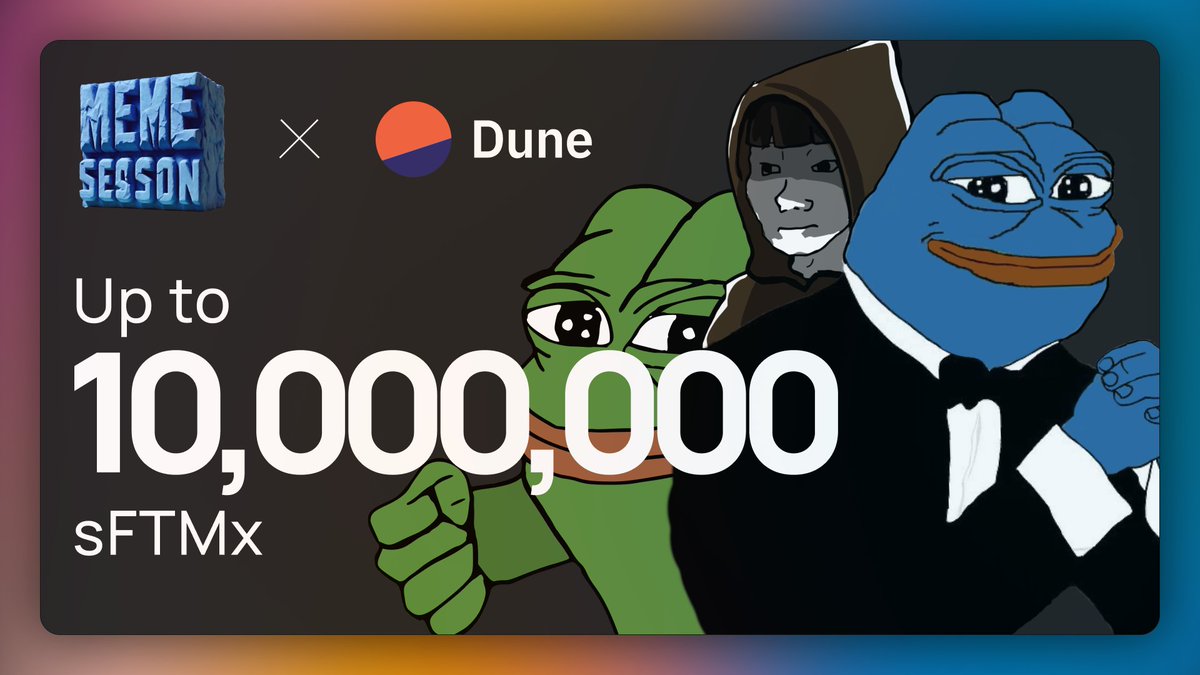
Did you know @DuneAnalytics powers our Meme Season leaderboard?
🔍 Dune provides the most accurate and accessible on-chain data to determine who wins up to 10,000,000 $sFTMx in prizes.
Shoutout to the dashboard dev: @0xKhmer!
📊 Leaderboard:
https://t.co/bW2mPZwtQg
Liquidity Conundrum on Polkadot (And Solution)
As we're headed towards a future of native stablecoins fuelled by the next wave of ecosystem incentives, a key question remain;
"Do we really want native stablecoins?"
The easy answer is yes, of course. But, a key consideration stands in the way;
Capital Flows
No secret that the easier capital can move into an ecosystem, the easier it is to attract users (and more capital). At the heart of this conundrum lies the native vs bridged debate;
🔴 Native stables like USDC/USDT require CEX touchpoints; extremely difficult to move your stables natively into Polkadot in a decentralized manner (from another blockchain network)
🔴 Bridged stables like USDC.wh (@wormhole) make it very easy to transfer assets across other networks w/o CEX touchpoints.
🔴 Withdrawing stables via CEX for native stables is a cumbersome process in Polkadot. Just imagine a new user requiring to;
1⃣ Set up new substrate wallet with 1 DOT sufficiency
2⃣ Withdraw USDC from Binance to the substrate wallet on Asset Hub
3⃣ Send USDC to Moonbeam via XCM
4⃣ Finally, USDC on EVM wallet on Moonbeam to swap/stake
Not ideal. Withdrawing out of Moonbeam is the above steps in reverse. And imagine wanting to transfer into another ecosystem; MB > AH > Binance > Ethereum. Also not ideal.
So while native assets is something vital, it might not necessarily gain better traction due to limitations of Capital Flows.
Look at our USDC - GLMR pools; we have both native and bridged USDC. Eventhough we're incentivizing more rewards and the native USDC pool has a higher APR, its TVL is night and day vs the bridged USDC pool. Why? Because getting native USDC is such a chore. A quick analysis of the top whale activity on Stella also suggests that the main way for moving stables is via Wormhole, with no CEX touchpoint required.thin o
But we at StellaSwap have committed to incentivizing native USDC for our upcoming $GLMR & $DOT liquidity incentive programs, because native is secure. But the issue still remains, and we're certain that incentivizing native stables entails a higher premium.
How can we solve this issue?
🟢 Having solutions like Circle's cross-chain transfer protocol (CCTP) that'll enable seamless transfer of USDC from another network <> Polkadot/Moonbeam
🟢 Cross-chain swaps
Now, CCTP is beyond our control and that's handled by ecosystem agents. But crosschain swaps is directly within our control. FYI, crosschain swaps are designed by the OGs at @squidrouter + @axelarnetwork, and we're glad to be one of the first that integrated it on @MoonbeamNetwork . But the premise is simple;
One-click swaps from a network to another in a non-custodial manner and getting native assets as output
For crosschain swaps to work well, lots of liquidity is needed. So that when you're transferring $100,000 of USDC from Ethereum to Moonbeam, slippage is minimal. When slippage is super low, we can foster more transfers to Polkadot in a non-custodial manner without CEXs. And that's the key 🗝️
And that's why we've allocated $DOT & $GLMR rewards on our upcoming USDC.axl - USDC.xc pool, which will be the medium for crosschain swaps. This pool will enable you to get native coins on Polkadot with just 1-click from other networks, without using a CEX.
We're excited to move towards a future of native stables. Finally. And although we'll still need to alleviate the UX of transferring native stables to Polkadot, this is a good step ahead that's already live, and just needs a boost.
Which is coming. Very soon.
So to all of you kind souls that's gonna ape into our farms soon, get ready.
🌅 The upgrade window closes on June 12 ⏱️
Still on the hosted service? 🧐 Upgrade to The Graph Network by June 12, before hosted service endpoints become unavailable. ❌
Upgrading to the network is quick, easy, free and enables you to enjoy reliable access to onchain data.
Go to your hosted service dashboard and upgrade now ⬇️ https://t.co/op9RdWFD87
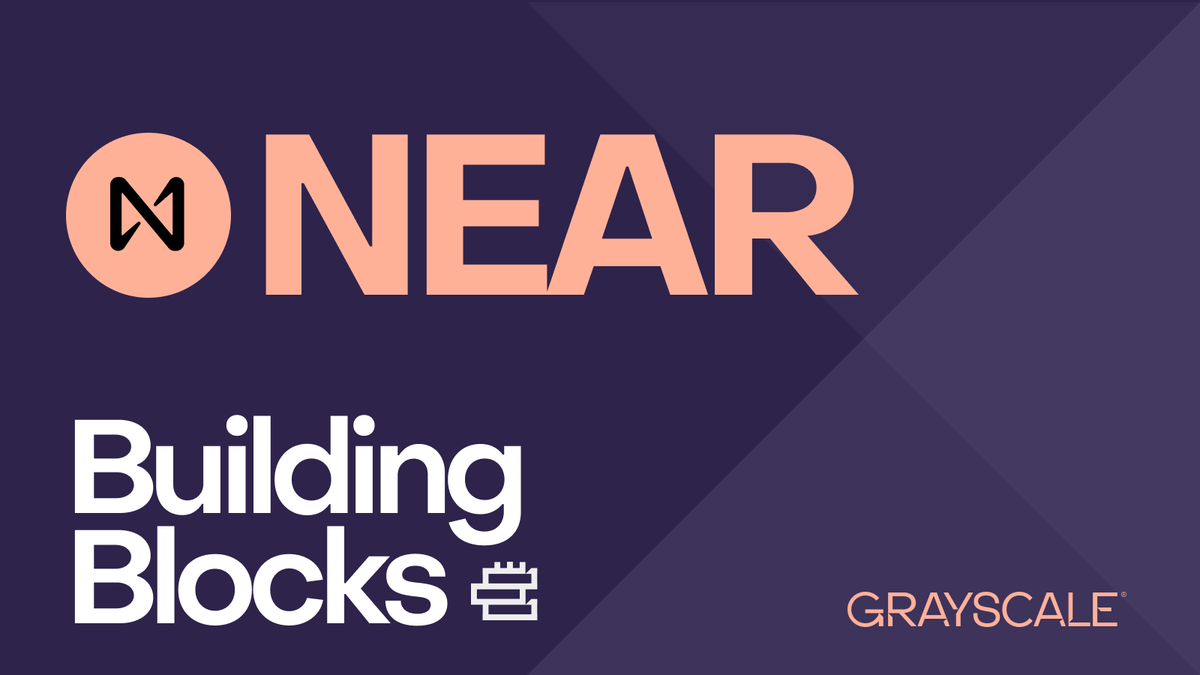
Explore the $NEAR Protocol: fast, cost-effective, and user-friendly. NEAR scales user onboarding efficiently, though fee revenue is still low compared to competitors.
Read the NEW Building Blocks: https://t.co/9LhAQRZCCt
Gaming, DeFi, AI, DePin, Social Media and more... Polkadot parachains cater to almost any use case.
Social network @MeWe is actively migrating encrypted data onto Polkadot parachain @one_frequency, resulting in a surge in transactions & events 👀
.@ChainlinkLabs has joined the ERC3643 Association (@ERC3643Org) alongside other tokenization industry leaders.
The goal of the association is to catalyze industry adoption of the ERC-3643 token standard for real-world asset (RWA) tokenization. https://t.co/kJqNREYP3h
There’s a category of fast-growing AI tools that everyone is rightfully excited about: music, web creation, more...
But there’s likely a whole category of non-AI companies that can FINALLY exist *because of the productivity gains of AI,* says @arampell: https://t.co/eEyC44Bysh
According to ZachXBT, Rain, one of the largest crypto exchanges in the Middle East, was suspected of being hacked on April 29, 2024. Suspicious fund outflows occurred in its BTC, ETH, SOL and XRP wallets, resulting in a loss of US$14.8 million. https://t.co/mGeQHfcC9R
🏡 Real-world assets are bridging physical and digital worlds with transparency and greater efficiency.
Combined with the Polkadot SDK, RWAs are unlocking a new paradigm for property owners, artists, asset managers and beyond 🔥
1/6