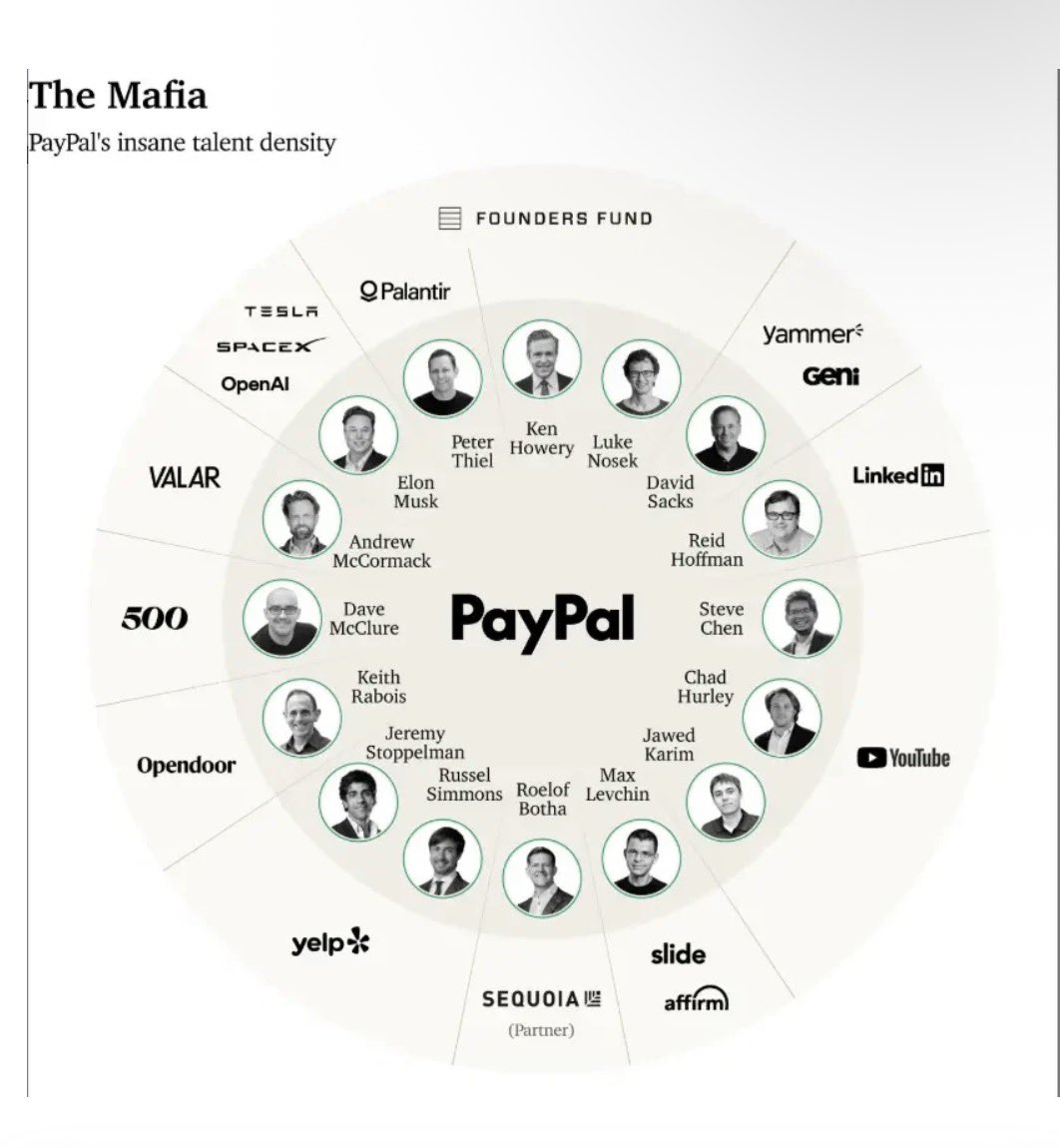
Entrepreneurial journeys are a struggle against the odds... focus + perseverance + serendipity play a key role. 3 examples: i) how Sequoia struggled to invest in Steve Jobs ii) Elon Musk relentless focus on talents iii) how an unlikely duo understood DNA https://t.co/U5TdSRrfA0
Huh? “It’s no coincidence that venture capital’s propaganda era began around the same time as a paper discussing the concept of “proximal mass opinion leaders” which essentially sets out the theory behind programmes like a16z’s New Media Fellowship” https://t.co/ErAuwnG57a
SITUATION EXPLAINED: What is China trying to do to catch up in semiconductors?
@perrymetzger, chairman of Alliance for the Future:
"The folks at Huawei are very clever, and even though they don't have EUV fabs, they've started building three-dimensional integrated circuits."
"Normal logic chips usually have all of the transistors next to each other on a flat surface. The technology for getting things crammed in closer and closer has been bottoming out. But what they've said is, well, if you can't make things smaller on a flat surface, you start building upwards."
"They also have several crash programs to develop EUV lithography. Understanding how to train AI systems is partially a question of mathematics and reading a lot of papers, and it's very difficult to embargo information on mathematics permanently."
"What one group of human beings is capable of doing, another group of human beings, especially given the information about what the first set did, is capable of duplicating."
"Your strategy in the world can't be that the other guy is going to have worse technology forever."
The EU Commission in Brussels has shut off airco, but only for the lower floors, where the lower ranks work:
“It’s like feudalism,” a Commission official working on a lower level of the Berlaymont, granted anonymity to speak freely, told POLITICO on Friday, referring to the fact that upper floors housing commissioners got to keep their AC on. A second official agreed it was a “disgrace.” https://t.co/DWUnu3Wz3C
The Michelangelo of Banking
Raffaele Mattioli translated Shakespeare into Italian, owned a vineyard in Tuscany, and ran Italy’s most powerful bank for three decades.
When asked how he read a balance sheet, he said this:
One of the most underrated finance books.
The author spent years inside the world’s greatest merchant banks.
These men had more power than most governments.
co-founder of KKR bought Safeway for $5.6 billion with just $126 million of equity and turned it into a 50x return
one of the rawest investing masterclasses ever recorded - from getting sent alone to meet Roy Disney as a 23 year old summer trainee to building a $758 billion empire
"I am scared to death to be sitting with Roy Disney - he said you know a lot about my business - I want you to spend the day with me - most analysts haven't even read my annual report"
"he never asked if I was a partner or a summer trainee - all he cared about was that I cared about his company"
"I said I'm going to have to let you go - he said you can't let me go because you'll lose the McDonald's account - I called McDonald's - he laughed"
bookmark & watch the full conversation ↓
After interviewing dozens of leading AI experts and reading hundreds of books, these 4 books stood out as the most important for the AI-age. If you truly understand their insights, not only will you survive this revolution, you will thrive.
1. Max Weber’s Protestant Ethic
2. Aristotle’s Nicomachean Ethics
3. Rene Girard’s Deceit Desire and the Novel
4. Jeff Kripal’s Secret Body
People today are mostly worried about AI taking their job or the bubble bursting, but Weber’s Protestant Ethic is going to show you the problem is much greater. The right comparison isn't the dotcom bubble or 2008. It’s Darwin which shook the faith of an entire civilization or the industrial revolution which required two world wars to sort out. That's the scale of the AI challenge and Weber’s text helps put that in view.
The next 3 books will teach you where to spend your time now in order to thrive in this radically new world order. I've already made major life decisions based on their insights to AI-proof my life and career. Why should we go looking for guidance in “outdated” works of philosophy? Because we need to rethink everything from the ground up from first principles. And if you are just stuck on learning how to prompt engineer or following the latest fads on X you are underestimating the size of the earthquake that is about to hit us by magnitudes.
These are the crucial insights each of these 4 texts have to offer us in the AI age…
Timestamps:
0:00 0. Introduction
1:42 1. Weber’s Protestant Ethic
5:41 2. Aristotle’s Nicomachean Ethics
9:48 3. Girard’s Deceit Desire and the Novel
14:25 4. Kripal’s Secret Body
I limiti del debito pubblico + onnipresenza dello Stato + corruzione … e poi è arrivata tangentopoli … Giappone ha una storia simile: crescita guidata dal debito pubblico e poi crisi per >30 anni
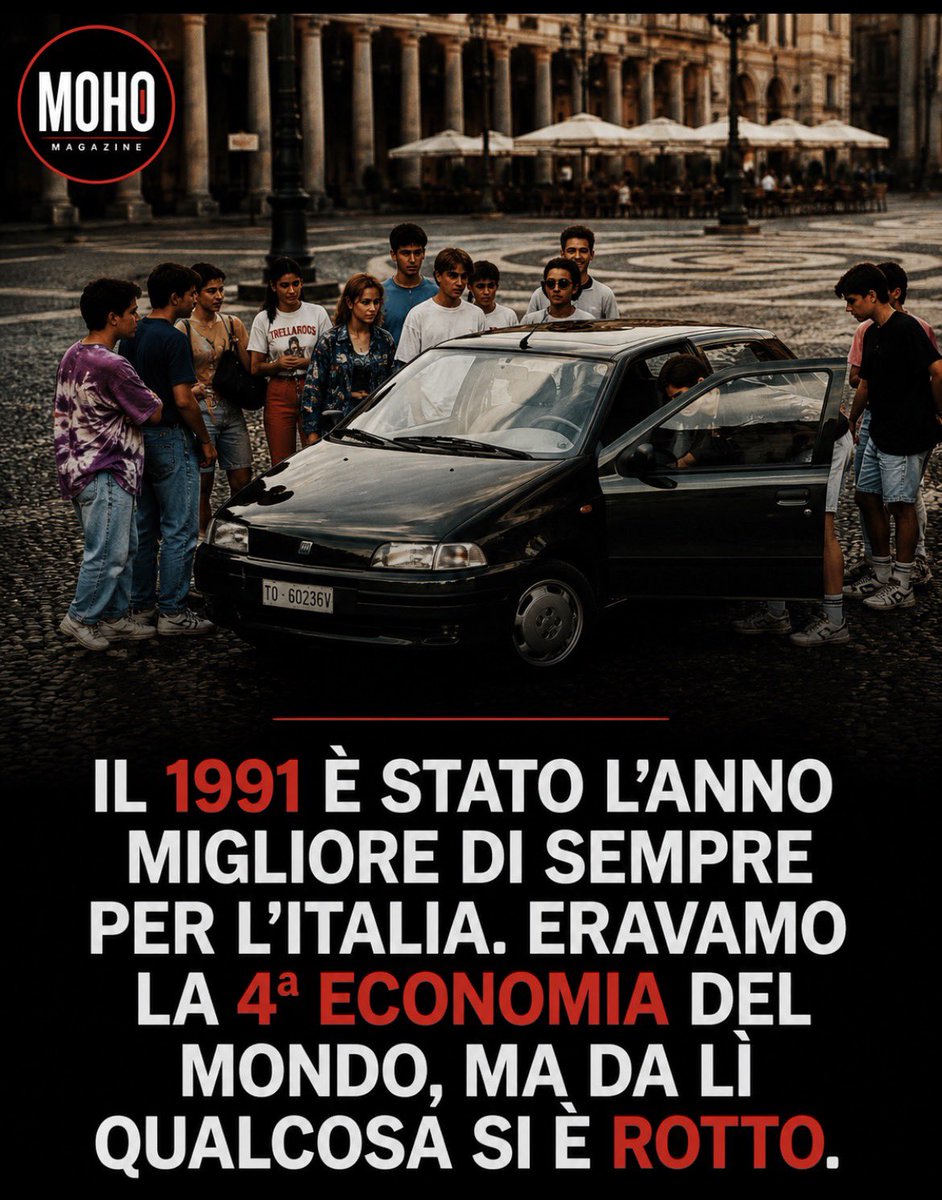
🇮🇹 Il 1991 è stato l’anno migliore della storia italiana!
Nel 1991 l’Italia era appena diventata la 4ª economia mondiale. Il Made in Italy conquistava il mondo, nascevano oltre 550.000 bambini all’anno e il futuro sembrava una promessa. C’era ottimismo collettivo, la sensazione diffusa che il Paese fosse pronto a un periodo di crescita.
Oggi siamo un Paese più vecchio, più indebitato e meno fiducioso. Cosa è successo in questi 35 anni?
The most successful car salesman in America had a different question:
Not “How do I sell this person a car today?” but “How do I make sure they come back to me for their next one?”
So he sometimes downsells, recommends a cheaper model that’s nearly as good. Builds instant trust. One McLaren salesman even saved Jay Leno $20k on ceramic brakes he didn’t need.
Rory Sutherland points out that if you only chase short-term, easily measured sales, you’ll never do this. The top guy probably looked average for his first few years.
Long-term success often looks like short-term “failure” when you’re playing a different game, one based on trust instead of extraction.
“ If people like you, they’ll listen to you, but if they trust you, they’ll do business with you.” — Zig Ziglar
.@elonmusk made Warren Buffett’s entire net worth in one day.
Peter Thiel predicted why Buffett’s logic was flawed 13 years ago:
“He’s become the richest man in America by avoiding technology.”
“Would you rather invest in a spaceship company going to Mars or a Mars candy bar?”
“And when people live on Mars, they’ll still be eating Mars candy bars. Spaceship companies will come and go, so you should only invest in candy bars.”
Hundreds of you have joined us this past week, so now is a good time to reiterate our mission.
Interest in studying the great texts of Western Civilization is growing like crazy.
Our book club exists to help preserve and spread the ideas that built the greatest culture in world history. We recognize that Western culture will only survive if we all individually choose to keep the fire burning.
If you'd like to study the great books with us, from Homer to Aquinas to Dante to C.S. Lewis, please join our community. We are about to finish Crime and Punishment together.
Every month, we read a new text and discuss it inside our group, and we host biweekly discussions via Zoom to reflect on them together. That's it.
We rely entirely on YOUR support. Please join us as a paid member (just a few dollars per month) if you want to support our efforts.
Paid members get:
- Live community book discussions (biweekly)
- Deep-dive essays to guide you through the books we’re reading
- The full archive of book reviews, essays, and our 100 Great Texts reading list
- Access to all community discussion threads (via the subscriber chat)
- Ability to vote on what we read next
Join us!
With unprecedented investor demand for the largest IPO in history (SpaceX), it's worth remembering a simple lesson:
A great company doesn't always make for a great investment at any price.
The median major IPO lost 31% in its first year & suffered a 53% drawdown along the way.
In an era obsessed with bigger models and bigger datasets, I argue the opposite — that the future of AI for drug discovery belongs to smaller, specialized models built on bespoke data we generate ourselves, and I explain why intrinsically disordered proteins, the "undruggable" drivers of cancer and neurodegeneration, are exactly where this expert-driven approach unlocks hidden biology and a faster path to the clinic.
https://t.co/wgtMvhFwX1
Big thanks for the feedback @jandom_random@SSadnro
I got inspired by a very informative, to-the-point breakdown by @bravo_abad of https://t.co/U4ekNlFAy7 and decided to share my take on what the recent issues with scientific reproducibility and data sizes mean for drug discovery.
I need your book recommendations.
Over the last few years I've spent a lot of time reading about Western history.
I've decided to focus more on biographies.
Some I've considered:
• Napoleon: A Life by Andrew Roberts
• Caesar: Life of a Colossus by Adrian Goldsworthy
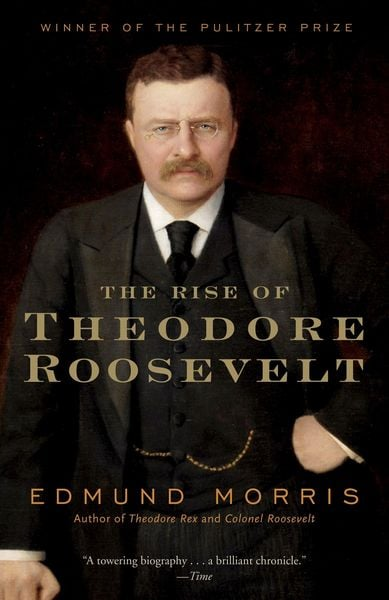
• Theodore Roosevelt Trilogy by Edmund Morris
• Washington: A Life by Ron Chernow
• Bismarck: A Life by Jonathan Steinberg
• Alexander of Macedon by Peter Green
• The Quest for El Cid by Richard Fletcher
• Godfrey of Bouillon by John C. Andressohn
• Frederick the Great: King of Prussia by Tim Blanning
• Prince Eugene of Savoy by Nicholas Henderson
• Conquistador: Hernán Cortés by Buddy Levy
I'm super interested in interesting lives.
Warriors, explorers, statesmen, kings, adventurers, empire-builders, founders, defenders of civilizations.
The kind of person whose biography sends you down a 20-book rabbit hole.
If you could recommend only ONE historical figure to obsess over for the next year, who would it be?
And what's the best book ever written about them?
Finding community is difficult. Resisting its pressures to conform may be even harder.
@EconTalker talks with @LukeBurgis about belonging, commitment, family, and the search for identity.
Watch a new episode of EconTalk from the Hoover Institution, @Liberty_Fund, and @Econlib:
The cold data on tech IPOs nobody is showing you before SpaceX, OpenAI, and Anthropic list.
This is the post-IPO performance of every major tech IPO of the last decade. Every single name lost at least 20% from peak in the first 12 months. Most lost 40-70%. Several lost 80-90%.
Median Year 1 max drawdown: -54%
Average Year 1 max drawdown: -55%
Even the legendary names crashed in year one:
– Facebook: -54%
– Shopify: -52%
– Snowflake: -52%
– Palantir: -53%
– Airbnb: -39%
– Uber: -68%
The speculative ones were brutal:
– Robinhood: -90%
– Rivian: -88%
– Lyft: -79%
– Pinterest: -70%
– CrowdStrike: -67%
Not a single tech IPO of the last decade escaped this gravity. Not one.
Now consider what's coming.
SpaceX. OpenAI. Anthropic. The three largest IPOs in stock market history, all in the same window. Combined valuation north of $3.5 trillion. More than every dot-com IPO from 1995-2000 combined.
If they trade like every other tech IPO since 2012, the playbook writes itself:
– A big day-one pop
– A 50%+ drawdown somewhere in year one
– Most retail buyers who chase the open will be underwater within months
This is exactly why William O'Neil developed the IPO base methodology. You don't buy the open. You wait. You let the float change hands. You let the dust settle. You buy the first proper base breakout.
ServiceNow IPO'd in 2012 and formed an IPO base 6 weeks later before going up 30x.
Palantir IPO'd in 2020 and formed an IPO base before its first major run.
The IPO day is the wrong moment to buy a great company.
It's the moment everyone closest to the asset – founders, employees, bankers, VCs – needs you to be the marginal buyer.
Patience pays in IPOs.
The chart proves it.
I'm about to order a new batch of history books for my ever-growing library.
Do me a favour and drop your must-read titles here, plus any odd ones out. ;)
I'm thinking of the following:
- Rhodesia Accuses
- The Embarrassment of Riches
- The Pity of War
- The Forgotten Slave Trade
- Pirates of Barbary
- The Anarchy
- The Dutch East India Company: Expansion and Decline
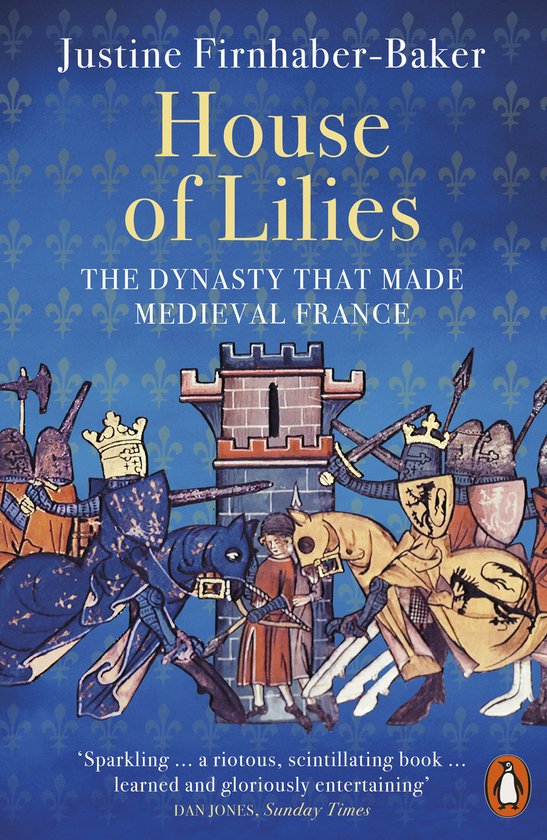
- House of Lilies: The Dynasty that Made Medieval France
- Henry V: The Astonishing Rise of England's Greatest Warrior King
- De Bourgondiërs
- A Revolution of the Mind: Radical Enlightenment and the Intellectual Origins of Modern Democracy