Japan’s Shinkansen bullet trains have operated for over 60 years with a perfect safety record: zero passenger fatalities from crashes or derailments.
Since the first line opened in 1964, the network has carried more than 10 billion passengers while traveling at speeds of up to 200 mph (320 km/h). This makes it one of the safest high-speed transportation systems in history.
The remarkable safety stems from deliberate design choices: dedicated, grade-separated tracks that eliminate crossings with other trains, roads, or freight; advanced automated control systems; real-time earthquake detection that can stop trains within seconds; and rigorous, continuous maintenance and staff training.
The system is equally renowned for its punctuality. In fiscal year 2023, the average delay across the network was just 1.6 minutes per train, even when including disruptions from earthquakes, typhoons, and other natural events.
On the busiest Tokaido Shinkansen line (Tokyo–Osaka), around 432,000 passengers ride daily, with trains departing every few minutes. Few transportation systems worldwide match this combination of speed, scale, safety, and reliability.
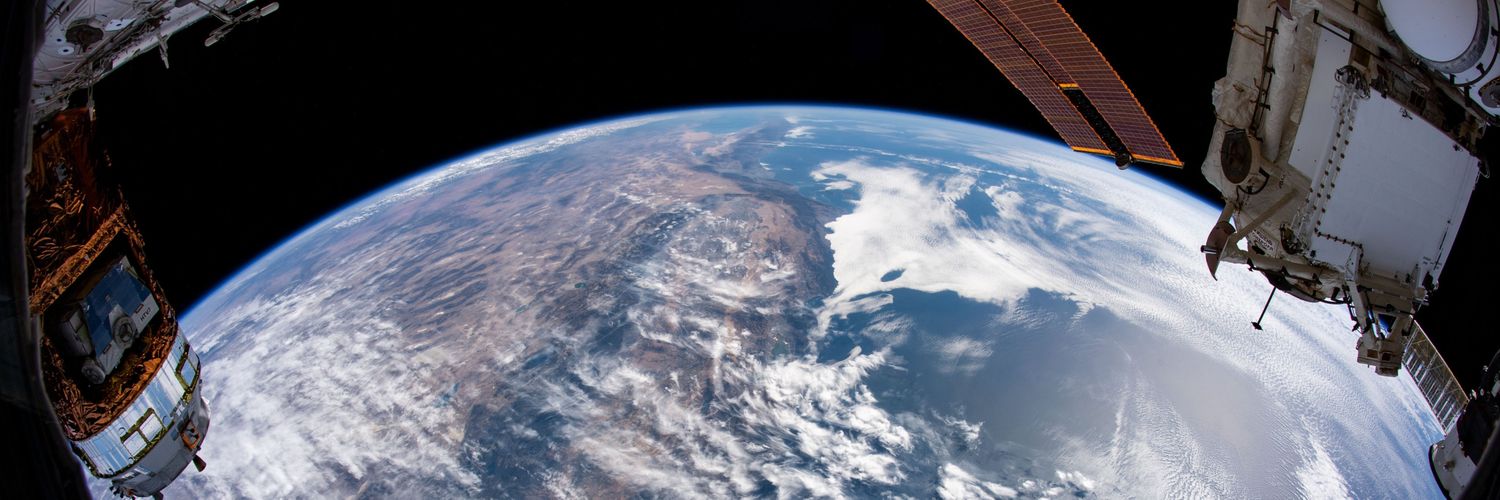
Introducing the Large Docking Adapter. The future of space is larger space stations, vehicles, and payloads. Designed to support greater overall mass while standardizing module compatibility, the adapter is currently in development at Vast HQ and available for order. https://t.co/MQYmEU6UTc
Elon Musk just explained why artificial intelligence cannot physically survive on Earth.
In a conversation with Jamie Dimon, Musk bypassed the romance of space exploration entirely.
He answered with physics.
Musk: “I think we can do probably somewhere around 1 terawatt per year of AI space compute from Earth, but we can do 1,000 terawatts or more from the Moon.”
One terawatt. That is the thermodynamic ceiling of this entire planet.
Every nuclear plant. Every solar farm. Every grid upgrade humanity can possibly build. All of it maxes out at one terawatt of AI compute.
Earth is no longer a canvas. It is a bottleneck.
So Musk is looking at the Moon.
Not for flags. Not for footprints. For leverage.
Musk: “Because the Moon has no atmosphere and about one-sixth Earth’s gravity, you can use an electromagnetic accelerator… You don’t need to use rockets to do AI data centers into deep space from the Moon. You can literally just shoot them like a railgun type of thing.”
He is not describing a research outpost. He is describing a frictionless manufacturing hub on a celestial body.
Mine the lunar surface for raw material. Build solar arrays and thermal radiators on-site. Construct an electromagnetic railgun. And fire AI superclusters directly into the vacuum of deep space.
No supply chain from Earth. No atmosphere to fight. No fuel to burn on exit.
A thousand terawatts. A 1,000x multiplier on the physical limit of human intelligence.
And the Moon isn’t even the endgame.
Musk: “We can build a self-growing city on the Moon faster than we could do so on Mars.”
The Moon is the factory floor. Mars is the civilization.
Musk: “If you warm up Mars, you could one day make Mars like Earth, meaning with liquid oceans and life and where you could walk outside without a spacesuit type of thing.”
Musk: “I call Mars a fixer-upper of a planet, but it’s got a lot of potential.”
A fixer-upper. That is how the richest man on Earth talks about an entire planet. Like a house with good bones and a bad roof.
The rest of the industry is fighting over zoning permits and year-long environmental reviews to plug in a single server farm.
Musk is building a magnetic launcher on the Moon to fire compute into the cosmos.
For ten thousand years, humanity looked up at the stars and saw mythology.
Musk looks up and sees bandwidth.
We thought the ultimate purpose of spaceflight was exploration.
It was always infrastructure.
Earth was never the destination. It was the incubator.
Elon on @SpaceX's planned upmass: "With Starship, we'll be aiming to go from 2,500 tonnes to orbit to millions of tonnes a year in orbit. We think we can get a million tonnes to orbit a year in about 3 years."
Elon Musk: In the beginning, we can launch chips that already exist. The current reference design is for NVIDIA chips - GB300 or Rubin - and we��ll also have reference designs for TPUs. Essentially, you can put existing chips into orbit
But the industry may only reach around 100 gigawatts per year of AI compute. That doesn’t answer how to get to a terawatt. For that, you need TerraFab
TerraFab is expected to be around 100 million square feet, about 10 times the size of Tesla Gigafactory Texas
Even without fundamental technology breakthroughs, scaling existing chipmaking to a terawatt of output per year would be equivalent to about 1 billion chips per year, each doing roughly 1 kilowatt, plus a huge amount of memory
ELON MUSK: "I'm fired up to see a mass driver on the moon. It would also mean that anyone who wants to go to the moon will be able to go to the moon, and I think that'd be pretty cool. You can move there if you want to go live on the moon."
$SPCX unveiled AI1 which is its first AI compute satellite featuring a 150kW payload and deployable liquid cooling.
Elon Musk says AI1 repurposes proven Starlink V3 power, cooling and laser-link technology into an orbiting AI compute platform.
Here are the Top 10 countries in the 2026 "Best Countries" ranking:
1. Switzerland
2. Japan
3. United States
4. Canada
5. Germany
6. United Kingdom
7. Australia
8. France
9. Italy
10. Spain
Voyager 1 is 24 billion kilometers from Earth.
It communicates with us using a 23-watt transmitter.
Less than a refrigerator light bulb.
The signal takes 22 hours to reach us, traveling at the speed of light.
By the time it arrives, it's 20 billion times weaker than the power of a digital watch battery.
NASA's Deep Space Network picks it up using 70-meter dish antennas cooled to near absolute zero to reduce electronic noise.
The engineering required to hear a 23-watt signal from 24 billion km away is arguably more impressive than the spacecraft itself.
Launched 1977.
Still transmitting.
Still being heard.
We built something that works perfectly, 47 years later, in conditions no one has ever tested in.
That's what engineering for the long term looks like.
Many people forget that @elonmusk is a self-taught aerospace engineer.
Elon explains why he thought he was qualified to be the CTO of SpaceX:
“I read a lot of books, and talked to a lot of smart people.”
Via @60Minutes
This applies to many niche skills. I didn’t learn astrophotography from school, I learned it by getting my hands dirty & spent every night learning how NOT to do it.
If you want to do something, just start doing it. Waiting for someone to teach you might leave you with nothing.
@jawwwn_@60Minutes There is obviously no “degree” you can get from a university that actually teaches you how to make an orbital rocket, as none of the professors know how to do it!