AI doesn't have to take over the world to cause serious problems. Sometimes, one wrong decision without a reliable record of what happened is enough.
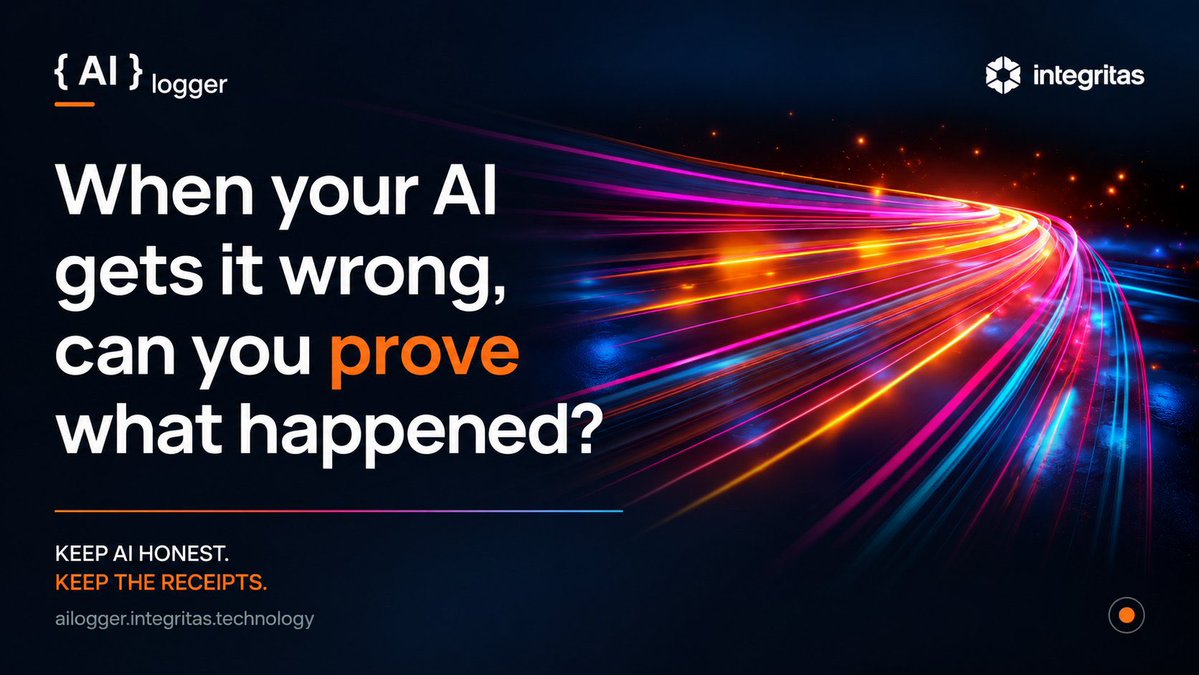
If an AI agent makes a wrong decision, how do we go back and check what happened, what information it used, and what it produced?
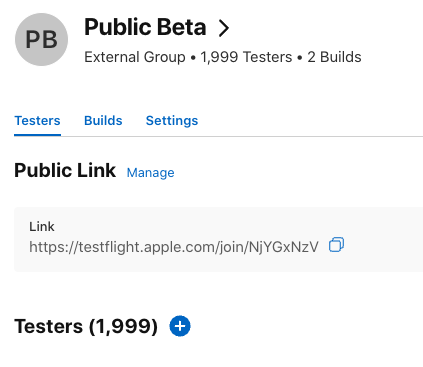
An app I made for myself last year received 2000 downloads in the past 24 hours.
The internet can be fun and beautiful. Thank you to everyone who's used Analog and shared feedback.
Android version soon, and iOS is getting a lot of new features and improvements this weekend.
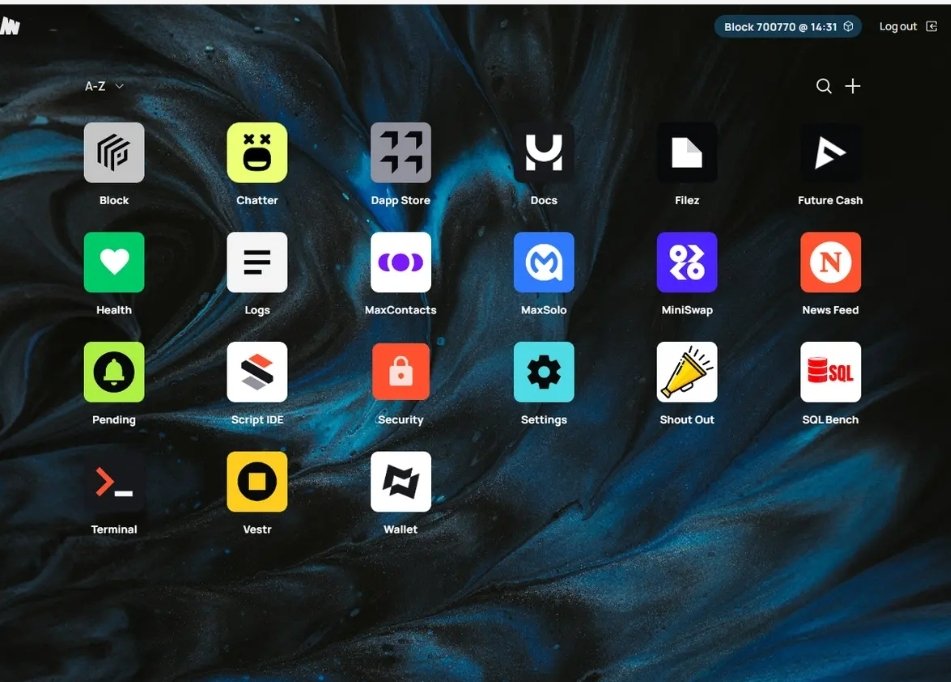
Most NFT collections are a pile of tokens pointing at images stored somewhere else. Atelier does it differently: one token ID, many images, and each item’s identity is enforced by the chain itself.
Built on Minima by @eurobuddha 🧵
It's been a hard few weeks for security, with breaches and leaked credentials affecting a lot of people. It's a reminder of why we keep building systems that don't depend on a single point that can fail.
Our weekly newsletter by @chai_really rounds up the news, and what our team shipped this month:
→ Bluetooth payments for the Zcash community by @sxtvik, which complete even with both phones in airplane mode
→ Radius by @mizanxali: walk into a room and your phone shows who nearby is worth meeting
→ A smart hub by @bahdotsh that runs your home's devices with no internet
Plus, we'll be at Devcon in Mumbai, and we look forward to seeing you there!
Read the full roundup 👇
https://t.co/KfM4wF3zdA
AI can make decisions, generate answers and trigger actions. But weeks later, can you establish what it produced and whether the evidence has changed?
This is the problem Minima is addressing with AI Logger and Integritas.
An AI used in screening job applications, assessing insurance claims or assisting medical professionals gives an output and when the output is challenged, understanding why it was wrong matters. But first, you need reliable evidence of what happened.
Conventional logs can be edited, deleted or separated from the context needed to investigate an incident.
This is where AI inference logging is important.
An inference occurs when an AI model processes an input and generates an output. An audit trail can record that event alongside relevant details, making it easier to trace and investigate later.
But recording something and proving that the record hasn't changed are two different things.
Minima's AI Logger initiative with Integritas addresses this distinction by creating a protected, independently verifiable record of captured AI inferences.
The aim is simple: when an AI output is questioned, there should be evidence to examine, not just a claim about what happened.
This verification works by cryptographic hashing which converts a record into a digital fingerprint. If the record changes, its fingerprint will ordinarily change too.
That fingerprint can be anchored to a blockchain and checked later against the original proof, providing evidence of the record's integrity.
This is anchored on the Minima blockchain. An organisation's internal database remains under its control. Blockchain anchoring provides an independently checkable, tamper evident reference that other parties can verify without relying entirely on the organisation's own records.
Minima provides the decentralised infrastructure; Integritas applies verification to real-world data and workflows.
For instance an AI system rejects an insurance claim, and the customer challenges the decision.
A verifiable audit trail could help investigators establish which output was recorded, when it was captured and whether the record has changed. This is a stronger starting point for an investigation, but it doesn't automatically prove the decision was fair or correct.
This is a crucial distinction because a cryptographic proof cannot, by itself, detect biased training data, prove an AI's reasoning was sound or establish that its original input was accurate.
It helps protect the evidence. Additional controls and investigation are still needed to assess the decision itself.
The applications extend beyond AI. Industrial fault detection, connected devices and automated workflows can all benefit from reliable records of what happened and when.
Through AI Logger and Integritas, Minima is working on the evidence layer needed to make digital activity more accountable.
Explore the AI Logger audit trail:
https://t.co/1flHXGYR9i
A real order book running entirely on-chain, with no matching server and no keeper bots. The Pool by Minima Bay does it by turning every order into a coin.
It’s a test release trading test assets only, but worth understanding. 🧵
Parlons is a chat app built on Maxima, Minima’s messaging layer. Contacts, payments and files in one place.
@eurobuddha rebuilt the Maxima comms layer from scratch and made it work on a phone. 🧵
You can swap on a Minima node that lives in your phone.
No exchange account. No server in the middle. No “connect wallet” button that secretly means “connect to our backend.”
PandaPools and PandaDEX, built by Eurobuddha.
How they work 🧵
Nobody cares about AI.
Twitter is a bubble of the smartest engineers, founders, investors who obsess over emerging technology because it is their livelihood.
Today's benchmarks assume a data-centre GPU, a fast connection and English. Most people meet AI on something else: a budget Android phone, often offline, in their own language.
I just submitted an application for EveryPhone. A new benchmark that measures usefulness and feasibility together, on real hardware. It makes 'works on the phones people own' a number that can be optimised, the way coding and reasoning benchmarks did for their domains, and shows clearly where small models still fail people who rely on them most.
We are solving the hardest challenge facing intelligence right now, making everyone care about AI by making AI care about everyone.
just one more personal AI bro, I promise, just one more
this one will clear your inbox and check-in for your flight even faster bro
I promise bro just share all your personal data one last time
Look at these messages to the @AnthropicAI team.
I have been thinking of lightweight, accessible, local AI for a very long time.
The teams currently building local AI still believe that the biggest unlock from intelligence is clearing emails, booking flights, and snagging restaurant bookings, I strongly believe AI can help us change the world by creating a meaningful impact.
I am interested in creating a meaningful impact at scale.
Very excited about this opportunity, and grateful for the validation this brings to the work our team has undertaken over the past year to improve our encryption standards and open source our core infrastructure.
I've followed the work of @OctantApp via @arlery for a long time, and I'm always been in deep awe of the extremely important role they're playing in bringing funding and visibility to companies and projects that truly care about our future.
This email to @sama will go down in history.
I have been experimenting with local intelligence almost every day for the better part of a year. This email I wrote to Sam Altman back in April outlines some of my insights and beliefs that have significantly scaled up since, along with my ambitions for the future of intelligence.
I never received a response, but I never stopped experimenting either. What comes next is my biggest swing yet, and everyone can be a part of it.
Honored to be in @OctantApp's Epoch 13 privacy cohort, alongside Tor, Session and many other impressive teams.
We're building resilient, private, open-source infrastructure for native apps like Fernweh and for new use cases where phones, devices and AI agents find each other and share data directly.
End-to-end encrypted, with internet or cloud paths optional.
Allocate Oct 14–21 👇
Вариант 1:
@Minima_Global от R&D к продуктам:
➤ Integritas: цель $25–50K MRR к декабрю 2026
➤ Edge Studio: бета на Raspberry Pi
➤ Minima-on-Chip: фаза 3 с Arm, Siemens и Саутгемптоном
Не просто блокчейн. Протокол → продукт → внедрение. 👀
#Minima#Blockchain#DePIN#Crypto
I just made an agent on my computer pay for an image capture and processing session on a connected hardware device that was authorized to provide this capability by another agent on another device. I accomplished all of this without any internet connections between these devices.
The possibilities this opens up are endless, autonomous vehicles can coordinate with drones for route guidance, connect to sensors to receive weather updates, or coordinate with each other to exchange skills in a swarm. Productivity robots can talk to personal assistants to understand user preferences, or receive outage data from field technicians to perform repairs, all without the need for an active internet connection or expensive backhaul solutions.
Useful intelligence has moved onto devices; autonomous systems are expanding from isolated machines into fleets; and connectivity continues to fragment across Bluetooth, Wi-Fi, cellular, satellite, and specialized radios. Those networks extend reach, but none supplies the shared application contract required to decide who may act, what capability is available, which route should carry the request, how state converges after disconnection, and what evidence proves completion.
Offline Protocol packages the missing contract as one integrated stack and abstracts multiple transports with automatic failover; OfflineID provides device-owned identity that peers can verify locally; Messaging Layer Security protects sessions; serverless discovery lets a device advertise, find, and invoke a capability without DNS or a cloud directory; reliable delivery adds acknowledgment, retry, deduplication, retention, and replay; and the shipped CRDT data layer synchronizes application state through compact deltas and deterministically merges concurrent offline edits.
Our protocol has reached 350,000+ cumulative deployed device instances, with 11,500+ network clusters active in the trailing 30 days, and 12,000+ SDK package installs. Within a month of starting our commercial motion, we've already signed 4 LOIs, 2 paid pilots, 6 more in technical scoping, and have several enterprise level distribution partnerships in negotiations.
I have historically been too quiet and not outspoken enough about our work, a VC recently told me I am too humble about our trajectory and technology, and so for once I want to really share how confident I feel about the progress we're making and the brand new paradigm of machine coordination our technology opens up.
Every device is more useful when it can work with the devices around it.
Offline Protocol lets machines find each other, securely share data, and request capabilities they don’t have themselves, even without internet. A robot can ask a nearby camera to inspect something. A technician’s device can retrieve equipment history on site. A fleet can share updates locally and sync back to central systems when connectivity returns.
We give developers the infrastructure to build these interactions into their products: identity, discovery, secure communication, reliable delivery, and shared state in one stack. The demo below brings that together: agents authorizing, purchasing, and delivering a real hardware capability entirely over local connections.
Let's go offline.