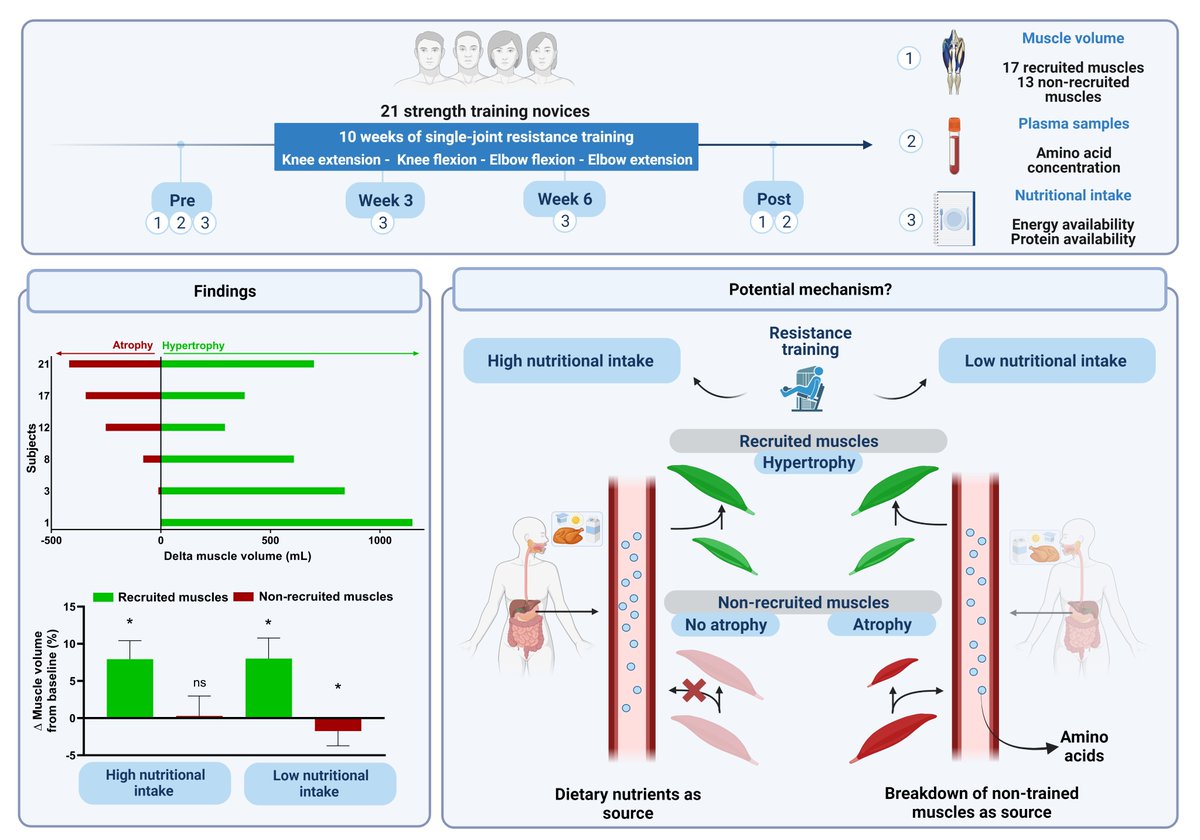
Muscle atrophy during resistance training… Huh?
Learn more in the thread🧵below or by reading our new @MSSEonline paper🏋️ (1/12)
https://t.co/oWdpkZkzxN
Is muscle fiber type composition (MFTC) important in professional football⚽️?🧵
In our new SJMSS paper we investigated if
1) fast and slow typology players naturally gravitate to/get selected for specific positions
2) MFTC impacts match running performance
https://t.co/t5TNFDRd68
Are all fibers in skeletal muscle created equal? How important are myosin heavy chains isoforms? In a joint effort between @TeamDerave and @AtulDeshmukh lab, we tried to answer these (and more) questions. #myotwitter#muscle A 🧵on our preprint (1/24)
https://t.co/61Nl1YEjCI
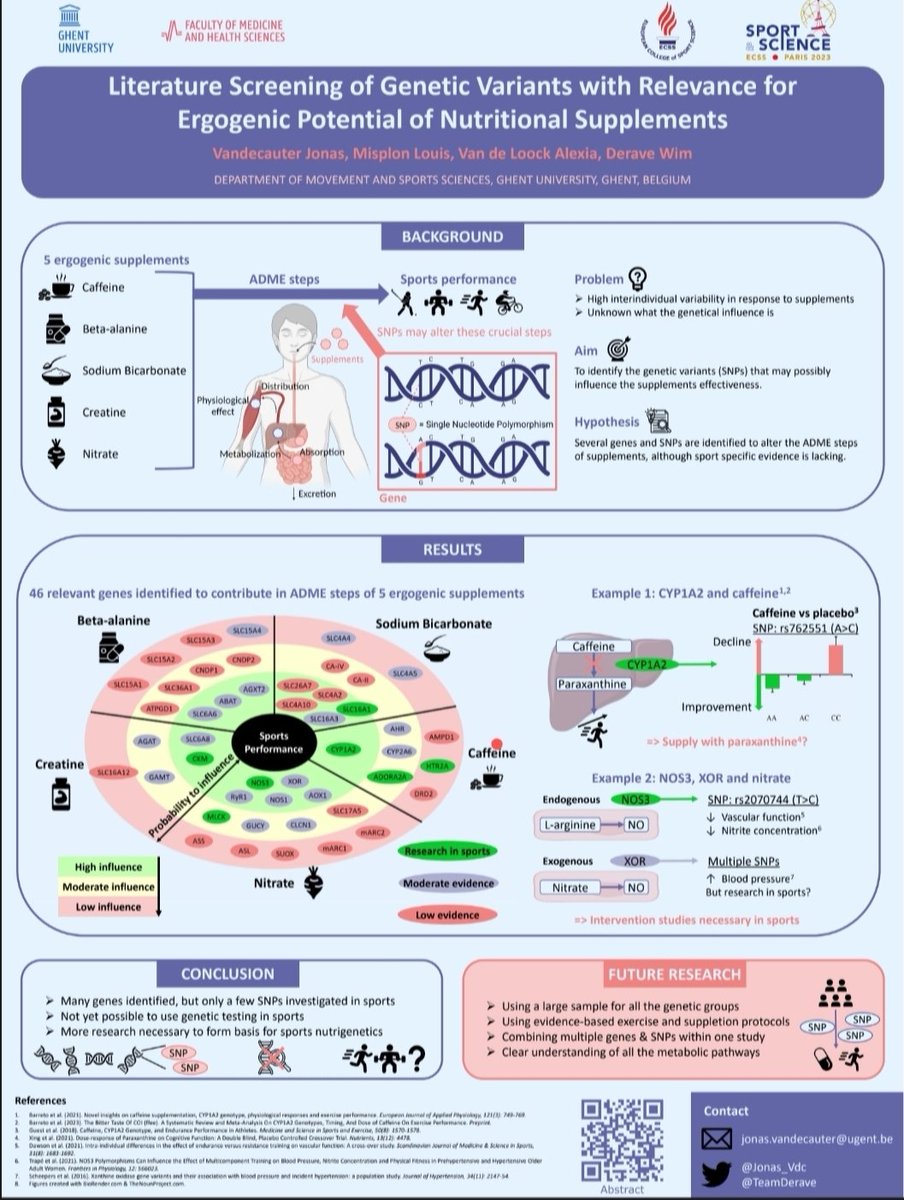
Very excited to present for the first time on #ECSS2023 with a poster about genetic variants influencing the effectiveness of dietary supplements.
Find my poster today:
📍Hall Bordeaux, Poster Session 14
🕕06.07.2023, 18:00
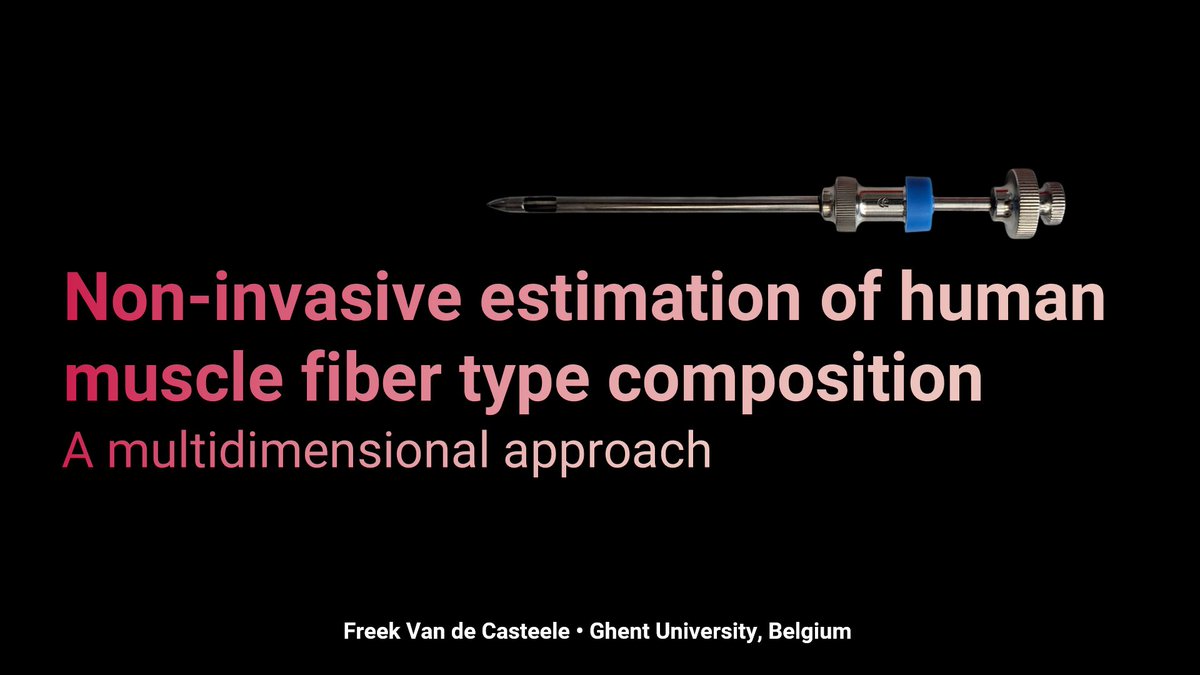
Excited to present my research on non-invasive assessment of muscle fiber type composition at ECSS.
And maybe even more excited to see my international sports research friends back :)
Hope to see you soon!
⏲️Friday 07.07.2023, 08:00
🏢Lecture room.: 343
#ECSS2023
Thanks @joaonunesjpn for highlighting our work with @KimVanVossel, @HardeelJulie and @eline_lievens on myotypes and strength training
"Those born to be lizards will never become alligators" 🇧🇷
or do they?
https://t.co/RDqWokYb9A
An interesting piece from our friends at Ghent University. They used a Springbok Analysis to better understand factors that contribute to the variability in gains after resistance training.
Check it out. ⬇️
https://t.co/ikvOZPva3a
3. Consequently, this study indicates the importance of shifting from the use of traditional load-repetition tables to individualized testing and training prescriptions. (6/6)
Excited to share our new paper 'Muscle typology influences the number of repetitions to failure during resistance training' in @EurJSportSci!
@teamderave
https://t.co/1bvGmYFAdx
What did we find? 👇🧵
2. 1RM is often estimated based on the number of repetitions performed at a submaximal load using traditional prediction equations. Yet, this might lead to an underestimation of 1RM in fast typology individuals and an overestimation in the slow typology individuals. (5/6)
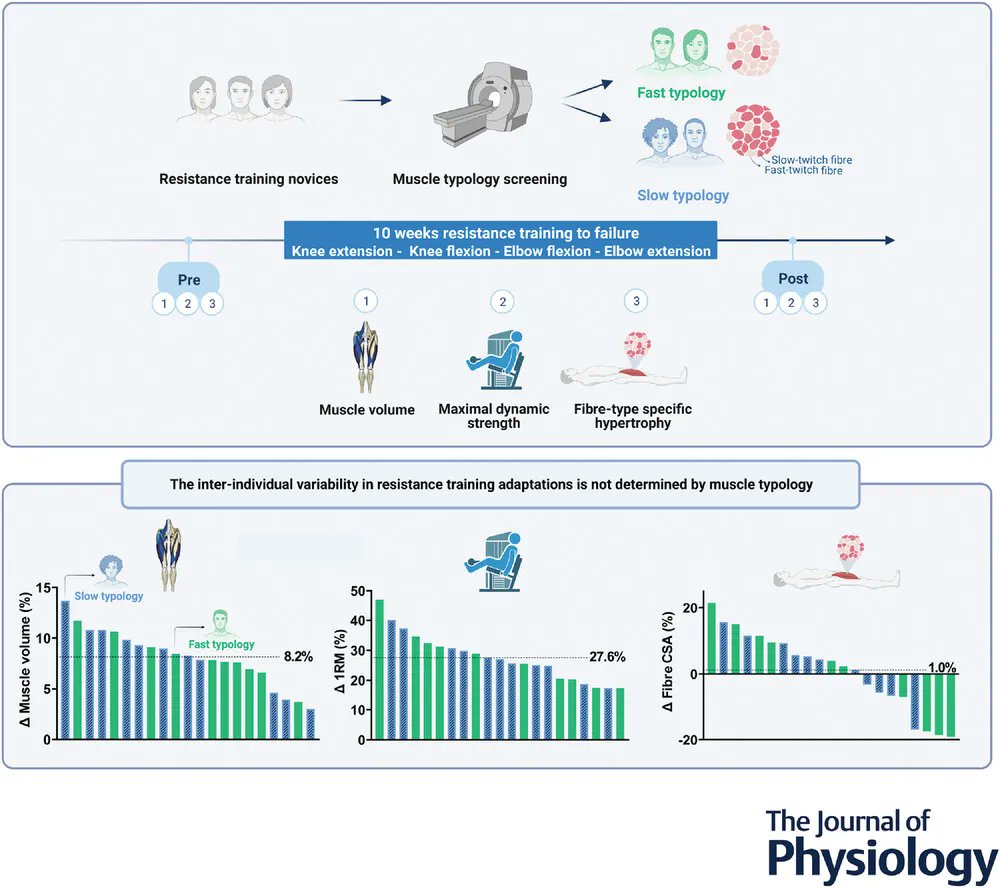
Cool study compares fast-twitch and slow-twitch ppl strength-training one arm/leg 2X/wk and the other arm/leg 3X/wk.
Key result: both groups (surprisingly) made similar muscle and strength gains.
BUT slow-twitchers needed ~25% more reps to hit failure.
https://t.co/JPgVQnu40W
Thanks, Alex, for highlighting our recent work so eloquently 💪
"Slow-twitchers probably need to do more reps than fast-twitchers to get a comparable stimulus. Three workouts a week trumps two for muscle size. And you can’t blame your muscle fibers for your failure to bulk up."