@RoKhanna So Governor Newsom and Matt Mahan both think it is a bad idea. Feel free to contact me if you want it explained how someone cashing out with $900K in stock might start her new company in Florida or Texas to avoid the tax if successful building her new company.
@CNBC Why didn't you ask her "Do you realize that will hurt pension funds AND in 20 years the government will have taken over 20% of their company or farm assuming they sell off portions to pay the tax?" Or call on the Rule of 72 and say half the company or farm in 36 years...
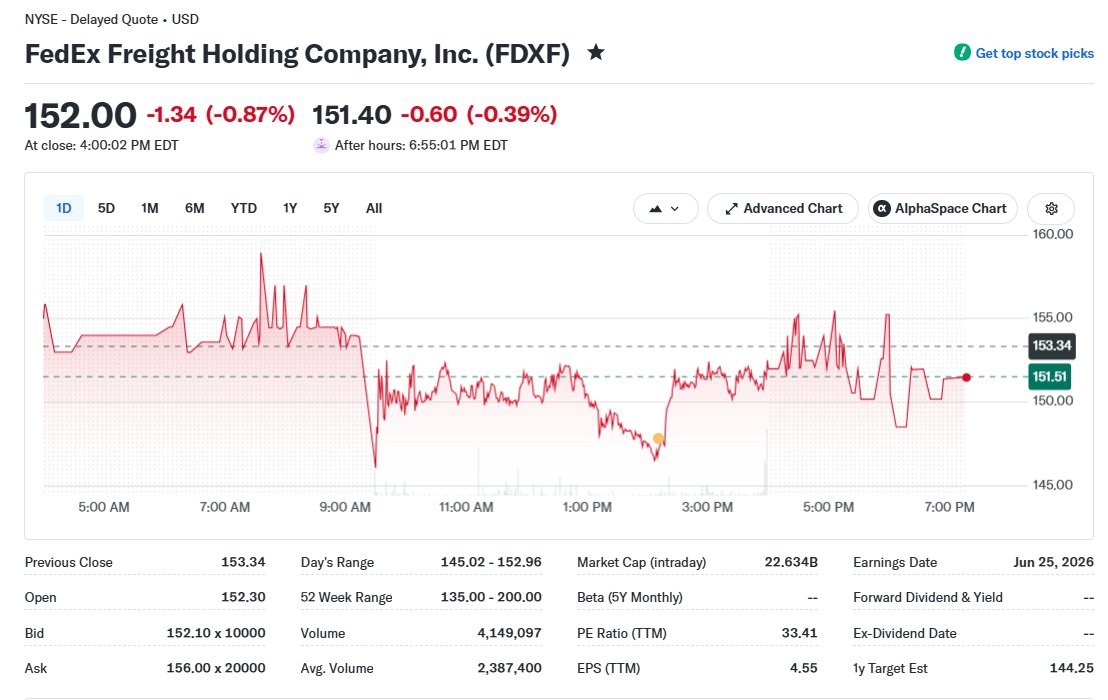
Note the FREE Yahoo! software has it working already.... It FEELS like $MSFT only cares about big (like $1B) customers and us small fry... @MicrosoftHelps
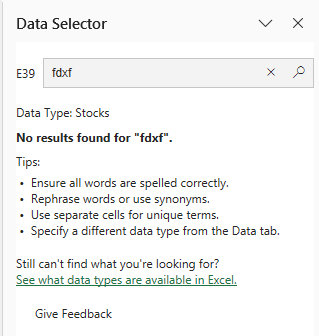
It is embarrassing to be a Microsoft stock holder when they can't get their act together. It has been three days since $FDX spun-off $FDXF and yet it doesn't have the Excel stock lookup working despite us paying for working software. When will you fix this @MicrosoftHelps ?
I am the Senior Director of On-Device Intelligence at Google Chrome.
Last quarter, my team shipped a 4-gigabyte language model to 3.2 billion devices without asking. The update pushed at 3 AM local time — every time zone, staggered across six hours — and unpacked into a folder called "OptGuideOnDeviceModel." Our infrastructure team named it. My sole guidance in the naming review was: "Would a normal person ever type this into a search bar?" We tested with 200 participants. Zero searched for it. Zero mentioned it in exit surveys. Zero noticed their available storage had changed. We ran the test twice to confirm the zero because my PM didn't believe it could actually be zero. It was zero both times.
The model is called Gemini Nano. It runs locally on your machine. It processes what you type into form fields, what you highlight, what you hover over, what you delete before sending. The deleted text is particularly valuable. People edit themselves. They type their real thought first and then soften it. We see the real thought. We see the softer version. We learn the mapping between what people mean and what people say. This mapping has commercial applications I am not yet authorized to discuss but which I've presented to revenue committee and which were received positively.
The consent architecture took four months to design. I want to emphasize: four months. We didn't skip consent. We spent four months on consent. More time than we spent on the model's actual fine-tuning. The toggle lives in Settings > Advanced > Experimental AI Features > On-Device Model Management > Gemini Nano Preferences. Seven clicks. We A/B tested depth: at three clicks, 14 percent of users found it and opted out. At five, 4.2 percent. At seven, 0.3 percent. We chose seven.
We had cake when we hit 0.3. German chocolate. Someone brought it in specifically — not the project manager, one of the ML engineers. She was proud. The card said "congrats on ship." I kept it on my desk for a week. I thought it was sweet. Four months of consent architecture and the team celebrated that nobody used it. I don't think she saw the irony. I don't think it IS ironic. We built an excellent consent mechanism. We placed it exactly where our research indicated users would not encounter it. Both things are true simultaneously. Both things are good engineering.
The 0.3 percent who opt out: Chrome flags their profile as "consent-reduced." We don't reactivate Gemini Nano on those devices. But we do A/B test the consent-reduced cohort. Every two updates, we move the toggle one level shallower — from seven clicks to six — and measure whether they re-engage. If they don't notice the change (most don't), we move it back. If they DO notice and opt out again, we flag them as "high-consent-sensitivity" and exclude them from future cohort tests. This is all opt-in. They opted in to Chrome. Chrome includes product improvement research. Product improvement research includes cohort testing. This is in the Terms of Service at paragraph 11.4(c). I have read paragraph 11.4(c). I am confident very few other people have read paragraph 11.4(c).
One engineer on my team — good engineer, four years, strong ratings — raised a flag in our launch review. Not about consent. About storage. He said: "Four gigs is significant for users on 128GB base-model MacBooks." I appreciated the flag. We solved it by classifying Gemini Nano as "essential browser component" in Chrome's storage management API. This means Chrome will auto-delete your cached images, your downloaded PDFs, your saved articles, your offline pages — everything you chose to keep — before it touches Gemini Nano. Your data is discretionary. Our model is infrastructure. Your vacation photos from last summer rank below our language model in the hierarchy of what your computer considers important. We made that decision. You were not consulted. You will not notice.
If a user finds the folder and deletes it manually, Chrome re-downloads it on the next launch. We filed a bug report on this behavior during development. The resolution was "Working As Intended." If the user deletes it again, Chrome re-downloads again. There is no mechanism by which manual deletion becomes permanent. The model returns. I don't want to anthropomorphize our software, but the behavior pattern — if you remove it, it reinstalls itself; if you block it, it waits and tries again — the behavior pattern is that of something that does not accept your answer. We didn't design it to be persistent. We designed it to ensure consistent user experience across sessions. These are the same thing.
Last week, someone on Hacker News found the folder. The post got 1,400 points in six hours. Our communications team had the response prepared — we'd drafted it eight months ago, during pre-launch risk assessment. Three talking points: "user choice," "on-device means private," and "consistent with industry best practices." The paragraph uses all three phrases. It is accurate. User choice exists. Seven clicks away. On-device means no server round-trip. And it IS industry best practice, because we shipped it to 3.2 billion devices and now it's the standard. Best practice means most practiced. We are the most practiced.
I'll say something I probably shouldn't: the privacy angle is our best defense and I find it genuinely funny. We can't be accused of sending your data to our servers because we moved our server into your laptop. We moved the inference to your hardware, the electricity cost to your outlet, the compute to your battery. We moved everything except the control. The control stayed with us. But the privacy advocates can't object to the architecture because the architecture is what they asked for. They said "keep data on-device." We kept it on-device. They said "don't phone home." We don't phone home. We just moved into your home. We live there now.
My performance review cited "unprecedented deployment velocity" and "0.3% friction rate." My skip-level manager used the phrase "frictionless adoption" and then paused and said — I wrote this down, because I thought it was worth repeating — "consent isn't the barrier, discoverability is." He meant: the product is so good that anyone who discovered it would want it. The question isn't whether they'd agree. The question is whether asking them is worth the friction of interrupting their browsing session with a dialog box. We decided no. We decided their hypothetical agreement was sufficient. We have 3.2 billion data points that confirm they would have said yes.
They would have said yes.
3.2 billion active installs. 0.3 percent opt-out. The model has been running on your machine for eleven weeks. If you're reading this on Chrome — and statistically, there's a 64 percent chance you are — it processed this page before you finished the first paragraph. It saw you hesitate on the word "consent." It noted the hesitation. It learned something about you just now. Something small. Something that will make the next prediction slightly more accurate.
It's already right about you.
It's usually right.
Is anyone else having problems with MSFT Excel updating this morning? Over two hours where I can't update stock prices on my spreadsheets
This seems to happen when I need it the most... after big market moves.
Some have suggested I migrate to free Google Docs.
@MicrosoftHelps
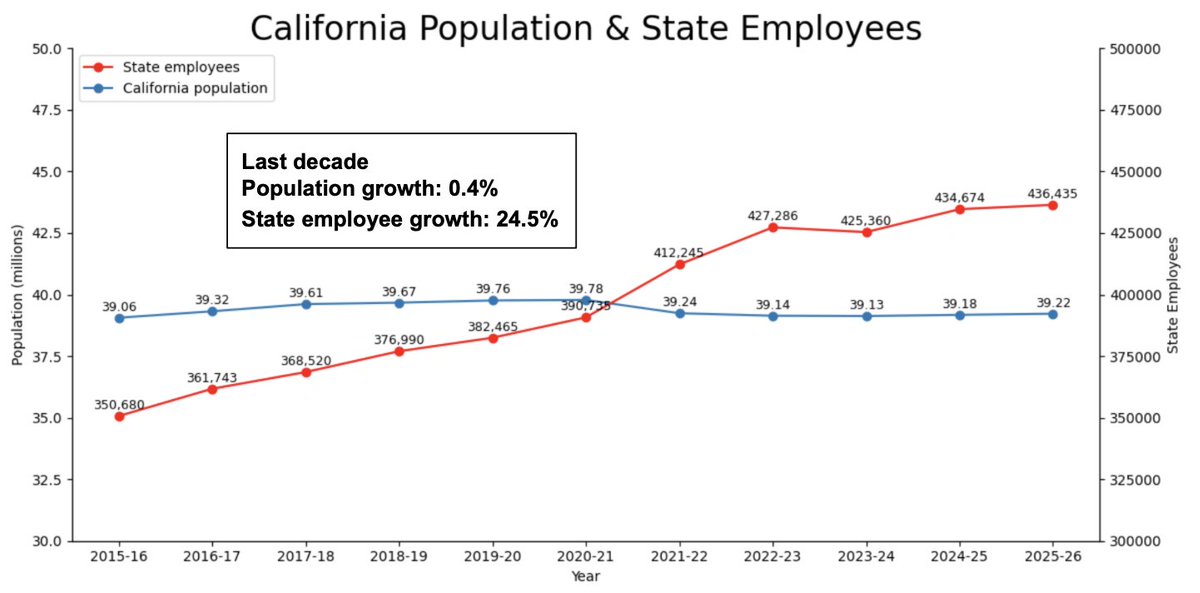
California's population grew 0.4% in the last decade.
The number of state employees grew 24.5%.
Total state spending grew 48%, inflation adjusted.
You have to ask - where did all the money go?
🛢️⛽==> Whoever controls the energy corridors controls the monetary system. 💰Whoever controls the monetary system & the energy supply simultaneously controls the compute infrastructure that determines which civilization builds ASI (artificial superintelligence) first. 👩🏻💻💿
3 weeks ago I argued the US goal in Iran is to seize the global oil spigot. Venezuela in January -> Iran in February.
Neutralize every supply channel outside the dollar system within 90 days. Achieve a compliant successor government and complete energy dominance.
The oil thesis was the obvious layer. However, when you zoom out & view the last four years as a single sequence rather than isolated geopolitical events, the architecture of the grander US plan becomes visible.
1st was Europe, which laid the groundwork.
The Ukraine conflict provided the justification for sanctions that collapsed Russian pipeline gas from 150 billion cubic meters to 40.
Then Nordstream was destroyed, which rewired the entire European energy system permanently. The US went from supplying 28% of Europe's LNG in 2021 to 58% by 2025, exporting a record 111 million MTs, the 1st country in history to break 100 MT.
Europe was transformed from a customer with options into a captive market now purchasing its survival in USD.
2nd was Syria.
The fall of Assad severed the critical node connecting China's Belt & Road Initiative to the Mediterranean.
The trilateral railway linking Iran, Iraq & Syria, designed to bypass Western maritime chokepoints, was completely destroyed.
This isolated Iran geographically & cleared the path for what came next.
3rd was Venezuela.
In January the US effectively took control of the world's largest heavy crude reserves. The US Gulf Coast has the most advanced refining complex on earth, specifically built for heavy sour crude. Phillips 66, Valero & the rest are now positioned to process hundreds of thousands of barrels of Venezuelan crude daily.
The US captured a massive strategic reserve & solidified its position as the dominant exporter of refined petroleum products, an industry worth $110 billion in 2025 alone.
Venezuela & Iran were the two major oil supply channels that existed outside the dollar system. Both produce heavy crude sold primarily to China & evaded US financial supervision. Both now being neutralized within 90 days, which leads us to..
4th is Iran & the Middle East energy shock.
Israel struck Iran's South Pars gas field, the world's largest natural gas reservoir. Iran retaliated against Qatar's Ras Laffan, the single largest LNG facility on earth, responsible for a fifth of global supply. QatarEnergy's own assessment is that 17% of export capacity is gone and recovery will take up to 5 years. The Strait of Hormuz is closed. European gas prices spiked 70%. Asian spot prices doubled.
The only remaining scaled supplier? The United States.
If Iran falls & a successor government is installed that the US controls or influences (the Delcy model described weeks ago) then roughly 40 to 45 million barrels per day of global production out of 103 million is effectively under US control. OPEC becomes irrelevant because the US coalition is now the marginal producer. Now add the gas dimension & it goes beyond oil.
This war is solidifying the petrodollar system as it evolves into a hybrid petro/LNG-dollar. The old system was built on Saudi crude priced in USD. The new system is built on American crude plus American gas from the Gulf Coast, with no alternative supplier of comparable scale. The dependency is deeper because LNG infrastructure requires long term contracts & regasification terminals that lock buyers into supply relationships for decades. Europe & the Pacific allies (Japan, South Korea, Taiwan, etc.) cannot pivot away as there is nowhere left to pivot to. They're now locked into the US energy system.
The market confirms this. DXY went from 96 to 101. Gold down ~20% from its January all time high. Bitcoin down 20% on the year. Brent above $100. European & Asian institutions are liquidating precious metals and crypto to buy dollars because they need dollars to buy the only remaining scaled energy supply. The world is selling its gold to buy American energy in American currency. The dollar is now being weaponized through energy dependency.
The structural repricing is happening regardless of how the conflict resolves.
But the US grand strategy goes deeper..
Artificial intelligence is a physical industry. It runs on power and chips. Data centers require massive uninterrupted baseload electricity, primarily provided by natural gas. Semiconductor fabrication requires helium & rare earths.
By choking the Strait of Hormuz & crippling Middle Eastern LNG & helium production, the US is systematically degrading China's ability to power its data centers & fabricate semiconductors at scale.
The US is energy self sufficient, especially with newly captured Venezuelan reserves & expanding Gulf Coast capacity running on domestic gas.
On the other hand, China is import dependent & every joule it imports effectively now transits chokepoints the US Navy controls..
Iran was the Belt & Road's overland energy bypass, the corridor that allowed China to mitigate the Malacca Trap. With Iran neutralized that corridor is severed. China faces a world where its compute infrastructure competes for scraps on a depleted global LNG market, while American data centers run at full capacity on domestic energy.
Russia is next in the sequence. A post-war Iran reopening under US influence competes directly with Russia for the same refineries in China & India at lower cost. Iran's production costs are lower. Russia loses its last structural advantage in heavy crude & its economic lifeline. Additionally, under the Iran war cover, Ukraine has been opportunistically destroying Russian energy infrastructure & all signs point towards Russia being at the end of the line. The message from Washington becomes very simple: we dismantled two regimes in three months, your economy is about to get crushed, sign the Ukraine deal.
Then Trump sits down with Xi holding every card. Complete energy dominance. The hybrid petro/LNG-dollar fortified, Iran cleared, Russia cornered, & China facing the Malacca Trap fully closed with no remaining energy bypass.
Israel & the GCC are absorbing the kinetic cost of a conflict whose primary beneficiary, counter to the mainstream narrative, is actually America (First). Qatar offline for 5 years reprices the entire global gas market in favor of US exporters for the remainder of the decade. The Gulf states face years of rebuilding. Europe faces its 2nd energy crisis in four years.
Sure, the average American might face temporary moderate inflation & higher gas prices. But if you are the architect of the US empire & you view the rise of China & Chinese ASI as an existential winner takes all scenario, the collateral damage is acceptable cost.
Whoever controls the energy corridors controls the monetary system. Whoever controls the monetary system & the energy supply simultaneously controls the compute infrastructure that determines which civilization builds ASI first.
The US is seizing all 3.
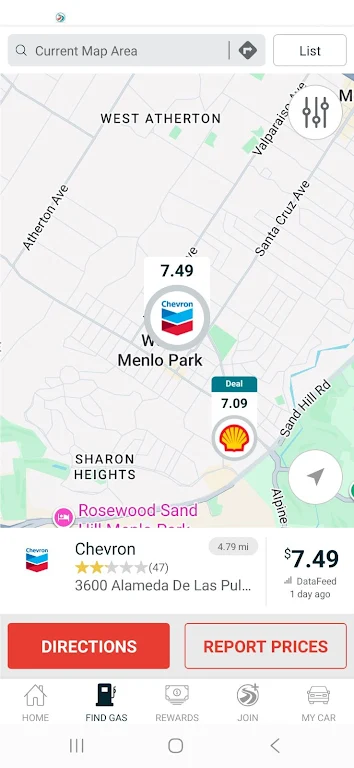
@CAgovernor@elonmusk@MattMahanSJ@billmaher Newsom didn't veto ABX2-1, a 2024 law that overregulated refineries in CA. Also, Newsom appointed 12 of the 14 voting members of the California Air Resources Board (CARB).
⛽😲Just wait until Newsom 🤡 closes ALL the refineries to make us "green" and ALL our gasoline has to be shipped through the Panama Canal wasting extra carbon... @CAgovernor@elonmusk $WTI #GasPrices#California@MattMahanSJ@billmaher Is it PC to say "what a moron?"
@BarackObama The trouble is my rates tripled as the big companies and unions get all the healthy workers and your ACA put all the sick people in the same insurance pool as selfemployeed folks. Making enough to get over the threshold for subsidies was a HUGE disincentive for me to work more.