🪱 Bringing Copper Home — Red Metals’ debut today
TLDR; Copper is the workhorse of electrifying everything. We need to refine more copper in the next 25 years than in all of human history.
FastCompany: “The world faces a looming copper shortage: By 2040, demand could grow by 50%, driven by everything from electric cars to the surge in data centers. At the same time, supply is expected to drop, leaving a shortfall of 10 million metric tons, according to an S&P analysis. Already, supply shortages have pushed copper prices to record highs this year.
In Charleston, South Carolina, a startup called Red Metals is racing to build more American supply through urban mining—pulling copper from old products and scrap rather than extracting the metal from increasingly depleted copper mines.
Right now, only around half of the copper in existing products is recovered at their end of life. In the U.S., the scrap that’s recycled is often sent overseas for refining before being sent back.
At the same time, demand is growing throughout the global economy. Transportation is electrifying. Households are electrifying. The number of air conditioners keeps growing as the planet gets hotter. All require copper. And data centers are a massive source of new demand: A single hyperscale data center can use, by one estimate, 50,000 tons of copper in cooling systems and power equipment. …humanoid robots could also be a major new source of demand.
At its $70 million facility under construction in South Carolina, Red Metals will use AI to sort copper from discarded products, from motors to Christmas lights, and turn it into copper rod that customers can use to make products like wire. The process skips several intermediate steps that usually come between recovered copper and rod, including concentrate, matte, anode, and cathode, helping make recycled American copper cost-competitive.
Switzer compares the process to Nucor, a steel manufacturer that changed how scrap steel could be made directly into new sheets of metal. “They did it at a much smaller scale, and all the major steel producers like U.S. Steel dismissed them, [thinking that] because they’re out there at a small scale there’s no way they can compete,” he says. “Fast forward to now; Nucor is the largest steel producer in the United States and other legacy steel producers have gone bust.”
— from https://t.co/WKocENN62j
For America, copper is a critical input for many of the nation’s most important industries and technologies, including electrical infrastructure, batteries, data centers, defense systems, and advanced manufacturing. U.S. copper demand is projected to increase by more than one million metric tons annually through 2035, contributing to a domestic market expected to exceed $45 billion. At the same time, American copper production capacity has steadily declined, and the U.S. is projected to face a refined copper supply gap of more than 2.5 million metric tons of refined copper annually by 2035, even if every major announced mining project comes online.
We export 950K tons of copper scrap each year, one of the world's largest exporters, with over 40% going to China. If refined and recycled domestically, that scrap would meaningfully reduce our reliance on imported copper and strengthen the resilience of the domestic supply chain. Recycling starts with a 60x better feedstock than mining ore, which is 99% rock. And copper can be recycled repeatedly without losing its properties.
Let’s make it so. Now hiring: https://t.co/PgkUhMvzsH
FD: Future Ventures is a seed investor in this fast company.
TLDR: What lights you up?!
Opener for our 1517 Summit:
25 years ago I started working with homeschoolers. Those families changed the trajectory of my life. It’s where I got to see that real learning starts with passion and curiosity.
16 years ago, when Michael and I were on the founding team of the Thiel Fellowship, we called it an older young person’s homeschool program.
And today, with 1517, we say we homeschool CEOs.
I think that there is a lot that we can learn from homeschoolers about going against the grain, following curiosity, and getting a sense of what real learning looks like.
In homeschooling there is a concept called “deschooling” — a transition time between being in a more institutionalized setting, to one of their own creation. It sometimes looks chaotic, “unproductive,” and purposeless.
But this time period is when people start unraveling assumptions that have been shaping their lives, without them knowing it. By letting go of the rules, natural curiosity and passion can start to emerge.
Over the next ten years, I think all of us are going to go through something like a collective deschooling period. We’re going to need to unlearn the assumptions that were put down before us by other people and institutions, ride the chaos, and emerge through to the other side with passion and curiosity.
The path used to look clear. Work hard. Get good grades. Collect credentials. Climb the ladder. Success had a map.
But the world we're entering is uncharted.
Artificial intelligence is making information abundant. Institutions are failing us. Careers are becoming less linear. Entire industries are appearing and disappearing in just a few years.
The old question was: "What should I do?"
But today, I propose a new question: “What lights you up, when no one is watching?”
That's a much harder question.
Many people discover that when the external structure disappears, they're left with an uncomfortable feeling. Not freedom. Not excitement.
Meaninglessness.
Because for years, meaning was outsourced. A syllabus told us what mattered. A test told us what to learn. A boss told us what success looked like. A credential told us we were progressing.
But what happens when fewer and fewer people can tell you what matters next?
I think that's one of the defining challenges of the next decade.
And I think the antidote is surprisingly simple.
Start dreaming:
What is the thing you can't stop thinking about?
What rabbit hole do you disappear into?
What topic makes you lose track of time?
What project would you work on, even if nobody was grading it?
All summed up: What lights you up?
When we're young, we're often taught to treat those interests as distractions from the "real" work.
I think the opposite is true.
Those interests are clues. They're pointing toward the place where your curiosity, your energy, and your contribution intersect.
The people who will thrive in the next ten years will be like shining beacons!
They'll be the people who know how to follow genuine curiosity.
The people who can create their own path.
The people who can stay fascinated.
The people who know what lights them up and have the courage to build around it.
So welcome to your summit. When you meet a new friend today, ask “What lights you up?” May the answers surprise and delight and lead you into your next 10 years.
A person who spends thirty minutes scrolling before bed has not merely lost thirty minutes.
They may have lost the version of tomorrow morning where they woke up sharp enough to write.
They may have lost the version of next week where they finally tolerated boredom long enough for an original thought to appear.
The transaction is invisible because the price is paid in probability.
Aleph 2.0 is here. Now you can edit a single frame in your video, preview the change and then Aleph 2.0 carries that edit across the rest of your video.
Try it now in the new Edit Studio on web at the link below.
Two questions I get all the time:
"What educational AI tools would you recommend for my kid?" "What adaptive apps does Alpha use?"
Many of the apps we've built ourselves aren't publicly accessible yet. Here are ten third-party ones I do recommend.
@NebulaAI SEO/ AEO agent, that analyses your website and gives you ways to improve
B2B Lead gen agent that finds businesses that could become customers, so u can outreach
We need to all work hard to live as long as possible, and in good health.
I’ve met many companies trying to support this mission. One stands out, that those in the US haven’t experienced yet.
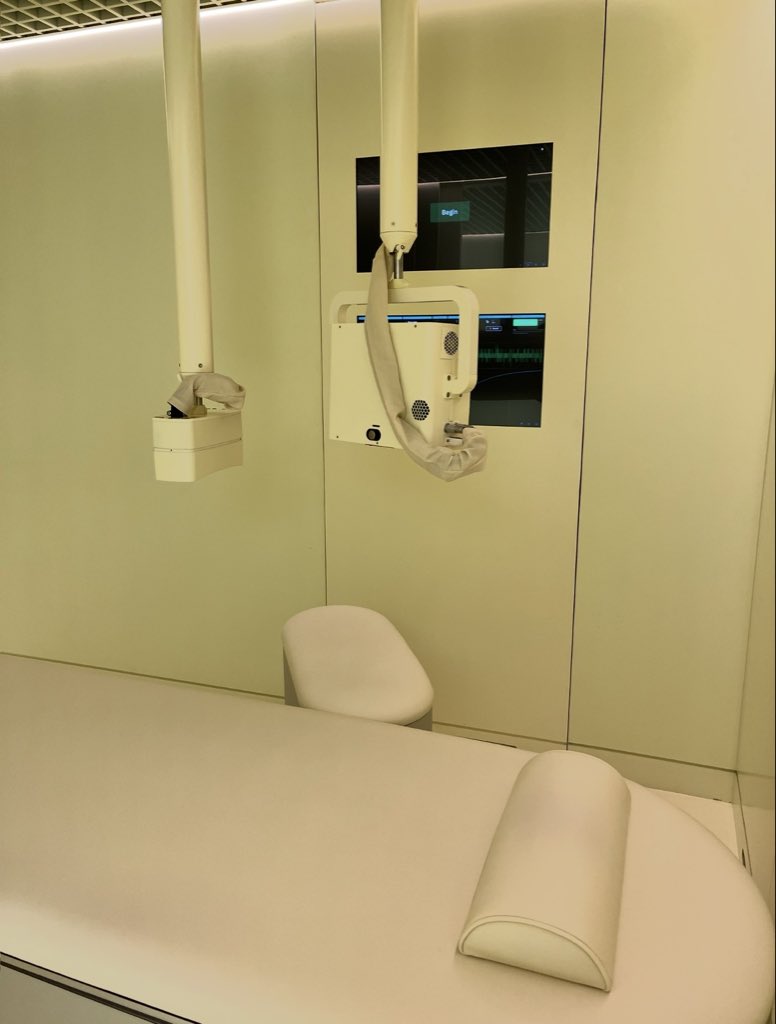
I was blown away by the experience at @neko in London.
Insanely well crafted patient experience, 30 min from start to finish, £300 (way cheaper than most), and immediate blood/skin/other results that a doctor walks you through live.
They are focused on detecting and monitoring the things that most predict potential health problems at a very affordable annual cost. They’ve developed all their own technology, which feels like living in the future, now.
They are opening in NYC soon. Go in London if you can. Future is bright in so many ways. Thanks to @shak and @HNilsonne for hosting us. Go try it!
Introducing Public Agents
It’s the easiest way to share an agent you’ve built, or install one someone else made
Teams are already using agents to:
- audit and secure apps
- run interviews/screen candidates
- run operations for businesses
- and 100+ examples
Try it now for $0


![FutureJurvetson's tweet photo. 🪱 Bringing Copper Home — Red Metals’ debut today
TLDR; Copper is the workhorse of electrifying everything. We need to refine more copper in the next 25 years than in all of human history.
FastCompany: “The world faces a looming copper shortage: By 2040, demand could grow by 50%, driven by everything from electric cars to the surge in data centers. At the same time, supply is expected to drop, leaving a shortfall of 10 million metric tons, according to an S&P analysis. Already, supply shortages have pushed copper prices to record highs this year.
In Charleston, South Carolina, a startup called Red Metals is racing to build more American supply through urban mining—pulling copper from old products and scrap rather than extracting the metal from increasingly depleted copper mines.
Right now, only around half of the copper in existing products is recovered at their end of life. In the U.S., the scrap that’s recycled is often sent overseas for refining before being sent back.
At the same time, demand is growing throughout the global economy. Transportation is electrifying. Households are electrifying. The number of air conditioners keeps growing as the planet gets hotter. All require copper. And data centers are a massive source of new demand: A single hyperscale data center can use, by one estimate, 50,000 tons of copper in cooling systems and power equipment. …humanoid robots could also be a major new source of demand.
At its $70 million facility under construction in South Carolina, Red Metals will use AI to sort copper from discarded products, from motors to Christmas lights, and turn it into copper rod that customers can use to make products like wire. The process skips several intermediate steps that usually come between recovered copper and rod, including concentrate, matte, anode, and cathode, helping make recycled American copper cost-competitive.
Switzer compares the process to Nucor, a steel manufacturer that changed how scrap steel could be made directly into new sheets of metal. “They did it at a much smaller scale, and all the major steel producers like U.S. Steel dismissed them, [thinking that] because they’re out there at a small scale there’s no way they can compete,” he says. “Fast forward to now; Nucor is the largest steel producer in the United States and other legacy steel producers have gone bust.”
— from https://t.co/WKocENN62j
For America, copper is a critical input for many of the nation’s most important industries and technologies, including electrical infrastructure, batteries, data centers, defense systems, and advanced manufacturing. U.S. copper demand is projected to increase by more than one million metric tons annually through 2035, contributing to a domestic market expected to exceed $45 billion. At the same time, American copper production capacity has steadily declined, and the U.S. is projected to face a refined copper supply gap of more than 2.5 million metric tons of refined copper annually by 2035, even if every major announced mining project comes online.
We export 950K tons of copper scrap each year, one of the world's largest exporters, with over 40% going to China. If refined and recycled domestically, that scrap would meaningfully reduce our reliance on imported copper and strengthen the resilience of the domestic supply chain. Recycling starts with a 60x better feedstock than mining ore, which is 99% rock. And copper can be recycled repeatedly without losing its properties.
Let’s make it so. Now hiring: https://t.co/PgkUhMvzsH
FD: Future Ventures is a seed investor in this fast company.](https://pbs.twimg.com/media/HJ_2bSbbwAA1KjA.jpg)










![FutureJurvetson's tweet photo. 🪱 Bringing Copper Home — Red Metals’ debut today
TLDR; Copper is the workhorse of electrifying everything. We need to refine more copper in the next 25 years than in all of human history.
FastCompany: “The world faces a looming copper shortage: By 2040, demand could grow by 50%, driven by everything from electric cars to the surge in data centers. At the same time, supply is expected to drop, leaving a shortfall of 10 million metric tons, according to an S&P analysis. Already, supply shortages have pushed copper prices to record highs this year.
In Charleston, South Carolina, a startup called Red Metals is racing to build more American supply through urban mining—pulling copper from old products and scrap rather than extracting the metal from increasingly depleted copper mines.
Right now, only around half of the copper in existing products is recovered at their end of life. In the U.S., the scrap that’s recycled is often sent overseas for refining before being sent back.
At the same time, demand is growing throughout the global economy. Transportation is electrifying. Households are electrifying. The number of air conditioners keeps growing as the planet gets hotter. All require copper. And data centers are a massive source of new demand: A single hyperscale data center can use, by one estimate, 50,000 tons of copper in cooling systems and power equipment. …humanoid robots could also be a major new source of demand.
At its $70 million facility under construction in South Carolina, Red Metals will use AI to sort copper from discarded products, from motors to Christmas lights, and turn it into copper rod that customers can use to make products like wire. The process skips several intermediate steps that usually come between recovered copper and rod, including concentrate, matte, anode, and cathode, helping make recycled American copper cost-competitive.
Switzer compares the process to Nucor, a steel manufacturer that changed how scrap steel could be made directly into new sheets of metal. “They did it at a much smaller scale, and all the major steel producers like U.S. Steel dismissed them, [thinking that] because they’re out there at a small scale there’s no way they can compete,” he says. “Fast forward to now; Nucor is the largest steel producer in the United States and other legacy steel producers have gone bust.”
— from https://t.co/WKocENN62j
For America, copper is a critical input for many of the nation’s most important industries and technologies, including electrical infrastructure, batteries, data centers, defense systems, and advanced manufacturing. U.S. copper demand is projected to increase by more than one million metric tons annually through 2035, contributing to a domestic market expected to exceed $45 billion. At the same time, American copper production capacity has steadily declined, and the U.S. is projected to face a refined copper supply gap of more than 2.5 million metric tons of refined copper annually by 2035, even if every major announced mining project comes online.
We export 950K tons of copper scrap each year, one of the world's largest exporters, with over 40% going to China. If refined and recycled domestically, that scrap would meaningfully reduce our reliance on imported copper and strengthen the resilience of the domestic supply chain. Recycling starts with a 60x better feedstock than mining ore, which is 99% rock. And copper can be recycled repeatedly without losing its properties.
Let’s make it so. Now hiring: https://t.co/PgkUhMvzsH
FD: Future Ventures is a seed investor in this fast company.](https://pbs.twimg.com/media/HJ_2gpOawAA0zLp.jpg)