Prediction markets have a whale problem: big money moves the price, everyone else is exit liquidity.
Pharos fixes it. Every macro market shows a second number, our framework's fair value, that no whale can move.
Live on @arc, for @circle's hackathon 🔦
https://t.co/rlKZ1xHjUl
@EmilWolter@ArbitrageSearch Was talking to a friend at a credit shop about this but I am am a firm believer that in the majority of cases, you can replicate most of the benefits of leverage w proper position sizing & risk mgmt. Obviously caveats to that, but generally speaking, this is a hill i’d die on.
@deerpointmacro@B2Balzer I really like this. Curious if you are willing to share a bit more on the P-G Vol series. Totally understand if it’s proprietary and certainly not asking for exact model or anything, but would love to learn more about it, even if just to ensure I’m thinking about it correctly.
@Suethehumanrace short answer, the latter. long answer is a bit more nuanced but essentially those 2 things you pit against each other are actually largely tied to each other and thus, move together over the long term.
This chart makes me think of the old school
PM at my first job who quoted the Dow in points whenever somebody asked him about the market. The new analysts would be sitting there like “I literally have no idea what that means”
It’s not entirely wrong bc essentially the dow is comprised of “value” aka shorter duration equities and the S&P is (or at least has been for years) largely driven by growth aka longer duration stocks. I think framing it Value/Growth or thru the short/long duration is probably better but youre in the correct neighborhood for sure.
Prediction markets have a whale problem: big money moves the price, everyone else is exit liquidity.
Pharos fixes it. Every macro market shows a second number, our framework's fair value, that no whale can move.
Live on @arc, for @circle's hackathon 🔦
https://t.co/rlKZ1xHjUl
@OliverBCushing Totally agree. The sooner you (proverbial, not you specifically lol) accept that you’re kind of a clueless idiot and so is everyone else, the better chance you have at being a slightly less of clueless idiot. Therein lies the biggest edge, imo.
There’s a reason I end every piece with 6 to 12 explicit ways I could be dead wrong. Also why this is the very first line in our core principles. I don’t know shit about shit. Neither do you. Only Siths and Permas deal in absolutes.
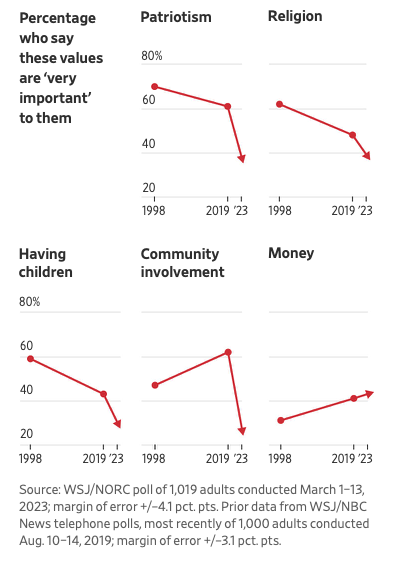
Something I think the older generations might be less aware of is how rampant completely fabricated wealth is in the younger generations. I’m talking like influencers who post their cars/houses but it’s all just hourly rentals. That’s a VERY frequent occurrence. Wealth/having money is the dominant force behind decision making for much of the sub 30 population.
Skipping the $6 coffee is smart, but it barely moves the needle. The $58k wedding, buying the bigger house six months after closing, the boat - now THOSE are where your financial future is determined. A handful of big buys decide it, not your morning latte.
Following my friends back on this account was fine in theory and hilarious in practice. My timeline is my edge. Network. Net worth. Few.
cc: @Suethehumanrace@SperrysandNikes
Yes. Everything is relative. Understanding that is key to this entire discussion whenever it comes up. “People are better off now than ever” yes that’s how the world has always worked. The one stretch of time it did not we called the ‘Dark Ages’. But that’s never been what matters to people. We’re an incredibly envious species.
@mackenziejem People in the 90s compared to their peer set and felt content with their position.
People now are fed a stream of targeted fabricated payops about other lifestyles while they’re working their boring dead-end 9-5 and feel depressed
I believe this in large part bc most of the industry is ‘Sharpe-pilled’ so to speak, but also bc humans have a natural tendency to compound bad things. By measuring yourself via something that rewards the minimization of bad things, you get a built in “don’t be an idiot” check.