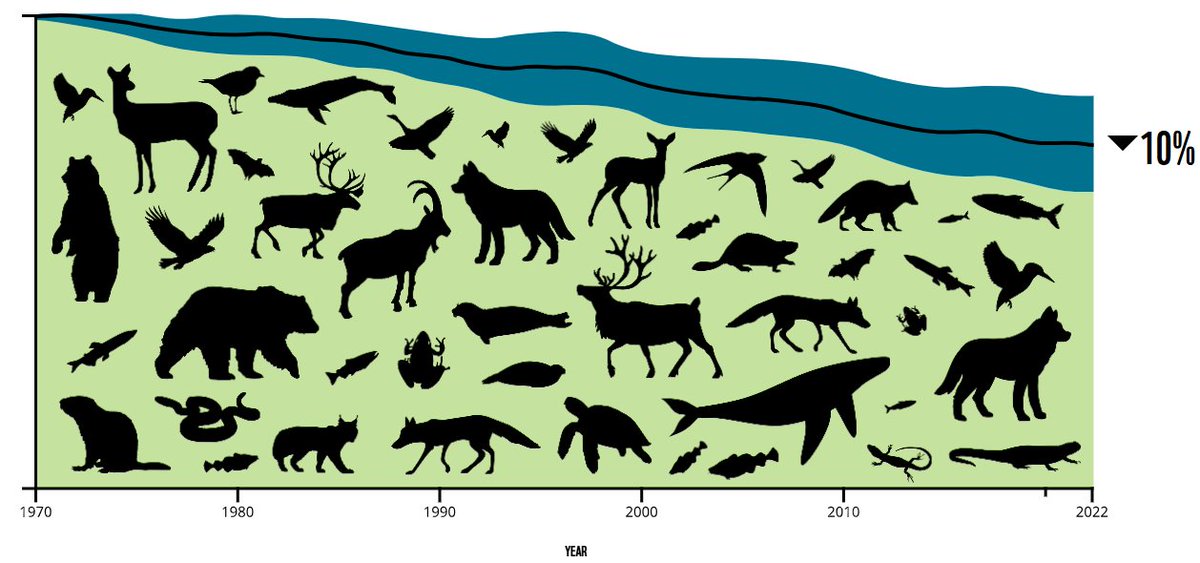
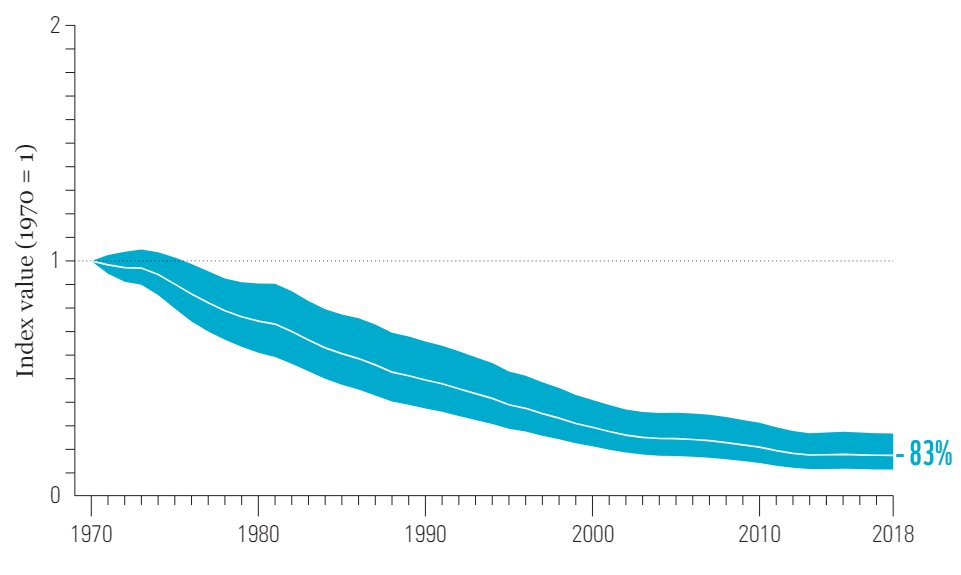
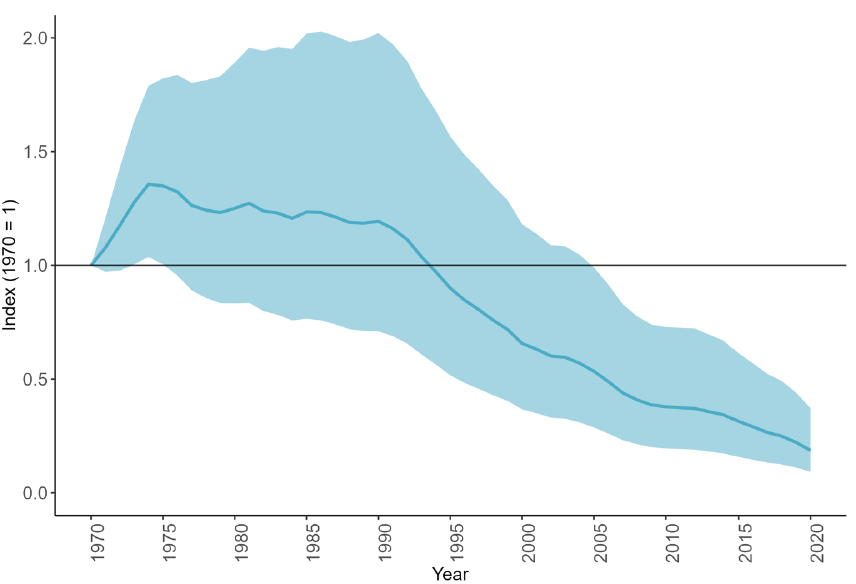
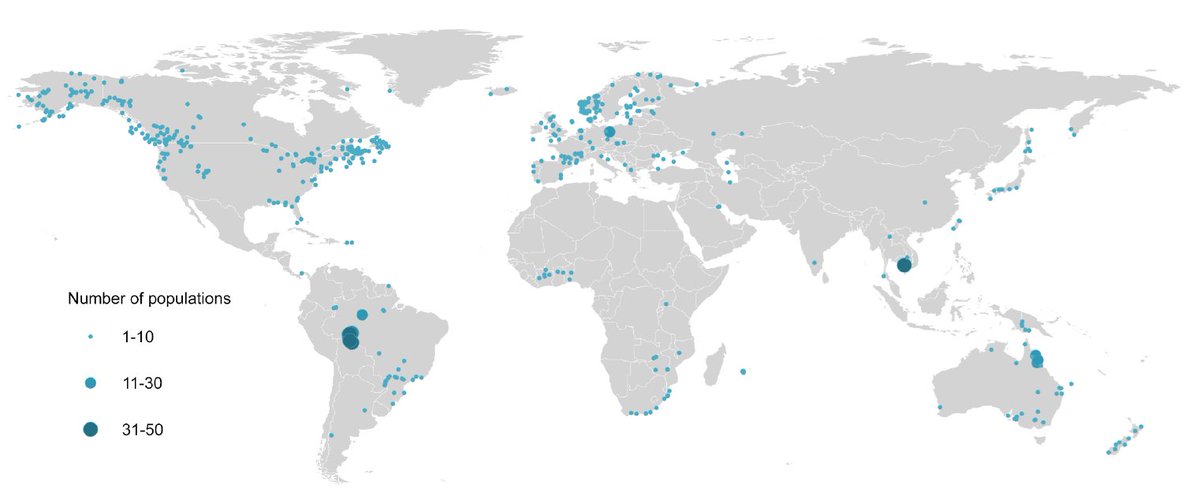
Part of @ZSLScience | The Living Planet Index is a measure of the state of the world's #biodiversity based on population trends of vertebrate species globally
We propose that butterfly monitoring programs can be the foundation for an effective global network of insect monitoring.
To test this, we brought together an international consortium & calculated a “Global Butterfly Index” using the @LPI_Science approach!
Reporting on the Thames’ bird populations was carried out by modelling a Living Thames Index, developed using the Living Planet Index methodology. 🦆
🔗 Follow the link to read the report!
https://t.co/iTv8raTJ9l
At the LPI every record is checked using a strict protocol. If a population trend meets our criteria, it’s included! ✅
We don’t compare absolute population sizes - only relative change over time. This makes trends comparable across the LPI, even if methods and units vary. 📊
Using the largest dataset to date, the report presents the clearest and starkest picture of wildlife decline in Canada yet. More than half of the species studied are decreasing in abundance.
https://t.co/wA4wfVW7a1
World Wildlife Fund Canada’s Living Planet Report Canada (LPRC) 2025: Wildlife at Home reveals the most severe average decline in the size of monitored wildlife populations in Canada since WWF-Canada began reporting two decades ago.
WWF-Canada’s Living Planet Report Canada 2025 has found persistent wildlife declines over the last half century #WWF#LivingPlanetReport#biodiversity
https://t.co/9kvlreaxCm
The @World_Wildlife 2024 Living Planet Report is out and two new stripes of grey have been added to the Biodiversity Stripes. My blog on visualising the crisis of biodiversity loss: https://t.co/ZKwjVGDhtW
Monitored wildlife populations have decreased on average by 73% between 1970 and 2020, finds the latest Living Planet Index by our Institute of Zoology – the most comprehensive measure of vertebrate population trends across the globe. https://t.co/zJ7LBZC4mu
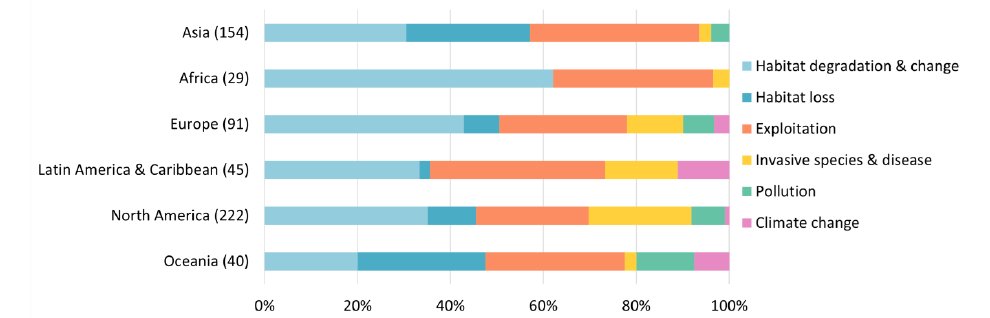
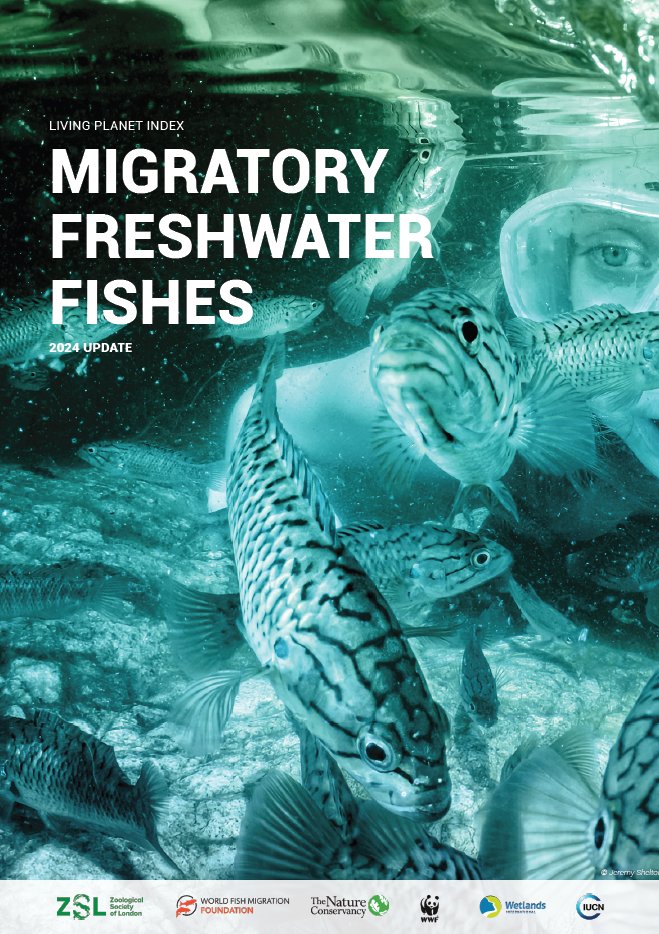
🐟 Migratory freshwater fish are crucial to maintaining river health and supporting countless communities around the world.
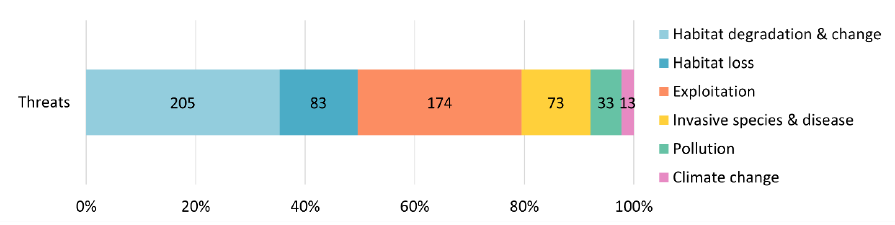
🌍 But these species are facing extinction due to habitat degradation and overexploitation.
➡️ Read the latest #LivingPlanetIndex2024
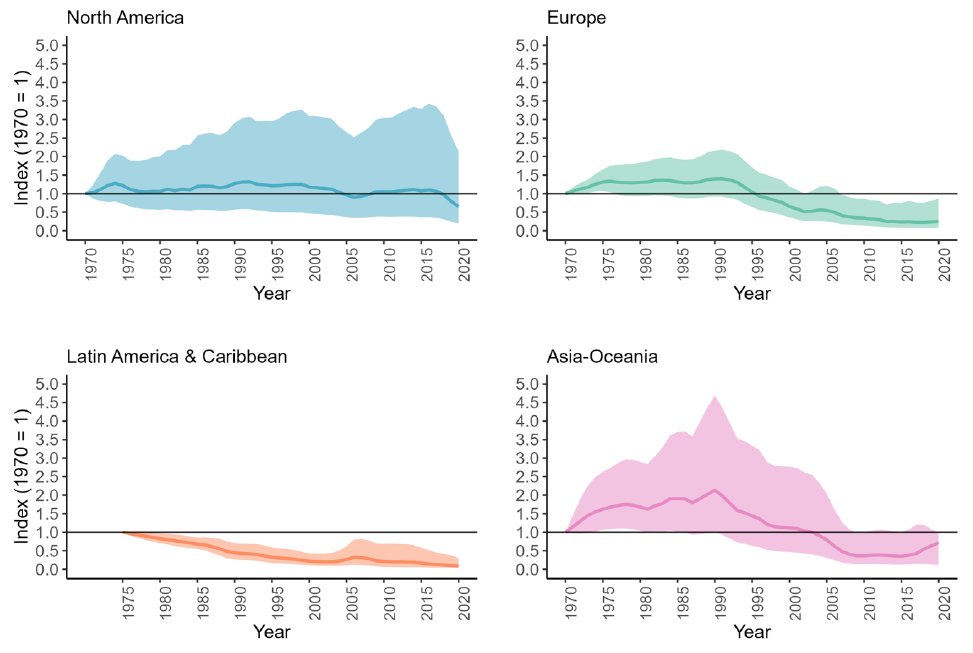
Asia-Oceania shows a 28% average decline in #MigratoryFreshwaterFish but this is likely an underestimate.
We only have data from 14% of known species from the region & data is patchy from biodiverse river basins e.g. Mekong & Yangtze.
#WorldFishMigrationDay#LivingPlanetIndex
⚠️Europe is particularly affected by #fragmentation of rivers & resulting changes in water flow. There are over 1.2 million barriers across the continent!
But mechanisms are being developed to restore connectivity. #EuropeanBiodiversityStrategy#NatureRestorationLaw