🎉New in Neuron! We identified that microglia-derived soluble DLK1 links aging to hypomyelination. In mouse and human iPSC models, telomere shortening drives microglial senescence, ↑sDLK1, and impaired oligodendrocyte maturation and neuronal activity. https://t.co/iNR0jS1xJa
From @Nature : The aging human brain is more dynamic than we thought. Somatic mutations revealed marrow-derived cells in every human brain studied, sometimes forming a large share of microglia, Clonal hematopoiesis was also linked to a lower risk of AD. https://t.co/mzah3qDhq8
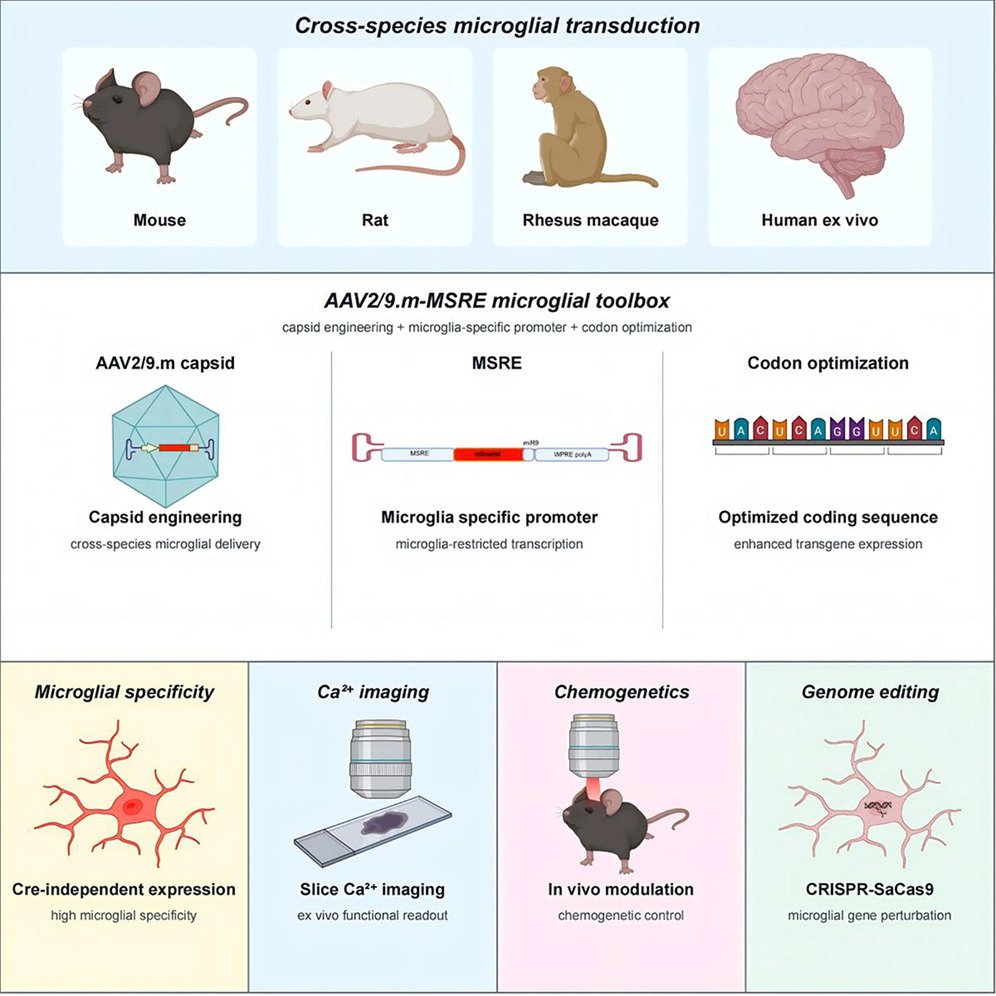
A truly groundbreaking study showcasing the transformative potential of human glial chimeric brain models for in vivo AAV evolution. Combining human glia-selective capsids with glymphatic delivery represents a landmark advance toward precise CNS gene therapy!
Well said on the role of somatic mutations in myeloid cells in Alzheimer's disease! (https://t.co/IhI5j3nPgq)
The CSF2RB A455D variant from our study is also a promising example. More studies using chimeric brain models with human microglia carrying somatic mutations are needed.
Can grafted microglia be harnessed for neuronal replacement?
Motivated by their unique properties for cell-based therapies, we explored the direct conversion of human microglia into neurons. Excited to share our new study on bioRxiv.
All models have limitations. Animal models are indispensable for neuroscience research. Meanwhile, chimeric brain models provide opportunities to study human neural cells with advanced maturation and functional integration in an in vivo brain environment
https://t.co/vlZGIOLv32
In this study, we developed a series of new chimeric brain models by combining different transgenic mouse lines with co-transplantation of human microglia and neural cells, enabling in vivo studies of human neuro–glia and glia–glia interactions.
Thrilled to share our new study published in @CellReports! 🎉
Led by @jin_mengmeng, @ZiyuanMa5, and Haiwei Zhang. Grateful for a wonderful collaboration with Dr. Steve Goldman, a pioneer in chimeric brain models and glial biology.
https://t.co/HLnVKSeOky
New study from Jiang group gives clues to Down syndrome patients' resilience to AD: DS-linked myeloid mutation CSF2RB A455D protects engrafted human microglia against tau by suppressing IFN signaling, boosting phagocytosis, & reducing microglial senescence https://t.co/YV22v9xott