It is a great pleasure to share our most recent work on ‘rejuvenating’ nuclear speckles to ameliorate proteinopaties such as Tauopathy and retinitis pigmentosa. It is my first publication that is not related to biological rhythms and I am very excited to
https://t.co/SL5Gu0phMO
What if a tiny nuclear structure helps determine whether neurons survive or degenerate?
Our new Trends in Neurosciences review explores how nuclear speckles—dynamic nuclear condensates once thought to be passive splicing hubs—coordinate RNA metabolism, stress responses,
Hepatic metabolic functions follow a 12-hour cycle rather than a 24-hour cycle, significantly contributing to the liver’s ability to meet nutrient demands throughout the day! https://t.co/5UuvDkExxO
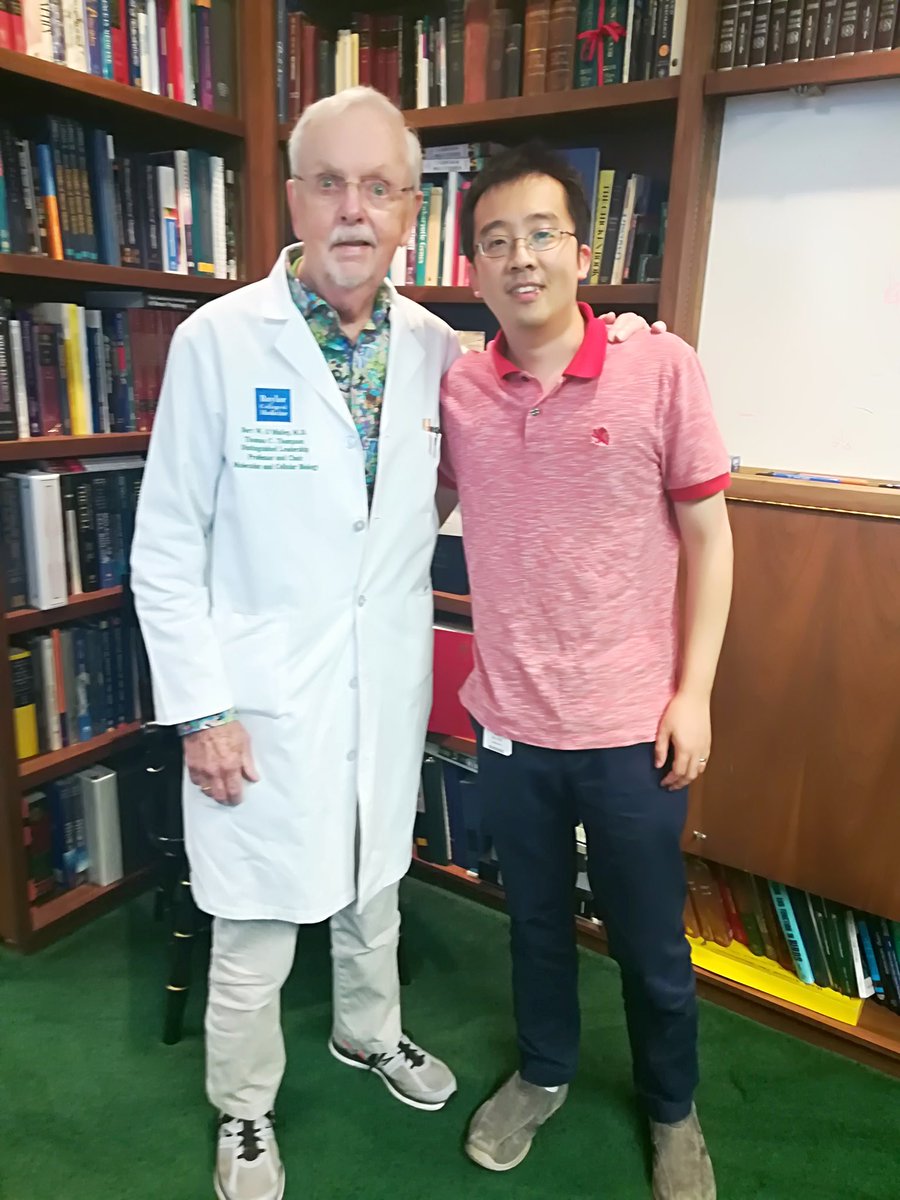
I am so sad to hear the passing of Dr. Bert O’Malley today. He has been a great mentor for me and has always been my inspiration for pursuing science. The world has lost a great scientist and mentor today.
Pyrvinium as a nuclear speckle rejuvenator independently validated in a new study.
SWING domains prime chromatin for nuclear body–mediated gene regulation https://t.co/NIHrzw3u24
#Postdoc opportunity at Columbia U. in New York!
We are interested in candidates from biochemistry backgr. & excited about fractionation, purification and reconstitution to study autonomous clocks in the cell cycle, in colab. w/ @Aydinlab at NYU!
https://t.co/bNBHILsmJr
GraphVelo allows for accurate inference of multimodal velocities and molecular mechanisms for single cells | Nature Communications https://t.co/BZ78Nfswje
Perhaps our boldest hypothesis… we propose a model for RNA Structural Memory propagation @NatureCellBio, where RNA conformation is reshaped by stress, locked by RBPs, copied prion-like in condensates & passed across generations—all without altering DNA.🧵
https://t.co/Gp74O8vLVJ
A news article on our work. Nuclear Speckle Rejuvenation “Next Frontier” for Treating Neurodegeneration - UPMC & Pitt Health Sciences News Blog https://t.co/vUGCZrP3JS