Been building AI for 20 years. Now refactoring all of it. Not just algo surfing, actually surfing. Mango eating beach bum. Founder @madstreetden @vue_ai
Nice cap placement there on Maja Chwalinska’s coach’s head, Hubspot :)
What a match!! 2 newbies storm into the women’s tennis scene at the semis. This shd have been the finale! Absolutely fearless and fierce
OpenAI and Anthropic are effectively telling the market they can't solve every problem with a generic AI coworker.
You don't pour billions into massive forward-deployed joint ventures if you think the next model release is going to take care of it.
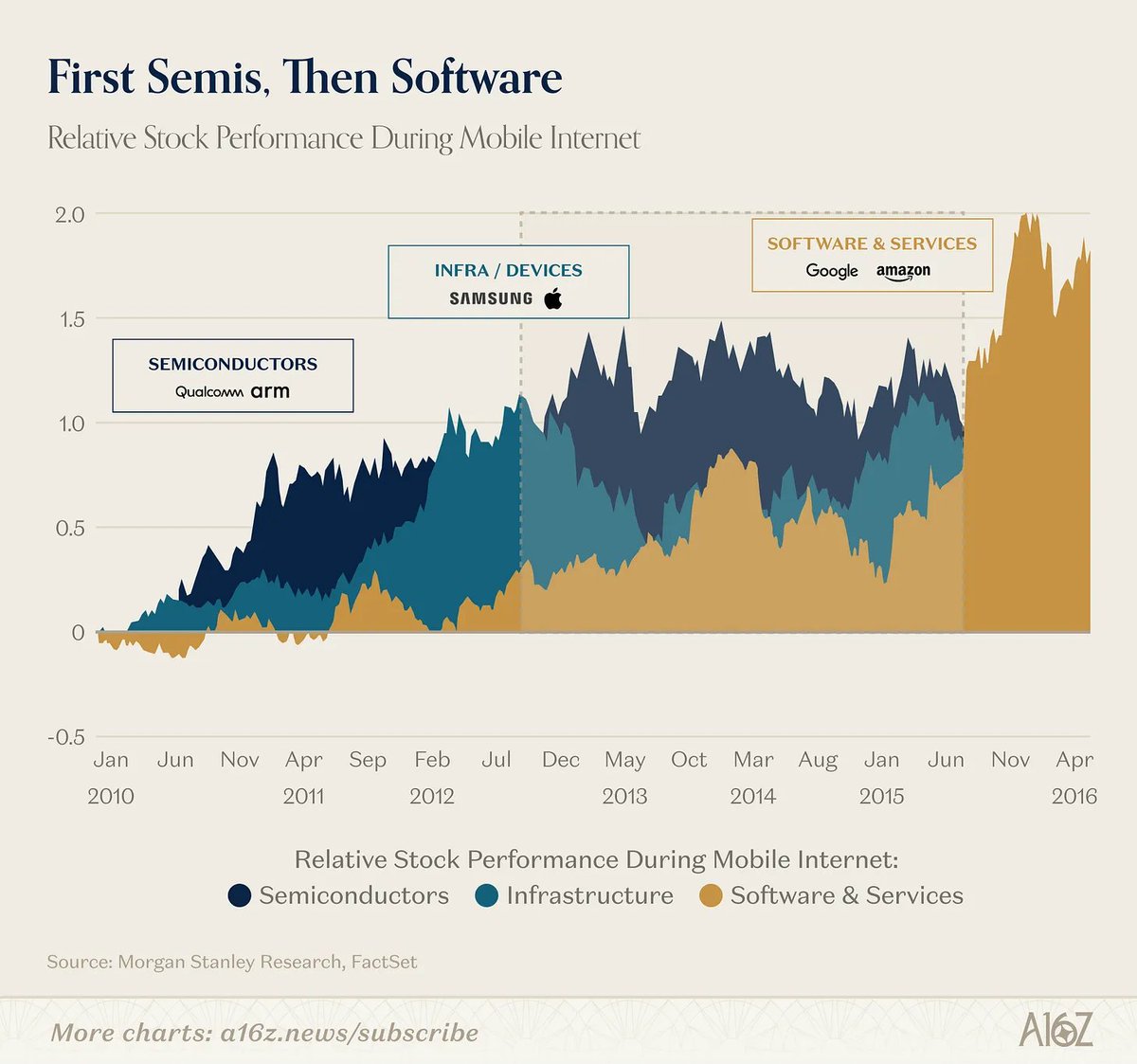
In the cloud supercycle, semis led and software followed (and you didn't need Qualcomm or ARM to tell you the value was migrating up the stack).
In AI, the infra layer itself is telling us the application layer is a separate, massive opportunity they can't fully capture.
a16z's @joeschmidtiv on why the app layer isn't dead: https://t.co/84QN5Mj9T3
Just caught up with the Basavareddy - Fritz game and whaaaaat in the world is this talent. So excited for whats ahead with this kid. I was considering skipping Roland Garros this year given no Carlitos ... was I wrong or what!!!
Automation is a lie. CLIs are over. The SaaSpocalypse is dumb.
A year ago @danshipper came on the podcast to predict where AI was heading. He was remarkably right—including the call that everyone was sleeping on Claude Code.
Dan has a unique lens into where things are going because his team at @every is possibly the most AI-pilled group of people in tech. I always learn a ton talking to Dan.
So I brought him back for round two. We'll score these in exactly a year:
🔸 Every company will have one “super-agent” in Slack.
🔸 Codex and Claude Code will become the new operating system for knowledge work.
🔸 The AI job apocalypse is not happening.
🔸 PMs and designers will thrive.
🔸 We will read way more AI-generated writing and we will like it.
🔸 "I would buy SaaS stocks right now."
Listen now 👇
https://t.co/wzxQ5bz49h
SaaS got a loooot of things wrong. Its so easy to talk about everything that is wrong with it, in retrospect, after we've arrived in an AI-first world today. Its fantastic to see so many of those being fixed as SaaS learns the rules of AI.
But of all the things it got wrong, this roadmap defense and the clunky reasons why switching costs were such a horror - were the absolute worst of the lot. Really good piece on how the AI-first builds change the tone on the 'next new feature' drama that all of us faced for the last decade.
The only caveat here is if companies start treating the FDE as the solution to the next new feature, everyone's gonna be sitting with a 100 branches of code & struggling with what gets into the product & what doesnt. Bringing them together is hard because the FDE organization design can result in chaos if not done right.
@ponnappa all while SaaS revenues doubling and tripling left and right because all their agents doing happy business. fewer seats, more volumes .. tomato to-mah-to
Before Claude/Codex, programming was mostly single-threaded human execution.
One task. Full focus. Context switching was expensive, and most importantly truly truly hated. I remember product & delivery teams endlessly complaining about how CS and sales teams were constantly asking them to context switch.
I'd walk on eggshells before asking Anand a question while he was coding. Now, its like .. Gurllll who is this with all these tabs!?!?
Vibecoding has turned developers into insane multi-taskers and schedulers. Kick off one job, supervise another, debug a third, and learn to manage the latency between agent runs.
@ntkris Yes no doubt. But I think this is just the beginning of the context switching for those 'writing' code. I think we've gone from deep work for this persona to this other end just now ...
In a world where 'build at blitzscale' has truly come true, Dharmesh's pieces remind you of the kind of thought you need to be creating space for as we mature into productizing AI. While you are producing this and that and everything in the middle 100x faster, take the time to consider the design of the system, the role of the human & the things in the experience that twitter rarely talks about - the design of AI, the human experience of AI
What a fantastic thought piece!
I keep thinking about the doorman fallacy Rory Sutherland keeps referring to.
A hotel can replace a doorman with an automatic door and call it efficiency.
On paper, it saves money.
But the balance sheet only sees one job: opening the door. It does not see everything else the doorman was doing.
He was security. He was status. He was recognition. He was the first human signal that this place is cared for. He noticed who came in. He made regular guests feel known. He made strangers feel watched. He made the hotel feel like a hotel.
This is the danger of cost cutting. It often removes value that was never measured.
Many businesses make this mistake. They define a human role too narrowly, automate the visible function, and then wonder why the experience feels worse.
A receptionist is not just answering calls. A call center agent is not just closing tickets. A postman is not just delivering letters.
Human beings carry invisible value.
They create trust, warmth, reassurance, and memory. These things are hard to quantify, so finance departments treat them as waste.
But customers don't behave like numbers inside an excel sheet.
They live with feelings and emotions that are hard to measure.
And sometimes the thing you remove to save cost was the thing that made people trust you.
@svikashk no no. Terrace garden has very alive basil and ginger and a very dead tomato plant. This is in the absolute boonies away from the city, down the coast :)
Brief detour from context engg and AI transformation to say …
Building your own AI app as a side gig is awesome but growing and eating mangoes all summer long … is a whole other kind of side gig. (One of the few joys of this merciless heat)
LOVED this piece on the death of SaaS (non) debate
"The greater the long-term risk, the better the short-term case for acceleration. The paradox of investing in SaaS right now is that the more threatened a SaaS company is in the long term, the better the odds that it will accelerate and "disprove" the bear case in the near term"
For the last few months, I profiled one public software company per day (50 total) and wrote about the impact of AI on each.
Posts collated here:
https://t.co/cyEQtxFfYN
My takeaways after reflecting this morning:
1) This is not an innovator's dilemma situation like the on-prem to SaaS transition. The on-prem software companies were in deep trouble- they had legacy products and a legacy pricing model, and getting to the cloud meant sacrificing near-term revenue/profits/cash (subscription transition) AND moving each of their customers from an on-prem version of their software to the new cloud-native version, which created a significant change event- i.e. an occaison for their customers to consider whether the cloud-native option might be better, since they were going to have to make a big change anyway. For better or worse, the SaaS companies are not experiencing dynamics like that- no one is targeting them and running a successful "rip and replace" strategy at any scale. Net retention is stable to up, even for companies disappointing at the margins. The existing business model is intact for now- even growing (and in some cases accelerating).
2) The greater the long-term risk, the better the short-term case for acceleration. The paradox of investing in SaaS right now is that the more threatened a SaaS company is in the long term, the better the odds that it will accelerate and "disprove" the bear case in the near term. It is the companies closest to killer-app AI use cases (code, image/video gen/CX, etc.) that have both the best prospects for near-term upside and the most ferocious AI native competition. In many other categories, it simply isn't clear yet that AI adds enough value and/or is token-intensive enough to generate the incremental revenue required to accelerate. It seems likely that some SaaS companies will accelerate into their own obsolescence, and companies that don't accelerate near term are paradoxically better off in the long run (because they will have more time to adapt).
3) Most software management teams don't seem to have made wholesale organizational changes due to AI yet, and that's a disappointment. I would have expected to have read/heard widespread stories about increased operating leverage, cost takeouts, etc. but instead SaaS hiring continues apace and it shows up in management commentary. There is clearly a major struggle to change the culture of SaaS companies and elite talent is being poached by AI natives. I haven't seen a single management team talk about this honestly and put forward a strategy for attracting/retaining top talent in this environment- and I think that's a huge issue in the long run.
4) The mythical "shitty thin SaaS company with no moat" doesn't really exist in public markets. These companies have all gone through the gauntlet- competition with other VC-backed startups, competition with Microsoft, etc. Almost by definition, they've built up complex, moated businesses with brand equity, network effects, exceptional complexity, etc. That doesn't mean AI isn't an issue for them, but the "issues" I found that concerned me were more around disruption to the workflow the software company serves (see: Figma, Five9, etc.) than a disruption to the SaaS business model writ large.
Summing it up, the broad-brush SaaS bear case melts away somewhat when you go company-by-company. The median SaaS company is seeing little to no impact (in either direction today), while saying all of the right things on the product side and none of the right things on the organizational side.
That doesn't mean there won't be some sort of wholesale disruption down the road- but I don't yet have a clear picture of what it will look like. If you feel like you do, please pick a specific company, respond to or quote-tweet its profile, and explain what you think is going to happen. That's much more fun than debating in the abstract. :)