Much-needed data on the genetics of #longCOVID in a new preprint by @23andMeResearch - GWAS of #LongCOVID identified 3 loci pointing to immune and thrombo-inflammatory mechanisms 🔥 @ninaadsc
1) HLA-DQA1–HLA-DQB
2) ABO
3) BPTF–KPAN2–C17orf58
(1/)
https://t.co/0MUr9GbDiA
1/9 Here is a thread on our new paper on how amyloid-like microclots, termed fibrinaloid microclots, form in blood due to cross-seeding of amyloidogenic proteins. This finding could have major implications for thrombotic & amyloid diseases. 🔬🩸
https://t.co/jTG9JIPGV7
Esto es grandioso ‼️
La vacuna ARNm-4359 de Moderna ha mostrado signos tempranos de eficacia, activando proteínas clave para desencadenar una respuesta inmune para destruir las células cancerosas.
Si quieres saber más, tira del 🧵
🌐 Hoy es el día para recordar a nuestros compañeros más enfermos, y transmitirles, que siempre habrá una luz de esperanza, que nos permita pensar en un mejor mañana.
Un abrazo
Lala
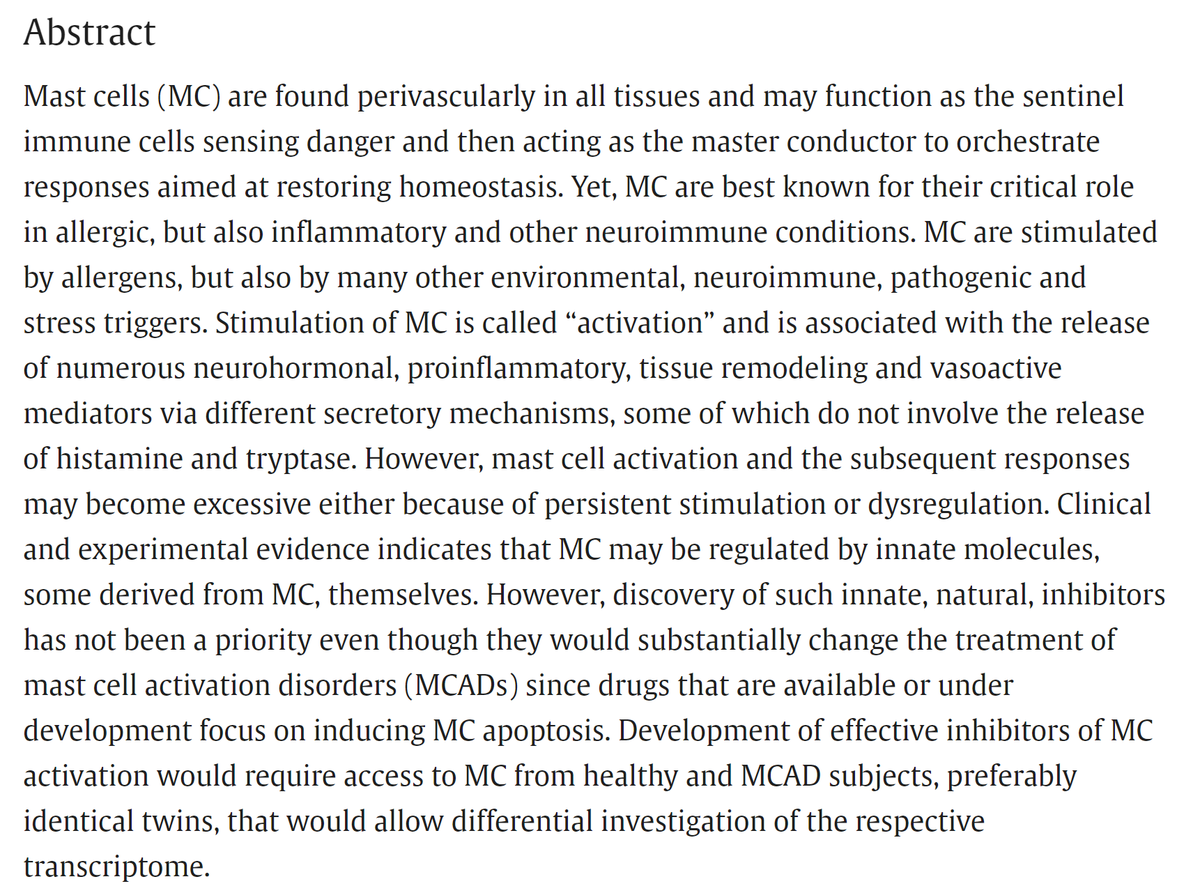
I know I shouldn't play favorites but Dr. Theo Theoharides, the 'mast cell master' is my personal favorite mast cell researcher.
This is his new (very readable) paper which is a great introduction and overview.
Mast Cells: The Unregulated Master Immune Response Conductor (2024)
https://t.co/DbbeO9LqbG
Excellent section on treatment and IMPORTANT information on the mediators that are released when mast cells degranulate. There is MUCH more than just histamine release going on - which is why for some antihistamines alone will not cut-it for treatment.
We are excited to have supported this new study via our #LongCovid Research Consortium. The project team are our incredible @CUBoulderBN colleagues at the University of Colorado Boulder: https://t.co/KqpAQkAbAa
👩🏻⚕️"Es necesario que haya un estudio de #COVIDpersistente a nivel global no solo focalizado en ciertos países"
🧪💵"hay que impulsar la investigación y la financiación es fundamental para avanzar"
@svillapol en #SEMG24@SEMG_ES
https://t.co/Y62ZCN8kuV
It is in Your Head! - Structural Changes to The Brain from COVID-19
Some in the medical profession have been saying Long COVID is all in the head. Ironically, they're onto something—but not in the way they think. COVID-19 doesn't just leave behind fatigue and coughs; it causes actual, measurable structural changes to the brain. Yes, Long COVID truly gets into your head, altering brain structures and triggering neurological issues that are very much real and tangible.
Structural Brain Changes
Recent studies have identified several structural changes in the brains of Long COVID patients...
Structural Brain Changes
Recent studies have identified several structural changes in the brains of Long COVID patients:
- Thalamus and Basal Ganglia Alterations: Research has shown that patients with post-COVID fatigue exhibit structural changes in the thalamus and basal ganglia. These changes include shape deformations and decreased volumes of the left thalamus, putamen, and pallidum. These regions are critical for motor and cognitive functions, and their impairment is linked to severe fatigue and cognitive deficits[1].
- Microstructural Changes: Advanced imaging techniques like diffusion microstructure imaging (DMI) have detected microstructural changes in various brain regions of Long COVID patients. These changes are not visible with traditional MRI scans and are associated with impaired cognition, sense of smell, and fatigue[2].
- Immune Cell Profile and Autonomic Dysfunction: Studies have also found that Long COVID patients exhibit differences in immune cell profiles and autonomic dysfunction, which may contribute to persistent neurological symptoms like brain fog and fatigue. This includes lower levels of CD4+ and CD8+ T cells and increased B cells, indicating immune dysregulation[3].
Impact on Patients
The structural changes in the brain due to Long COVID can have profound effects on patients:
- Cognitive Impairments: Many patients report experiencing "brain fog," which includes symptoms such as forgetfulness, difficulty concentrating, and sluggish thinking. These cognitive deficits can significantly impact daily life, making it challenging to perform tasks that require mental effort[4][9].
- Fatigue: Persistent fatigue is one of the most debilitating symptoms of Long COVID. The structural changes in the thalamus and basal ganglia, which are involved in motor and cognitive processes, are closely linked to the severity of fatigue experienced by patients[1].
- Mood and Sleep Disorders: Long COVID can also lead to increased levels of anxiety, depression, and sleep disturbances. These neuropsychiatric symptoms are often associated with the structural brain changes observed in Long COVID patients[1][5].
Prevention is Key
Given the potential long-term impacts of COVID-19 on brain health, the best strategy to protect oneself is to avoid contracting the virus in the first place. Here are some recommended preventive measures:
- Vaccination: Staying up to date with COVID-19 vaccinations is the most effective way to reduce the risk of severe illness. If you have Long Covid work with your doctor as some Long Covid patients have had issues with vaccines[7][10][11].
- Respirator Masks: Wearing a high-quality N95 or better respirator that fits well is crucial for protecting yourself from airborne SARS-CoV-2. These respirators are designed to filter out at least 95% of airborne particles, significantly reducing your risk of inhaling these pathogens. A snug fit ensures that air does not leak around the edges, which would otherwise allow unfiltered air to bypass the mask and enter your lungs. Proper fit and seal are essential for the respirator to function effectively, making it a key measure in safeguarding your health, especially in high-risk environments.
- Ventilation: Ensuring good ventilation in indoor spaces can help reduce the concentration of viral particles in the air, lowering the risk of infection[6][8].
So, next time someone says Long COVID is all in your head, you can confidently reply, “Exactly, and that’s precisely why it’s so serious.” COVID-19 can lead to significant structural changes in the brain, resulting in cognitive impairments, fatigue, and other neuropsychiatric symptoms.
The best way to protect oneself from these long-term consequences is to prevent COVID-19 infection through vaccination, masking, avoiding crowded spaces and proper ventilation. By taking these preventive measures, individuals can reduce their risk of contracting COVID-19 and potentially developing Long COVID.
References:
[1] The Lancet: Structural brain changes in patients with post-COVID fatigue
[2] WebMD: Novel MRI Study Detects Brain Changes in Long COVID Patients
[3] NIH: NIH study identifies features of Long COVID neurological symptoms
[4] CDC: Long COVID Basics
[5] Yale Medicine: Long COVID Brain Fog: What It Is and How to Manage It
[6] WHO: Advice for the public: Coronavirus disease (COVID-19)
[7] CDC: About COVID-19
[8] Minnesota Department of Health: Protect Yourself and Others: COVID-19
[9] NIH: Shining a Light on Long COVID Brain Fog
[10] Mayo Clinic: Coronavirus: What is it and how can I protect myself?
[11] Loyola Medicine: How to Protect Yourself from COVID-19
Sources
[1] Structural brain changes in patients with post-COVID fatigue https://t.co/XHKylQO2Cf
[2] Novel MRI Study Detects Brain Changes in Long COVID Patients https://t.co/C79ZdyHKFU
[3] NIH study identifies features of Long COVID neurological symptoms https://t.co/xG6qI3PUC3
[4] Shining a Light on Long COVID Brain Fog https://t.co/bLZdw69rle
[5] Long COVID Basics - CDC https://t.co/FIPHXUM6E5
[6] Advice for the public: Coronavirus disease (COVID-19) https://t.co/vPxZbfjl7c
[7] About COVID-19 - CDC https://t.co/zniToWtCoL
[8] Protect Yourself and Others: COVID-19 - MN Dept. of Health https://t.co/B5Zqvw55oW
[9] Long COVID Brain Fog: What It Is and How to Manage It https://t.co/gc0NJPiXv8
[10] Coronavirus: What is it and how can I protect myself? - Mayo Clinic https://t.co/xwjIO9pzOf
[11] How to Protect Yourself from COVID-19 | Coronavirus https://t.co/OEOjRn9VOz
The report of the physiological data from the Cornell Center two-day CPET study is now out: https://t.co/4GkbwgoBUS. We are working on several new manuscripts utilizing blood samples collected before and after each CPET.
🧵1/16 Our new preprint with @dbkell and Alain Thierry's team (https://t.co/lNeI4lNIIg) from @Inserm, shows a significant link between circulating microclots and Neutrophil Extracellular Traps (NETs) in #LongCOVID. Dive into the findings with us. 👇https://t.co/RRcN9hySIf
Sharing our new study by @keylas3, @SilvaJ_C, Rafael Bayarri Olmos et al (with T. Horvath & @PutrinoLab) showing that a passive transfer of IgG from patients with #longCOVID into mice recapitulates ⬆️ pain and other symptoms 🧵 (1/)
https://t.co/J5I22Y4fnn







![Dave_it_up's tweet photo. It is in Your Head! - Structural Changes to The Brain from COVID-19
Some in the medical profession have been saying Long COVID is all in the head. Ironically, they're onto something—but not in the way they think. COVID-19 doesn't just leave behind fatigue and coughs; it causes actual, measurable structural changes to the brain. Yes, Long COVID truly gets into your head, altering brain structures and triggering neurological issues that are very much real and tangible.
Structural Brain Changes
Recent studies have identified several structural changes in the brains of Long COVID patients...
Structural Brain Changes
Recent studies have identified several structural changes in the brains of Long COVID patients:
- Thalamus and Basal Ganglia Alterations: Research has shown that patients with post-COVID fatigue exhibit structural changes in the thalamus and basal ganglia. These changes include shape deformations and decreased volumes of the left thalamus, putamen, and pallidum. These regions are critical for motor and cognitive functions, and their impairment is linked to severe fatigue and cognitive deficits[1].
- Microstructural Changes: Advanced imaging techniques like diffusion microstructure imaging (DMI) have detected microstructural changes in various brain regions of Long COVID patients. These changes are not visible with traditional MRI scans and are associated with impaired cognition, sense of smell, and fatigue[2].
- Immune Cell Profile and Autonomic Dysfunction: Studies have also found that Long COVID patients exhibit differences in immune cell profiles and autonomic dysfunction, which may contribute to persistent neurological symptoms like brain fog and fatigue. This includes lower levels of CD4+ and CD8+ T cells and increased B cells, indicating immune dysregulation[3].
Impact on Patients
The structural changes in the brain due to Long COVID can have profound effects on patients:
- Cognitive Impairments: Many patients report experiencing "brain fog," which includes symptoms such as forgetfulness, difficulty concentrating, and sluggish thinking. These cognitive deficits can significantly impact daily life, making it challenging to perform tasks that require mental effort[4][9].
- Fatigue: Persistent fatigue is one of the most debilitating symptoms of Long COVID. The structural changes in the thalamus and basal ganglia, which are involved in motor and cognitive processes, are closely linked to the severity of fatigue experienced by patients[1].
- Mood and Sleep Disorders: Long COVID can also lead to increased levels of anxiety, depression, and sleep disturbances. These neuropsychiatric symptoms are often associated with the structural brain changes observed in Long COVID patients[1][5].
Prevention is Key
Given the potential long-term impacts of COVID-19 on brain health, the best strategy to protect oneself is to avoid contracting the virus in the first place. Here are some recommended preventive measures:
- Vaccination: Staying up to date with COVID-19 vaccinations is the most effective way to reduce the risk of severe illness. If you have Long Covid work with your doctor as some Long Covid patients have had issues with vaccines[7][10][11].
- Respirator Masks: Wearing a high-quality N95 or better respirator that fits well is crucial for protecting yourself from airborne SARS-CoV-2. These respirators are designed to filter out at least 95% of airborne particles, significantly reducing your risk of inhaling these pathogens. A snug fit ensures that air does not leak around the edges, which would otherwise allow unfiltered air to bypass the mask and enter your lungs. Proper fit and seal are essential for the respirator to function effectively, making it a key measure in safeguarding your health, especially in high-risk environments.
- Ventilation: Ensuring good ventilation in indoor spaces can help reduce the concentration of viral particles in the air, lowering the risk of infection[6][8].
So, next time someone says Long COVID is all in your head, you can confidently reply, “Exactly, and that’s precisely why it’s so serious.” COVID-19 can lead to significant structural changes in the brain, resulting in cognitive impairments, fatigue, and other neuropsychiatric symptoms.
The best way to protect oneself from these long-term consequences is to prevent COVID-19 infection through vaccination, masking, avoiding crowded spaces and proper ventilation. By taking these preventive measures, individuals can reduce their risk of contracting COVID-19 and potentially developing Long COVID.
References:
[1] The Lancet: Structural brain changes in patients with post-COVID fatigue
[2] WebMD: Novel MRI Study Detects Brain Changes in Long COVID Patients
[3] NIH: NIH study identifies features of Long COVID neurological symptoms
[4] CDC: Long COVID Basics
[5] Yale Medicine: Long COVID Brain Fog: What It Is and How to Manage It
[6] WHO: Advice for the public: Coronavirus disease (COVID-19)
[7] CDC: About COVID-19
[8] Minnesota Department of Health: Protect Yourself and Others: COVID-19
[9] NIH: Shining a Light on Long COVID Brain Fog
[10] Mayo Clinic: Coronavirus: What is it and how can I protect myself?
[11] Loyola Medicine: How to Protect Yourself from COVID-19
Sources
[1] Structural brain changes in patients with post-COVID fatigue https://t.co/XHKylQO2Cf
[2] Novel MRI Study Detects Brain Changes in Long COVID Patients https://t.co/C79ZdyHKFU
[3] NIH study identifies features of Long COVID neurological symptoms https://t.co/xG6qI3PUC3
[4] Shining a Light on Long COVID Brain Fog https://t.co/bLZdw69rle
[5] Long COVID Basics - CDC https://t.co/FIPHXUM6E5
[6] Advice for the public: Coronavirus disease (COVID-19) https://t.co/vPxZbfjl7c
[7] About COVID-19 - CDC https://t.co/zniToWtCoL
[8] Protect Yourself and Others: COVID-19 - MN Dept. of Health https://t.co/B5Zqvw55oW
[9] Long COVID Brain Fog: What It Is and How to Manage It https://t.co/gc0NJPiXv8
[10] Coronavirus: What is it and how can I protect myself? - Mayo Clinic https://t.co/xwjIO9pzOf
[11] How to Protect Yourself from COVID-19 | Coronavirus https://t.co/OEOjRn9VOz](https://pbs.twimg.com/media/GSC0Fn_XEAA5agk.jpg)


