Providing timely and dependable legal advice, Experts in Debt Recovery, due diligence Company Secretaries &Business analysts for both individuals and companies.
In the matter of the Estate of Late Muhakanizi Keith (Miscellaneous Application No. 443 of 2026) [2026] UGHCFD 33 (31 March 2026)
Court granted conditional renewal of letters of administration for pension and non-pension assets, subject to filing an account within one month.
👉:https://t.co/GeGNzyWVya
@Makerere@BenardsKelly@SpireJim 's friend KIU charge 800k as graduation fees, graduant only to receive a bottle of Vio. This excludes gown that comes with an invitation to the graduation grounds, the last time I checked it was 200k.
@NIRA_Ug Hey Nira, what stations are you issuing National IDs, where one took the biometrics or the place of residence as captured while filling the form.
How do I know where to pick my national ID. Speaking for self and many others
Sudhir Ruparelia & Meera Investments Ltd v Bank of Uganda (Taxation Reference No. 05 of 2023) [2025] UGSC 49 (17 October 2025)
An advocate may file separate bills for distinct clients; only sums actually in issue in an appeal count as the amount involved for taxation
👉:https://t.co/XSasM81xCm @FERDINANDIUS
The Rules Committee, chaired by the Deputy Chief Justice, Justice Dr. Flavian Zeija, who represented the Chief Justice, convened at the Supreme Court in Kampala to review two major draft frameworks: the Judicature (Court Fees) Rules, 2025 and the Judicature (Court Annexed Mediation) Rules, 2025.
Justice Dr. Zeija urged members to provide constructive input to ensure that the final documents meet the needs of court users while simplifying the work of judicial officers.
On the Court Fees Rules, the Committee noted that the current fees, last comprehensively reviewed during the 2021 Rules and Law Reform Committees retreat in Chobe, are outdated. Inflation and rising administrative costs have rendered them impractical, with collections falling short of the expenses involved in their management. The proposed revision seeks to align fees with prevailing economic conditions, enhance government revenue, and facilitate integration with the Judiciary’s Electronic Court Case Management Information System (ECCMIS).
The members agreed that the framework should be simple and user-friendly for both the public and court staff. They also emphasized that related laws should be referenced by cross-referencing rather than repeating provisions in full. It was resolved that criminal cases should remain free of court fees, though there was a proposal to introduce a fee for bail applications. A further proposal to exempt government agencies from paying fees was rejected on grounds that such bodies already budget for these costs and an exemption could create legal and financial inconsistencies.
Turning to the Mediation Rules, the Committee reviewed the draft developed by a technical team following recommendations from the March 2025 retreat. The new Rules aim to strengthen Mediation as a tool for dispute resolution by placing it under the existing Case Management Committee instead of creating a new structure. They introduce clearer procedures for accrediting, registering, and training mediators, as well as new options for private and affiliate mediation to give parties greater flexibility.
Members welcomed the inclusion of a code of conduct and standardized forms to improve record-keeping. They agreed that mediators should undergo at least forty hours of training, though traditional and religious leaders with proven experience may qualify through shorter approved programmes. To accommodate community mediators, the Rules also recognize training offered by professional development institutions in addition to formally recognized bodies.
The Committee proposed that complaints against mediators should be lodged with the Chief Registrar rather than the Case Management Committee, which is too large and infrequently convened. They agreed that mediation subcommittees should continue to function under the Case Management Committee to avoid duplication of roles. It was resolved that filing of mediation summaries should be optional and left to the discretion of the mediator, since some cases rely more on dialogue than written documents.
They emphasized that sanctions for non-cooperation in mediation should remain administrative, such as fines or cost orders, rather than criminal. Mediators are to enjoy qualified immunity for actions taken in good faith, and a twelve-month transition period will be provided for re-accreditation under the new rules.
The Committee also discussed recognition and enforcement of settlements. While some members preferred a time limit for setting aside mediated agreements to prevent abuse. Others argued that courts should retain discretion to handle exceptional cases. It was agreed to leave this provision open to judicial interpretation.
In closing, the Deputy Chief Justice commended members for their detailed contributions and noted that their recommendations will be incorporated into the drafts before they are submitted to the Attorney General for further review
The Permanent Secretary/Secretary to the Judiciary (PS/SJ), Dr. Pius Bigirimana, today met with the Heads of the International Development Law Organization (IDLO) and the United Nations Office on Drugs and Crime (UNODC) in Uganda to align partner support with Judiciary priorities and strengthen accountability in programme delivery.
IDLO engagement
The IDLO delegation was led by Ms. Barbra Kilei, Country Manager, accompanied by Mr. Samson Asiimwe, Programme Manager.
Dr. Bigirimana appreciated IDLO’s longstanding collaboration with the Judiciary and emphasised the value of continuous engagement to reduce uncertainty in planning and funding. He called for harmonised facilitation during activities, particularly ensuring provision for drivers and bodyguards of Judicial Officers at trainings, workshops and conferences and reiterated that all funded initiatives must align with approved workplans to avoid pressure on Judiciary resources to co-fund partner activities.
Ms. Kilei commended the strong working relationship and noted that many constraints arise from funder rules that typically provide for only the listed participants in meetings and trainings, unlike court sessions where full facilitation is possible. The IDLO team received the Judiciary’s proposed workplan for review and input ahead of formal sign-off.
UNODC meeting
The UNODC team comprised Ms. Sharon Lesa Nyambe** (Head of Office), Ms. Alejandra Euceda, (Programme Coordinator) and Ms. Angella Tusiime (Communications Officer).
Dr. Bigirimana welcomed the partnership and underscored the need for early, integrated planning so that activities are captured in the Judiciary’s workplan and appropriately counter-funded where necessary. He urged UNODC to budget for attendant costs for all activities and advised that ad hoc requests during the financial year should not be prioritised.
Ms. Nyambe explained that UNODC operates on a project-based model, with resources tied to specific capacity-building outputs and participant cohorts, which can limit coverage for all ancillary roles. The meeting agreed to review funder policies to address these constraints and pursue “full-package” support that adequately covers Judiciary operational needs.
In attendance; Ms. Maureen Kasande (Under Secretary), HW John Paul Edoku (Registrar, Planning, Research and Development), Ms. Nuruh Ntabadde (Statistician) and Mr. Ronald Mumbere (Statistician)
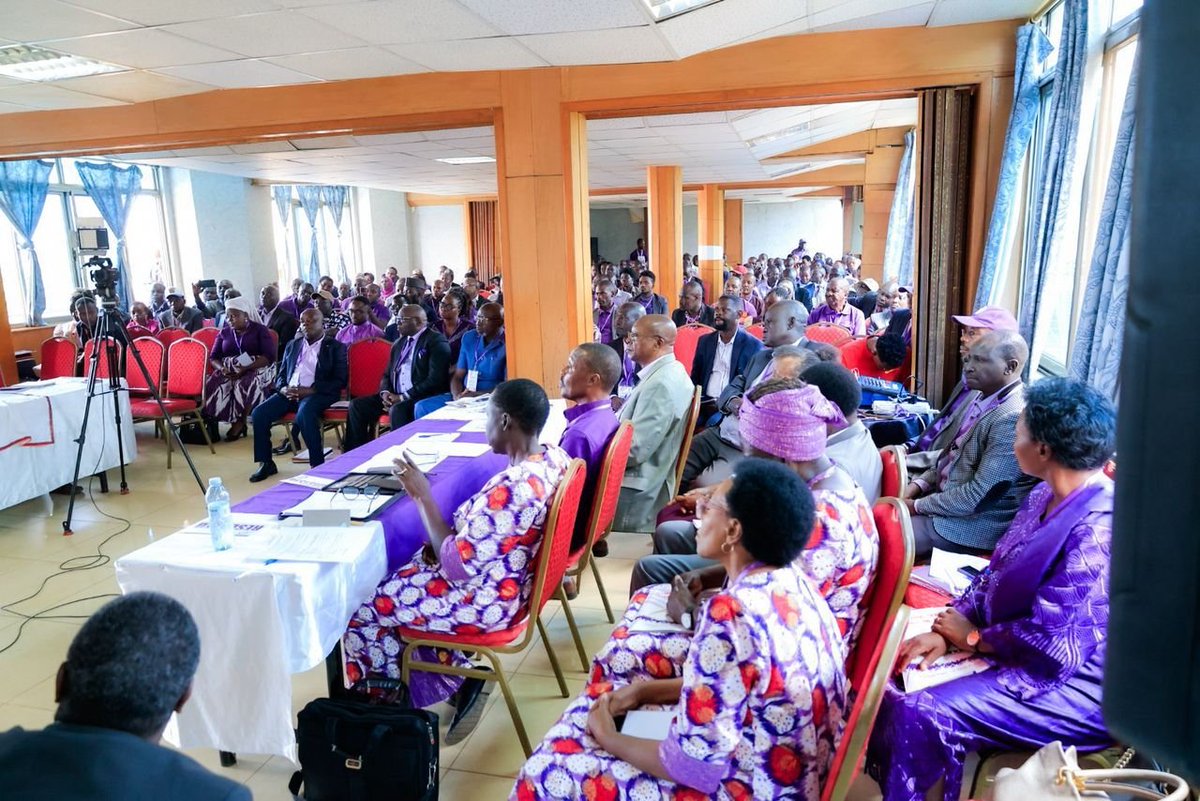
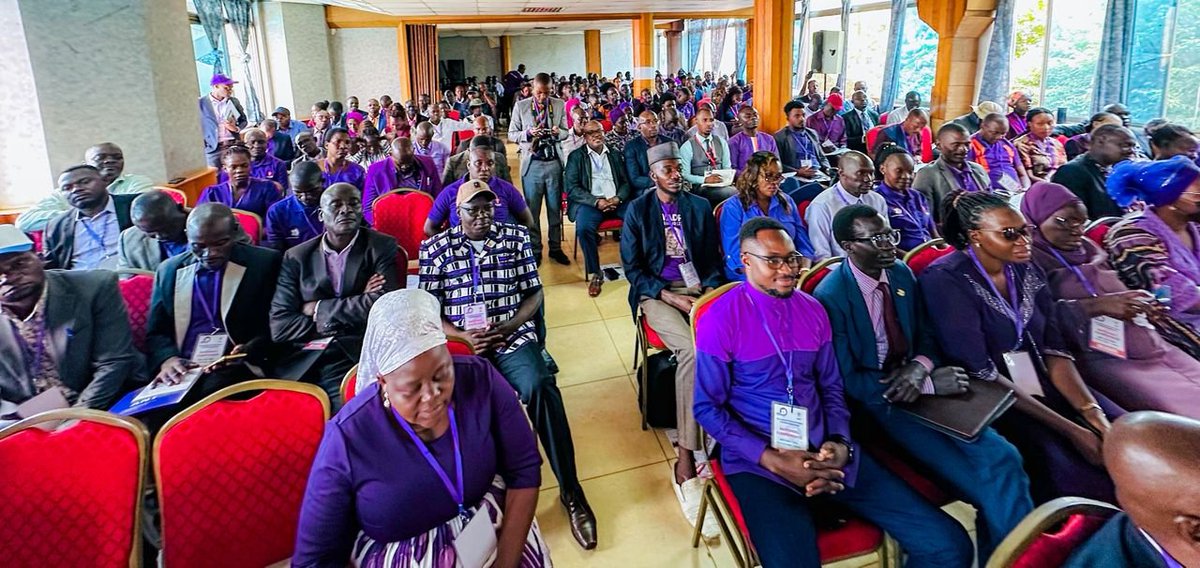
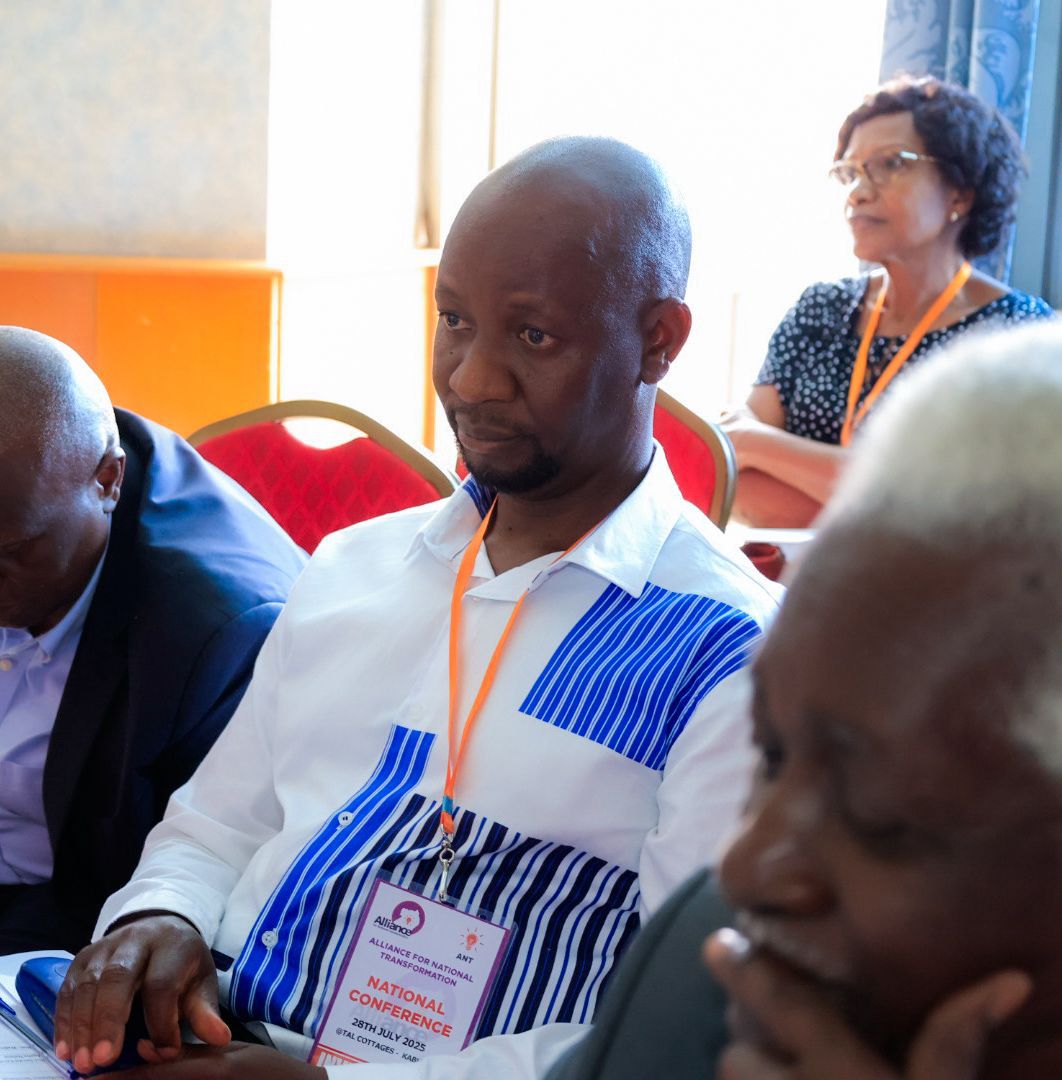
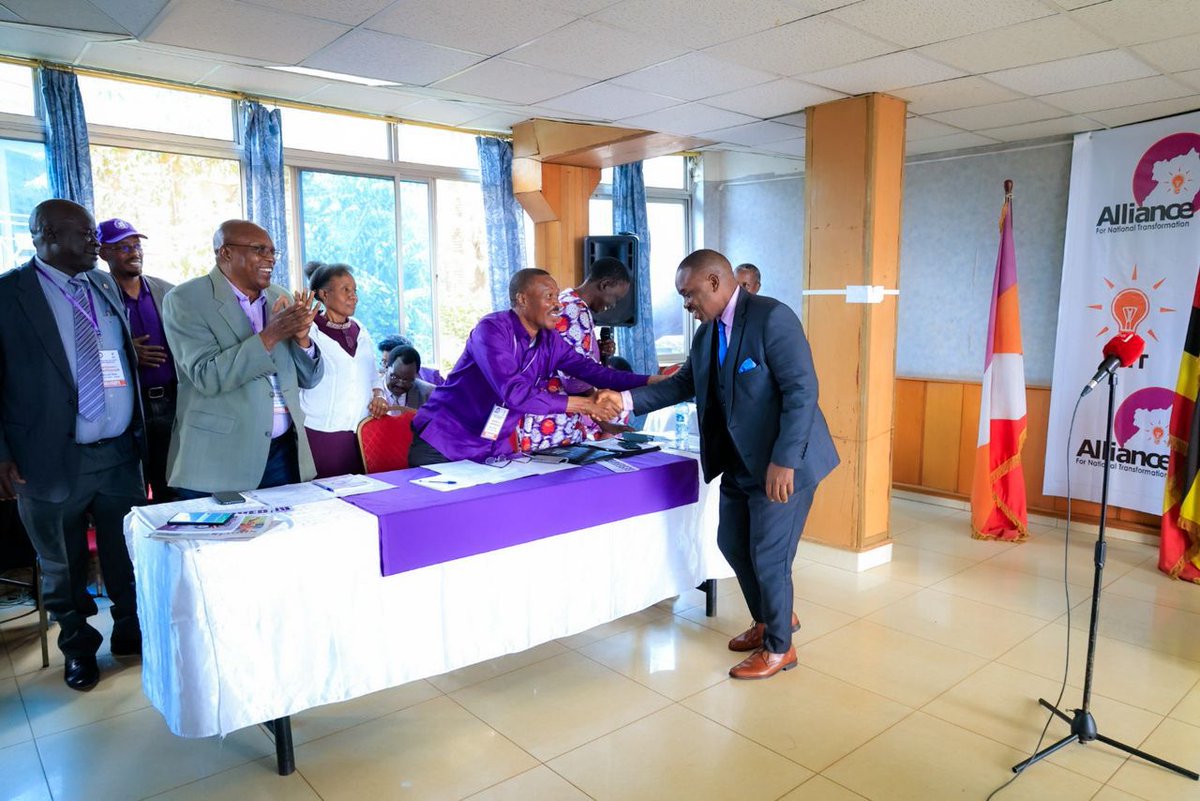
We extend our sincere appreciation to the delegation from the @PFFUganda led by Party Chairperson @EriasLukwago_, for honoring us with their presence at our ongoing National Conference. Our cooperation is driven by a goal to restore hope and uphold the dignity of all Ugandans.
When @HEBobiwine@kizzabesigye1@mugishamuntu speak against these vices killing our country due to poor leadership people think it's just politics. We need a lasting solution to all this.
@DailyMonitor#GodSaveKiizaBesigye
It breaks my heart to see the way a person presumed innocent until proven guilty is being handled. Dominic Ongwen was handled way better than this after killing thousands.
#FreeKizzaBesigye
Since I started writing weekly about PE/VC, this is my longest article yet -but worth the read. It comes out at 10 am
I explain in detail how EBFs work & how banks can extend such facilities specifically designed to cater for PE/VC firms.
#EBFs#PrivateEquity#VentureCapital
@adam_kungu The guiding law should be article 92 during this legislation. The draftsman shld be very careful otherwise the law will be challenged. The supreme Court said that the current UPDF Act doesn't provide for appeal to the civil courts but recommended an amendment to fill the gap.










![Uganda_LII's tweet photo. In the matter of the Estate of Late Muhakanizi Keith (Miscellaneous Application No. 443 of 2026) [2026] UGHCFD 33 (31 March 2026)
Court granted conditional renewal of letters of administration for pension and non-pension assets, subject to filing an account within one month.
👉:https://t.co/GeGNzyWVya](https://pbs.twimg.com/media/HHc4Kt4XIAAS9i5.jpg)
![Uganda_LII's tweet photo. Sudhir Ruparelia & Meera Investments Ltd v Bank of Uganda (Taxation Reference No. 05 of 2023) [2025] UGSC 49 (17 October 2025)
An advocate may file separate bills for distinct clients; only sums actually in issue in an appeal count as the amount involved for taxation
👉:https://t.co/XSasM81xCm @FERDINANDIUS](https://pbs.twimg.com/media/G3um_uYXEAAMESL.jpg)