GWAS sample sizes are officially in the 7-digit realm🧬
New GWAS for eGFR in 2.2 million (!) individuals @ScienceMagazine
👉1,026 genomic loci
👉8,901 putative causal variants in 1,818 credible sets in fine-mapping
👉convergence across 1,060 genes in multi-omic integration
Biobanking with genetics shapes precision medicine and global health https://t.co/QGJgAeryab #Review by @CScottGallagher, Geoffrey S. Ginsburg @PersonalizedMed & Anjené Musick
@NIH@AllofUsResearch
So many cool papers while I was away❗️
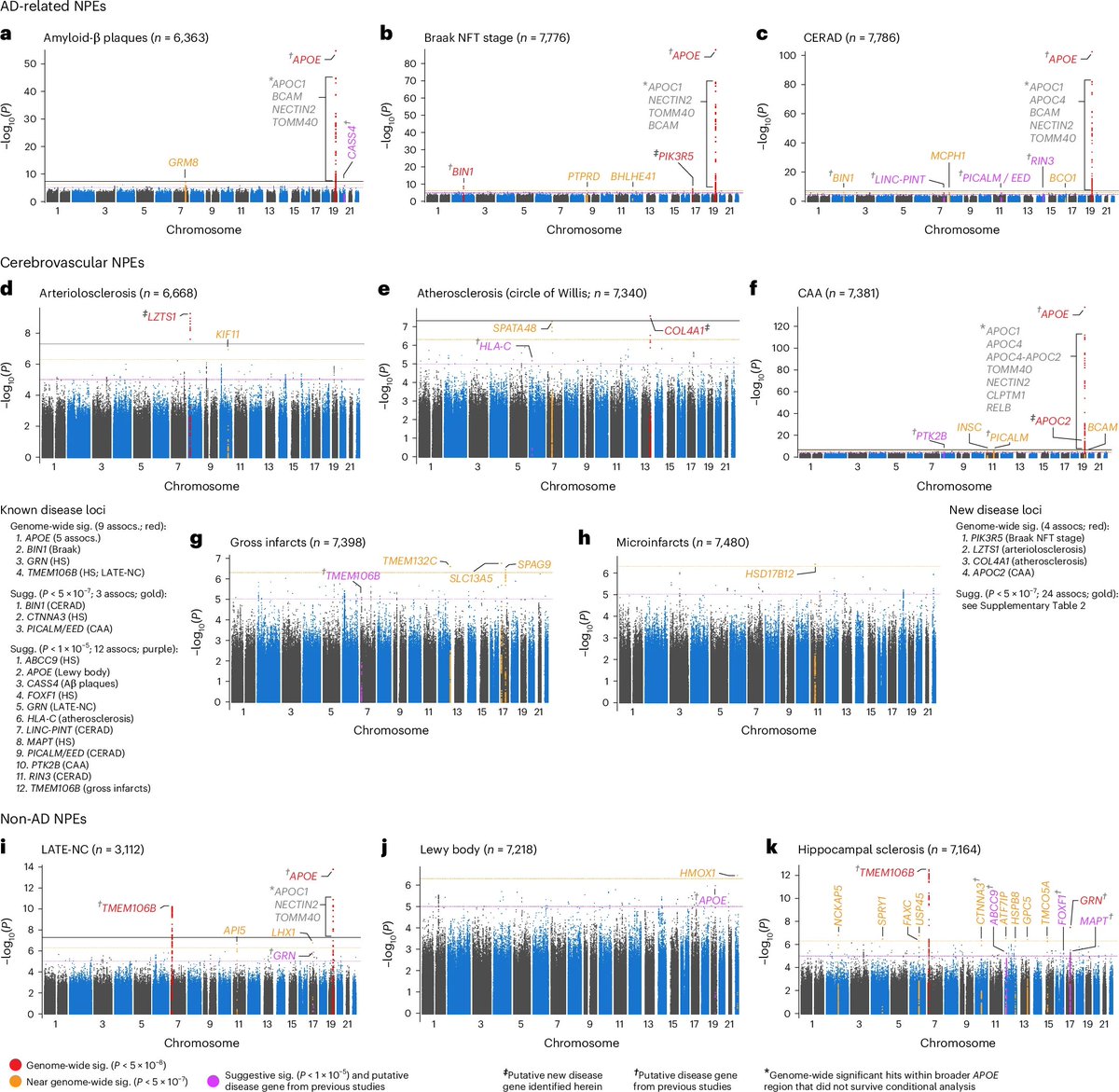
🧬GWAS of 11 autopsy-assessed neuropathology traits (N=7,786)🧠
👉Great resource for cognitive aging research (often dominated by less precise neuropsych phenotypes)
📰Paper: https://t.co/dOpXjFYlyS
📊Summ stats: https://t.co/gSYTulbDz1
Three scientists involved in developing the blockbuster anti-obesity drugs that are currently changing the health-care landscape are among the winners of this year’s prestigious Lasker Awards https://t.co/NmX3afGOgP
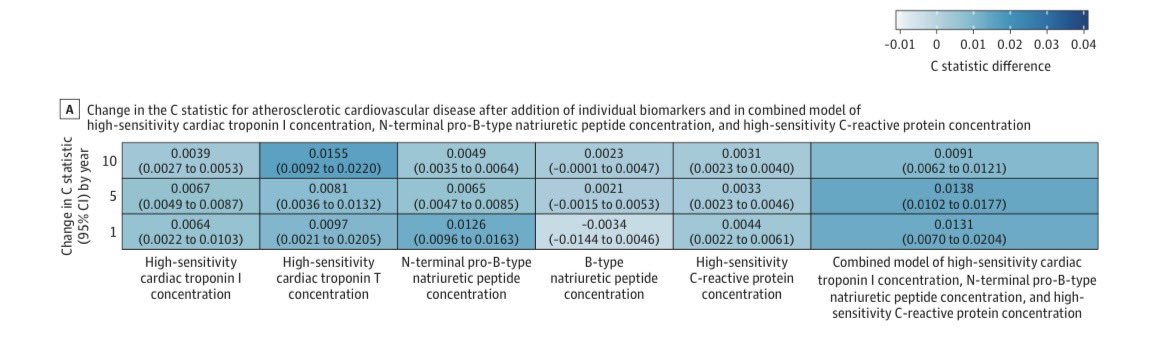
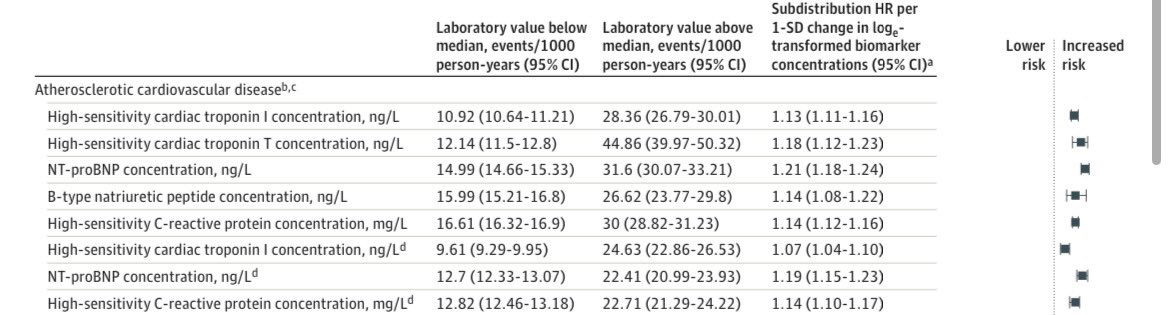
A study @JAMA_current assessed hsTrop I, hsTrop T, nT-proBNP, proBNP, hsCRP as CV risk predictors across 28 cohorts (N=164K, f-up 12y):
👉all biomarkers associated with incident CV events
👉only slight improvements in c-index (changes of <1%)
https://t.co/RVWRa0Q3zy
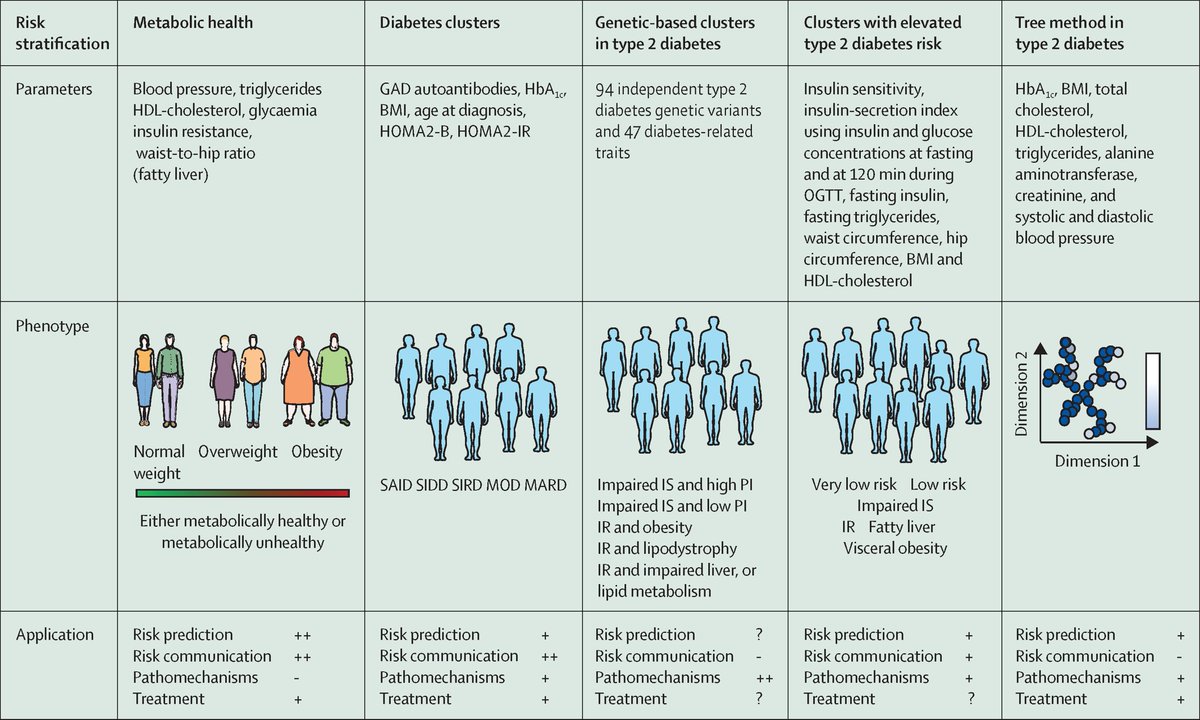
Among 20 leading risk factors for years of life lost in 2040, reference forecasts point to 3 metabolic risks—high blood pressure, high BMI & high fasting plasma glucose—as top risk variables.
Find out more in a @TheLancetEndo Review: https://t.co/Brwe1jKd37
The GWAS summary stats for circulating cytokine levels from our study are now available through GWAS catalogue:
Accession numbers GCST90428399 to GCST90428438
https://t.co/DCZysEv91a
Today, the flagship paper of the @uk_biobank Pharma Proteomics Project was published in @Nature.
https://t.co/klfTJLeO51
The results are fully browsable at https://t.co/KvrFNjdfuu.
The underlying protein measures will become available to UKB researchers in the next few weeks.
📢 Today we launch the @PGCGenomics Video Textbook!
A structured training program in psychiatric genetics, analysis methods and software tools.
Open access, do share widely. #WCPG2023
1/n
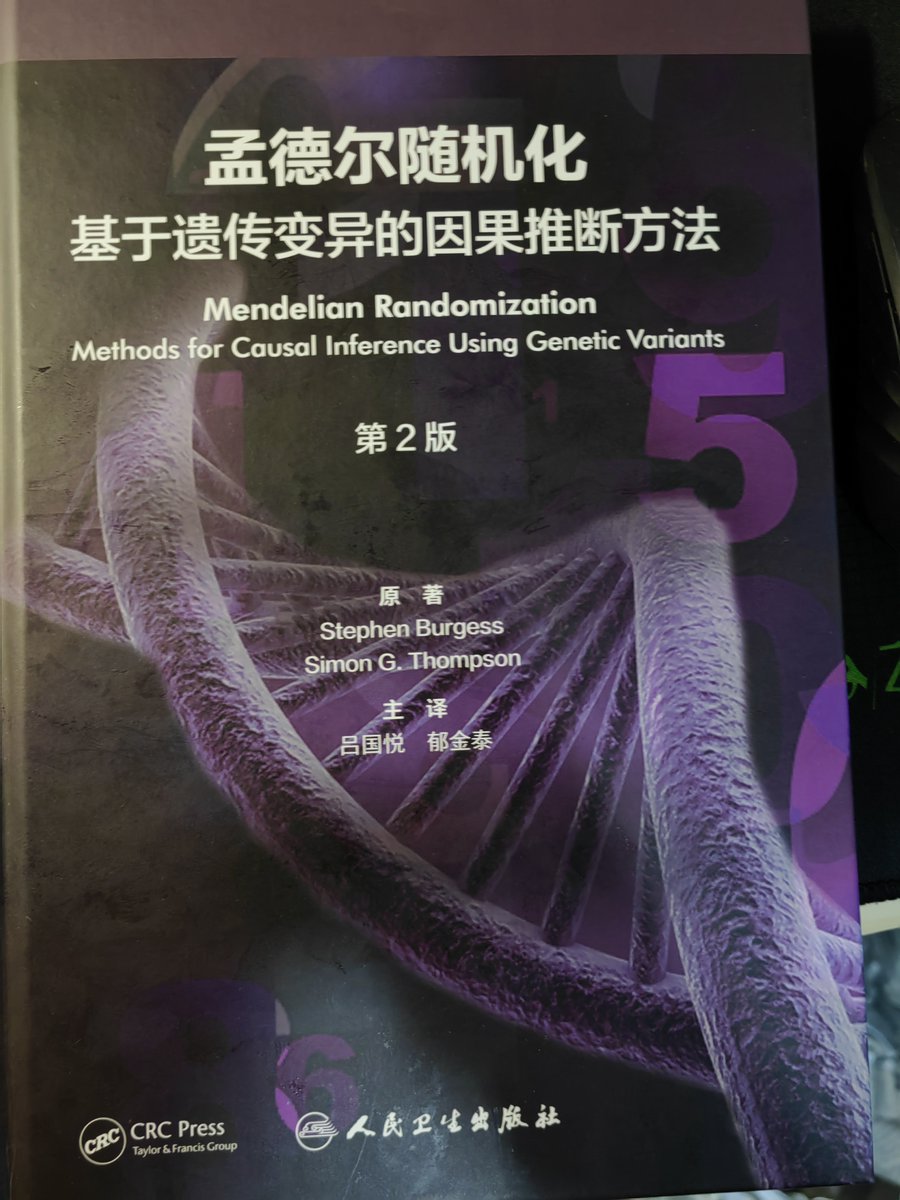
Proud to say our Mendelian randomization book is now available in Chinese: https://t.co/2Pl9d2mQvo. This translation is the result of months of co-operation with a network of researchers and academics in China. We hope this enables a wider audience to benefit from its contents.
Really Excited - our work was just out @Nature! Grateful for the invaluable contributions of our collaborators from around the globe and the leadership of @minouye271 , making all these possible. Looking forward to a lot more exciting studies ahead!
Great to see our work from the CARDIoGRAMplusC4D Consortium on the genetics of coronary artery disease finally out in Nature Genetics https://t.co/CpXaNAdpny
A short 🧵 to highlight some key findings..... 1/8
Many thanks all for the nice questions. If you miss the talk or would like to have follow up discussions, please join us at the #ASHG2022 digital forum on 15 Nov. 😊
If you would like to know more about how we at @NovoNordisk are integrating human genetics with proteomics for drug discovery, come see @LingyanC present at #ASHG2022 6:15pm West Hall A plenary session
3. Do pQTLs go in the same directions as eQTL?
a. Proteins in circulation are not reflective of what is going on at the tissue level
b. Different regulatory mechanisms of RNA and proteins (transcription vs translation)
Systematic Mendelian randomization using the human plasma proteome have identified 6 potential targets (TFPI, TMPRSS5, IL6RA, MMP12, CD40, CD6) for stroke. Thx to @joannahowson @stevesphd @aidanbutty @CAMBRIDGE_CEU https://t.co/O3Irzr4CcG