Nach @Die_Gruenen jetzt auch Zusage von @dieLinke, zur Übergabe des #S4FAppells zu kommen! Vielen Dank, @lgbeutin!🙂
Ort und Uhrzeit:
Dienstag, 25.03. 09:30 Uhr, Nordende Friedrich-Ebert-Platz
Wie schaut es bei der @spdbt und der @cducsubt aus?
Das bayerische Ziel der #Klimaneutralität bis 2040 ist richtig und notwendig, doch die Umsetzung ist mangelhaft.
In einem offenen Brief "Klimaneutraler Hochschulbetrieb 2040" fordern wir, dass die bayrischen Universitäten und HAW vorangehen.
➡️
https://t.co/isd2LbyzBK
In @nature, Delavaux et al., 2024 suggest that species richness on oceanic islands is reduced by mutualism rates on the mainland. In https://t.co/0AFd2FXGFZ, @_Max_Pichler and I had another look at this question and conclude that this effect is likely a statistical artefact.
Der Brief kann durch Wissenschaftlerinnen und Wissenschaftler an Universitäten und Hochschulen für angewandte Wissenschaften in Bayern unterzeichnet werden!
Wir als Scientists for Future Bayern haben einen Offenen Brief an die Bayerische Staatsregierung verfasst, um den Hochschulen einen schnellen Emissionsreduktionspfad zu ermöglichen und eine Klimaneutralität 2040 erreichen zu können:
https://t.co/7pLTJOAXYU
Wir fordern die Staatsregierung auf, bei Gebäuden, Mobilität, Beschaffung, Ernährung und Dienstreisen die notwendigen Änderungen durchzuführen, damit wir als Universitäten und HAWs schnelle Emissionsreduzierungen erreichen. In all diesen Bereichen passiert bisher zu wenig!
Latest NASA global temperature data.
Earth has never been hotter since Homo sapiens discovered agriculture in the early Holocene. Likely even since 120,000 years ago.
Fossil coal, oil and gas emissions caused it.
We need to stop making it worse.
Yes, we can if we want to. 🧵
DHARMa v0.4.7 #rstats package for #glmm residual diagnostics now available on #CRAN. Among other things, this version includes a new residual test for #phylogenetic correlation, as well as support for the #phylolm package. Moreover, to make DHARMa more accessible for color-blind
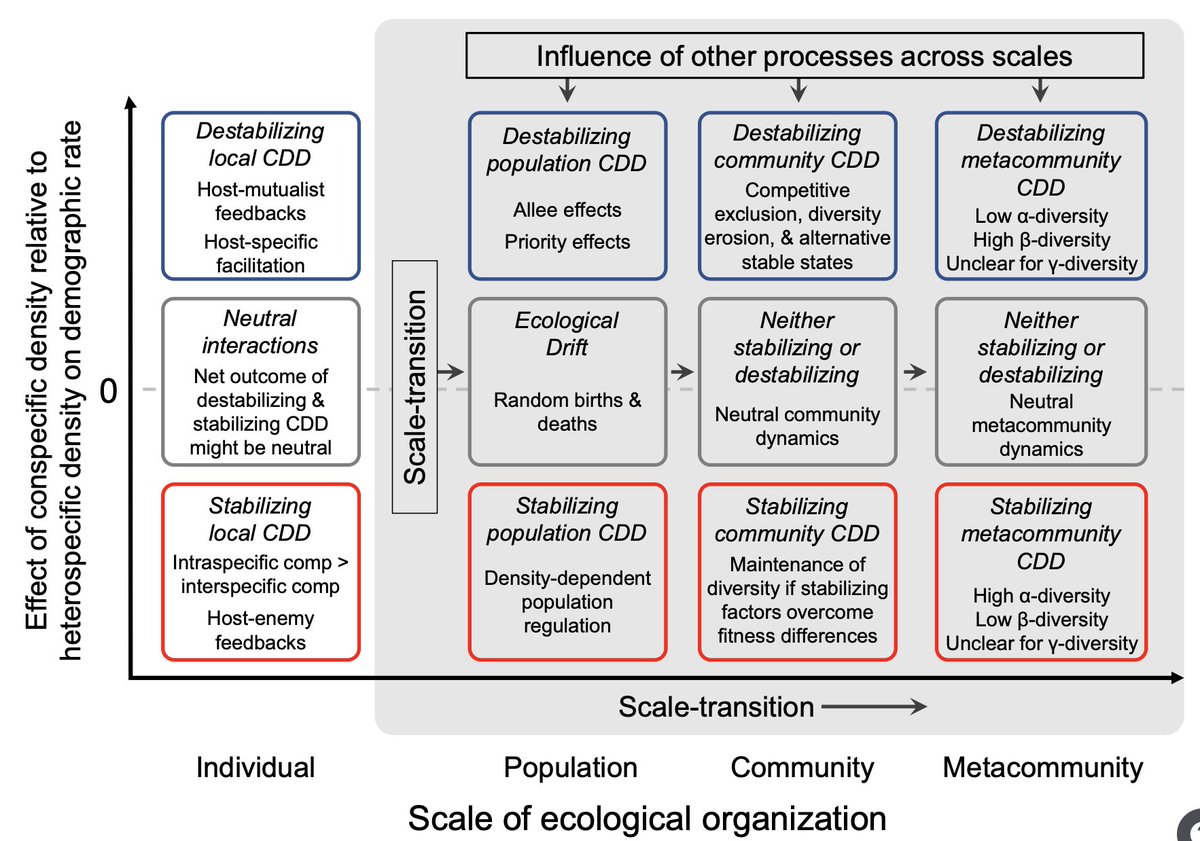
Great to see our article "Consequences of Local Conspecific Density Effects for Plant Diversity and Community Dynamics" lead by Joe LaManna and Camille Delavaux now out and available in @Ecology_Letters https://t.co/NYhyAKTHpX
"How’s your health, forests?" illustrates how various tools data and perspectives are needed to assess the functioning and condition of the world's forests. It features the work of many colleagues eg @DanielFZuleta @Nate_G_Swenson @Seanscience1 and our own https://t.co/GE8K3Pvc8v
Interested in climatechange, ecology, biodiversity, and biodiversity loss? Our master program #GlobalChangeEcology at @unibt addresses these topics interdisciplinary. #GCE students regularly attend @IPCC_CH & @IPBES. Apply now! https://t.co/yun7j6Yfsz
We data/theory people from @EasiLabUBT really went out for field work, into a real FOREST! 😇 Leonie Gass and I set up temperature logger in the Fichtelgebirge to measure the microclimate on new disturbance patches - a collaboration with @katja_kowalski and @corneliussenf
The last paper of my PhD is finally out!
"Major axes of variation in tree demography across global forests"
many thanks to the 50+ co-authors who made this study possible! special thanks to my mentors @PIPrado1, @LisaHuelsmann, @Seanscience1, Marco Visser
https://t.co/mbIk69jqz6
News & Views about the below Nature paper:
"Local to global: Uncovering drivers of global tree diversity" https://t.co/oPSogAtRhe
One of the most notable biodiversity patterns on Earth is the decline in plant species diversity from the Equator to the poles...
cito v1.1 #rstats package for deep neural networks (#DL#DNN) (with formula syntax) is now available on #CRAN. New features include likelihoods such as the negative binomial distribution and easy hyperparameter tuning: https://t.co/JSQMkVyLu5 1/4