Our new article is out and about: Learning Words Orthographically Enhances Subsequent Word Processing During Sentence Reading: Extending the Visual Word Learning Advantage https://t.co/M6nGHcLZMJ
@KDrakoulaki Ναι, θα έλεγα κάτι σαν προβλεπτική επεξεργασία/διεργασία και ενεργητικός συμπερασμός. Όταν είχα κάνει μια παρουσίαση στα ελληνικά για την ανάγνωση είχα μεταφράσει το prediction theories θεωρίες γλωσσικής πρόβλεψης.
📣 Open registrations for #iWORDD23! 📣
#BCBL will organise an international workshop on reading and developmental #dyslexia between June 7th and 9th for the research community in this field.
You cannot miss it! 👇
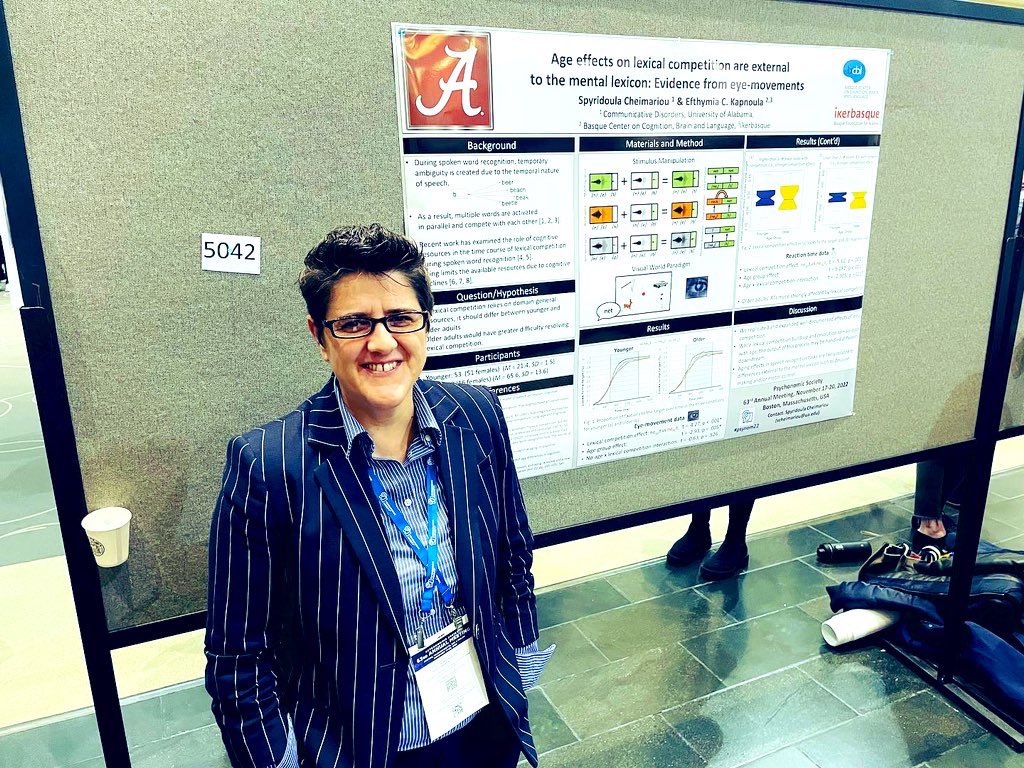
Second, we have a poster with @LitsaCheimariou@UofAlabama suggesting that any differences in how older adults deal with lexical competition are outside the mental lexicon.
Litsa will be presenting this work on-site on Sat 6:00-7:00PM!
4/4
Are you an aspiring or practicing neuroscientist who wants to learn Python for free? Dr. Mark Kramer and colleagues @BU_Tweets developed a great intro virtual book that uses Jupyter Notebooks with neuro data included. A🧵 of the topics included: @PhDVoice@AcademicChatter
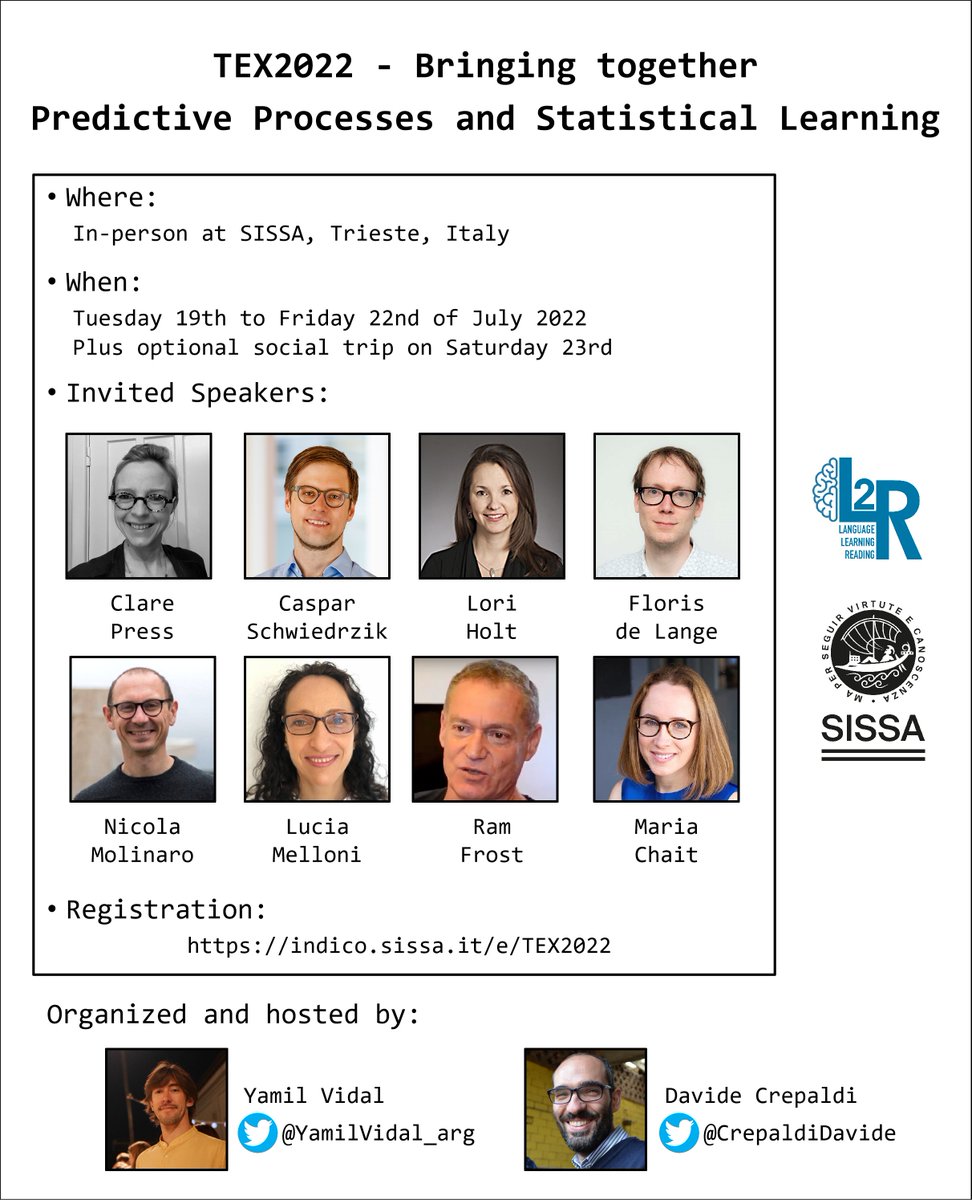
Registration is now open for #tex2022!
After our on-line meeting last year, this summer we want to welcome you in person in Trieste. Morning lectures by the invited speakers and afternoon talks by attendees. Plus plenty of time for discussion.
More at https://t.co/nj5bUd0pAB
🗣️Does repeating a novel word out loud help to learn it better?
*New paper* with Arty Samuel takes a stab at reconciling the seemingly contradictory effects of production on word learning👇
https://t.co/IAPsQXNnWq
@bcbl_@Ikerbasque
Hey! How come you didn't submit your abstract for the OCP19+ yet? We've got good news: you are still on time! The new submission deadline is Nov. 1st. We can't wait to get your abstracts! Submission link: https://t.co/EtxjVZ5LBm
Check our webpage too: https://t.co/puvRgEja1n
Can your research help us understand the link(s) between #phonology and #dyslexia? If yes, consider submitting your abstract!
👉Both online and on-site registration options available
🗓Deadline: Oct 15th
@bcbl_@deusto
As someone interested in statistical analyses of EEG data & the history of the field, I think an important (and under-appreciated) researcher is Dr. Mary Brazier (1904-1995) who did both pioneering experiments & analyses, and rigorously documented the history of the field.
What does it mean to learn a new word?
The answer may depend on whether we study L1 or L2 learning, or on whether we use real or made-up words.
Despite the differences, common patterns do emerge - pointing to fundamental #wordlearning mechanisms.
https://t.co/lBysAuEcNT
Excited to share new work out with Brothers, @LivHoversten, Traxler, @SwaabTamara! We find ERP evidence that semantic prediction and domain-general processing are supported by separable mechanisms - in both young and older adults. 🧠
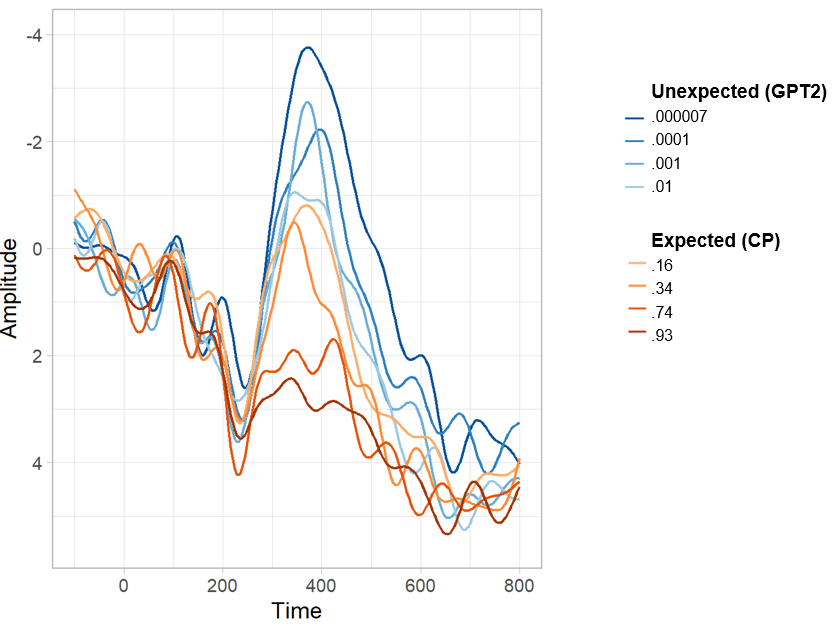
Happy to share a new preprint (with @CABlabUIUC)! Across five datasets (n=138) we show (and replicate) that N400 amplitude is sensitive to word (log)probability even in incongruent words (with word predictability estimated by a language model - GPT-2). https://t.co/gDVpgy9yJy