@silvirouskin Silvi- did not get my first R01 till the end of my 4th year as assistant professor. Hang in there, when the first one comes through (matter of when not if) many will follow. I had seriously considered opening a souvlaki cart in mission bay after my 3rd “not discussed” R01 try
1/5 Telomerase has long been linked to chromosome maintenance in eukaryotes. Now, we show that telomerase-like activity is also present in bacteria, shedding new light on its ancient origins.
Excited to share that our work on DRT10 is now out in @Nature!
https://t.co/4CekquyMXX
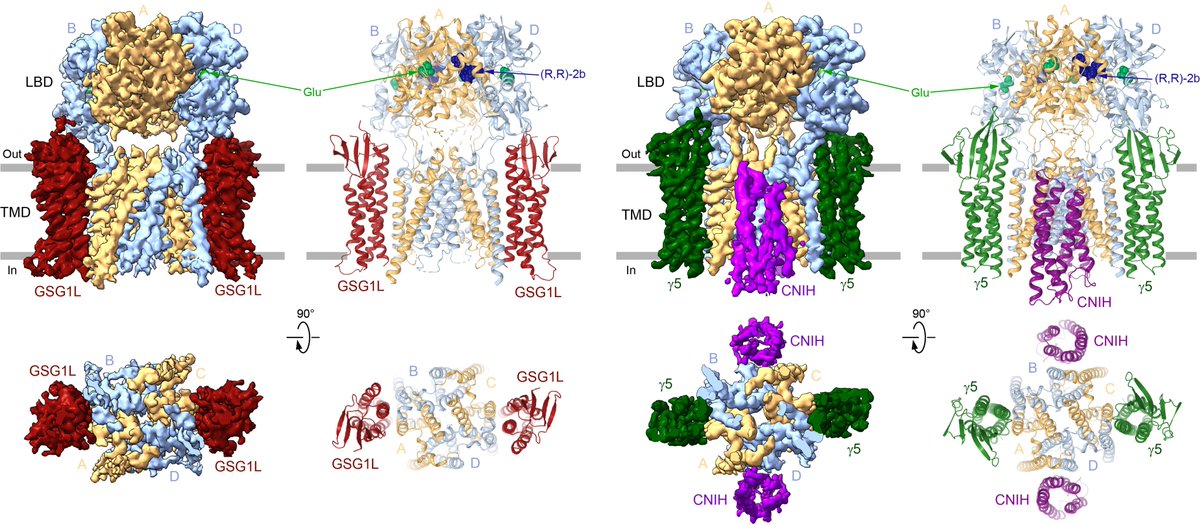
Officially out in Nature Communications: Structural and functional regulation of GluA2 AMPA receptor by inhibitory auxiliary subunits GSG1L and TARP g5 and by epilepsy-associated disease mutations. @shantigangwar@MariaKarela3@MKCMU
https://t.co/FGvrE1CwQG
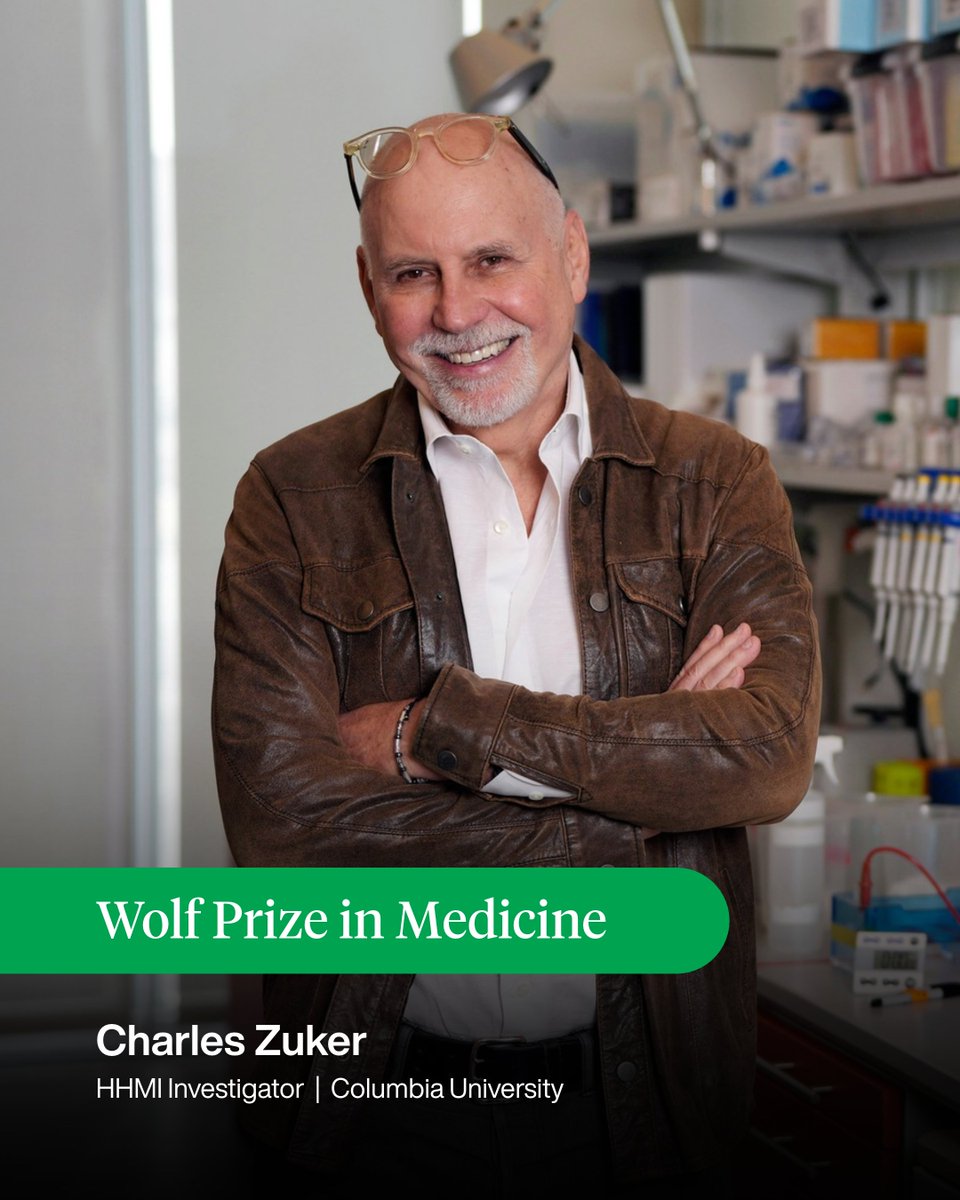
Congratulations to #HHMIInvestigator Charles Zuker, winner of the 2026 Wolf Prize in Medicine! Zuker's groundbreaking research into taste has helped reveal how the brain transforms signals from the outside world into perceptions, actions, & behaviors: https://t.co/TMeQSgDp2F.
Amazing story showing how pairing basic research with medicine results in clinical “miracles”. and so inspiring to know that our own Dr. Lustig from @Columbia had key contributions in this inspiring story
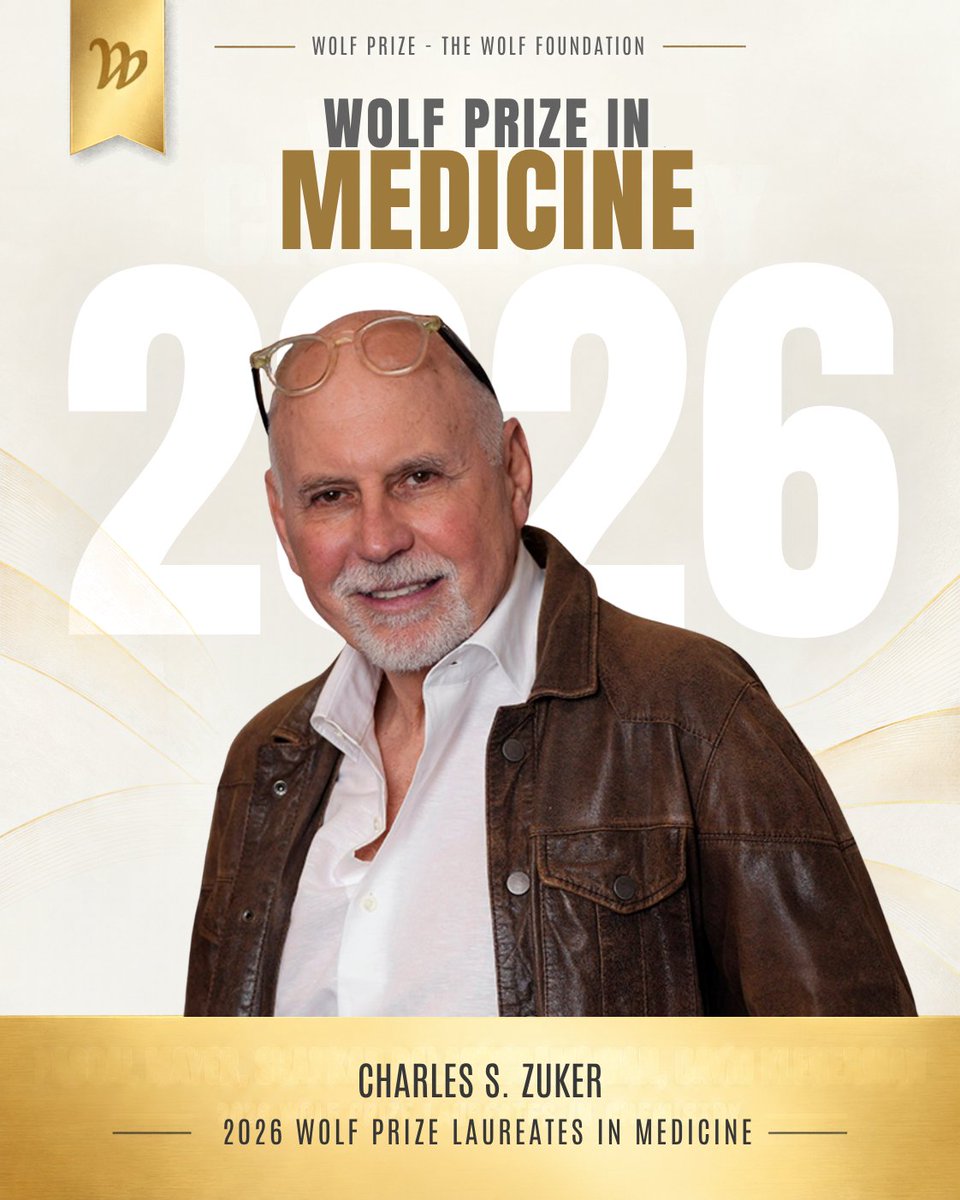
ANNOUNCING THE 2026 WOLF PRIZE LAUREATE IN MEDICINE
The 2026 Wolf Prize in Medicine is awarded to Charles S. Zuker of Columbia University and the Howard Hughes Medical Institute, “for revolutionizing our understanding of taste, the last of our senses to be elucidated.”
Sweet. Sour. Bitter. Salty. Umami:
Zuker’s research revealed the cells and receptors responsible for each of the five basic tastes - and showed how those signals are encoded and represented in the brain.
His experiments went even further: by rewiring taste receptors in mice, his team demonstrated that what makes something feel “sweet” or “bitter” is not simply the receptor itself, but the specific neural pathway activated between the tongue and the brain.
By defining how chemical signals on the tongue are translated into perception and behavior, Zuker transformed taste from one of the least understood sensory systems into one of the best mapped in modern neuroscience.
Congratulations to Charles S. Zuker, 2026 Wolf Prize Laureate in Medicine.
Thrilled to be one of the 25 winners for the @NIH#TRDNT Challenge (Phase 1). 🏆 🏆🏆We will develop an all-in-one #RNA trans-splicing platform for highly efficient and programmable exon editing. We hope to expand the list of druggable target genes that are challenging with current technologies.
Kudos to the leading postdoc in the lab Ye Wang for what we have achieved so far! I am very excited about what to expect moving forward!
@ColumbiaSysBio@ColumbiaPS@Columbia
#RNA
#PrecisionMedicine
https://t.co/l3dob57OWQ
Natalie Fardian-Melamed was named a Blavatnik Regional Award for Young Scientists laureate. Samuel H. Sternberg was named a finalist for the Blavatnik National Awards for Young Scientists.
https://t.co/CD8efcu1kO
Excited to share our new preprint! 🎉
Using base-editor screens, we reveal how individual residues within the intrinsically disordered region of YTHDF2 control protein interactions, condensate recruitment, and m⁶A-dependent mRNA decay.
https://t.co/kJO8sit1J9
🧵👇
🧬🧪🔬Why are enhancers transcribed? How does it impact gene regulation? I’m excited to share our new paper in @ScienceMagazine showing that ncRNAs control the timing of gene activation in embryos. w/Mike Levine #ScienceResearch#RNA
A few highlights 🧵👇
https://t.co/ZHPXKBDLhh
We’re expanding! The Concepcion Lab at @ColumbiaPS@columbiacancer is searching for a Postdoctoral Research Scientist to study epigenetic deregulation & chromatin states in lung cancer. 🧬🔬 Pls share!
https://t.co/vSs0n0YZIT
📢 Our Dept. of Systems Biology @Columbia has a faculty opening in the broad area of quantitative biology (Comp/AI/Bio, etc.).
Come join our department in NYC! Please circulate/RT.
Apply: https://t.co/lF0Ti0w1ZU
Deadline: Nov 1, 2026.
@ColumbiaSysBio
https://t.co/7YPnW7VRTb
Happy to share molecular mechanics of AMPA-subtype ionotropic glutamate receptor (iGluR) pre-activation and complete gating pathway revealed by time-resolved cryo-EM with the help of full and partial agonists. @MariaKarela3@MKCMU@shantigangwar
https://t.co/56mFj4BOba
I'm thrilled to share that I'll join Columbia University in Jan 2027 as an Assistant Professor in @ColumbiaGenDev & @CSCIColumbia ! A long-held dream; I'm grateful for my mentors and colleagues.
We'll study microbiota-ENS interactions & we’re hiring!
https://t.co/gxC887WdVY
Our back to back paper @NatureNeuro is out today (https://t.co/vAUFib4mR1). We developed a method to visualize ribosomes bound to endogenous mRNAs with near codon resolution and made some really counterintuitive cell biological discoveries which have cool implications for AD🧵
Translocation-driven chr19-der(14) interaction is associated with disease-specific transcriptional programs in mantle cell lymphoma https://t.co/GqfruQXeVW food for thought....