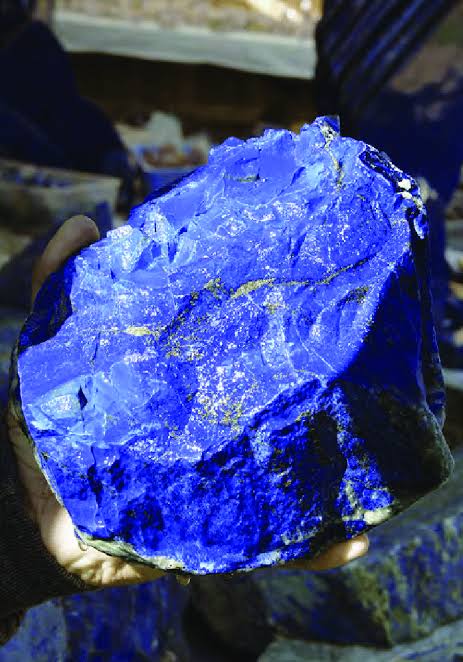
Lapis lazuli has one of the longest, most geographically expansive histories of any gemstone. The oldest known mines, Sar‑e‑Sang in Badakhshan, Afghanistan, were already active by the 7th millennium BC, supplying a deep blue stone so rare that Neolithic and Bronze Age cultures treated it as sacred.
From these mountains, lapis traveled astonishing distances: to the Indus Valley, where beads appear in early burials; to Mesopotamia, where it entered elite ritual objects as early as the Ubaid period (c. 4900–4000 BC); and to Egypt, where it symbolized the heavens and resurrection and was embedded in amulets and royal regalia, including the mask of Tutankhamun.
Its scarcity, intense color, and association with the divine made it more valuable than gold in many ancient societies.
By the mid‑ to late Bronze Age (c. 2000–1000 BC), lapis lazuli had become a cornerstone of long‑distance trade linking Central Asia, the Near East, and North Africa. Caravans carried it westward along land routes through Iran and Mesopotamia, while later maritime routes expanded its reach.
Afghan lapis dominated the ancient world because of its unmatched quality, and its movement across continents reflected shifting political alliances, trade networks, and religious symbolism. By the Middle Ages, Europe imported lapis to grind into ultramarine, the most prized blue pigment of Renaissance art, further extending its cultural legacy.
According to scholars, Lapis Lazuli didn’t just travel as a gemstone, it quietly shaped global knowledge systems. Medieval scribes used ultramarine (ground lapis) to illuminate only the most sacred passages, but even more surprising, recent chemical analysis shows that tiny lapis particles were found in the dental plaque of a 12th‑century German nun.
Archaeologists have found that Bronze Age artisans sometimes faked lapis lazuli by mixing cheaper blue minerals with resins or glass, because real Afghan lapis was so scarce and politically controlled. These forgeries weren’t crude, they were sophisticated enough that modern lab analysis is often needed to tell them apart. The existence of “counterfeit lapis” 4,000 years ago shows just how powerful and coveted the stone was, and how early humans developed global‑trade‑level fraud to imitate it.
#drthehistories
Just pointing out that I broke the story 7 months ago that Mandelson failed vetting from the security services and put it to Downing Street...so the idea that Downing Street only found out on Tuesday is complete nonsense.
https://t.co/9Zp14BGCoD
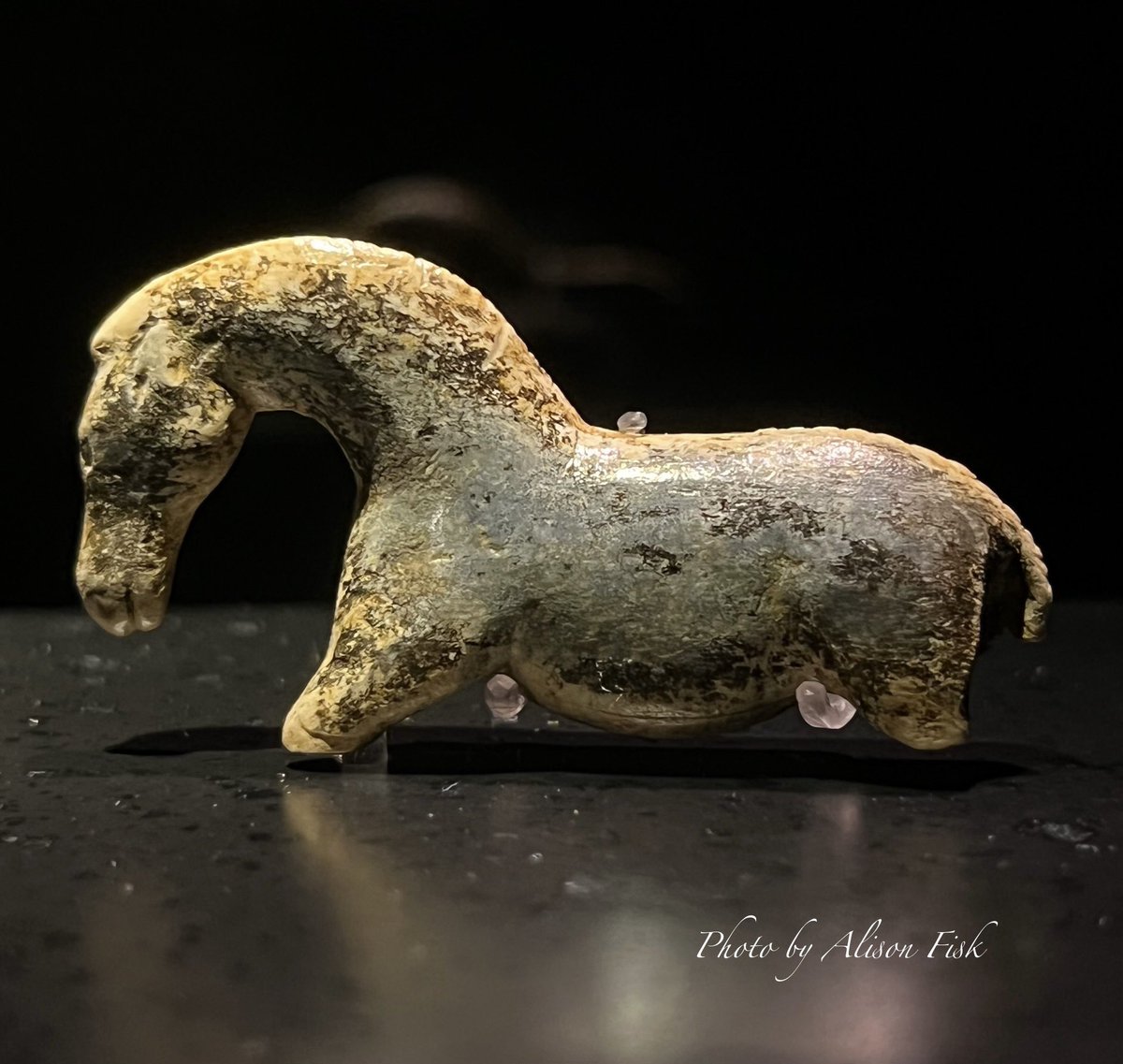
Something ancient and wonderful for the weekend!
A tiny horse figurine carved from mammoth ivory about 40,000 years ago!
Imagine the #IceAge artist at work, sitting by the warmth of a fire, creating what is the world’s oldest known figure of a horse!
📷 by me
#Archaeology
I can genuinely say I’ve never seen such disregard for women & children’s safety as I have in recent years. From all directions.. the loss of rights & spaces, to paltry sentences for sexual assault & pedophilia, to lack of support for grooming gang enquiries, to school girls having to carry rape alarms, to the gross pornification of the internet … the list goes on & on. We are going backwards in how we treat women & girls
After today's excellent decision by the IOC.,if the Rio 2016 women's 800m. was held today, the 3 medallists in my photo. Wambui, Niyonsaba & Semenya would be barred and the medals would go to Canada's Melissa Bishop, Poland's Joanna Jozwik & GB's Lynsey Sharp @AthleticsWeekly
When my dearest darling mum died, she had so many beautiful clothes in her draws never worn, she had been keeping ‘for best’. On International Women’s Day …..wear those clothes every single day of your life…..even going to Tesco.
Ladies and Gentlemen, if you enjoy this account, and care for the memory, and future of London, kindly follow (if you don't already) and share this post in order to help others find us. Thank you all for your support. 🤝
International women’s day next week. Wouldn’t it be great if ‘morality police’ telling Iranian women what to wear could be relegated to the pages of history
A foreign national, of no fixed address, appeared in court today, charged with defacing the statue of Winston Churchill. The case had to be adjourned so he could be provided with an interpreter. This story sums up the state of our nation in so many ways. https://t.co/GzLg1WxmwL