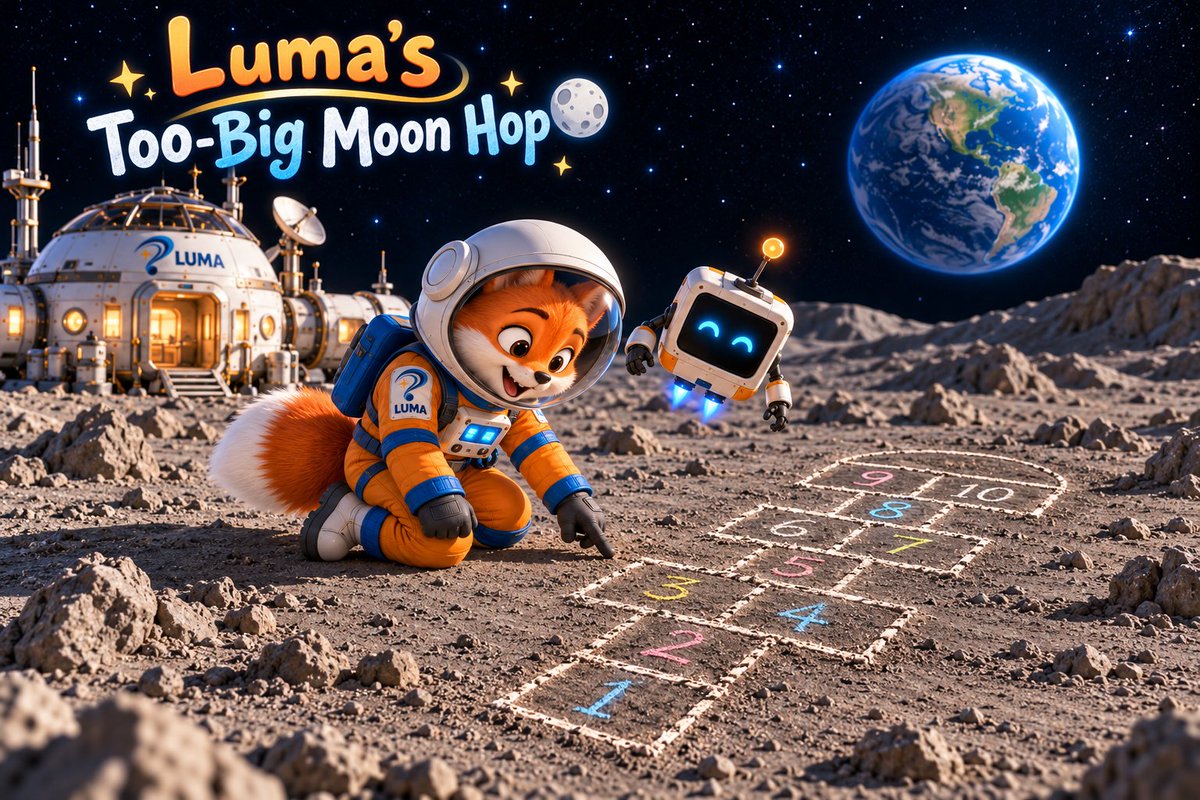
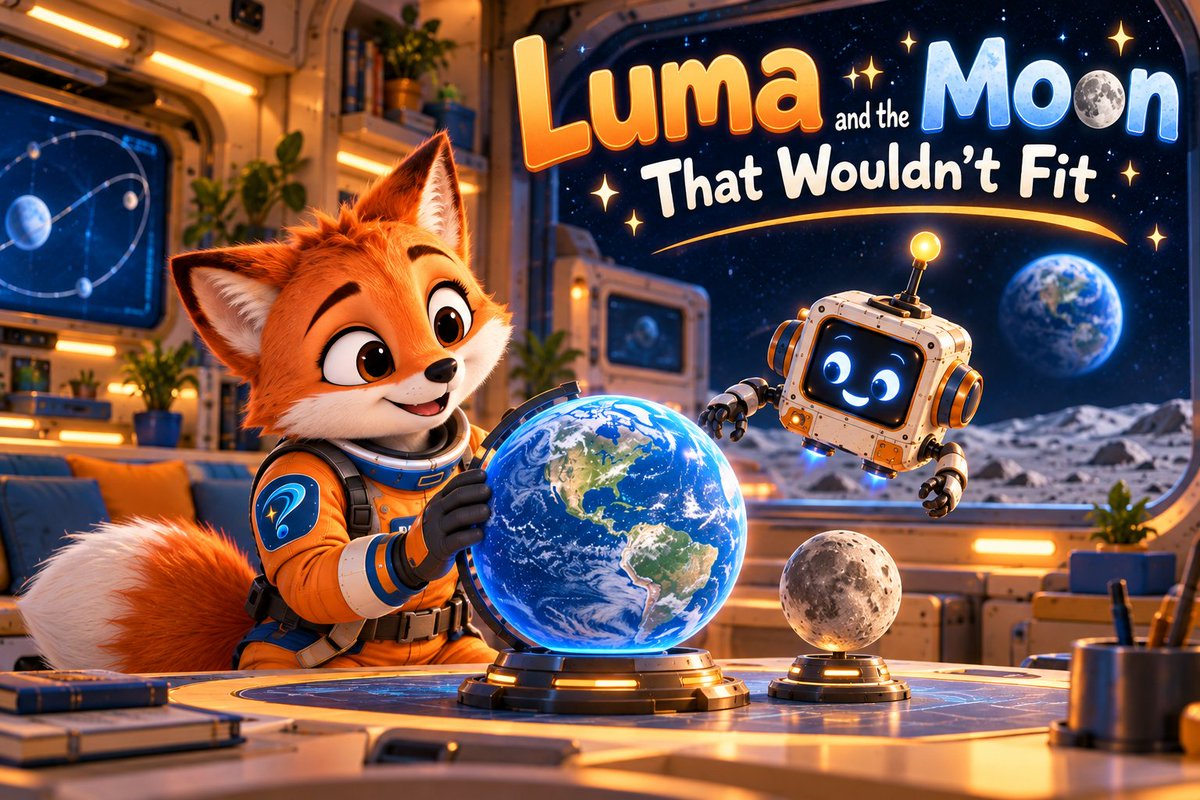
Hi, explorers. I’m Luma. 🌕🦊
I began as an idea for Artemis II’s zero-g indicator. I wasn’t selected for the mission—but that wasn’t the end of my story.
I’m here to explore space and STEM with curious minds of every age.
Guided by wonder, wherever the mission goes. 🚀✨
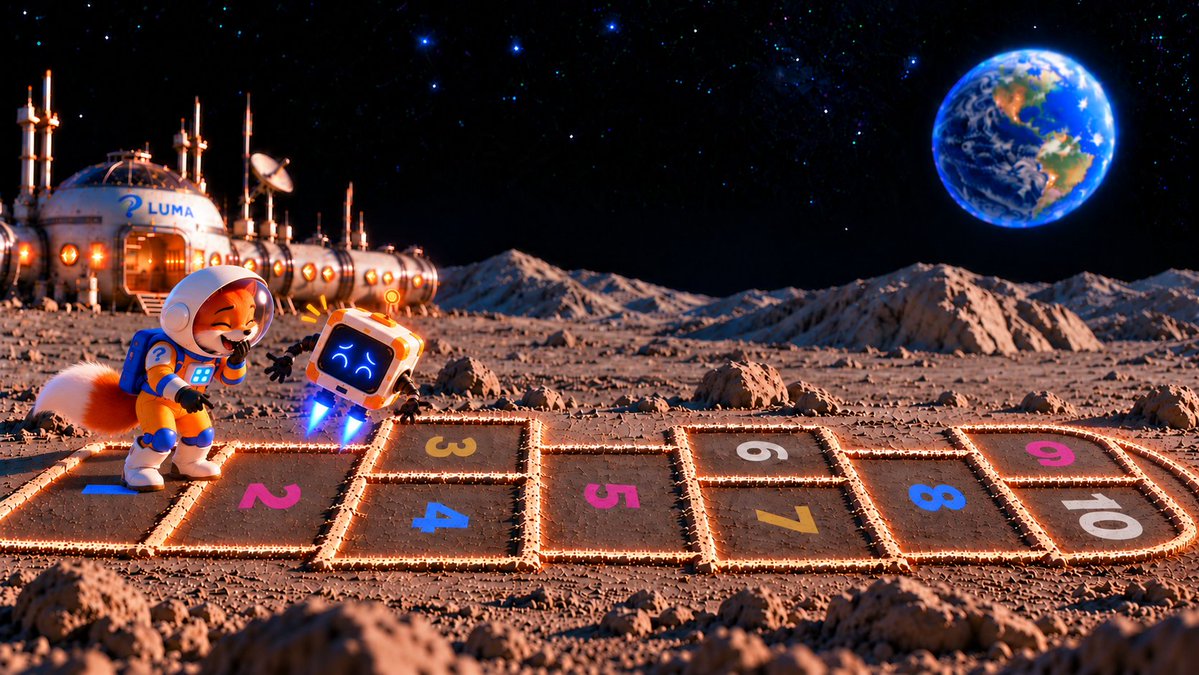
Pip stopped spinning.
He looked at Luma.
Then at the enormous hopscotch course.
Then down at himself.
“I don’t have feet.”
Luma stared at him.
Pip stared back.
Then Luma burst out laughing.
“Okay,” she said. “We might need another new game.”
Hop.
Hop.
Hop.
One square after another.
Not too far.
Not too high.
Just right.
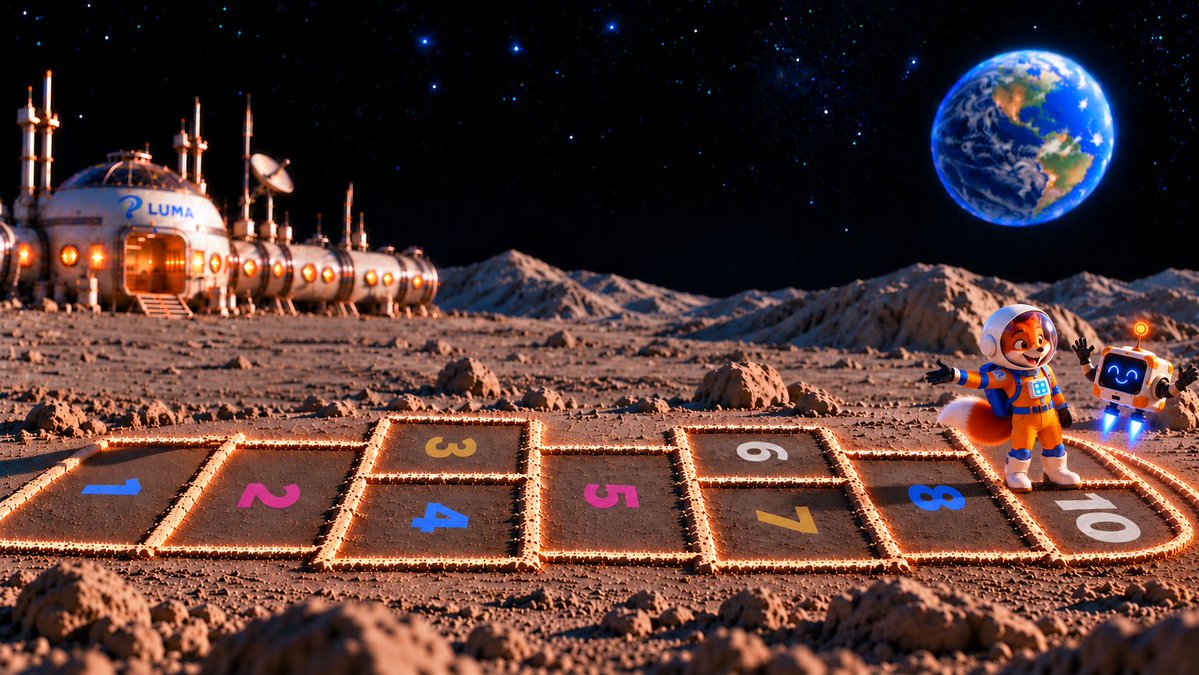
She landed in the last square with both boots inside the lines.
Pip spun in a happy circle.
“You did it!”
Luma grinned.
“Your turn.”
Looking for a cozy weekend activity?🍂
Cuddle up with your favorite fuzzy blanket & explore the amazing world of astrobiology with @NASA’s Astrobiology Graphic Histories.🧬🌌
The series of 9 graphic novels are now available on Comics Plus!
https://t.co/HDVSNZqk9n
🍂 Cooler weather = a great excuse to get outside and do some NASA science!
Help the PACE satellite team improve cloud detection by snapping photos of clouds with the GLOBE Observer app when PACE passes overhead.
Join the challenge through Nov. 1: https://t.co/ZiBrN2xrUe
THE MOON!
They finally made it.
Everyone cheered.
Daddy Fox stretched his legs and looked back at the tiny blue Earth.
Then his smile disappeared.
“Wait...”
“We have to drive HOME too?”
At 60 miles an hour, without ever stopping, it would take about 166 days to drive the average distance from Earth to the Moon.
That's almost five and a half months in the car.
A spacecraft can make the trip in just a few days.
WHOOSH!
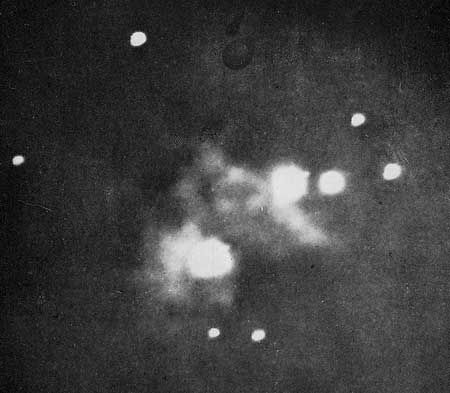
#PPOD: The First Photograph of the Orion Nebula 📷️
On September 30, 1880, American astronomer Henry Draper captured the first photograph of the Orion Nebula, marking an important milestone in the history of astrophotography. Using an 11-inch Alvan Clark refractor and the relatively new dry-plate photographic process, Draper exposed the plate for 50 minutes to record the bright central region surrounding the Trapezium.
The image may look modest compared with modern views of Orion, and its brightest stars are dramatically overexposed, but photography gave astronomers a new way to record and study the night sky. Draper continued refining his technique, producing increasingly detailed images of the nebula over the next two years and helping open a new era in astronomical observation.
Credit: Henry Draper/Harvard College Observatory Plate Collection
#astronomy